Creator Match Milestone and the Evolution of B2B Creator Marketing: AJ Eckstein to Emcee Creator Economy Live East

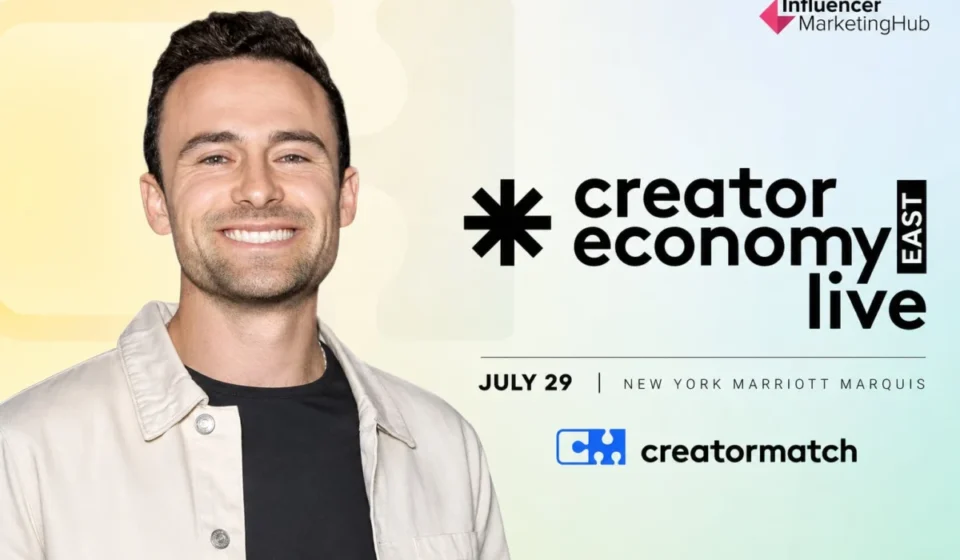
AJ Eckstein, the founder and CEO of Creator Match, has been appointed as the emcee for the upcoming Creator Economy Live East conference, scheduled to take place at the New York Marriott Marquis on July 29, 2024. This leadership role at one of the industry’s most prominent gatherings follows a significant financial milestone for Eckstein’s firm, which recently facilitated $1 million in approved creator offers within a single week. The achievement serves as a benchmark for the rapid maturation of the Business-to-Business (B2B) creator sector, an area of the digital economy that was largely non-existent just a few years ago.
The appointment of Eckstein as emcee represents a full-circle moment for the entrepreneur. Only one year ago, Eckstein attended Creator Economy Live West in Las Vegas as an audience member. His transition from the seats to the stage mirrors the trajectory of Creator Match, which has evolved from a small-scale experimental agency into a dominant force in the LinkedIn marketing ecosystem. The New York event is expected to draw more than 500 brands and feature over 50 speakers, focusing on critical industry pillars such as campaign scalability, employee-generated content (EGC), and measurable return on investment (ROI) within professional networks.
A Chronology of Rapid Scalability
The growth of Creator Match provides a case study in how niche marketing categories can achieve explosive scale when aligned with platform shifts. Eckstein recently documented the company’s financial progression on LinkedIn, noting a condensed timeline of revenue milestones: it took one year to reach the first $1 million in creator payments, then one month to hit the same figure, and finally, only one week to reach $1 million in approved creator offers.
While the "approved offers" metric refers to the volume of contracts sent to and accepted by creators rather than immediate top-line revenue for the agency, it remains a vital indicator of the sheer volume of capital now flowing into the B2B creator space. This velocity suggests that brands are no longer merely testing the waters of LinkedIn influencer marketing but are instead committing significant portions of their quarterly budgets to these programs.
To support this influx of activity, Creator Match has expanded its internal infrastructure. The company currently employs nearly 40 professionals and is actively recruiting for several new roles. Eckstein has been vocal about attributing this success to the collective effort of his team and the growing community of professional creators. "I get too much credit as the founder," Eckstein stated in a recent public communication. "There is an entire team of close to 40 people behind the scenes that’s making this new world a reality."
Overcoming the LinkedIn "Influencer" Stigma
The current success of Creator Match stands in stark contrast to its origins two years ago. At that time, the concept of a "LinkedIn influencer" was met with widespread skepticism from both brands and the creators themselves. In the early stages of the company, Eckstein struggled to convince technology startups to invest even modest sums in the platform.
Initial campaigns were often priced at approximately $2,000. These were fully managed "test" programs that included agency fees and participation from multiple creators. The primary hurdle was educational. Marketing executives traditionally associated influencer marketing with consumer-facing platforms like Instagram, TikTok, and YouTube, where the "creator" archetype was well-established. Conversely, professionals on LinkedIn who possessed large, engaged audiences often did not view themselves as creators or influencers, nor did they recognize a clear path toward monetizing their professional insights.
Eckstein’s strategy involved bridging this gap by formalizing the relationship between B2B brands—primarily in the software-as-a-service (SaaS) and technology sectors—and subject matter experts on LinkedIn. By handling the logistics of discovery, relationship management, contracting, and content review, Creator Match removed the friction that had previously prevented B2B influencer marketing from scaling.
The Five Pillars of Modern B2B Creator Programs
As the market has matured, the definition of what constitutes a "creator program" has expanded beyond the simple sponsored post. Eckstein and his team have developed a comprehensive framework designed to "humanize" technology brands through five integrated elements:
- Live Events: Utilizing creators to anchor or cover industry conferences to build authentic relationships and generate real-time content.
- Physical Gifting: Sending creators tangible products or brand experiences to create organic storytelling opportunities that transcend digital screens.
- Internal Company Voices: Encouraging founders, executives, and employees to develop their own personal brands, providing the company with a recognizable, human face.
- Creator "Surround Sound": Coordinating groups of creators to speak about a brand simultaneously, creating an environment where the brand’s presence feels ubiquitous within a specific professional community.
- Paid Media Amplification: Using paid social strategies to boost the reach of high-performing organic creator content, ensuring it reaches a wider, yet still targeted, audience.
This "surround sound" approach is particularly effective in B2B marketing, where the sales cycle is long and requires multiple touchpoints. By combining the authority of a founder’s voice with the third-party validation of external creators, brands can create a sense of inevitability in their market presence.
Supporting Data and Industry Implications
The growth of Creator Match is reflective of broader trends in the global creator economy, which is estimated by Goldman Sachs to be a $250 billion industry, potentially reaching $480 billion by 2027. While B2C (Business-to-Consumer) marketing accounts for the majority of this spend, the B2B sector is seeing a higher growth rate in terms of contract value.
B2B creator marketing often yields a higher Return on Ad Spend (ROAS) because the Average Contract Value (ACV) of a B2B sale—such as an enterprise software license—is significantly higher than a consumer product. Consequently, a LinkedIn creator with 50,000 highly targeted professional followers may be more valuable to a brand like Salesforce or HubSpot than an Instagram influencer with 500,000 followers is to a fashion brand.
Furthermore, LinkedIn’s own platform shifts have facilitated this growth. The introduction of "Thought Leader Ads," which allow brands to promote posts from individual profiles rather than just company pages, has provided the technical infrastructure necessary for agencies like Creator Match to scale their operations.
Creator Economy Live East: Context and Expectations
The Creator Economy Live East event serves as a critical junction for the industry. As the emcee, Eckstein will guide a program that includes more than 15 specialized sessions and 100 scheduled one-on-one meetings between stakeholders. The event is designed to move the conversation away from "why" brands should use creators and toward "how" they can optimize these partnerships for long-term growth.
Key topics on the agenda include:
- Employee-Generated Content (EGC): How brands can leverage their own staff to build trust.
- Measurable Return: Moving beyond "likes" to track lead generation and pipeline influence.
- Platform Shifts: Navigating the changing algorithms of LinkedIn and other professional networks.
- Global Scaling: How to manage creator programs across different regions and languages.
The presence of over 500 brands suggests that the "experimental" phase of B2B creator marketing is over. Fortune 500 companies are now seeking standardized processes for creator engagement, mirroring the sophistication found in traditional media buying.
Analysis of Future Implications
The success of AJ Eckstein and Creator Match signals a permanent shift in the B2B marketing landscape. The reliance on cold outreach and generic corporate whitepapers is declining in favor of human-centric, relationship-based marketing. As more capital flows into the LinkedIn creator ecosystem, several implications emerge for the broader market:
First, the competition for top-tier professional creators will intensify. As brands realize the value of subject matter experts with established trust, the cost of partnerships is likely to rise. This will create a new class of "professional influencers" who command high fees for their specialized knowledge and audience access.
Second, the role of the agency is evolving. Agencies are no longer just "middlemen" for talent; they are becoming strategic consultants who integrate creator content into the broader go-to-market (GTM) strategy of a firm. The $1 million weekly milestone achieved by Creator Match suggests that the most successful agencies will be those that provide full-funnel solutions, from awareness to conversion.
Finally, the professionalization of the industry will require better attribution tools. As marketing budgets shift toward creators, there will be increased pressure to prove that these investments are driving revenue. The sessions at Creator Economy Live East regarding ROI and data-driven decision-making will be essential in establishing the benchmarks that will define the next decade of B2B marketing.
Eckstein’s journey from a curious attendee to the emcee of a major New York conference is a testament to the speed at which the creator economy is moving. For brands and creators alike, the message is clear: the professional world is no longer just about who you know, but about whose voice is being heard in the digital town square.