Fold2Unfold: A Novel Reflection-Based Privacy System for Foldable Smartphones

The pervasive nature of smartphones has ushered in an era of unprecedented connectivity, yet it has also amplified concerns about digital privacy, particularly in public spaces. "Shoulder surfing," the act of illicitly viewing another person’s screen, remains a persistent challenge across a wide range of devices. While privacy films and built-in screen technologies, such as those found on devices like the Samsung Galaxy S26 Ultra, offer a degree of protection, they are often insufficient, as even minor shifts in viewing angles can reveal sensitive information. This challenge is significantly amplified when it comes to foldable smartphones, where the inherent fragility of the inner display renders traditional privacy films impractical and often explicitly discouraged by manufacturers like Samsung, who cite the risk of irreparable damage to the delicate flexible screens. Furthermore, the current market lacks a privacy film technology that possesses the necessary flexibility to conform to the dynamic nature of foldable displays.
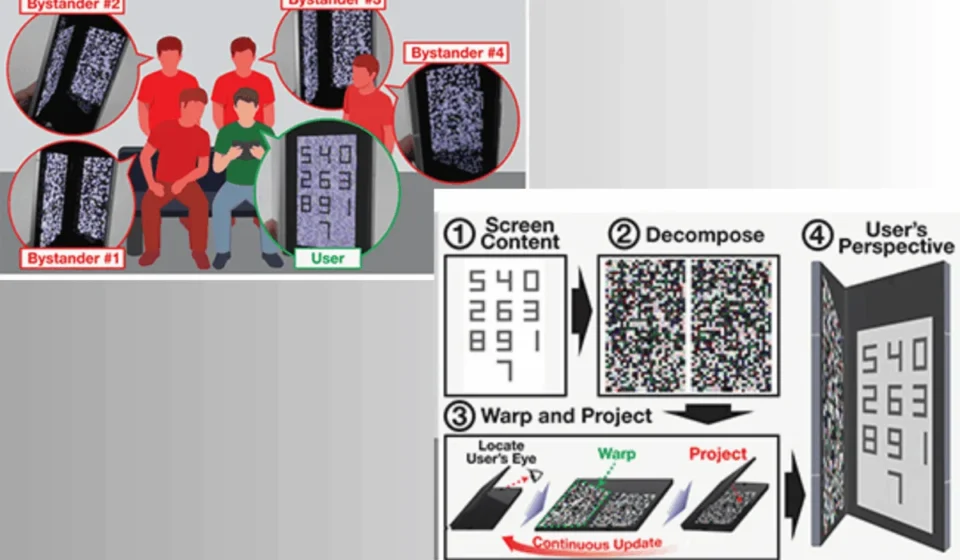
Addressing this critical gap in mobile security, researchers from the Korea Advanced Institute of Science and Technology (KAIST) and Pohang University of Science and Technology (POSTECH) have unveiled an innovative solution that sidesteps hardware modifications entirely. Their groundbreaking system, dubbed "Fold2Unfold," leverages a sophisticated reflection-based approach, transforming each half of the foldable phone into a dynamic mirror for displaying information. In this ingenious implementation, the user directly views one segment of the screen, while the other segment functions as a meticulously calibrated reflector panel.
The Genesis of Fold2Unfold: A Collaborative Effort
The development of Fold2Unfold emerged from a recognized need within the rapidly evolving smartphone market. As foldable devices gained traction, the unique privacy vulnerabilities they presented became increasingly apparent. Traditional privacy solutions, effective on rigid smartphone screens, proved ill-suited for the complex engineering of folding displays. This technological impasse spurred a collaborative research initiative between leading South Korean institutions, KAIST and POSTECH, renowned for their contributions to computer science and engineering. The project, which has been in development for an estimated two years, culminated in the presentation of their findings at the prestigious 39th Annual ACM Symposium on User Interface Software and Technology (UIST ’26) conference.

Deconstructing and Reconstructing Visual Information
At its core, Fold2Unfold operates by deconstructing an image intended for display into two distinct, incomplete visual components. These components are then presented on separate halves of the foldable screen. The magic of the system lies in its ability to precisely control the angles at which these two halves are viewed and reflected. When observed from the user’s direct viewing angle, the system orchestrates a perfect overlap of the reflected and directly displayed images, reconstituting the original, complete visual information. For any observer attempting to "shoulder surf," however, the visual information remains fragmented and unintelligible.
During rigorous testing phases, the Fold2Unfold system demonstrated remarkable efficacy. In simulated scenarios mirroring the close proximity found in crowded public transport, such as a packed rush-hour subway, individuals attempting to glean information from the screen could identify only a mere 6.5% of the digits displayed on a simulated keypad. This starkly contrasts with a control group viewing the same phone without the Fold2Unfold privacy measures, where nearly 99.9% of the screen’s content was readily decipherable. The researchers further quantified the system’s robustness, noting that even a slight deviation of just 7.5 degrees off-axis, or a lateral head adjustment of 4.6 centimeters at a distance of 35 centimeters, rendered the text virtually unrecognizable to an eavesdropper.
Eye-Tracking Technology: The Key to Dynamic Privacy
The sophisticated real-time adaptation of Fold2Unfold is powered by the integrated camera located on the inner foldable screen. This camera meticulously tracks the user’s eye position, enabling the system to dynamically adjust the deconstructed image on the screen. Regardless of minor head movements or subtle shifts in viewing angle, the on-screen fragmented images are continuously recalibrated. This ensures that the reflection consistently overlaps in a manner that provides seamless readability for the intended user while remaining an indecipherable jumble to any peripheral observers. This dynamic adjustment mechanism is crucial for maintaining user experience without compromising privacy.
The initial research focused on a Samsung Galaxy Z Fold 7, but the team confirmed the technology’s compatibility with previous generations, including the Galaxy Z Fold 5. Moreover, the underlying hardware requirements for Fold2Unfold are met by foldable devices from other leading manufacturers such as Motorola and Huawei, suggesting broad applicability across the foldable smartphone market.

Navigating the Nuances: Performance and Limitations
While Fold2Unfold represents a significant leap forward, the research team has openly acknowledged certain trade-offs and limitations. A key consideration is the slight delay introduced by the system’s real-time processing. In usability tests, participants took an average of 8.2 seconds to enter a PIN using Fold2Unfold, compared to an average of 4.2 to 4.5 seconds on a standard keypad. This temporal overhead, while noticeable, is considered a reasonable compromise for enhanced security.
The system’s resilience in dynamic environments was also assessed. A preliminary test involving a user experienced with Fold2Unfold riding a campus shuttle bus demonstrated consistent accuracy in PIN entry, with an average time of 6.58 seconds per entry. This suggests that the eye-tracking technology can effectively compensate for moderate motion.
It is important to note that Fold2Unfold has been primarily engineered to thwart direct "shoulder surfing." Its effectiveness against sophisticated surveillance methods, such as hidden cameras, recording devices, or advanced optical tools like binoculars, has not yet been thoroughly investigated. Therefore, it should not be considered an absolute anti-snooping solution.
The current iteration of Fold2Unfold is best suited for tasks involving sensitive, short-form content, such as entering numerical PINs, one-time passwords, or viewing financial figures like bank balances. While the POSTECH announcement hints at potential future applications for private messaging, the published research paper currently focuses on numerical data. The system’s capacity for rendering extended text or multimedia content without introducing significant usability challenges is an area for future development.

The Technical Underpinnings: Pixelization and Decomposition
The technical sophistication of Fold2Unfold lies in its unique image processing pipeline. The system begins by pixelizing and deconstructing the on-screen image, effectively obliterating the clear structural cues that define letters and numbers. This initial pixelization step obscures the original visual information. Subsequently, a block decomposition process is employed to generate two complementary images. To further confound potential eavesdroppers, the system strategically incorporates "camouflage" blocks. These blocks are designed to blend with the underlying content, making it difficult to distinguish genuine information from background noise on either screen segment.
The final, cohesive image is only discernible when these two deconstructed images are precisely superimposed through reflection. When the user views the screen head-on, the system’s eye-tracking ensures that the overlapping reflections create a perfectly legible image. Conversely, observers positioned at an off-axis angle are presented with a chaotic, pixelated, and unintelligible display.
Implications for the Future of Mobile Privacy
The Fold2Unfold system presents an ingenious and cost-effective approach to a pressing privacy concern, particularly for the burgeoning foldable smartphone market. Its reliance on software and existing hardware eliminates the need for costly accessory purchases or complex hardware integration. The reported success rate of just 6.5% against privacy intruders suggests a level of security that significantly surpasses traditional methods.
The researchers envision Fold2Unfold being integrated into sensitive applications, such as mobile banking platforms. This integration could empower users to manage their financial information, including bank balances, credit card numbers, PINs, and passwords, with a newfound sense of security in public environments. "Our results show that Fold2Unfold significantly limits information leakage, with attackers correctly identifying only 0.65 of 10 keypad digits on average, while incurring moderate overhead in usability," the research team stated in their paper. This quantifiable reduction in information leakage underscores the practical value of their innovation.

While the current implementation exhibits minor drawbacks, such as subtle color artifacts and increased power consumption due to continuous camera operation and high brightness settings, these are addressable challenges. The fundamental concept behind Fold2Unfold offers a compelling glimpse into the future of mobile privacy, demonstrating that innovative software solutions can effectively tackle hardware-specific vulnerabilities. As foldable technology continues to mature, systems like Fold2Unfold are poised to play a crucial role in ensuring user privacy in an increasingly interconnected world. The ongoing research and development in this area promise further refinements, potentially leading to even more robust and seamless privacy solutions for the next generation of mobile devices.