Gemini Personal Intelligence Rolls Out Globally, Ushering in a New Era of AI Assistance

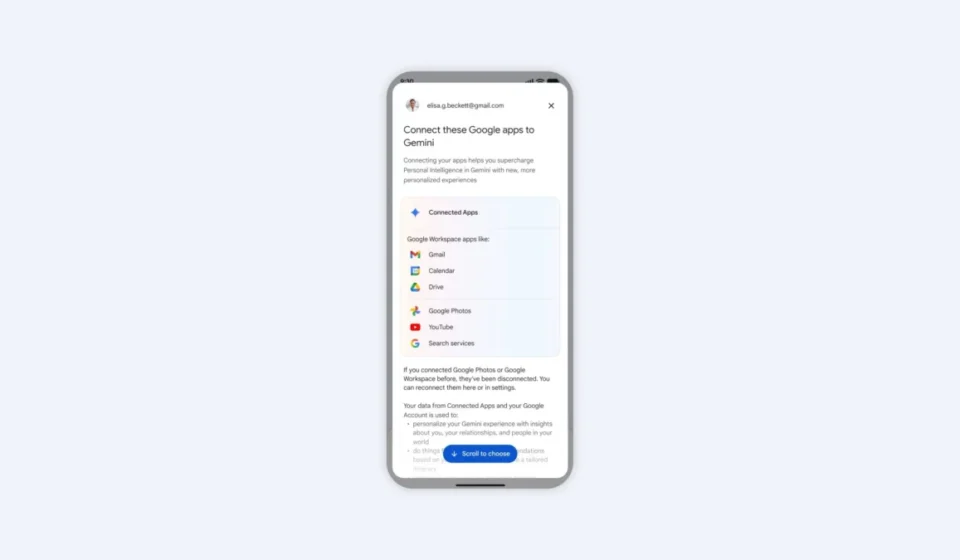
Google’s ambitious push to transform its AI assistant, Gemini, into a deeply personalized tool has taken a significant leap forward with the global rollout of its "Personal Intelligence" feature. Previously available to paid subscribers in the United States, this advanced functionality is now accessible to a wider audience, signaling a pivotal moment in how artificial intelligence interacts with individual users’ digital lives. Personal Intelligence empowers Gemini to connect with and leverage data from a user’s suite of Google applications, including Gmail, Google Photos, YouTube, Search, Maps, Calendar, and Drive, promising a more intuitive and contextually aware AI experience.
The core innovation behind Gemini Personal Intelligence lies in its ability to tap into a user’s existing Google ecosystem. This integration allows Gemini to move beyond generic responses and provide highly tailored insights and actions based on a user’s personal history, preferences, and data. The implications are far-reaching, potentially redefining user expectations for AI assistants and consolidating Google’s dominant position in the personal technology landscape.
Unlocking a Deeper Level of AI Understanding
At its heart, Gemini Personal Intelligence is designed to understand you. By granting Gemini permission to access specific Google applications, users enable the AI to build a comprehensive, albeit privacy-conscious, understanding of their digital footprint. This means that when you ask Gemini for a recommendation, it can consider your past purchases, your preferred styles, and even your dietary habits, drawing information directly from your Gmail receipts or saved preferences in other Google services.
Consider a scenario where a user is struggling to troubleshoot a recently purchased electronic device. Instead of embarking on a generic web search, Gemini, with access to the user’s Gmail, could identify the exact purchase receipt, pinpoint the specific model of the device, and then retrieve relevant manuals or support documents directly related to that purchase. This level of contextual recall eliminates the need for users to re-explain their situation or provide granular details repeatedly, streamlining the interaction and making the AI feel more like an extension of the user’s own memory.

The practical applications extend to complex planning as well. For instance, a user planning a trip with a tight layover could ask Gemini to assess their flight connections. Gemini could then cross-reference this with calendar entries, check gate information, estimate walking times between terminals, and even factor in the user’s known food preferences for airport dining, all within a single, coherent response. This integrated approach showcases Gemini’s evolving capability to synthesize information from disparate sources to provide actionable solutions.
Furthermore, Gemini’s ability to analyze patterns within a user’s activity opens up possibilities for proactive assistance and discovery. The AI could potentially identify recurring interests or engagement patterns across various applications, suggesting new hobbies, learning opportunities, or even social connections that align with the user’s established digital behaviors. This moves Gemini beyond a reactive assistant to a more proactive partner in a user’s personal and professional development.
A Phased Global Rollout and User Control
The expansion of Gemini Personal Intelligence is being implemented in a phased approach to ensure a smooth transition and to allow for ongoing refinement. Initially launched for paid Google AI subscribers in the United States earlier this year, the feature is now rolling out to eligible users worldwide. The current phase of the global rollout includes countries outside the European Economic Area, Switzerland, and the UK for Google AI Plus, Pro, and Ultra subscribers. Free Gemini users are slated to gain access within the coming weeks, further democratizing this advanced AI capability.
Crucially, Google emphasizes that Personal Intelligence is an opt-in feature. Users retain complete control over which Google applications Gemini can access. This user-centric approach to data integration is paramount, addressing potential privacy concerns head-on. Google has stated that Gemini does not directly train its foundational models on sensitive personal content from applications like Gmail or Photos. Instead, it references this data on demand to formulate responses, while keeping the underlying personal information segregated from the AI’s learning processes. This distinction is vital for building user trust and ensuring responsible AI deployment.
Technical Foundations and Accessibility

Gemini Personal Intelligence is engineered to function seamlessly across a wide range of devices and platforms. Users can access its capabilities on their desktops, Android smartphones, and iOS devices. The feature supports all languages currently recognized by Gemini, ensuring broad accessibility for a global user base. The underlying architecture is designed to handle complex queries and synthesize information efficiently, providing near-instantaneous responses that feel natural and intuitive.
The development of Personal Intelligence builds upon Google’s extensive experience in data management and AI research. Years of work in areas like natural language processing, machine learning, and large language models have culminated in the sophisticated capabilities that Gemini now exhibits. The ability to securely and effectively integrate personal data, while respecting user privacy, represents a significant technical achievement.
Strategic Significance in the AI Landscape
The global rollout of Gemini Personal Intelligence is more than just an update to an AI assistant; it represents a strategic maneuver by Google to solidify its position in the rapidly evolving artificial intelligence race. While competitors are also investing heavily in AI personalization, Google possesses a unique advantage: an unparalleled ecosystem of user data spanning billions of individuals worldwide.
Other major tech players are also navigating the landscape of AI personalization. Apple, with its upcoming "Apple Intelligence," is beginning to integrate AI capabilities into its devices, aiming for a similarly personalized experience. However, Apple’s approach is largely confined to its own hardware and software ecosystem, and the full extent of its integration is still unfolding. Microsoft’s Copilot, while powerful, is primarily embedded within productivity suites like Microsoft 365, focusing on work-related tasks. OpenAI’s ChatGPT, a leading general-purpose AI, lacks a native, first-party data ecosystem to draw from, relying instead on publicly available information or user-provided context within a given chat session.
Google, by contrast, has a foundational advantage. Its suite of services – Search, Gmail, Maps, Photos, Drive, Calendar – forms a comprehensive digital life for a significant portion of the global population. By seamlessly integrating Gemini with these services, Google is not just building an AI assistant; it is creating a deeply embedded digital companion that understands the nuances of individual lives. This unparalleled access to a rich tapestry of personal data positions Google exceptionally well to deliver on the promise of true AI personalization, potentially giving it a decisive edge in the ongoing competition. The ability to leverage this vast, interconnected data set allows Gemini to offer a level of contextual understanding and predictive assistance that currently remains out of reach for its competitors.

Implications for Users and the Future of AI
The widespread availability of Gemini Personal Intelligence marks a significant shift towards AI that is not just intelligent, but also intimately familiar. This move away from generic AI interactions towards deeply personalized assistance has profound implications for how individuals interact with technology. Users can expect a more efficient, intuitive, and proactive digital experience, where their AI assistant anticipates needs and provides relevant information before being explicitly asked.
The implications extend beyond mere convenience. As AI assistants become more integrated into our daily lives, their role could evolve from tools to trusted confidants and partners. This raises important discussions about data privacy, ethical AI development, and the long-term societal impact of such deeply personalized technologies. Google’s emphasis on user control and its commitment to separating personal data from model training are critical steps in navigating these complex issues.
In conclusion, the global rollout of Gemini Personal Intelligence signifies a bold step forward for Google and for the field of artificial intelligence. By bridging the gap between general AI capabilities and the intricate realities of individual lives, Google is poised to redefine what it means to have a personal AI assistant. The success of this initiative will likely depend on its ability to maintain user trust through robust privacy measures and to continuously innovate in delivering genuinely helpful and personalized experiences. This development underscores Google’s strategic vision to leverage its unique ecosystem advantage in the ongoing race to build the most intelligent and indispensable AI companions.