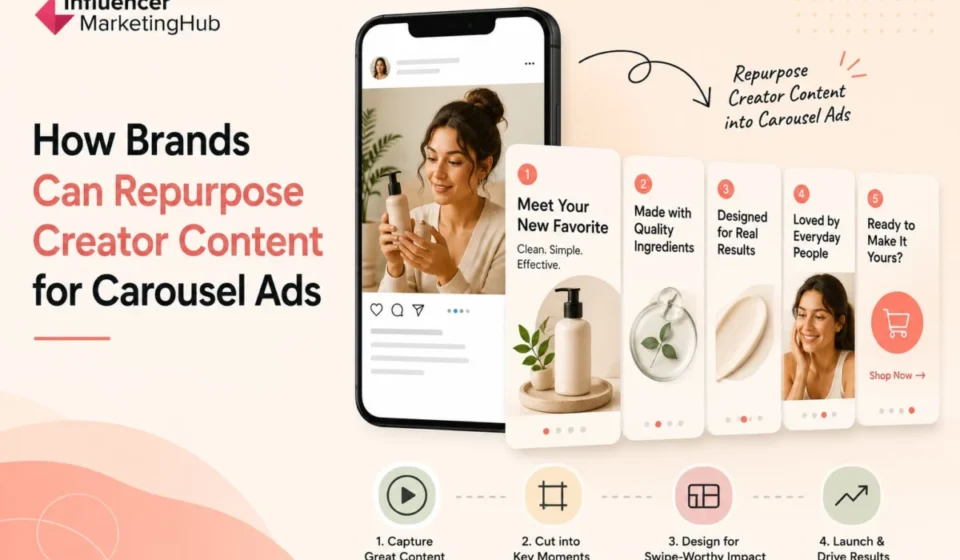

The landscape of digital advertising has undergone a fundamental transformation as brands shift away from high-gloss, studio-produced creative in favor of authentic, creator-led content. This transition is most visible in the evolution of carousel ads—a multi-frame format that allows for sequential storytelling and product demonstration. By repurposing content originally generated by influencers and content creators, brands are finding higher engagement rates, lower costs per acquisition, and a more resonant connection with a fragmented consumer base. As of late 2026, the integration of creator assets into paid social carousels has become a cornerstone of performance marketing, bridging the gap between organic discovery and direct-response conversion.
The Strategic Shift Toward Creator-Led Advertising
For decades, the standard for brand advertising was the "polished" aesthetic. However, the rise of short-form video and social-first photography has inverted this hierarchy. Data from leading marketing analytics firms suggests that consumer trust in traditional advertising has declined by nearly 25% over the last five years, while trust in "people like me" or recognizable digital personalities has remained steady or increased.
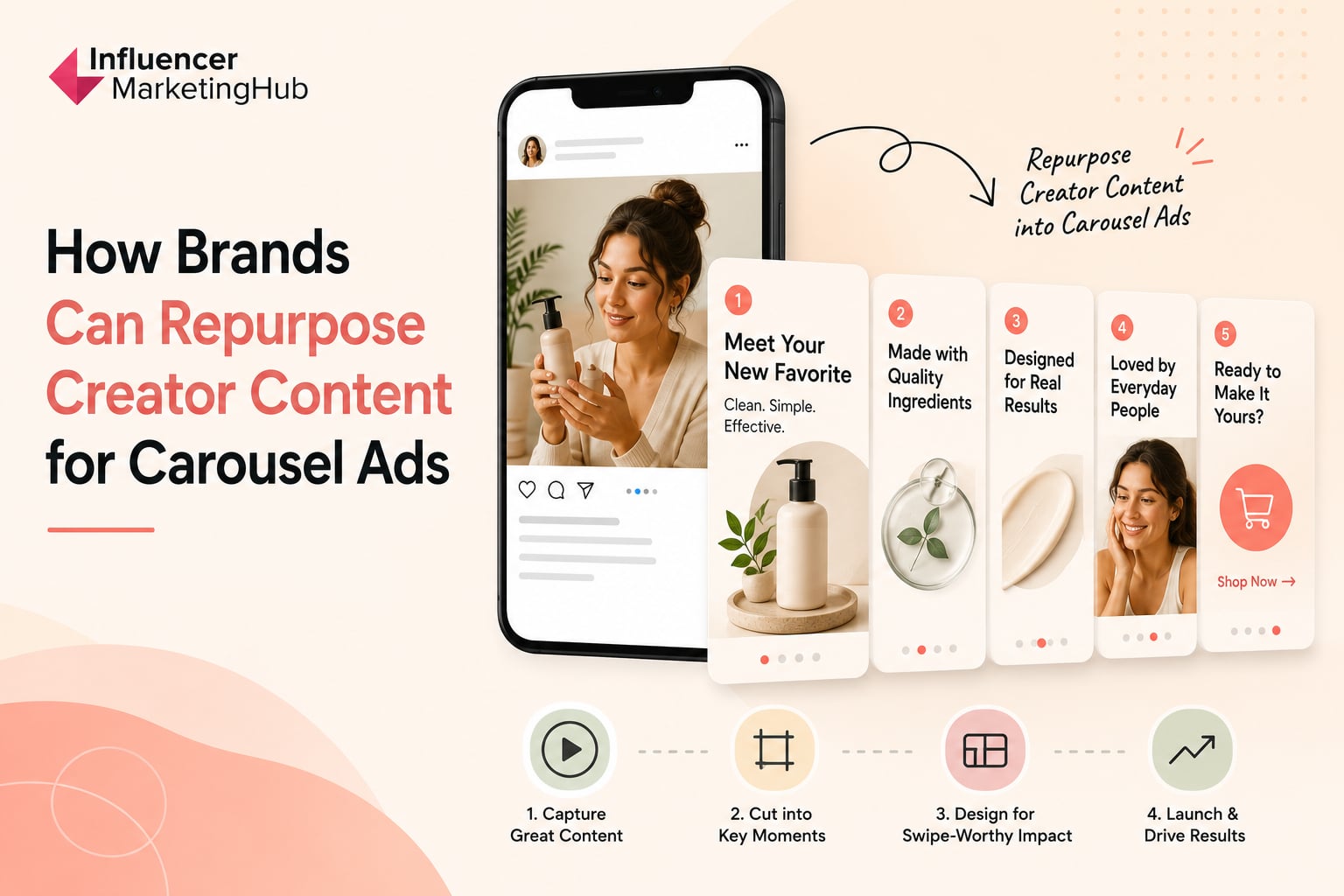
Carousel ads provide a unique opportunity to leverage this trust. Unlike a single image or a solitary video, a carousel allows a brand to curate a narrative arc using a creator’s voice. This might involve a slide dedicated to a product unboxing, followed by a slide showing the product in use, and concluding with a slide highlighting specific benefits or a call to action. The hybrid nature of these ads—combining the creator’s aesthetic with the brand’s strategic targeting—creates a "best of both worlds" scenario for digital marketers.
Chronology of Content Repurposing Evolution
The journey toward the current state of creator-led carousel ads has moved through several distinct phases:
- 2018–2020: The Era of the One-Off Post. Brands primarily viewed creator partnerships as organic "shout-outs." Content lived and died on the creator’s profile with little to no life beyond the initial 24-hour window.
- 2021–2023: The Rise of Whitelisting and Partnership Ads. Platforms like Meta and TikTok introduced tools allowing brands to run ads directly through a creator’s handle. This era saw the first major experiments in "boosting" creator content to wider audiences.
- 2024–2025: The Modular Content Revolution. Marketers began requesting "raw files" from creators rather than just finished posts. This allowed internal brand teams to chop, edit, and reassemble creator footage into various formats, including carousels.
- 2026–Present: Integrated Performance Carousels. Today, repurposing is no longer an afterthought. Contracts are built around the specific intent to use creator assets in multi-slide ad units, with creative direction specifically tailored for the carousel format.
Supporting Data: Why Carousels and Creators Win
Recent industry benchmarks highlight the efficacy of this approach. According to a 2025 study on social media performance, carousel ads featuring user-generated content (UGC) or creator assets saw a 35% higher Click-Through Rate (CTR) compared to standard brand-produced carousels. Furthermore, the Cost Per Mille (CPM) for creator-led carousels often trends lower because social platform algorithms prioritize content that generates high dwell time—a metric where carousels naturally excel.
Additional data indicates:
- Retention Rates: Users are 2.5 times more likely to swipe through at least three slides of a creator carousel than they are to watch a 30-second brand video to completion.
- Conversion Lift: Brands utilizing creator content in their "Bottom of Funnel" carousel ads report a 14% increase in Return on Ad Spend (ROAS).
- Production Efficiency: Repurposing creator content reduces creative production costs by an average of 40% compared to traditional commercial shoots.
Technical Execution: Best Practices for Repurposing
Successfully repurposing content for carousels requires more than simply uploading five random photos. It requires a structural understanding of the "Hook-Story-Offer" framework.
The Hook (Slide 1)
The first slide must stop the scroll. Journalistic analysis of high-performing ads shows that a creator’s face or a high-energy "before" shot is significantly more effective than a brand logo or a product-only shot. This slide establishes the human connection immediately.
The Story (Slides 2-4)
The middle slides are where the creator’s expertise is showcased. This can include "how-to" segments, close-up textures of a product, or a list of "top three reasons why I use this." By using the creator’s own words in the captions, the brand maintains the authenticity of the original content.
The Offer (Final Slide)
The final slide transitions from the creator’s narrative to the brand’s objective. This usually involves a clear Call to Action (CTA), such as a discount code or a "Shop Now" button. The transition must feel seamless; if the tone shifts too abruptly from "creator-vibe" to "corporate-vibe," the user is likely to drop off.
Official Responses and Industry Sentiment
The shift has prompted responses from both major platforms and legal experts regarding usage rights. A spokesperson for a leading social media management platform recently noted, "The demand for ‘perpetual usage rights’ in creator contracts has skyrocketed. Brands are no longer looking for a fleeting moment of influence; they are looking for a library of assets they can deploy across their paid media ecosystem for months at a time."
Creators, too, are adjusting their business models. While some initially resisted their content being used in ads, many now view it as a way to increase their own reach, provided they are compensated fairly for the licensing. The "Creator-to-Consumer" (C2C) model is becoming the dominant paradigm, where the creator acts as the creative director, production house, and talent all in one.
Broader Implications for the Marketing Industry
The trend of repurposing creator content for carousels has implications that reach far beyond social media departments. It is fundamentally altering the role of the traditional creative agency. Agencies are now being tasked with "creative strategy and assembly" rather than "production."
Moreover, this shift highlights the democratization of influence. As carousels allow for more niche, detailed storytelling, brands are finding that "micro-creators" with highly specific audiences often provide better content for carousels than "mega-celebrities." A micro-creator’s detailed breakdown of a skincare routine, for example, translates perfectly into a 7-slide informative carousel, whereas a celebrity’s simple endorsement lacks the depth needed for the format.
Ethical and Legal Considerations
As brands become more aggressive in repurposing content, legal frameworks are tightening. The Federal Trade Commission (FTC) and similar international bodies have increased scrutiny on "dark posting" and partnership ads. It must be clear to the consumer that the content is a paid advertisement, even if it looks like an organic post from a creator.
Furthermore, the issue of "Usage Rights" remains a point of contention. Standard influencer contracts in 2026 now frequently include specific clauses for "Paid Media Usage," "Whitelisting Rights," and "Derivative Work Rights." Brands that fail to secure these rights before repurposing content for carousels face significant legal risks and potential damage to their reputations within the creator community.
Analysis of Future Trends
Looking toward 2027, the integration of Artificial Intelligence (AI) with creator content is expected to be the next frontier. Brands are already beginning to use AI to analyze which specific frames of a creator’s video will perform best as static slides in a carousel. We are also seeing the emergence of "Dynamic Carousels," where the order of the slides changes based on the individual user’s past behavior, using creator assets as the building blocks.
In conclusion, repurposing creator content for carousel ads is not merely a tactical trend but a strategic evolution in digital communication. It acknowledges the consumer’s desire for authenticity while satisfying the brand’s need for measurable performance. By treating creators as essential partners in the creative supply chain, brands are able to build ad campaigns that feel less like interruptions and more like valuable, engaging content. This synergy between human-centric storytelling and data-driven ad formats represents the current pinnacle of social media marketing efficiency.