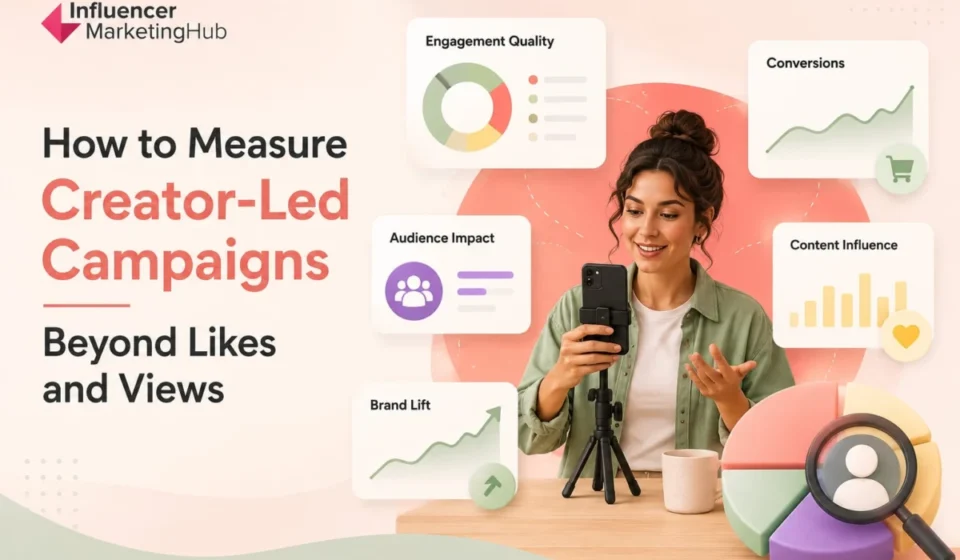

The global influencer marketing industry has transitioned from a nascent experimental sector into a sophisticated $24 billion ecosystem, necessitating a fundamental shift in how brands evaluate success. As of 2026, the reliance on "vanity metrics"—specifically likes, views, and follower counts—has been largely superseded by a multi-dimensional approach to measurement that prioritizes long-term brand equity, conversion accuracy, and granular consumer sentiment. This evolution reflects a broader maturation of the creator economy, where Chief Marketing Officers (CMOs) now demand the same level of accountability and data-driven rigor from creator partnerships as they do from traditional programmatic advertising and search engine marketing.
The Evolution of Measurement: From Visibility to Value
Historically, the measurement of influencer campaigns was limited by the technical constraints of social media platforms and a lack of standardized reporting. Between 2015 and 2020, the primary indicators of success were reach and engagement rates. However, the rise of "bot" accounts and engagement pods significantly diluted the reliability of these figures. By 2023, the industry began a rapid pivot toward performance-based tracking, accelerated by the introduction of more robust API integrations and third-party attribution tools.
In the current landscape of 2026, measurement is no longer viewed as a post-campaign post-mortem but as a continuous integration of data points throughout the campaign lifecycle. This shift is driven by the realization that high engagement does not always correlate with high intent or brand loyalty. Brands are now looking at the "Full-Funnel Impact," analyzing how a single creator’s content influences every stage of the customer journey, from initial discovery to repeat purchase.
Key Performance Indicators for the Modern Era
To move beyond the surface level, sophisticated marketing teams have adopted a suite of advanced metrics that provide a more accurate reflection of Return on Investment (ROI).
1. Attribution Modeling and Conversion Tracking
The use of unique promo codes and affiliate links remains a staple, but the industry has moved toward sophisticated multi-touch attribution (MTA). This allows brands to see the role a creator played in a purchase even if the consumer did not click a direct link. By utilizing first-party data and "clean rooms," brands can track a user’s path from seeing a creator’s video to eventually purchasing via a desktop browser or in-store. Data suggests that creator-led content often serves as a powerful "assist" metric, increasing the effectiveness of retargeting ads by up to 30%.

2. Brand Lift and Sentiment Analysis
Quantitative data is now being paired with qualitative analysis. Brand lift studies—previously reserved for high-budget television or billboard campaigns—are now frequently applied to creator partnerships. These studies measure shifts in brand awareness, ad recall, and, most importantly, purchase intent. Furthermore, Natural Language Processing (NLP) tools are used to analyze the comments section of creator posts. Instead of simply counting comments, AI-driven sentiment analysis categorizes the discourse to determine if the audience is discussing the product’s features, the brand’s values, or merely the creator’s appearance.
3. Share of Voice (SOV) and Earned Media Value (EMV)
Brands are increasingly measuring their "Share of Voice" within specific niches compared to their competitors. If a creator campaign results in a 15% increase in organic mentions of a brand within the "sustainable fashion" community, that is viewed as a high-value outcome. Similarly, Earned Media Value (EMV) provides a benchmark by calculating what the equivalent reach and engagement would have cost if purchased through traditional paid social ads.
Chronology of Industry Standardization
The path to the current measurement standards has been marked by several key industry milestones:
- 2021-2022: The widespread adoption of "Creator Licensing" or "Whitelisting," where brands put paid spend behind creator content. This allowed for the tracking of traditional advertising metrics like Cost Per Acquisition (CPA) and Return on Ad Spend (ROAS) directly on creator posts.
- 2023: Major platforms like Instagram and TikTok enhanced their "Creator Marketplace" tools, providing brands with deeper insights into audience demographics and real-time performance data.
- 2024: The "Privacy-First" shift. With the deprecation of third-party cookies, brands began relying more heavily on creator-led "zero-party data" collection, such as polls and lead-generation forms within social apps.
- 2025: The integration of AI-powered predictive analytics. Brands began using historical data to predict the potential ROI of a creator before a contract was even signed.
Industry Perspectives and Stakeholder Reactions
The move toward deeper measurement has met with varying reactions across the industry. Agency leads argue that while data is essential, the "magic" of creator marketing lies in authenticity, which cannot always be quantified.
"We have reached a point where we can tell you exactly how many cents every view is worth in terms of downstream revenue," says Sarah Jenkins, Head of Strategy at a leading digital talent agency. "However, the risk is that we optimize for the spreadsheet and lose the soul of the content. The best campaigns in 2026 are those that balance hard conversion data with long-term brand affinity."
Conversely, brand-side executives have welcomed the change. "For years, influencer marketing was the ‘black box’ of our budget," notes Marcus Thorne, a CMO for a global consumer electronics firm. "Now, we treat creators as a high-performance media channel. If a campaign doesn’t show a lift in search volume or a decrease in customer acquisition cost (CAC), we re-evaluate the partnership. The era of ‘guessing’ is over."

The Economic Impact of Advanced Measurement
The financial implications of these measurement shifts are profound. According to recent industry reports, brands that utilize advanced attribution modeling for their creator campaigns report a 25% higher efficiency in their total marketing spend. By identifying which creators drive actual business outcomes versus those who merely generate "noise," companies are able to reallocate budgets toward high-performing partnerships.
Furthermore, the rise of "Customer Lifetime Value" (CLV) as a metric in creator marketing has changed how contracts are structured. Brands are moving away from one-off "pay-per-post" models in favor of long-term ambassadorships. The data shows that a creator’s impact compounds over time; a third or fourth post from the same creator often yields a 40% higher conversion rate than the first, as trust is established with the audience.
Broader Implications and the Future of the Creator Economy
As measurement techniques continue to refine, the divide between "influencers" and "creators" is becoming clearer. Influencers who rely solely on aesthetic appeal and high follower counts are finding it harder to secure premium contracts as brands prioritize "conversion-capable" creators who possess deep subject matter expertise.
This data-driven environment is also fueling the growth of "Social Commerce." With platforms like TikTok Shop and Instagram Shopping becoming primary storefronts, the distance between seeing a piece of content and completing a transaction has shrunk to seconds. In this environment, measurement is instantaneous. The "view-through" rate is becoming less relevant than the "click-to-cart" rate.
Looking ahead, the next frontier in measurement involves the integration of Augmented Reality (AR) and Virtual Reality (VR). As creators begin to produce content for immersive environments, brands will need to measure "dwell time" and "spatial interaction" within virtual spaces.
Conclusion
The transition beyond likes and views represents the professionalization of the creator economy. By embracing a holistic measurement framework that includes attribution modeling, sentiment analysis, and brand lift studies, organizations can finally integrate creator-led initiatives into their broader business strategies with confidence. While the tools and technologies will continue to evolve, the core objective remains constant: transforming social influence into measurable business growth. In the competitive landscape of 2026, the brands that master these metrics are the ones that will define the next decade of digital commerce.