Leaked specs of Qualcomm’s upcoming flagship chips reveal that the Pro variant may get a better GPU and support for newer memory.

Qualcomm’s highly anticipated Snapdragon 8 Elite Gen 6 mobile platform is shaping up to be more diversified than initially anticipated, with recent leaks suggesting a distinct segmentation within its flagship offerings. The company is reportedly poised to launch not one, but two variants: a standard Snapdragon 8 Elite Gen 6 and a more powerful "Pro" version. This strategic dual-chip approach, if confirmed, aims to provide smartphone manufacturers with greater flexibility in targeting various price segments and potentially widening the performance chasm between mainstream flagships and the ultra-premium tier.
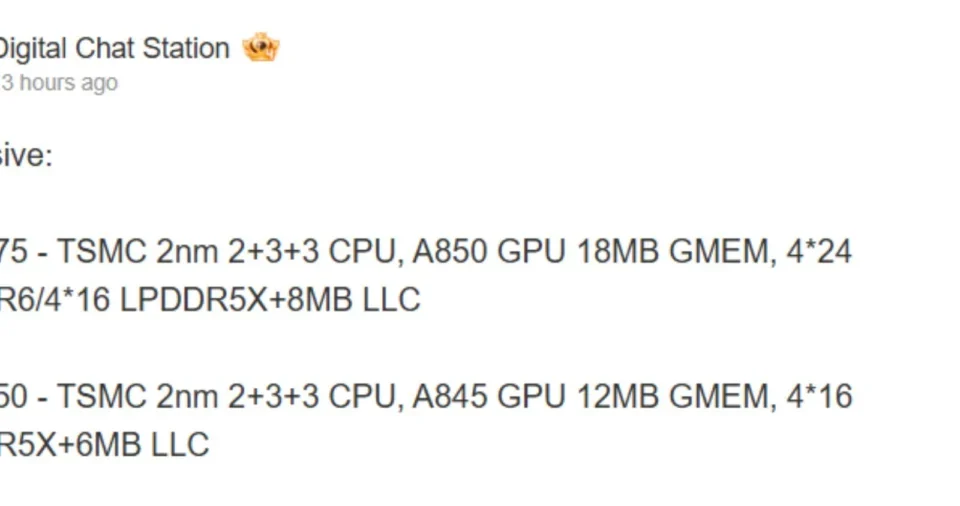
The revelations stem from insights shared by prominent leaker Digital Chat Station, who has a consistent track record of providing accurate pre-release information on mobile hardware. These leaks build upon earlier reports indicating Qualcomm’s move towards a dual-chip strategy for its next-generation high-end silicon. Both the standard and Pro variants of the Snapdragon 8 Elite Gen 6 are expected to be manufactured using TSMC’s cutting-edge 2nm process technology. This advanced manufacturing node is crucial for delivering significant improvements in both performance and power efficiency, a cornerstone of modern flagship smartphone chipsets.
Architecturally, both chips are anticipated to share a common foundation, employing a 2+3+3 CPU configuration. This arrangement typically involves a powerful prime core for intensive tasks, a cluster of performance cores for sustained demanding operations, and a set of efficiency cores for everyday use, optimizing battery life. However, the divergence in performance is expected to be most pronounced in the graphical processing unit (GPU) and memory subsystems, according to the latest disclosures.

Differentiating the Snapdragon 8 Elite Gen 6 Pro
The "Pro" variant, identified by the internal codename SM8975, is slated to feature a more potent Adreno 850 GPU. This GPU is reportedly complemented by 18MB of GMEM (Graphics Memory), a dedicated on-chip memory pool that significantly accelerates graphics rendering and reduces latency. In contrast, the standard Snapdragon 8 Elite Gen 6, internally designated SM8950, is expected to be equipped with an Adreno 845 GPU. This GPU will likely be paired with a smaller 12MB GMEM.
This disparity in GPU hardware and dedicated memory could translate into a noticeable performance advantage for the Pro model, particularly in graphics-intensive applications such as high-fidelity mobile gaming, complex video editing, and demanding augmented reality experiences. For consumers, this could mean smoother frame rates, faster loading times, and more immersive visual experiences on devices powered by the Pro chip.
Beyond graphical prowess, the leaked specifications also point to differences in memory support. The Snapdragon 8 Elite Gen 6 Pro is rumored to offer support for both the latest LPDDR6 RAM standard and the established LPDDR5X standard. LPDDR6, when it becomes widely adopted, promises even higher bandwidth and improved power efficiency compared to its predecessors, further boosting overall system performance and enabling more demanding multitasking capabilities. The standard Snapdragon 8 Elite Gen 6, on the other hand, is expected to be limited to LPDDR5X RAM. While LPDDR5X is a very capable memory technology, the inclusion of LPDDR6 support in the Pro variant signals a clear tiering in memory capabilities, directly impacting how quickly data can be accessed and processed by the CPU and GPU.

Strategic Segmentation and Market Implications
The potential for a segmented flagship chip lineup from Qualcomm carries significant implications for the smartphone market. This strategy allows Qualcomm to cater to a broader spectrum of manufacturers and their product portfolios. For instance, brands that typically focus on value propositions might opt for the standard Snapdragon 8 Elite Gen 6, ensuring competitive pricing while still offering flagship-level performance. Conversely, those aiming for the absolute pinnacle of mobile technology and willing to command premium prices would likely gravitate towards devices equipped with the Pro variant.
This differentiation could lead to a more pronounced performance gap between standard flagship smartphones and their "Ultra" or "Pro" counterparts. While historically there have been differences, this explicit hardware segmentation at the chip level could amplify those distinctions, making the performance edge of top-tier devices even more apparent. This might, in turn, drive up the cost of these ultra-premium smartphones, as manufacturers would be incorporating more advanced and likely more expensive silicon.
The timeline for the official unveiling of the Snapdragon 8 Elite Gen 6 series is not yet confirmed, but based on Qualcomm’s typical release cycles, it is reasonable to expect an announcement in late 2024 or early 2025, with devices featuring these chips hitting the market shortly thereafter. The industry has been keenly observing Qualcomm’s next steps, especially following the success of previous Snapdragon generations that have powered a vast majority of high-end Android devices.

Background and Context
Qualcomm has long held a dominant position in the premium smartphone processor market. Its Snapdragon line has been instrumental in pushing the boundaries of mobile performance, enabling features like advanced AI processing, sophisticated camera capabilities, and console-quality gaming on smartphones. The company’s relationship with TSMC for manufacturing has been a critical factor in achieving these performance milestones, with each new generation of TSMC’s process nodes enabling Qualcomm to introduce more powerful and efficient chips.
The move towards a more segmented product strategy is not entirely unprecedented in the semiconductor industry. Chip manufacturers often offer tiered product lines to cater to different market needs and price points. For example, in the PC processor market, Intel and AMD offer a range of CPUs with varying core counts, clock speeds, and integrated graphics capabilities, allowing consumers to choose based on their specific requirements and budget. Applying a similar approach to the mobile space, especially at the high end, suggests a mature market where distinct performance tiers are becoming increasingly important for differentiation.
Potential Industry Reactions

While official statements from Qualcomm are expected closer to the launch, the leaked specifications are likely to generate considerable discussion among industry analysts and competitors. Smartphone manufacturers will be evaluating how these new chips can best serve their product roadmaps, balancing performance aspirations with cost considerations. Competitors, such as MediaTek with its Dimensity series, will also be assessing how to counter Qualcomm’s advancements and maintain their market share.
The focus on LPDDR6 support is particularly noteworthy. The adoption of new RAM standards often signifies a leap in overall system responsiveness and the ability to handle increasingly data-intensive applications. If Qualcomm indeed includes this in its Pro variant, it would position those devices at the forefront of mobile memory technology, potentially setting a new benchmark for the industry.
Broader Impact and Future Outlook
The segmentation of the Snapdragon 8 Elite Gen 6 could lead to a more diverse and competitive landscape within the ultra-premium smartphone segment. Consumers seeking the absolute best performance may find themselves with clearer choices, albeit potentially at higher price points. This could also spur innovation among smartphone brands to leverage the distinct capabilities of each chip variant to create unique user experiences.

Furthermore, the emphasis on GPU performance and memory bandwidth in the Pro variant signals a continued trend towards mobile devices becoming powerful gaming and content creation platforms. As games become more graphically demanding and AR/VR applications mature, the need for robust mobile silicon capable of handling these workloads will only intensify. Qualcomm’s strategy appears to be aligned with this evolving demand, ensuring that its top-tier offerings are well-equipped to meet future challenges.
As the mobile industry continues its rapid evolution, the nuances of chipset architecture and differentiation will play an increasingly critical role in defining the capabilities and market positioning of next-generation smartphones. The rumored Snapdragon 8 Elite Gen 6 lineup, with its distinct Pro variant, is a clear indicator of Qualcomm’s intent to shape this future, offering both incremental upgrades and significant performance leaps for the devices that will define the coming years. The exact details and performance benchmarks will be eagerly awaited upon the official release, but the leaked specifications provide a compelling glimpse into the future of flagship mobile processing power.