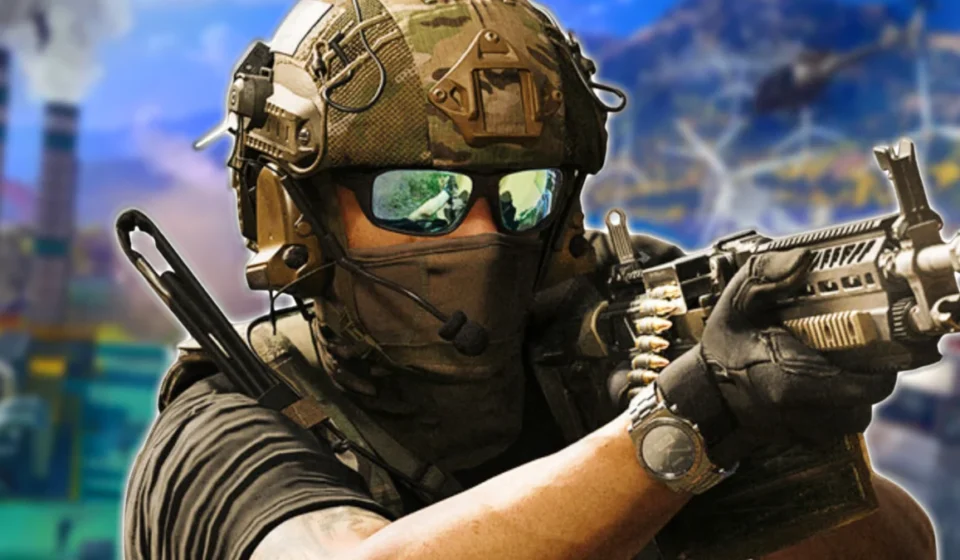
Modern Warfare 4: A First Look at the Nintendo Switch 2’s Ambitious Entry

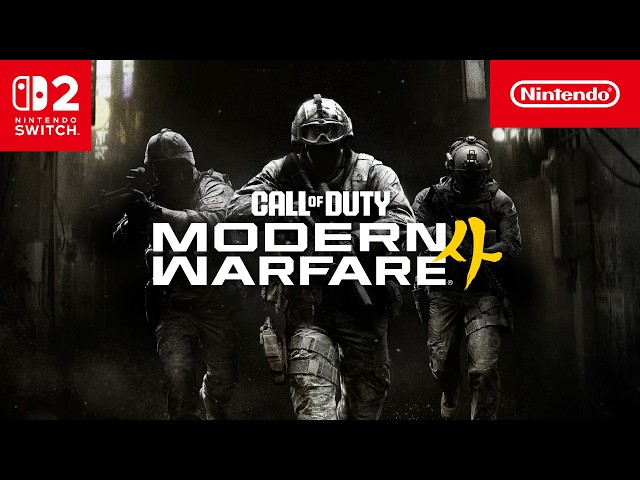
Gamescom 2026, typically a crucible of cutting-edge gaming technology and fervent fan anticipation, has become the stage for a pivotal moment in Nintendo’s hardware evolution. Amidst the bustling halls and palpable excitement, a particular reveal has garnered significant attention and a healthy dose of apprehension: the Nintendo Switch 2 iteration of the highly anticipated Modern Warfare 4. This hands-on preview, conducted both at the convention in Cologne and subsequently in a more controlled home environment, offers a comprehensive look at the game’s potential on Nintendo’s next-generation handheld, revealing a title brimming with promise yet facing tangible challenges.
The Gamescom Showcase: A Glimpse of the Future
The atmosphere at Gamescom is notoriously charged, a blend of industry professionals, eager consumers, and the sheer energy of a global gaming congregation. Within this vibrant setting, Nintendo’s booth presented a curated experience of Modern Warfare 4, specifically featuring content from the game’s initial beta weekend. Attendees were not afforded the luxury of choice regarding game modes or maps; instead, they were ushered into the familiar chaos of Team Deathmatch, a direct pathway into the core multiplayer experience. This randomized approach, while efficient for a large-scale event, also served to amplify existing concerns surrounding the Switch 2’s graphical capabilities.
Early impressions, particularly concerning the visual fidelity, have been a focal point of discussion. Reports indicate noticeable texture pop-in and a degree of concern regarding the detail of character models. The widely circulated memes depicting a less-than-ideal rendition of Captain Price serve as a stark visual reference for these anxieties, suggesting that this visual shortfall may extend across the entire operator roster. Such observations are not entirely unexpected, especially for early builds of ambitious cross-platform titles, and especially for a console generation leap. Developers often utilize older game builds for public demonstrations, and the Call of Duty franchise, with its complex multiplayer infrastructure, is no stranger to such practices during beta phases. The hope, therefore, is that the retail version of Modern Warfare 4 will showcase a significant graphical uplift, especially given the Switch 2’s proven capability to deliver impressive ports, such as the lauded Cyberpunk 2077 experience.

Performance and Gameplay: A Tale of Two Modes
Beyond the initial visual concerns, the performance of Modern Warfare 4 on the Switch 2 presents a more encouraging narrative. When played in docked mode, utilizing a Nintendo Switch 2 Pro Controller, the gameplay experience is described as exceptionally smooth and responsive, with no discernible compromises when compared to its console counterparts. This suggests that the underlying architecture of the Switch 2 is more than capable of handling the demanding engine of a modern Call of Duty title.
However, a critical distinction emerges when examining the framerate targets across different game modes. While core multiplayer modes appear to be targeting a fluid 60 frames per second, the popular battle royale mode, Warzone, and the single-player campaign seem to operate at a more conservative 30 frames per second. This disparity, observed after further testing at home following the Gamescom event, could present a significant hurdle for players accustomed to the higher refresh rates typically associated with modern competitive shooters. The decision to potentially limit Warzone and campaign experiences to 30fps, if it persists in the final release, may lead to player dissatisfaction, particularly in fast-paced combat scenarios.
Despite this potential limitation, the gameplay itself, particularly in modes like Zodiac Resurgence within Warzone, is reported to be largely stable. While occasional instances of less-than-perfect particle effects and weather simulations were noted, the core combat mechanics and player movement remain robust. The very presence of a Call of Duty battle royale on a Nintendo handheld is, in itself, a significant technical achievement, potentially fulfilling a long-standing demand for a definitive first-person shooter experience within the Switch 2’s library.
Controls and Customization: Refining the Experience
Player input and control schemes are paramount in a game like Modern Warfare 4. Initial impressions suggest that while the docked experience with a Pro Controller is exceptional, fine-tuning for the Joy-Cons may be necessary. Players have reported needing to make constant adjustments to sensitivity to achieve an optimal feel, a common challenge when adapting a genre-defining control scheme to a more versatile, yet potentially less precise, input method. This leads to the reasonable expectation that many players will gravitate towards docked gameplay for the most immersive experience.

The game’s "Create a Class" system appears to retain the familiar and accessible format seen in recent Call of Duty entries. Players can select their primary weapon and equip up to five attachments, a system that has proven effective in balancing customization with ease of use. However, Modern Warfare 4 introduces a novel layer of customization with "Apex Attachments." These unique additions do not occupy traditional attachment slots. Instead, they offer the potential to fundamentally alter a weapon’s performance and tactical role. Examples cited include the possibility of adding alternative fire modes, effectively transforming a weapon’s capabilities beyond its intended design, or even equipping unconventional offensive tools like throwing knives as a primary function.
This Apex Attachment system, while conceptually exciting and offering a fresh avenue for player expression and strategic depth, also raises potential concerns. There is an acknowledged risk that this system could become a vector for "stupid additions" and unfitting crossovers in future updates, a recurring critique of the Call of Duty franchise. The developers’ commitment to maintaining the series’ established tone and avoiding gratuitous cosmetic integrations will be crucial in ensuring the long-term integrity of this feature. The potential impact of Apex Attachments on the meta of modes like Modern Warfare 4‘s DMZ, currently not available for preview, remains an open question, and a significant one given the genre’s reliance on balanced progression.
Gameplay Mechanics: A Familiar Yet Evolving Formula
For long-time fans of the Call of Duty franchise, Modern Warfare 4 represents a potential return to form. The author, drawing a parallel to the series’ formative impact in 2007 with Call of Duty 4: Modern Warfare, expresses a renewed sense of investment. A key divergence noted is the absence of the "Omnimovement" system, a fluid, Max Payne-esque mechanic previously championed by Treyarch. Infinity Ward’s decision to move away from this system, while potentially divisive, appears to be an effort to strike a balance between the series’ characteristic arcade pacing and a more tactical approach to positioning. Lingering elements of agile movement, such as sliding into prone or diving for cover, remain, but the overall traversal of maps is described as a "wicked rush," suggesting a satisfying and dynamic player experience.
The core gunplay is lauded as "punchy," a hallmark of the Modern Warfare sub-series. However, the rapid time-to-kill (TTK) inherent in Modern Warfare 4 is a point of ongoing evaluation. The beta phase has already seen adjustments to weapon balancing, with certain submachine guns reportedly overperforming at range, and series staples like the M4 exhibiting minimal recoil with satisfying tactile feedback through the Pro Controller. The iterative nature of weapon balancing in Call of Duty is well-established, and the beta provides a critical testing ground for these adjustments.
New Modes and the Broader Implications for Nintendo
Among the new multiplayer offerings, "Kill Block" has emerged as a standout. This mode ingeniously scales the Gunfight concept to a 10v10 format across multiple rounds. The innovation lies not only in the increased player count but also in the dynamic nature of the maps. Rather than simply cycling through pre-designed arenas, Kill Block dynamically mixes and matches sections from various Call of Duty historical maps, creating unique and unpredictable combat environments. This approach injects a significant level of freshness into each firefight and is considered one of the most compelling additions to the franchise’s multiplayer playlist in recent years.
The potential for Modern Warfare 4 to succeed on the Nintendo Switch 2 carries broader implications for the platform’s standing in the competitive shooter market. The platform has historically been perceived as lacking a truly definitive AAA first-person shooter experience. If Modern Warfare 4, particularly its Warzone and campaign components, can achieve technical excellence on the Switch 2, it could significantly broaden the appeal of Nintendo’s next-generation hardware to a wider audience of shooter enthusiasts. The success of the DMZ mode, if it proves to be a compelling extraction shooter experience comparable to genre leaders like Escape from Tarkov or ARC Raiders, could further solidify the Switch 2’s position as a versatile gaming platform.
A Promising, Yet Evolving, Debut
In conclusion, Modern Warfare 4‘s debut on the Nintendo Switch 2, as previewed at Gamescom and through subsequent beta testing, presents a compelling, albeit incomplete, picture. The game demonstrates significant technical ambition, particularly in its core multiplayer performance and the introduction of innovative features like Apex Attachments and the dynamic Kill Block mode. However, challenges remain, most notably in the visual fidelity of the Switch 2 version and the potential framerate limitations in Warzone and campaign modes.
The reunion of Call of Duty with Nintendo hardware, after a period of absence, signals a potentially transformative era for first-person shooters on Nintendo’s portable devices. While there is undoubtedly work to be done to refine the graphical presentation and optimize certain performance aspects, the foundational gameplay experience appears robust. The coming months will be critical as developers iterate on the beta feedback, aiming to deliver a polished and compelling Modern Warfare 4 that not only satisfies long-time fans but also establishes a new benchmark for the genre on the Nintendo Switch 2. The future of Call of Duty on Nintendo’s platform hinges on the successful navigation of these remaining hurdles, with the promise of a truly next-generation shooter experience within reach.