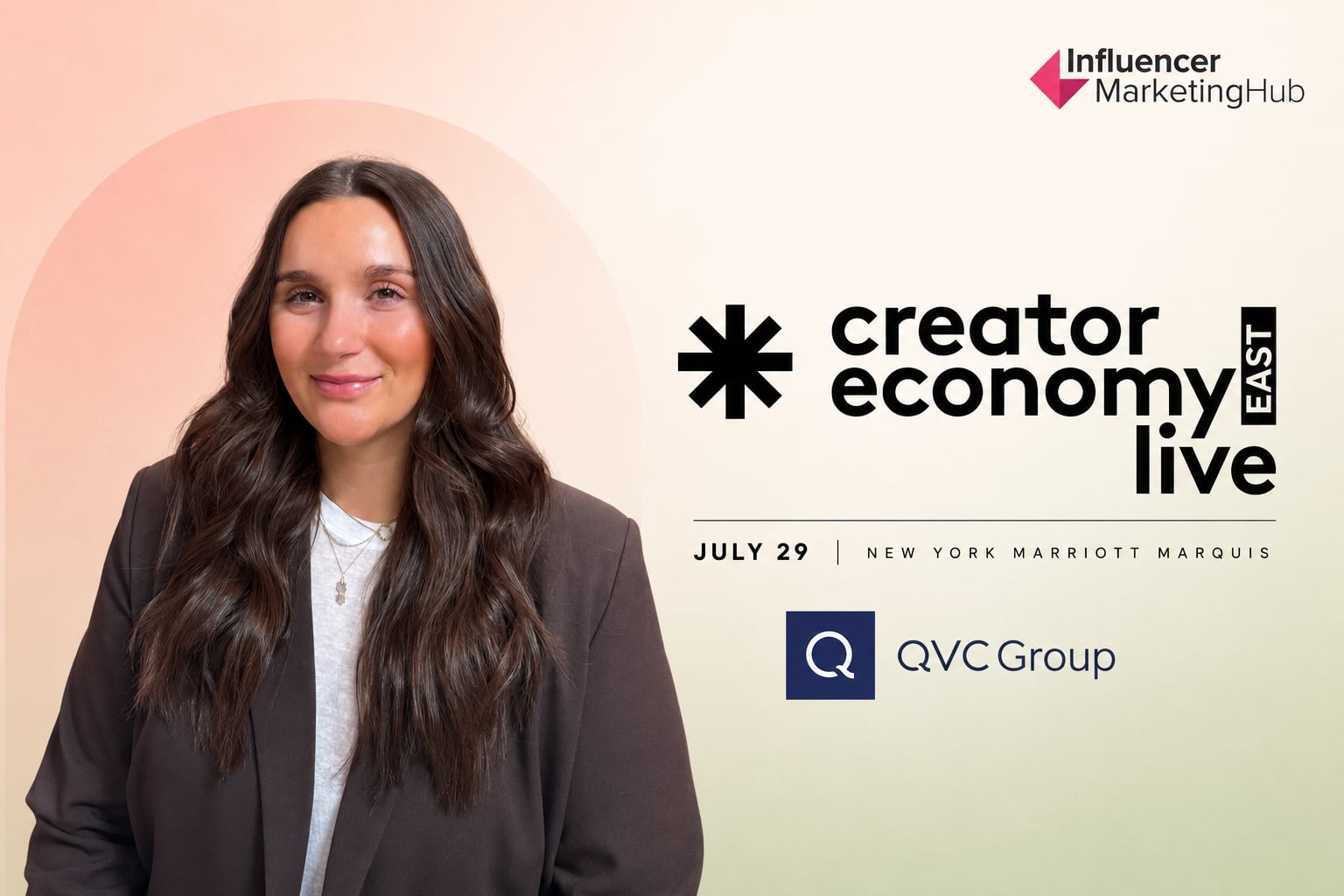
QVC Group Director of TikTok Abigail Bizzarro to Headline Creator Economy Live East Following Record-Breaking TikTok Shop Expansion

Abigail Bizzarro, the Director of TikTok for QVC Group, is scheduled to deliver a keynote session at the upcoming Creator Economy Live East conference in New York City on July 29. The appearance comes at a pivotal moment for QVC Group, which has recently undergone a massive digital transformation, culminating in its recognition as a "Seller of the Year" by TikTok Shop. Bizzarro’s session is expected to address one of the most pressing challenges in modern marketing: the ability to scale creator-led commerce programs without sacrificing the authentic, human connections that drive consumer trust and conversion. As QVC Group manages an ecosystem involving tens of thousands of creators and nearly 100,000 products, the insights shared at the New York Marriott Marquis will likely serve as a blueprint for legacy brands attempting to navigate the rapidly evolving social commerce landscape.
The Strategic Pivot: From Cable Television to Social Commerce
The history of QVC is inextricably linked to the birth of live shopping. For four decades, the company dominated the home shopping industry through cable television, utilizing a model built on long-form product demonstrations, charismatic hosts, and real-time audience engagement. However, the rise of short-form video and algorithmic discovery necessitated a fundamental shift in strategy. Under the leadership of executives like Abigail Bizzarro, QVC Group—which includes both QVC and HSN—began a transition to meet consumers where they are: on social media platforms.
The journey into the TikTok ecosystem began in earnest in August 2024. While many brands treated TikTok as a secondary marketing channel for brand awareness, QVC Group viewed it as a primary commerce engine. This required a radical departure from the "playbook" of traditional television. Instead of highly polished, studio-controlled broadcasts, the company had to adapt to the vertical, mobile-first, and often raw aesthetic of TikTok. By April 2025, QVC Group had solidified its position by launching the first continuous live social shopping experience in the United States. This initiative effectively merged QVC’s decades of live production expertise with TikTok’s creator-centric infrastructure, creating a 24/7 stream of shoppable content that bridged the gap between entertainment and retail.
Quantifying the Scale: A Data-Driven Expansion
The scale of QVC Group’s operation on TikTok is unprecedented for a traditional retailer. According to internal performance data and platform metrics, the company’s expansion has been characterized by high-volume output and massive creator recruitment. By early 2025, the following milestones highlighted the company’s dominance:
- Creator Integration: Over 74,000 individual TikTok creators have featured QVC products in their content, ranging from short-form shoppable videos to multi-hour livestreams.
- Inventory Breadth: QVC Group has successfully onboarded more than 90,000 distinct products onto the TikTok Shop platform, ensuring a diverse catalog that appeals to various niche communities.
- Programming Volume: The company currently produces over 200 hours of live programming every week, distributed across six dedicated TikTok Live channels.
- Customer Acquisition: During the 2025 calendar year, QVC and HSN acquired nearly one million new customers in the United States specifically through the TikTok Shop interface, signaling a successful reach into younger demographics.
To support this level of activity, QVC Group leverages five major distribution centers across the United States. This logistical backbone is what allowed the company to maintain high fulfillment standards, a critical component in TikTok Shop’s "Seller of the Year" evaluation. The award, presented at the 2026 TikTok Shop Summit in Los Angeles, recognized not just the volume of sales, but the innovation in programming and the seamless integration of creator partnerships into a corporate retail structure.
The Operational Challenge: Scaling the Human Element
At the heart of Bizzarro’s upcoming session is the "Human Question." In the early stages of a creator program, brand managers can often maintain personal relationships with their influencers. They can provide bespoke briefs, offer direct feedback, and build a sense of community. However, when a program scales to include 74,000 creators, the risk of "commoditizing" the relationship increases.
Industry analysts suggest that many brands fail at this stage by over-automating their processes. When communication becomes purely transactional and briefs become overly restrictive, the "creator magic"—the authenticity that makes a follower trust a recommendation—is often lost. Bizzarro’s work at QVC Group focuses on building systems that provide the necessary structure for payments, legal approvals, and performance tracking, while still leaving "creative oxygen" for the influencers.
In social commerce, the creator acts as more than just a spokesperson; they are the salesperson, the customer service representative, and the product demonstrator all at once. If a brand’s internal processes are too rigid, the creator cannot respond authentically to live comments or adapt their content to cultural trends. QVC Group’s success suggests they have found a middle ground: using their professional production heritage to provide high-quality "bones" for a broadcast, while allowing creators the freedom to drive the narrative.
Creator Economy Live East: Context and Industry Significance
Creator Economy Live East is one of the premier gatherings for marketing professionals, platform executives, and content creators. The New York City event is expected to host more than 500 brands and 50 speakers, focusing on the tactical and strategic shifts required to survive in a creator-led economy.
Bizzarro’s session is particularly timely as the industry watches the "TikTok Shop effect" ripple through the retail sector. While Amazon remains the dominant force in e-commerce, TikTok’s model of "discovery commerce"—where users buy things they weren’t actively looking for—represents a significant threat to traditional search-based shopping. QVC Group’s presence at the event underscores a broader trend: the convergence of legacy retail and social media.
The conference will likely delve into the technological requirements of this new era, including AI-driven creator matching, real-time attribution models, and the integration of social shop data into broader CRM systems. For attendees, the QVC case study provides a rare look at how a multi-billion dollar enterprise can move with the agility of a startup.
Broader Implications for the Retail Industry
The implications of QVC Group’s TikTok success extend far beyond a single award or conference session. It signals a shift in the power dynamics of retail marketing. For decades, brands controlled the message through expensive television commercials and print ads. Today, the message is decentralized.
- The Decline of the "Middle Man": Traditional advertising agencies are being bypassed as brands build internal "creator studios" and deal directly with talent or through platform-native tools.
- The Value of Live Interaction: QVC’s success proves that the "Home Shopping Network" model was not outdated; it was simply waiting for a more accessible platform. The interactivity of TikTok Live—where a creator can answer a question about a product’s size or texture in real-time—reduces the friction to purchase in a way that static product pages cannot.
- Trust as a Currency: In an era of deepfakes and AI-generated content, the "human touch" that Bizzarro emphasizes is becoming a premium commodity. Consumers are more likely to purchase from a person they have followed for years than from an anonymous corporate account.
Conclusion and Outlook
As Abigail Bizzarro prepares to take the stage on July 29, the narrative is clear: the creator economy is no longer a niche segment of the marketing budget; it is the core of the modern retail strategy. QVC Group’s journey from a 1980s cable pioneer to a 2020s social commerce leader demonstrates that longevity in retail requires constant reinvention.
The challenge for Bizzarro and her peers moving forward will be sustaining this momentum. As TikTok faces potential regulatory hurdles and as competition from platforms like YouTube (with YouTube Shopping) and Instagram (with Reels) intensifies, QVC Group must continue to refine its "human-at-scale" philosophy. For now, the "Seller of the Year" title serves as a testament to the fact that even the oldest players in the game can lead the charge into the future, provided they are willing to build a new playbook from scratch. Bizzarro’s insights at Creator Economy Live East will undoubtedly provide the industry with a much-needed look at the mechanics of this successful transition.