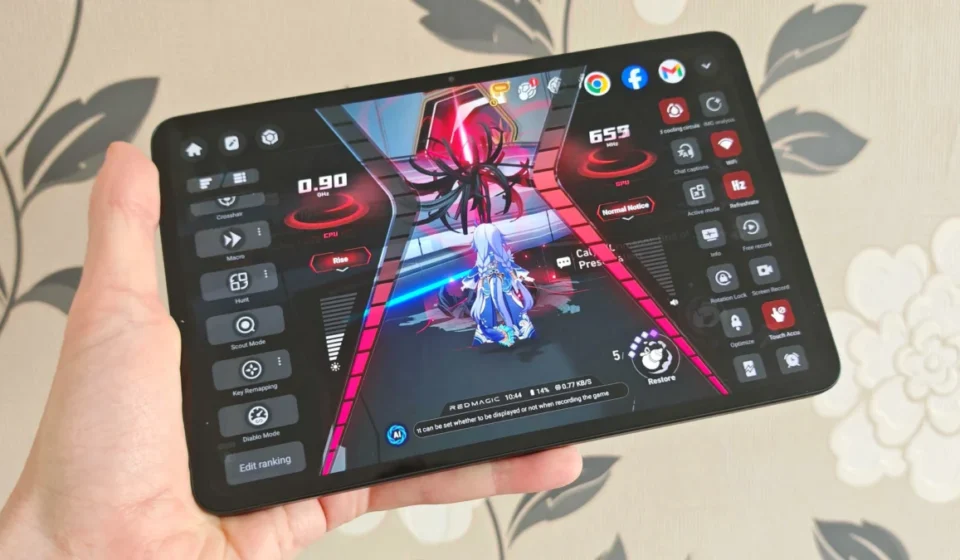
REDMAGIC Astra 2 Tablet Emerges as a Powerful Contender in the PC Gaming Handheld Market, Challenging the Asus ROG Ally X

The landscape of portable PC gaming, once dominated by dedicated handheld consoles, is undergoing a significant transformation. While the Asus ROG Ally X has carved out a substantial niche for itself as a compelling alternative to the market-leading Steam Deck OLED since its late 2023 release, new benchmarks suggest that the boundaries of what’s possible in mobile gaming are being pushed further than ever before. Recent testing has revealed that the REDMAGIC Astra 2, an Android gaming tablet, demonstrates remarkable capabilities in running demanding PC titles, potentially positioning it as a formidable competitor in the portable PC gaming arena.
Unveiling the Astra 2’s PC Gaming Prowess
The emerging details surrounding the REDMAGIC Astra 2’s performance in PC gaming scenarios stem from an in-depth analysis conducted by YouTuber Dame Tech. In a series of rigorous tests, the tablet was pitted against the Asus ROG Ally X, a device specifically engineered for PC gaming emulation. The results, particularly in graphically intensive titles, have generated considerable interest within the tech and gaming communities.
During the testing, the REDMAGIC Astra 2 was subjected to demanding gameplay on Grand Theft Auto V (GTA V) at very high settings. The tablet reportedly maintained a relatively stable frame rate of approximately 70 frames per second (fps), a performance level that closely matched, and in some metrics, even surpassed, the Asus ROG Ally X. This finding is particularly noteworthy given that the Astra 2 is an Android-based device, typically not optimized for the direct emulation of high-fidelity PC games.
Further challenging the established order, the REDMAGIC Astra 2 demonstrated superior efficiency when running Red Dead Redemption 2, another graphically demanding title from Rockstar Games. At high settings and a 720p resolution, the tablet not only matched the Asus ROG Ally X in performance but also outperformed it in terms of power draw. The Astra 2 consumed a mere 20 watts (W) of power, while the ROG Ally X required 40W to achieve comparable results. This significant difference in power efficiency suggests a more optimized hardware and software integration within the Astra 2 for certain gaming workloads.
The Enabling Technology: PC Game Emulation Software
The ability of the REDMAGIC Astra 2 to engage in PC gaming is attributed to its sophisticated PC game emulation software. This feature is a key component that has already positioned the Astra 2 as a leading option within the "best gaming tablets" category, according to various tech publications. The software is designed to bridge the gap between the Android ecosystem and the Windows-based environment of PC games, allowing for a seamless transition and playable experience.
However, this advanced capability is not without its limitations. Dame Tech’s analysis also highlighted a potential concern regarding thermal performance. During the intense PC gaming sessions, the REDMAGIC Astra 2 reportedly reached temperatures exceeding 100 degrees Celsius (°C). This suggests that while the tablet’s cooling technology is robust enough to handle the demanding thermal loads of Android gaming, it may be operating at its absolute limit when tasked with sustained, high-fidelity PC game emulation. This thermal aspect is a crucial consideration for extended gaming sessions and the long-term health of the device’s internal components.
A Publisher’s Perspective: Unsurprising Powerhouse
These findings are not entirely unexpected for those who have closely followed the development and release of the REDMAGIC Astra 2. In a recent comprehensive review of the tablet, it was noted that the device is a "seriously powerful tablet, capable of taking any of the top picks from our guide to the best mobile games in its stride, even at the highest possible settings." The review further elaborated on the versatility of the Astra 2, suggesting that by combining it with a wide-grip gaming controller, such as the Razer Kishi Ultra, the tablet can effectively double as a dedicated gaming handheld. This transformation allows users to leverage the tablet’s raw processing power for an immersive PC gaming experience, albeit with the added requirement of external peripherals.
Competitive Pricing Strategy
Beyond its technical capabilities, the REDMAGIC Astra 2 also presents a compelling value proposition in terms of its pricing. The tablet is slated to launch at a more accessible price point compared to the Asus ROG Ally X. The most affordable configuration of the REDMAGIC Astra 2 is expected to retail for $749, positioning it as a more budget-friendly entry into the high-performance portable gaming market. This aggressive pricing strategy could significantly influence consumer choices, especially for individuals seeking powerful gaming solutions without the premium cost associated with some dedicated PC handhelds.
The Snapdragon 8 Elite Gen 5: A Testament to Mobile Processor Advancements
The impressive performance of the REDMAGIC Astra 2 in PC gaming benchmarks is a direct reflection of the raw processing power offered by its Snapdragon 8 Elite Gen 5 CPU. This latest iteration of Qualcomm’s flagship mobile processor has consistently demonstrated its ability to compete with, and in some cases rival, the silicon found in dedicated handheld PC gaming devices. The gap in performance between mobile processors and those found in traditional PC gaming hardware has been narrowing for some time, and the Astra 2’s capabilities further underscore this trend.

This sustained advancement in mobile processor technology has significant implications for the future of portable gaming. It suggests that the lines between traditional mobile gaming and PC gaming are becoming increasingly blurred. As mobile processors become more powerful and efficient, the need for specialized hardware for portable PC gaming may diminish, with versatile tablets and smartphones becoming increasingly capable of delivering high-fidelity gaming experiences.
The success of the Snapdragon 8 Elite Gen 5 in these demanding scenarios also fuels anticipation for Qualcomm’s next generation of mobile chipsets. The rumored Snapdragon 8 Elite Gen 6 Pro is expected to push the boundaries even further, potentially offering unprecedented performance levels for mobile devices. This ongoing innovation in processor technology promises an exciting future for mobile and portable gaming, with even more immersive and graphically rich experiences on the horizon.
Broader Implications for the Gaming Ecosystem
The emergence of devices like the REDMAGIC Astra 2 as viable contenders for PC gaming on the go has several broader implications for the gaming ecosystem.
Democratization of High-Fidelity Gaming: By offering powerful gaming capabilities at more accessible price points, tablets like the Astra 2 can democratize access to high-fidelity gaming experiences. This allows a wider range of consumers to enjoy AAA titles without the need for expensive desktop PCs or dedicated handheld consoles.
Hardware Innovation and Competition: The increased competition from unexpected sources, such as Android tablets, will likely spur further innovation from established players in the handheld PC gaming market. Companies like Asus and Valve may be compelled to accelerate their development cycles and introduce more competitive features and pricing strategies to retain market share.
Software and Emulation Advancements: The success of PC game emulation on Android devices highlights the increasing sophistication of emulation software. This trend could lead to the development of even more robust and efficient emulation solutions, making a wider array of PC games accessible on various mobile platforms.
The Future of Portable Devices: The testing of the REDMAGIC Astra 2 suggests a future where a single device can serve multiple purposes, seamlessly transitioning between productivity, media consumption, and high-end gaming. This convergence of functionality could redefine consumer expectations for portable electronic devices.
Developer Opportunities: As mobile hardware becomes more powerful, it opens up new opportunities for game developers. They can potentially target a broader audience with more graphically demanding titles, pushing the creative and technical boundaries of mobile game development.
A Look Ahead
The REDMAGIC Astra 2’s foray into the PC gaming handheld space is a significant development, demonstrating the rapid evolution of mobile hardware and software. While challenges such as thermal management remain critical areas for consideration, the tablet’s impressive performance and competitive pricing position it as a serious contender. The ongoing advancements in mobile processors, exemplified by Qualcomm’s Snapdragon series, suggest that the future of portable gaming will be characterized by increasing power, versatility, and accessibility, potentially reshaping how and where consumers engage with their favorite games. The industry will be watching closely to see how this competition unfolds and what new innovations emerge as a result.