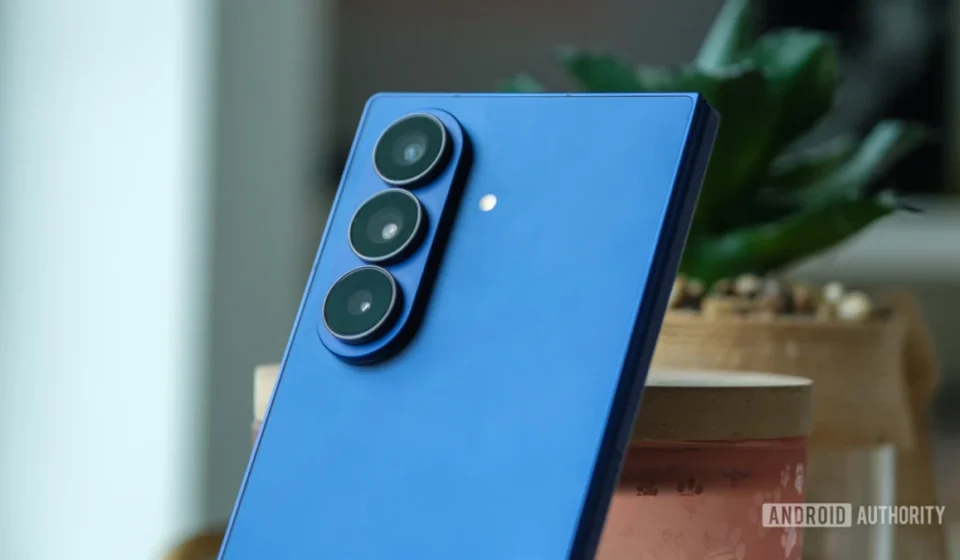
Samsung’s Galaxy Z Fold 8 and Z Flip 8 Storage Upgrade Policy Faces Uncertainty Amid Conflicting Reports

The highly anticipated launch of Samsung’s next generation of foldable smartphones, the Galaxy Z Fold 8 and Galaxy Z Flip 8 series, is currently overshadowed by conflicting reports regarding the company’s long-standing free storage upgrade promotion. This perennial incentive, a significant draw for consumers investing in Samsung’s premium flagship devices, appears to be undergoing a strategic re-evaluation, leaving prospective buyers and industry observers alike speculating on the final offering. Initially, reports suggested a complete cessation of the free upgrade, replaced by a discounted model. However, a subsequent report from a Korean outlet offers a more nuanced, and potentially more favorable, outlook for certain storage tiers.
For years, Samsung has cultivated customer loyalty and incentivized early adoption of its flagship Android phones by offering complimentary storage upgrades. This typically meant that purchasers of the base storage model, often 256GB, would automatically receive the next tier up, usually 512GB, at no additional cost. This practice has been a cornerstone of Samsung’s pre-order campaigns, particularly for its high-end S series and Z series devices, providing tangible value to consumers and often offsetting the premium price tag associated with these cutting-edge smartphones. The perceived value of receiving a higher-capacity device for the price of a lower one has proven to be a powerful marketing tool in a fiercely competitive market.
The Initial Rumblings: An End to Free Upgrades?
Earlier this week, the tech world was stirred by a report indicating a significant shift in Samsung’s promotional strategy. This initial intel suggested that for the upcoming Galaxy Z Fold 8 and Z Flip 8, the traditional free storage upgrade would be abolished. Instead, consumers would reportedly be offered a 50% discount on storage upgrades. This potential change immediately sparked concern among consumers and analysts. The "free" aspect of the upgrade holds a distinct psychological appeal that a "50% discount" might not fully replicate, even if the net monetary saving were similar in some scenarios. Such a move would mark a notable departure from a well-established promotional tactic and could be interpreted as a strategy to bolster profit margins or streamline inventory management.
Industry watchers began to analyze the potential ramifications of such a decision. Samsung’s flagship phones, especially the Z Fold series, command premium prices, with the previous Galaxy Z Fold 7 starting at nearly $2,000. Free storage upgrades have historically served to soften this blow, making the high entry cost feel more palatable by enhancing the overall value proposition. Eliminating this perk entirely, even with a discount, could lead to increased price sensitivity among consumers, potentially impacting pre-order volumes or shifting buyer behavior towards models with lower upfront costs, even if it means less storage.
A Counter-Narrative Emerges: Partial Free Upgrades Still Possible
Just as the industry was processing the implications of the initial report, a new perspective emerged from Korean news outlet News1. This publication reported that Samsung would, in fact, continue to offer free storage upgrades for its Galaxy Z Flip 8, Galaxy Z Fold 8, and the rumored Galaxy Z Fold 8 Ultra. Crucially, News1 specified that this complimentary upgrade would apply to users moving from the 256GB base model to the 512GB variant. This development offers a significant glimmer of hope for consumers who rely on or anticipate this particular promotional benefit.
However, the News1 report also introduced a new layer of complexity: for those seeking an even larger capacity, specifically upgrading from the 512GB model to the 1TB variant, the full cost would not be waived. Instead, these users would be required to pay 50% of the cost difference. The publication suggested that this tiered approach might be influenced by the widening cost disparity between higher storage capacities. This implies a strategic segmentation of the promotional offer, potentially designed to balance consumer appeal with internal cost management for Samsung.
Analyzing the Pricing Structure and Cost Implications
To understand the context of these potential changes, it’s helpful to review the pricing structure of previous models. For instance, the Galaxy Z Fold 7, launched last year, retailed for $1,999.99 for the 256GB model. The 512GB version was priced at $2,199.99, representing a $200 jump. The top-tier 1TB model, meanwhile, retailed for $2,499.99, indicating a $300 increase from the 512GB model.
If the News1 report holds true, a free upgrade from 256GB to 512GB would effectively save consumers $200. This is a substantial saving and aligns with the historical value proposition of Samsung’s promotions. However, the proposed 50% discount for the 512GB to 1TB upgrade would mean consumers still pay $150 (50% of $300) for that particular jump. This contrasts sharply with previous generations where, depending on the promotion, a 1TB upgrade might have been free or heavily discounted.
From Samsung’s perspective, the decision to offer a full free upgrade for the 256GB to 512GB tier while only providing a partial discount for the 512GB to 1TB tier makes economic sense. The cost of NAND flash memory, while generally decreasing over time, still presents a significant bill of materials component for high-capacity storage. The jump from 512GB to 1TB often involves more sophisticated memory modules or a larger number of chips, leading to a greater manufacturing cost differential. By applying a partial charge for the highest capacity, Samsung could mitigate some of the associated expenses while still offering a compelling incentive for the most common upgrade path.
The Evolving Landscape of Smartphone Storage Needs
The demand for higher storage capacities in smartphones has been on a relentless upward trajectory. Modern smartphone usage involves capturing increasingly high-resolution photos and videos, including 4K and even 8K footage, which consume vast amounts of storage. Applications are also becoming more complex and larger in size, and users frequently download extensive media libraries, games, and work files directly to their devices. A 256GB base storage, while sufficient for many, can quickly become a bottleneck for power users or those who intend to keep their devices for several years.
A 512GB model, therefore, represents a sweet spot for a significant segment of the premium smartphone market, offering ample space for most users without immediately hitting storage limits. The 1TB option caters to an even more niche segment: professional content creators, hardcore mobile gamers, or users who truly demand the absolute maximum on-device storage. Samsung’s potential strategy of offering free upgrades to 512GB recognizes this broad demand, while the partial discount for 1TB acknowledges the specialized nature and higher cost of that particular tier.
Competitive Dynamics in the Foldable Market
Samsung has largely pioneered and dominated the foldable smartphone market since the introduction of the original Galaxy Fold. However, the competitive landscape is rapidly evolving. Google has entered the fray with its Pixel Fold, and Chinese manufacturers like OnePlus, Honor, Huawei, and Xiaomi are increasingly offering compelling foldable alternatives, particularly in their home market. While these competitors may not always match Samsung’s global distribution or marketing muscle, they are often aggressive with pricing and bundled promotions.
Apple, though not yet in the foldable space, remains Samsung’s primary competitor in the premium smartphone segment. Apple’s strategy often involves gradual increases in base storage and charging significant premiums for higher tiers, rarely offering free upgrades. This contrast has historically allowed Samsung to differentiate itself through value-added promotions. Any perceived weakening of Samsung’s promotional offers could, therefore, be scrutinized by consumers comparing the overall value proposition against both traditional premium smartphones and emerging foldable rivals. If competitors continue to offer aggressive storage promotions or lower price points, Samsung might face increased pressure to justify its premium pricing, especially for the ultra-premium foldable segment.
Consumer Expectations and Market Reaction
Consumer expectations play a crucial role in the success of flagship smartphone launches. Years of consistent free storage upgrades have conditioned Samsung’s loyal customer base to anticipate this benefit. A sudden and complete withdrawal of the offer, as initially reported, could have led to disappointment and potentially impacted pre-order figures. The News1 report, suggesting a continuation of the 256GB to 512GB free upgrade, is likely to be met with relief by many, as it aligns more closely with established consumer expectations for a premium device launch.
However, the partial charge for the 1TB upgrade, while understandable from a cost perspective, might still be a point of contention for a smaller segment of users who have come to expect comprehensive promotions. The psychology of "free" is incredibly powerful. Even if a 50% discount offers substantial savings, it inherently carries a different perception than a completely waived cost. Samsung will need to carefully craft its messaging to highlight the continued value proposition, especially for the free 512GB upgrade, while managing expectations for the highest storage tier.
Regional Discrepancies and Global Strategy
It is critical to note that both reports originated from Korea. While Samsung’s home market often serves as an indicator for global strategies, the company frequently tailors its promotional offers and pricing structures to specific regions. Markets in Europe, India, and the United States often see variations in launch bundles, trade-in values, and promotional incentives based on local market conditions, competitive pressures, and consumer purchasing power.
Therefore, even if the News1 report accurately reflects Samsung’s strategy in Korea, there is no guarantee that the exact same policy will be implemented worldwide. Samsung could opt for different promotional structures in different regions – for example, a straight 50% discount across all tiers in some markets, or enhanced trade-in values in others, to compensate for potential changes in storage upgrade policies. This regional variability underscores the need for consumers outside of Korea to await official announcements from Samsung in their respective markets before making purchasing decisions based solely on these speculative reports.
The Broader Economic Context
Samsung’s potential re-evaluation of its storage upgrade policy also occurs within a broader global economic context. High inflation rates, fluctuating supply chain costs, and a general slowdown in consumer spending for discretionary items, particularly high-end electronics, could be influencing Samsung’s strategic decisions. While the foldable market continues to show growth, it remains a premium niche. Companies are under increasing pressure to maintain profitability while still delivering innovative products. Adjusting promotional strategies could be one way Samsung seeks to optimize its financial performance amidst these economic headwinds.
Furthermore, the cost of manufacturing and integrating advanced components, including the foldable display technology itself, continues to be substantial. By slightly tweaking its promotional offers, Samsung might be attempting to recoup some of these R&D and production costs, especially as it pushes the boundaries with innovations like potentially larger displays or more robust hinge mechanisms in the Z Fold 8 series.
Conclusion and Outlook
The current state of information surrounding Samsung’s Galaxy Z Fold 8 and Z Flip 8 storage upgrade policy is one of intriguing uncertainty. The initial report of a complete cessation of free upgrades was tempered by a subsequent report suggesting a more nuanced approach, where a free upgrade from 256GB to 512GB might still be on the table, with a partial discount for the 1TB tier. This latter scenario would represent a significant compromise, balancing Samsung’s desire to manage costs with its established practice of offering compelling pre-order incentives.
As the official launch event for the Galaxy Z Fold 8 and Z Flip 8 series approaches, all eyes will be on Samsung for a definitive announcement. Prospective buyers are advised to monitor official channels closely for region-specific details, as these promotions often play a pivotal role in the perceived value and ultimate purchasing decision for these ultra-premium foldable smartphones. The outcome of this storage upgrade saga will not only impact sales figures but also serve as an indicator of Samsung’s evolving strategy in the competitive and rapidly maturing foldable device market.