
A recent survey conducted by Android Authority has revealed a significant preference among smartphone users for utilizing their devices’ embedded sensors for practical, everyday tasks, with the digital tape measure emerging as the clear frontrunner. The findings underscore a growing trend where advanced mobile technology transcends its primary communication function, evolving into a versatile toolkit capable of replacing an array of traditional instruments. This shift reflects a user base increasingly aware of and eager to leverage the sophisticated sensor arrays packed into modern handsets, moving closer to the futuristic "tricorder" vision once confined to science fiction.
User Preferences: A Deep Dive into Sensor Utility
The comprehensive poll, which engaged thousands of participants, presented four distinct sensor-driven functionalities for smartphones: a digital tape measure, a metal detector, a spirit level, and a sound/light meter. The objective was to gauge which of these practical applications resonated most with the general user population for actual implementation. The results provided a compelling insight into consumer priorities and the perceived utility of these integrated features.
With an overwhelming 53% of the votes, accounting for nearly 3,000 respondents, the digital tape measure was decisively chosen as the most likely sensor-based tool users would incorporate into their routines. This clear mandate suggests a widespread, albeit often unmet, need for on-the-spot measurement capabilities. Following in second place, the smartphone as a metal detector captured 27% of the vote, indicating a notable interest in this more unconventional, perhaps even recreational, application. The remaining functionalities, the spirit level and the sound/light meter, shared the remaining percentage, highlighting their relatively more niche appeal compared to the top two. While the poll design necessitated a single choice, acknowledging an "all of the above" option might have further elucidated the situational value of each function.
The pronounced preference for the digital tape measure can be attributed to its broad applicability and the frequent, often spontaneous, need for measurements in daily life. From assessing whether a piece of furniture will fit into a new living space to quickly estimating dimensions for DIY projects or even checking the capacity of a vehicle’s trunk, the demand for convenient measurement tools is pervasive. The ability to pull out a smartphone, a device almost universally carried, and perform a quick measurement offers an unparalleled level of convenience that traditional tape measures, often misplaced or simply unavailable when needed, cannot match. This convenience factor likely propelled it to the top of the list, addressing a common pain point for many individuals.
The metal detector, while less frequently required than a tape measure, secured a strong second place, possibly due to a combination of practical utility and a sense of novelty or discovery. Users might envision employing it for practical tasks such as locating lost metallic items in dense grass or identifying studs within walls. However, the allure of finding "buried treasure," even if just loose change or forgotten trinkets, undoubtedly adds an element of fun and adventure, making it an engaging feature for casual experimentation. Nevertheless, it is crucial to temper expectations regarding its efficacy compared to dedicated, professional-grade metal detectors, which are designed for far greater sensitivity and depth of detection.
The spirit level and sound/light meter, while undoubtedly useful, garnered less attention in the poll. This outcome is likely due to their more specialized nature. Individuals who regularly require precise leveling for construction, carpentry, or art installation, or who need accurate sound or light measurements for professional audio engineering, photography, or environmental assessments, typically invest in purpose-built, calibrated equipment. For these users, the convenience offered by a smartphone app might not outweigh the perceived or actual accuracy limitations of integrated sensors compared to their professional tools. For casual users, the need for such precise measurements arises less frequently, reducing the perceived value of these smartphone functionalities in a head-to-head comparison against more common needs like measurement.
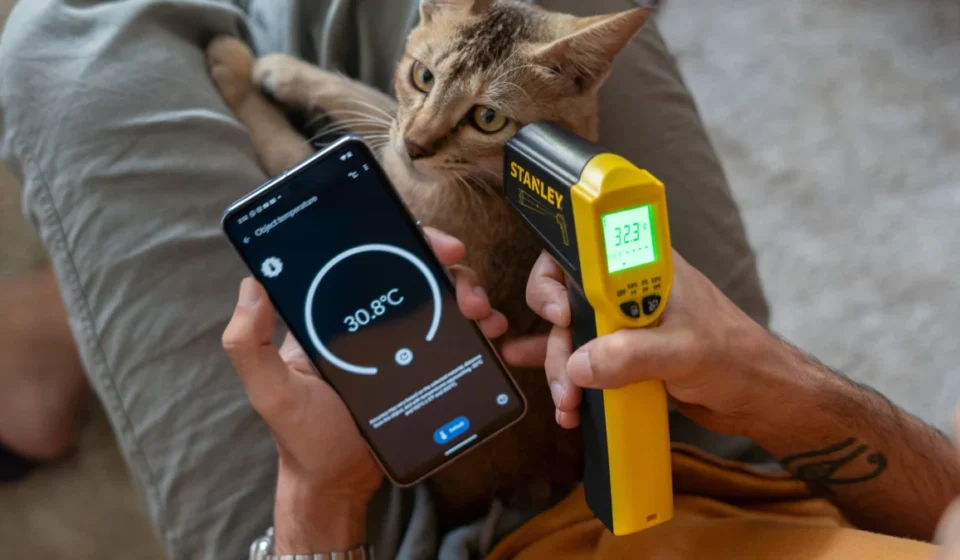
It is worth noting that a fifth potential sensor-driven tool, the thermometer, was intentionally excluded from this specific poll. This decision stemmed from its status as a Pixel-exclusive feature, specifically integrated into the Pixel 8 Pro, and the subsequent announcement of its discontinuation in future models like the Pixel 11. Despite its exclusion from this particular survey, prior polling indicated significant user engagement with the Pixel thermometer, highlighting its distinct utility, which will be explored further.
The Evolution of Smartphone Sensors: From Basic to Sophisticated
The ability of a smartphone to function as a versatile toolkit stems from decades of relentless technological advancement. What began with rudimentary sensors in early smartphones has blossomed into a complex ecosystem of miniature components, each contributing to the device’s enhanced capabilities. The journey from a simple accelerometer, primarily used for screen orientation, to the sophisticated array found in today’s flagship devices is a testament to the rapid pace of innovation.
Modern smartphones are typically equipped with a diverse range of sensors, including but not limited to:
- Accelerometers: Detect linear acceleration and movement, crucial for screen rotation, step counting, and motion-controlled gaming.
- Gyroscopes: Measure angular velocity and rotation, essential for precise spatial orientation, virtual reality (VR), and augmented reality (AR) applications.
- Magnetometers: Function as a digital compass, detecting magnetic fields, which is foundational for navigation apps and, notably, metal detection features.
- Barometers: Measure atmospheric pressure, used for more accurate altitude determination and weather forecasting.
- Proximity Sensors: Detect the presence of nearby objects without physical contact, primarily used to turn off the screen during calls.
- Ambient Light Sensors: Measure the intensity of surrounding light, enabling automatic screen brightness adjustments and serving as a basic light meter.
- GPS (Global Positioning System): Provides location data, indispensable for navigation, geotagging, and location-based services.
- Cameras: Beyond photography, cameras, particularly in conjunction with sophisticated software, are central to augmented reality, facial recognition, and object scanning.
- Microphones: Capture sound, vital for communication, voice assistants, and acting as a sound level meter.
- Newer additions: Time-of-Flight (ToF) sensors for depth sensing, LiDAR scanners (especially in premium devices) for highly accurate 3D mapping, and specialized infrared sensors for temperature measurement, as seen in the Pixel 8 Pro.
This comprehensive suite of sensors transforms a smartphone from a mere communication device into a pocket-sized supercomputer capable of interacting with and interpreting the physical world in remarkable detail. This technological leap brings us ever closer to the fantastical "tricorder" from Star Trek, a device Captain Picard or Geordi La Forge would use to scan environments, analyze vital signs, and diagnose complex problems. While our smartphones still cannot replicate the full diagnostic capabilities of a Starfleet tricorder, they undeniably offer a level of environmental and personal data collection that would have been unimaginable just a few decades ago, all while simultaneously streaming music and booking hotels – functionalities not typically associated with Starfleet tools.
Detailed Examination of Popular Sensor-Driven Utilities
Let’s delve deeper into how these core smartphone sensors facilitate the functionalities highlighted in the poll, examining their underlying technology, practical applications, and inherent limitations.
1. Digital Tape Measure (Augmented Reality Measurement)
- Technology: The digital tape measure functionality primarily relies on Augmented Reality (AR) platforms like Google’s ARCore for Android devices and Apple’s ARKit for iOS. These platforms leverage the device’s camera, gyroscope, and accelerometer to understand the surrounding environment in three dimensions. By analyzing video streams and motion data, the software can track points in space, estimate distances, and project virtual objects onto the real world.
- How it Works: Users typically point their phone’s camera at a starting point, tap to set it, then move the phone to an end point, where another tap finalizes the measurement. The AR software creates a virtual line between these points and calculates its length based on the device’s understanding of scale and distance.
- Practical Applications: This feature is immensely useful for quick, informal measurements. It’s perfect for sizing up furniture before a purchase, checking if an appliance will fit in a designated space, estimating room dimensions for renovation planning, or even verifying artwork placement on a wall. Its immediate accessibility makes it a go-to tool when a physical tape measure isn’t readily available.
- Limitations: While convenient, AR measurement tools are generally less precise than traditional physical tape measures. Their accuracy can be influenced by lighting conditions, the texture of surfaces being measured, camera calibration, and the steadiness of the user’s hand. For critical measurements requiring millimeter precision, a physical tool remains superior. However, for everyday estimations, the smartphone version offers sufficient accuracy.
2. Metal Detector (Magnetometer)
- Technology: The metal detector function utilizes the smartphone’s built-in magnetometer, a sensor designed to measure the strength and direction of magnetic fields. Every electronic device contains a magnetometer, primarily used for compass functionality and calibrating navigation apps.
- How it Works: Ferromagnetic metals (like iron, nickel, and cobalt) create their own magnetic fields or distort existing magnetic fields. When a smartphone with a magnetometer is brought near such a metal object, the sensor detects these changes in the ambient magnetic field. Apps then interpret these fluctuations, often displaying them as numerical values (e.g., microteslas, µT) or graphical representations, sometimes accompanied by an audible alert.
- Practical Applications: Beyond the recreational pursuit of "treasure," smartphone metal detectors have several practical uses. They can help locate electrical wiring or metal studs behind drywall, retrieve small lost metallic items (like keys or screws) from cluttered areas, or even identify magnetic fields from faulty electronics.
- Limitations: Smartphone magnetometers are designed for relatively small, close-range magnetic field detection. Their sensitivity and range are significantly limited compared to dedicated, professional metal detectors, which employ larger coils and more sophisticated processing to detect metals at greater depths and across a wider range of materials. They typically struggle with non-ferromagnetic metals (like aluminum or gold) unless they are very large or induce a detectable eddy current. For serious treasure hunting or precise archaeological work, a professional tool is indispensable.
3. Spirit Level (Accelerometer and Gyroscope)
- Technology: The spirit level, or bubble level, functionality leverages the smartphone’s accelerometer and gyroscope. The accelerometer detects the device’s orientation relative to gravity, while the gyroscope measures its rotational velocity.
- How it Works: By combining data from these sensors, the smartphone can determine its tilt and angle with respect to the horizontal or vertical plane. Apps typically display a virtual bubble or a numerical degree reading, mimicking a traditional spirit level, allowing users to assess if a surface is perfectly level or plumb.
- Practical Applications: This feature is incredibly handy for tasks like hanging pictures straight, leveling small shelves, ensuring a washing machine is properly balanced, or verifying the evenness of a tabletop. For casual home improvement tasks, it provides a quick and accurate enough solution.
- Limitations: While generally reliable for basic tasks, the accuracy of a smartphone spirit level can vary between devices and depends on proper calibration. For highly precise carpentry, construction, or scientific applications where even minor deviations are critical, a high-quality physical spirit level, especially a laser level, offers superior accuracy and consistency.
4. Sound/Light Meter (Microphone and Ambient Light Sensor)
- Technology: The sound meter uses the device’s built-in microphone, while the light meter utilizes the ambient light sensor.
- How it Works (Sound Meter): The microphone captures sound waves, which are then converted into electrical signals. Software algorithms process these signals to measure sound pressure levels, typically expressed in decibels (dB). Many apps offer real-time readings and can provide average or peak decibel levels.
- How it Works (Light Meter): The ambient light sensor measures the intensity of light falling on it, providing data that can be translated into lux (lm/m²) or foot-candles. This data is primarily used by the phone for automatic screen brightness adjustment. Apps can tap into this sensor to provide light intensity readings.
- Practical Applications (Sound Meter): Useful for checking noise levels in various environments (e.g., ensuring a workspace isn’t excessively loud, monitoring sound pollution, or simply satisfying curiosity). Some users might use it for basic acoustic analysis in a room.
- Practical Applications (Light Meter): Handy for photographers to assess ambient light conditions, for plant enthusiasts to ensure adequate lighting for their flora, or for evaluating lighting efficiency in a home or office.
- Limitations: Both smartphone sound and light meters are generally less accurate and less calibrated than dedicated professional equipment. Smartphone microphones are optimized for voice communication, not precise acoustic measurement across a broad frequency range, and their frequency response can vary significantly. Similarly, ambient light sensors are designed for general brightness detection, not for highly accurate photometric measurements required for professional photography or lighting design. External factors like microphone placement or direct sunlight on the light sensor can also affect readings.
The Pixel Thermometer: A Case Study in Niche Innovation
The Pixel 8 Pro introduced a unique infrared thermometer sensor, distinct from the other general-purpose sensors discussed. This specific addition generated considerable interest upon its release, embodying the "tricorder" ideal of health monitoring. The sensor was designed to measure surface temperatures of objects and, notably, human skin temperature.
- Timeline and Introduction: The Pixel 8 Pro, launched in October 2023, featured this innovative temperature sensor. Google touted its ability to measure the temperature of objects like cooking pans, drinks, or even an infant’s bottle. Crucially, it also offered the capability to measure a user’s skin temperature, a step towards more integrated health monitoring on a smartphone.
- User Adoption and Previous Findings: Prior polls conducted by Android Authority revealed that thousands of Pixel users were actively utilizing this thermometer feature. Its applications ranged from practical uses like ensuring food was adequately heated or cooled, checking the temperature of baby formula, to the more medically inclined measurement of body temperature. The latter resonated strongly with the Star Trek tricorder analogy, offering a non-invasive way to monitor a basic vital sign. At the time, Google was also pursuing FDA clearance for the skin temperature measurement feature, which would have enabled its use as a certified medical device for fever screening.
- The Decision to Discontinue: Despite the initial buzz and evident user interest, Google announced the decision to remove the thermometer sensor from the forthcoming Pixel 11 and potentially subsequent models. While Google did not provide an explicit, detailed rationale for this move, several factors can be logically inferred. These might include the high cost of integrating a specialized sensor that, for many users, remained a niche feature; the complexities and ongoing regulatory hurdles associated with obtaining and maintaining medical device certification (like FDA approval); and perhaps a re-evaluation of its long-term mass-market appeal compared to its development and manufacturing expenses. It highlights a critical challenge for smartphone manufacturers: balancing cutting-edge innovation with practical utility, cost-effectiveness, and widespread user adoption. Even a feature perceived as groundbreaking can be retired if it doesn’t meet strategic objectives or demonstrate sufficient return on investment.
Broader Impact and Implications: Convenience vs. Precision
The proliferation of sensor-driven tools in smartphones carries significant implications for consumers, industries, and the broader technological landscape.
1. Convenience and Accessibility: The most immediate impact is the unparalleled convenience these features offer. By consolidating multiple tools into a single, ubiquitous device, smartphones eliminate the need to carry separate gadgets for basic tasks. This accessibility democratizes tools that were once specialized or expensive, making them available to virtually anyone with a smartphone. For spontaneous needs, this integrated utility is invaluable.
2. Trade-off Between Convenience and Precision: A crucial aspect to consider is the inherent trade-off between the convenience of a smartphone tool and the precision of a dedicated instrument. While a smartphone can act as a rudimentary spirit level, it cannot replace the meticulous accuracy of a professional laser level for construction. Similarly, its metal detector or sound meter capabilities are adequate for casual use but fall short of the exacting standards of specialized equipment. Users must understand these limitations and choose the appropriate tool for the task at hand.
3. Sustainability and Resource Efficiency: From an environmental perspective, the integration of multiple tools into one device could potentially reduce the overall consumption of resources. If a smartphone can adequately fulfill the role of a tape measure, spirit level, and basic light meter for many users, it might reduce the demand for individually manufactured standalone versions of these items, contributing to less electronic waste and resource extraction.
4. Innovation Drivers and User Expectations: The continuous integration of new sensors and functionalities is driven by a desire for product differentiation, the pursuit of enhanced user experience, and the exploration of new market segments, particularly in health and environmental monitoring. However, the case of the Pixel thermometer demonstrates that not all innovations translate into sustained mainstream utility. Manufacturers must carefully balance technical possibility with actual user demand and regulatory realities. User expectations are constantly evolving, pushing developers to find new and meaningful ways to leverage existing and emerging sensor technologies.
5. The Future of the "Tricorder" Dream: As sensor technology continues to miniaturize and improve in accuracy, the "tricorder" dream moves closer to reality. Future smartphones might incorporate more advanced health monitoring (e.g., non-invasive blood glucose, advanced cardiac rhythm analysis), sophisticated environmental sensing (e.g., air quality, radiation detection), or even more precise augmented reality applications that can perform complex spatial analysis. The convergence of AI with enhanced sensor data will unlock even more intelligent and proactive functionalities, allowing phones to not just measure, but to analyze, diagnose, and even offer solutions based on the data they collect.
In conclusion, the survey results vividly illustrate that smartphone users are increasingly looking beyond traditional communication, embracing their devices as versatile, multi-functional tools. While the digital tape measure stands out as a clear favorite for its broad utility, the interest in other sensor-driven features underscores a fundamental shift in how we interact with technology. As manufacturers continue to innovate, the balance between integrating cutting-edge sensors and ensuring their sustained, practical value will remain a critical challenge, ultimately shaping the evolution of the pocket-sized supercomputers we carry every day.