Smartphone Storage Capacity Projected to Rise in 2026 Amidst Soaring Component Costs, Driven by AI Demands and Market Consolidation

The global smartphone industry is bracing for a challenging year in 2026, marked by an escalating cost environment for critical components such as RAM and storage. This trend has already manifested in observable price increases across various device segments as manufacturers grapple with what has been termed a "RAM crisis" alongside other supply chain and manufacturing pressures. Counter-intuitively, however, a new report from market intelligence firm Trendforce projects a significant increase in the average storage capacity of smartphones this year, a development that runs contrary to initial expectations that rising NAND flash storage prices would lead to a reduction in specifications. This unexpected shift is primarily attributed to the strategic discontinuation of lower-capacity models by manufacturers and the burgeoning demand for robust local AI capabilities in flagship devices.
The Shifting Sands of Smartphone Component Pricing
The foundational economics of smartphone manufacturing have been under considerable strain. For much of the preceding period, the industry benefited from declining component costs, particularly for memory and storage, allowing for aggressive pricing strategies and feature enhancements. This dynamic has fundamentally shifted. The "RAM crisis," a term reflecting a period of tight supply and surging prices for dynamic random-access memory, has been a significant factor. This crisis stems from a confluence of factors, including increased demand from other high-tech sectors like data centers and automotive, underinvestment in new fabrication facilities during previous downturns, and the inherent complexity and capital intensity of memory chip manufacturing. For smartphone makers, higher RAM costs directly impact their bill of materials (BoM), eroding profit margins or necessitating higher retail prices.
Parallel to the RAM challenges, the NAND flash market, which dictates storage costs, has also seen considerable volatility. While periods of oversupply previously led to price drops, the current environment points towards an upward trend. This surge in NAND flash prices is driven by factors such as increased demand from enterprise storage solutions, the ongoing transition to more advanced and denser NAND technologies (which initially incur higher production costs), and the broader economic inflation impacting raw material and energy prices. Traditionally, such cost increases would prompt manufacturers to either maintain existing storage tiers or, in extreme cases, reduce them to mitigate financial impact. Yet, the Trendforce projection suggests a different strategic calculus is at play for 2026.
The Rise of On-Device AI and its Storage Imperative
One of the most potent forces driving the increase in average smartphone storage capacity is the rapid acceleration of artificial intelligence integration directly onto devices. The industry is witnessing a profound shift from predominantly cloud-based AI processing to robust on-device or "edge" AI capabilities. This paradigm shift is not merely an incremental upgrade; it represents a fundamental rethinking of how AI can enhance the user experience, offering benefits in privacy, speed, reliability, and offline functionality.
Local AI capabilities encompass a wide array of sophisticated functions. These include advanced computational photography algorithms that enhance image quality, real-time language processing for translation and dictation, predictive text and personalization features that learn user habits, and sophisticated security protocols. Crucially, the latest generation of these AI models, particularly large language models (LLMs) and complex neural networks designed for image and video processing, are inherently data-intensive. They require substantial local storage not only for the models themselves but also for the vast amounts of data they process and generate in real-time. Trendforce’s analysis highlights this requirement, estimating that these local AI models demand between 40 to 60 gigabytes (GB) of system storage for optimal processing. This significant overhead necessitates a fundamental re-evaluation of base storage offerings.
Leading mobile brands have been quick to respond to this emerging imperative. Apple, a perennial trendsetter in the smartphone market, exemplifies this shift with its upcoming iPhone 17 series. Historically, Apple has been deliberate in its storage upgrades, often maintaining a 128GB base option for several generations. However, the iPhone 17 is now expected to feature 256GB as its base storage, effectively doubling the entry-level capacity. This move underscores Apple’s commitment to delivering advanced on-device AI experiences, acknowledging that the previous 128GB tier would simply be insufficient to comfortably accommodate both the operating system, user data, and the burgeoning AI frameworks.
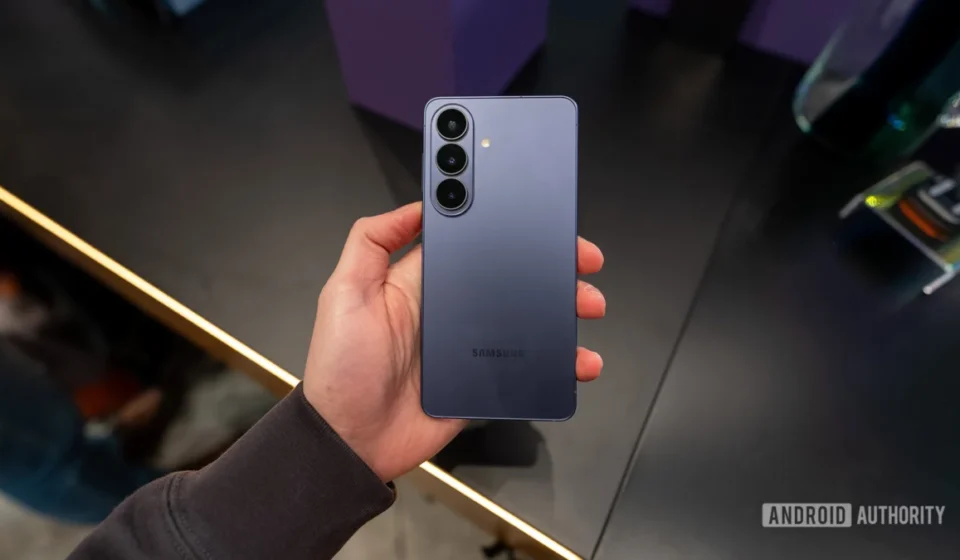
Similarly, HUAWEI, a brand known for its technological prowess and innovation, is actively promoting 512GB of storage on its Mate 80 series. This aggressive push for higher storage capacities in its premium lineup signifies HUAWEI’s strategy to differentiate its devices through superior performance and AI capabilities, catering to power users who demand ample space for complex applications and rich media. Samsung, another global titan in the smartphone arena, is following suit. After years of offering 128GB as the cheapest option for its flagship Galaxy S series, the highly anticipated Galaxy S26 is set to adopt 256GB as its starting storage. This move by Samsung, mirroring Apple’s decision, solidifies the industry-wide recognition that 256GB is rapidly becoming the new minimum for premium smartphone experiences, especially those heavily leveraging AI.
Market Rationalization: Phasing Out Low-Capacity Models
Beyond the demands of artificial intelligence, another critical factor contributing to the projected increase in average storage capacity is a strategic shift by smartphone manufacturers, particularly those catering to the budget and mid-range segments. These companies are increasingly "discontinuing or reducing" shipments of low-capacity models, often those with 64GB or even 32GB of internal storage, due to their significantly reduced profit margins.
The economics behind this decision are straightforward. In a highly competitive market, the cost difference between, for example, a 64GB and a 128GB NAND flash module has shrunk considerably relative to the overall bill of materials for a smartphone. However, selling a 64GB device often means competing at extremely low price points where profit margins are razor-thin, especially when factoring in marketing, distribution, and research and development costs. By phasing out these lower-capacity, lower-margin models, manufacturers can streamline their product portfolios, focus production on more profitable configurations (typically 128GB or 256GB), and offer a more consistent user experience across their range.
From a consumer perspective, the need for increased storage has been an undeniable trend for years. Modern smartphone operating systems consume a significant portion of the base storage. Add to that the ever-growing size of applications, the proliferation of high-resolution photos and videos (especially 4K and 8K recording capabilities), and the sheer volume of cached data from social media, streaming services, and games, and it becomes clear that 64GB or even 128GB quickly becomes insufficient for many users. Users are increasingly frustrated by "storage full" notifications, leading to a negative brand perception and a higher likelihood of upgrading to a device with more capacity. By standardizing at higher capacities, manufacturers are not only responding to technological imperatives but also to evolving consumer expectations and usage patterns.
Trendforce’s analysis provides a clear outlook for the near future of smartphone storage: "Looking ahead, as the AI application ecosystem continues to mature, the 128 GB storage tier may gradually disappear from mainstream Android smartphones by the end of 2026, with 256 GB emerging as the new standard configuration." This projection signals a definitive end to 128GB as the default entry point for most new Android devices, cementing 256GB as the benchmark for acceptable, future-proof storage. This move will effectively elevate the baseline experience for millions of users, providing ample space for both advanced AI features and their personal digital lives.
Broader Industry Implications and Outlook
The projected increase in average smartphone storage capacity, occurring against a backdrop of rising component costs, carries significant implications for various stakeholders within the mobile technology ecosystem.
Impact on Pricing Strategies: While consumers will benefit from more generous base storage, it is unlikely to come without a corresponding adjustment in pricing. Manufacturers, facing increased costs for RAM, NAND flash, and other components, will likely either absorb some of these costs, resulting in thinner profit margins, or pass them on to consumers in the form of higher starting prices for new devices. The value proposition will shift: consumers might pay a bit more, but they will receive a device with significantly enhanced capabilities and longevity due to increased storage and AI features. This could lead to a slight increase in the average selling price (ASP) of smartphones across all segments.
Competitive Landscape: Storage capacity, particularly in conjunction with AI capabilities, is poised to become a new battleground for differentiation among smartphone brands. Companies that can efficiently integrate advanced AI models and offer ample storage at competitive price points will gain an edge. This places pressure on smaller manufacturers or those with less robust supply chain leverage to keep pace, potentially leading to further market consolidation. The ability to source NAND flash efficiently and negotiate favorable pricing will be paramount.
Consumer Expectations and Usage Patterns: As 256GB becomes the new standard, consumer expectations will naturally recalibrate. Users will grow accustomed to the freedom of not constantly managing storage, leading to even greater consumption of high-resolution media, more expansive app installations, and deeper engagement with local AI features. This could, paradoxically, reduce the perceived urgency for cloud storage solutions for everyday personal media, though cloud services will remain critical for backup, synchronization, and collaboration.
Supply Chain Resilience and Innovation: The rising demand for higher-capacity NAND flash modules will continue to spur innovation in storage technology. Manufacturers will invest heavily in developing denser, more power-efficient, and cost-effective NAND architectures. This includes advancements in 3D NAND layering, controller technologies, and packaging. Furthermore, the industry will need to focus on building more resilient supply chains to mitigate future price volatility and ensure a stable supply of these critical components. Geopolitical factors, trade policies, and natural disasters will continue to pose challenges, making diversification of manufacturing and sourcing strategies crucial.
Beyond 2026: The Future of Mobile Storage: The trajectory established in 2026 suggests that the move to 256GB as standard is merely a waypoint. As AI models become even more sophisticated, as augmented reality (AR) and virtual reality (VR) content become more pervasive, and as spatial computing begins to integrate into mobile devices, the demand for storage will only continue to escalate. It is plausible that 512GB could become the mainstream standard for flagship devices within a few years, eventually trickling down to mid-range phones. The interplay between storage, RAM, and processor power will become even more symbiotic, with each component needing to scale in tandem to deliver seamless next-generation mobile experiences. The evolution of storage is not just about capacity but also about speed and endurance, as AI workloads demand rapid data access and manipulation.
Conclusion: Navigating a Complex Technological Landscape
The smartphone industry in 2026 presents a fascinating paradox: rising component costs threatening profitability, yet an upward trajectory for average storage capacity. This counter-intuitive trend is a clear indicator of the transformative power of artificial intelligence and the pragmatic strategic adjustments by manufacturers to streamline product lines and meet evolving consumer demands. While the "RAM crisis" and escalating NAND flash prices represent significant headwinds, the imperative to deliver cutting-edge on-device AI experiences and the economic rationale for phasing out low-margin, low-capacity models are proving to be stronger drivers. As 256GB emerges as the new baseline for smartphone storage, consumers can anticipate more capable and future-proof devices, albeit potentially at slightly adjusted price points. This ongoing evolution underscores the dynamic and complex nature of the mobile technology landscape, where innovation, economic realities, and consumer expectations continually reshape the market.