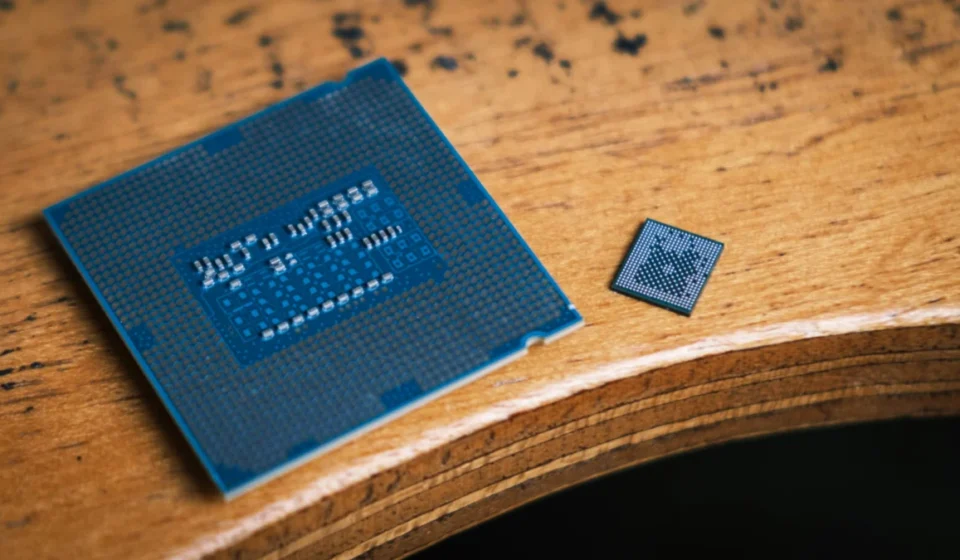
The Dawn of Ubiquitous AI: CPUs Embrace Dedicated Matrix Computation to Power On-Device Intelligence Across Smartphones and Laptops.

The landscape of artificial intelligence is rapidly evolving, pushing towards a critical inflection point where the execution of sophisticated AI models is migrating from vast cloud data centers to the very devices consumers hold in their hands. This pivotal shift is driven by a confluence of economic pressures, escalating privacy concerns, and an increasing demand for instantaneous, offline AI capabilities. The spiraling cost of high-bandwidth memory, particularly for both personal computing platforms and expansive cloud infrastructure, coupled with the prohibitive compute expenses associated with training next-generation AI models and the insatiable user demand for cloud-based AI services, has rendered AI increasingly expensive for both providers and end-users. Simultaneously, growing public apprehension regarding data privacy—specifically, the extent to which sensitive personal information is shared with and processed by cloud-based chatbots and AI assistants—further underscores the urgent need for local processing solutions.
The emergent consensus is that running AI models directly on user devices offers a compelling solution to these multifaceted challenges. Whether it involves Google’s Gemini Nano models summarizing emails directly on a smartphone or users fine-tuning LoRAs for image generation on a PC’s graphics processing unit, local AI execution is already a potent capability. In theory, this approach promises even greater utility, operating seamlessly without requiring an internet connection, thereby enhancing privacy, reducing latency, and mitigating recurring operational costs.
However, the practical implementation of widespread on-device AI has historically faced significant hurdles. Deploying large language models (LLMs) locally demands not only substantial quantities of expensive, high-speed RAM but also dedicated accelerators to efficiently process the enormous computational loads. While modern smartphones have long integrated Neural Processing Units (NPUs) specifically for AI workloads, their widespread adoption has been hampered by a fractured ecosystem of proprietary Application Programming Interfaces (APIs) and inconsistent software support across different hardware platforms. This fragmentation means that flagship and mid-range mobile devices often possess vastly divergent AI processing capabilities, compelling developers to maintain multiple, complex code paths or, more commonly, to revert to slower, less efficient CPU-based implementations as a universal fallback. This fractured state of proprietary APIs and hardware has limited the full potential of on-device AI.
The Strategic Imperative for CPU-Based AI Acceleration
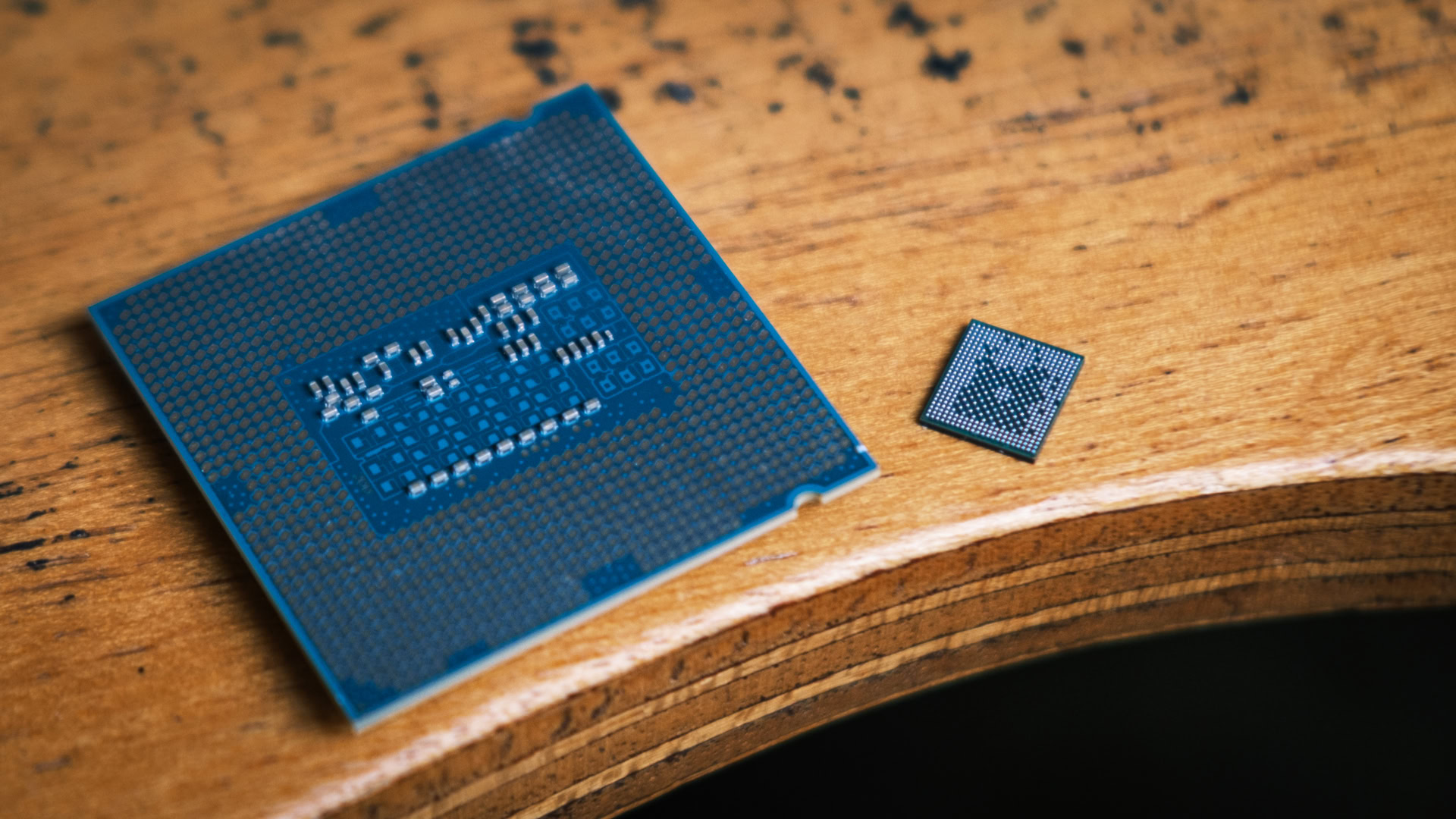
In response to these challenges, accelerating fundamental AI workloads directly on the Central Processing Unit (CPU) is emerging as an increasingly attractive middle ground. While a CPU-centric approach may not rival the sheer speed or raw computational power of a high-end dedicated accelerator like an NVIDIA RTX 5090 GPU running a massive LLM, targeting the CPU ensures broad compatibility. This allows AI tools to run on virtually any device equipped with a modern processor, sidestepping the significant development overheads associated with navigating proprietary drivers and diverse hardware APIs. Crucially, with the integration of specialized building blocks deeper within the CPU architecture, this approach is far from being as slow as it might initially appear. This strategic pivot represents a significant architectural evolution, moving beyond traditional CPU roles to embrace more direct and efficient AI processing.
Arm’s Pioneering Evolution in Mobile AI Processing
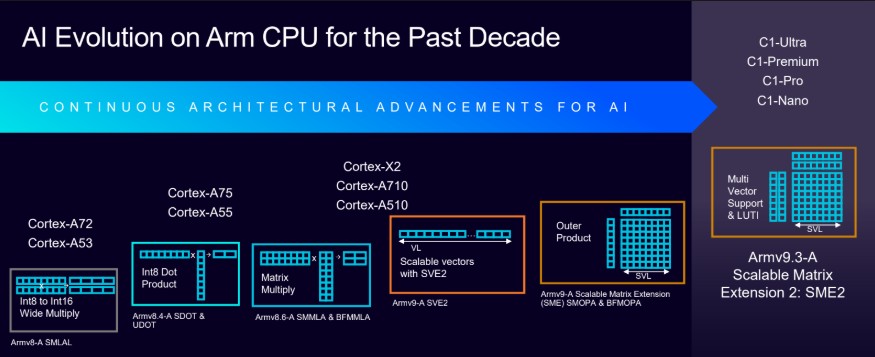
The journey towards more capable AI compute within mobile CPUs commenced in 2021 with the introduction of Armv9, the ninth generation of the Arm architecture. A key innovation within Armv9 was the Scalable Vector Extension 2 (SVE2). Unlike previous fixed-width Single Instruction Multiple Data (SIMD) designs, SVE2 introduced a vector-length-agnostic model. This allows hardware implementations to dynamically scale SIMD width from a minimum of 128-bit up to a robust 2048-bit, depending on the underlying hardware capabilities. This flexible approach to parallel mathematical operations provided a significant leap in efficiency. Furthermore, SVE2 incorporated native support for INT8 dot-product operations and enhanced support for low-precision arithmetic, such as FP16 (half-precision floating-point), making it exceptionally well-suited for the modern, quantized AI workloads prevalent in mobile applications.
However, the truly transformative shift in Arm’s CPU-based AI capabilities arrived with the introduction of the Scalable Matrix Extension (SME) and its successor, SME2. SME2 significantly extends the CPU’s core functionality by introducing a dedicated matrix execution mode. This includes a new, specialized matrix register file and integrated hardware support for General Matrix Multiply (GEMM)-style operations. Unlike traditional vector execution units, SME2 is meticulously engineered to accelerate the dense linear algebra patterns that form the computational backbone of modern transformer architectures and large language models. By providing direct hardware acceleration for these matrix-multiplication-heavy tasks, SME2 drastically reduces memory traffic and substantially increases computational throughput, offering a dedicated path for AI inference.
The impact of SME2 is profound. While technologies like SME2 may not entirely close the performance gap with power-hungry, dedicated AI accelerators designed for massive models, they deliver vastly improved performance over older CPUs lacking such specialized support. Arm itself cites performance enhancements of up to 3x to 5x in certain AI workloads. Critically, these enhancements are achieved with low power consumption, occupy minimal additional silicon space, and are significantly easier for developers to target. This ease of integration stems from their direct embedding within common software libraries, such as Arm’s KleidiAi, which abstract away hardware complexities. The integration of SME2 is already evident in cutting-edge mobile processors like MediaTek’s Dimensity 9500 and is anticipated to become a standard feature in more next-generation chipsets built upon Arm’s C1 Ultra cores or licensed architectures from various manufacturers in the coming years. This chronological progression highlights Arm’s foresight in anticipating the need for robust on-device AI.

The PC Ecosystem Responds: Intel and AMD’s Joint Venture into AI Compute Extensions (ACE)
Not to be outdone by the advancements in the mobile sector, the traditional PC processor giants, AMD and Intel, have recently announced a joint initiative to bring a comparable level of AI acceleration to future x86 CPUs. This collaboration centers around the development and integration of AI Compute Extensions (ACE). Much like Arm’s SME2, ACE introduces native matrix instructions directly into the x86 Instruction Set Architecture (ISA). This groundbreaking development provides direct hardware support for a range of data types crucial for AI, including sub-byte INT4, along with the more conventional BF16 (bfloat16) and FP16 (half-precision floating-point) data types. All of this is accessible through the familiar and widely adopted CPU instruction set.
This new x86 initiative builds upon existing advanced vector extensions (AVX) instructions, providing a consistent, enhanced functionality for faster parallel mathematical processing across different vendors within the x86 ecosystem. This standardization is a boon for developers, significantly simplifying the process of porting and optimizing AI workloads for consumer-grade PCs and laptops. Analogous to the latest mobile processors, ACE is designed for direct integration into the CPU pipeline, eliminating the need for external GPU or NPU offloading and the associated complexities of disparate external APIs. This commitment from industry leaders underscores the strategic importance of CPU-native AI capabilities.
While the precise implementation details of ACE will undoubtedly vary between AMD and Intel, both ACE and Arm’s SME2 represent a fundamental architectural shift: tightly integrated CPU matrix execution capabilities, rather than relying on offload-style accelerator architectures. This marks a departure from CPUs being solely general-purpose processors to evolving into sophisticated architectures that natively support tensor and matrix computations—the very bedrock of modern AI.
Broader Implications and the Future of AI Accessibility
This architectural evolution signifies a profound change in how AI will be deployed and consumed. While the massively parallel nature of Graphics Processing Units (GPUs) will undeniably retain their dominance for large-scale AI training and the execution of the largest, most complex models, CPUs are rapidly becoming far more capable and efficient for on-device and low-latency AI inference workloads. This means that an increasing array of AI applications, from real-time language translation and advanced image processing to personalized recommendations and enhanced voice assistants, can operate directly on a user’s device, often without an internet connection.
The most critical implication of these advancements is the dramatic simplification for developers. By offering standardized, CPU-based AI acceleration across a unified platform of phones, laptops, and PCs, developers will no longer be beholden to the complexities and inconsistencies of proprietary GPU or NPU APIs. This standardization fosters a more accessible and fertile ground for innovation, enabling a wider range of developers to integrate sophisticated AI capabilities into their applications with greater ease and efficiency. Industry analysts project that this trend will democratize AI, making powerful models accessible to a broader user base and fostering a new wave of privacy-centric applications.
This shift has significant ramifications for data privacy and security. By processing sensitive personal data locally on the device, the risk of data breaches and unauthorized access during transit to or storage in cloud servers is substantially reduced. Users gain greater control over their information, aligning with growing regulatory demands for data protection and user privacy. Moreover, the ability to run AI models offline opens up new possibilities for critical applications in areas with limited connectivity, such as remote sensing, disaster response, and embedded systems.
From a market perspective, this convergence in CPU design will intensify competition among chip manufacturers, driving further innovation in power efficiency, performance, and integration. Manufacturers will vie to offer the most compelling on-device AI experience, influencing consumer purchasing decisions for their next smartphone or laptop. While existing devices may not fully benefit from these latest architectural enhancements, the next generation of hardware upgrades promises a dramatically enhanced AI experience. This trajectory indicates a future where intelligent features are not merely an add-on but are deeply embedded into the core functionality and user experience of every personal computing device, heralding an era of truly ubiquitous, personalized, and secure artificial intelligence.