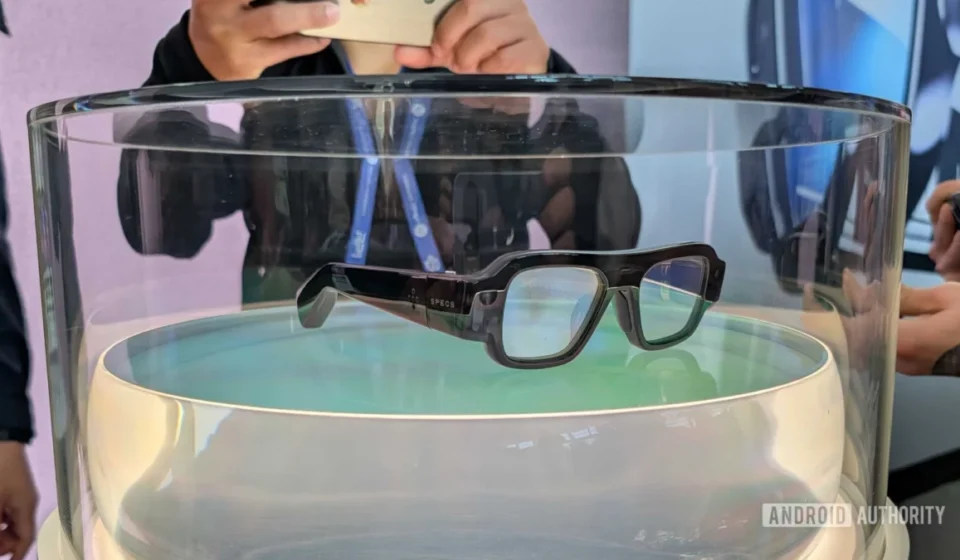
Snap Schedules Major Consumer Launch Event for "Specs" AR Glasses on September 16, Promising In-Depth Look and Hands-On Experiences

Snap Inc. has announced a significant consumer launch event for its highly anticipated augmented reality (AR) glasses, known as "Specs," scheduled for September 16. The event, set to take place in Los Angeles, will feature co-founder and CEO Evan Spiegel, who is expected to provide the "first in-depth look" at the innovative wearable. This marks a pivotal moment in Snap’s AR strategy, transitioning from a developer-centric unveiling to a broader consumer engagement, aligning with previous statements from the company regarding its phased rollout.
The September 16 presentation is poised to offer comprehensive demonstrations of how "Specs" integrate AI assistance, facilitate work tools, enhance entertainment experiences, and enable shared AR interactions. Attendees at the exclusive event will also have the opportunity to experience the glasses hands-on, providing direct engagement with the technology. For those unable to attend in person, Snap will offer a livestream, accessible to registered viewers, commencing at 4 PM PT. This event is a crucial step in Snap’s ambition to establish a strong foothold in the nascent but rapidly evolving consumer AR market, following a series of strategic product announcements and developer outreach initiatives.
The Road to September 16: A Chronology of Snap’s AR Ambition
Snap’s journey into augmented reality wearables is not a recent endeavor but rather a carefully cultivated strategy spanning several years, building upon its pioneering efforts with camera-enabled smart glasses.
Early Forays and Learning: The Spectacles Era
Snap first ventured into hardware with the introduction of Spectacles in 2016. The initial iteration, Spectacles 1.0, was primarily a camera embedded in sunglasses, designed to capture short video clips from a first-person perspective, directly integrating with the Snapchat app. While not true AR glasses, they served as a crucial learning platform for Snap regarding hardware design, user interaction with wearables, and supply chain management. Subsequent versions, Spectacles 2.0 and Spectacles 3.0, incrementally improved camera capabilities, design, and battery life, with Spectacles 3.0 featuring dual cameras to capture stereoscopic 3D photos and videos, laying groundwork for depth perception. These early products, despite their limited commercial success in the broader market, were instrumental in informing Snap’s long-term AR ambitions and gathering invaluable user data on wearable technology acceptance and utility. They represented Snap’s initial thesis that the camera, as an interface to the world, could be augmented.
The Leap to True AR: Spectacles 4.0 (Developer Edition) and Initial Announcements
The true turning point arrived with the announcement of Snap’s first true augmented reality glasses, often referred to as Spectacles 4.0 or the Developer Edition, in May 2021. These glasses were explicitly designed for developers and creators, featuring dual 3D waveguide displays, a 26.3-degree field of view, and the ability to overlay digital content onto the real world. Unlike their predecessors, these were not consumer products but rather a platform for building and experimenting with AR experiences. This strategic decision underscored Snap’s understanding that a robust ecosystem of content and applications would be paramount before a mass-market consumer launch. The limited availability and developer-focused approach allowed Snap to refine the hardware and software in a controlled environment, gathering critical feedback from early adopters and AR pioneers.
Unveiling the "Specs": A New Consumer-Oriented Phase
Building on the insights from its developer program, Snap announced its intention to release consumer AR glasses last year. This commitment signaled a clear trajectory towards making sophisticated AR technology accessible to a wider audience. The "finished product," now officially known as "Specs," was subsequently unveiled in June at the Augmented World Expo (AWE), a prominent industry event for augmented, virtual, and mixed reality technologies. This unveiling provided the first comprehensive look at the consumer-ready device, detailing its design, core specifications, and intended capabilities. At AWE, Snap also confirmed the pricing structure for "Specs," setting it at $2,195, with preorders becoming available through a refundable $200 deposit. This pricing positions "Specs" as a premium, early-adopter device, reflecting the advanced technology and ongoing investment required for cutting-edge AR hardware.
Evan Spiegel had previously articulated Snap’s phased approach, emphasizing an initial focus on developers to cultivate an AR content ecosystem before shifting towards consumer-oriented events in the fall. The September 16 launch event perfectly aligns with this declared strategy, signaling the company’s readiness to engage directly with potential end-users and articulate the value proposition of "Specs" in a more accessible format.
"Specs" Unpacked: Technology and Proposed Use Cases
The "Specs" represent a significant technological leap for Snap, designed as standalone AR glasses that promise a blend of immersion and practical utility.
Hardware Core: Powering Next-Generation AR
At the heart of the "Specs" are two Snapdragon processors. While the specific models have not been fully disclosed, it is highly probable that Snap is leveraging Qualcomm’s dedicated Snapdragon AR platforms, such as the Snapdragon AR2 Gen 1, or a combination of mobile and AR-specific chips optimized for wearable form factors. The use of dual processors is crucial for managing the complex computational demands of augmented reality, which include real-time environmental mapping, object recognition, rendering high-fidelity digital content, and processing sensor data from multiple inputs. These processors must operate with extreme power efficiency to ensure acceptable battery life in a compact, untethered device, a perennial challenge for AR hardware. The integration of these powerful chipsets allows "Specs" to perform sophisticated AR tasks without relying on a connected smartphone or external computing pack, offering true untethered freedom.
Interaction and Immersion: A Seamless Blend of Digital and Physical
The "Specs" incorporate advanced interaction mechanisms, including hand and eye tracking. Hand tracking allows users to manipulate virtual objects and interact with digital interfaces using natural gestures, eliminating the need for external controllers and enhancing the sense of direct engagement. Eye tracking can serve multiple purposes: enabling foveated rendering (where only the area the user is looking at is rendered in high resolution, saving computational power), facilitating intuitive menu navigation, and potentially enhancing social interactions within shared AR experiences by conveying gaze.
The transparent displays are perhaps the most critical component, as they are responsible for overlaying digital content onto the user’s real-world surroundings. These waveguide displays must be bright enough to be visible in various lighting conditions, possess a sufficient field of view to create compelling AR experiences, and remain transparent to ensure users can still see and interact with their physical environment unimpeded. The ability to seamlessly blend digital information with the physical world is the core promise of augmented reality, and Snap’s investment in these display technologies underscores its commitment to delivering a truly immersive and functional AR experience.
Demonstrated Capabilities: A Glimpse into the Future
Snap has outlined several key use cases for "Specs," which are expected to be elaborated upon during the September 16 event:
- AI Assistance: This could manifest as contextual information overlays (e.g., identifying objects, translating text in real-time), smart notifications, or even proactive virtual assistants that provide guidance based on the user’s environment or ongoing tasks. Imagine navigating an unfamiliar city with AR directions overlaid directly onto your path, or receiving real-time information about landmarks you are viewing.
- Virtual Workspaces: The concept of virtual workspaces in AR allows users to project multiple virtual screens or applications into their physical environment, creating an expansive digital desktop that is not constrained by physical monitor size. This could revolutionize remote work, collaboration, and productivity, enabling users to access information and interact with colleagues in a shared virtual space.
- Entertainment: AR games and immersive content represent a significant opportunity. "Specs" could offer interactive games that blend digital characters and elements into the real world, or provide enhanced viewing experiences for video content by projecting larger-than-life screens into any environment.
- Shared AR Experiences: This capability aligns deeply with Snap’s social media roots. Shared AR experiences allow multiple users wearing "Specs" to simultaneously interact with the same digital content in a shared physical space. This could range from collaborative games to joint creative projects, or simply experiencing augmented social interactions, bringing a new dimension to how people connect and share moments.
The September 16 demonstration will be crucial in moving beyond theoretical descriptions, providing concrete examples of how these features will function in practice and addressing potential user concerns regarding latency, visual fidelity, and ease of interaction.
Strategic Rationale: Why a Consumer Launch Now?
Snap’s decision to pivot to a consumer-focused launch for "Specs" at this juncture is underpinned by several strategic considerations, reflecting both internal development milestones and broader industry trends.
Evolving AR Market Readiness and Ecosystem Building
While mainstream consumer adoption of AR glasses is still considered years away, the market is undeniably maturing. Competitors like Meta Platforms are investing heavily in mixed reality (MR) with devices like the Quest 3, and Apple is rumored to be on the cusp of significant AR/VR hardware releases (e.g., Apple Vision Pro), indicating a growing belief in the eventual ubiquity of spatial computing. By launching "Specs" now, even at a premium price point, Snap aims to cultivate an early adopter community. This community is vital not only for revenue but, more importantly, for generating real-world feedback, identifying killer applications, and attracting more developers to build content specifically for the "Specs" platform. A thriving ecosystem of applications and experiences is widely recognized as the primary driver for widespread AR adoption.
Competitive Positioning and Differentiation
In a rapidly emerging market, establishing an early brand presence and a distinct value proposition is critical. Snap has consistently emphasized the social and creative aspects of AR, a natural extension of its Snapchat platform. While other companies might focus on productivity or enterprise applications, Snap’s "Specs" are likely to be positioned as tools for enhancing human connection, self-expression, and shared experiences. This differentiation could help Snap carve out a unique niche, appealing to a demographic already familiar with and engaged in augmented reality through Snapchat’s Lenses. The timing allows Snap to solidify its narrative and vision for AR before the market becomes saturated with competing devices.
Leveraging Developer Momentum
The initial developer-centric launch of the Spectacles 4.0 provided Snap with a foundational base of creators familiar with its AR tools and SDKs (Lens Studio). The consumer launch leverages this existing momentum, offering these developers a direct pathway to bring their creations to end-users. This iterative approach ensures that by the time "Specs" reach consumers, there is already a nascent library of experiences available, mitigating the "chicken-and-egg" problem often faced by new hardware platforms (lack of content due to lack of users, and vice-versa).
The September 16 Event: Expectations and Implications
The upcoming launch event carries significant weight for Snap and the broader augmented reality industry.
Evan Spiegel’s Vision and Narrative
As CEO, Evan Spiegel’s presentation will be instrumental in articulating Snap’s long-term vision for augmented reality. He is expected to move beyond technical specifications and delve into the philosophical underpinnings of "Specs," emphasizing how the technology can augment human capabilities, foster creativity, and deepen social connections, rather than isolating users. This narrative alignment with Snap’s core values will be crucial for distinguishing "Specs" from competitors and resonating with a target audience. His address will likely frame "Specs" not merely as a gadget, but as a portal to a new era of interactive computing.
The Importance of Hands-On Demonstrations
For a product as novel and experiential as AR glasses, hands-on demonstrations are invaluable. Unlike traditional screens, the impact of augmented reality must be felt and seen directly. Attendees experiencing "Specs" firsthand will be able to assess the display quality, the responsiveness of tracking, the comfort of the device, and the fluidity of the AR experiences. Positive hands-on impressions shared by influencers and early reviewers can significantly sway public perception and generate early buzz, which is critical for a high-priced, cutting-edge device.
Potential Key Announcements
While the event is primarily a consumer-focused deep dive, several crucial announcements could accompany the demonstrations:
- Firm Shipping Date: The current preorder page indicates an expected shipping date of "fall 2026," a notably distant timeline. The September 16 event presents a prime opportunity for Snap to announce a more precise or even accelerated shipping window, which would provide clarity for prospective buyers and signal the product’s readiness. A concrete date could significantly boost preorder confidence.
- New Software Features and Partnerships: Snap might unveil additional software capabilities, new integrations with popular apps, or strategic partnerships with content creators, game studios, or enterprise solution providers. Such announcements would expand the potential utility and appeal of "Specs."
- Ecosystem Growth Initiatives: Details on new developer tools, funding opportunities for AR creators, or specific programs designed to foster content creation for "Specs" could also be part of the presentation, reinforcing Snap’s commitment to building a vibrant AR ecosystem.
Analyst Reactions and Market Perception
Industry analysts will be closely watching the event for signals regarding Snap’s ability to execute its AR strategy. Key metrics for evaluation will include the clarity of the product’s value proposition, the impressiveness of the live demonstrations, the credibility of the shipping timeline, and the overall enthusiasm generated. Positive reception from analysts could boost investor confidence and validate Snap’s significant investment in AR hardware. Conversely, any perceived shortcomings could raise questions about the viability of consumer AR at its current stage.
Challenges and Outlook
Despite the excitement surrounding "Specs," Snap faces several inherent challenges in the nascent AR market.
Price vs. Adoption: The $2,195 price point, while competitive for high-end AR hardware, remains a significant barrier for mass consumer adoption. Snap will need to effectively communicate the long-term value and unique experiences offered by "Specs" to justify this premium, targeting early adopters and enthusiasts who are willing to invest in cutting-edge technology. The initial sales volume is likely to be modest, reflecting the early stage of the market.
The "Killer App" Dilemma: Augmented reality, like many emerging technologies, is still searching for its universally compelling "killer application" – an experience so valuable and unique that it drives widespread consumer adoption. Snap’s multi-faceted approach, encompassing AI assistance, work tools, entertainment, and shared social experiences, is designed to explore various potential "killer apps." The success of "Specs" will heavily depend on which of these use cases resonates most strongly with early users and drives sustained engagement.
Long-Term Vision and Infrastructure: The "fall 2026" shipping estimate underscores that "Specs" are part of a long-term vision for Snap. This implies that the current iteration is likely a foundational product, and significant software and hardware evolution will occur over the next few years. Snap’s sustained commitment to AR, including continued investment in R&D, infrastructure, and content development, will be crucial for the ultimate success of "Specs" and its broader AR ambitions. This timeline also gives Snap ample time to refine the product, optimize manufacturing processes, and further expand its developer ecosystem.
In conclusion, Snap’s September 16 event for "Specs" is more than just a product launch; it is a critical statement of intent for the company’s future in augmented reality. By providing an in-depth look and hands-on experiences, Snap aims to ignite consumer interest, solidify its strategic position in the competitive AR landscape, and lay foundational groundwork for a future where digital content seamlessly integrates with our physical world, transforming how we work, play, and connect. The success of this event will be a key indicator of Snap’s capacity to translate its long-held AR vision into a tangible, compelling consumer product.