
The Expanding Landscape of Generative AI: From Niche Simulations to Predictive Analytics

The pervasive influence of generative artificial intelligence (AI) continues to reshape the digital ecosystem, serving as a foundational technology for new services, a catalyst for application development, and an enhancer of existing functionalities. This rapid proliferation necessitates a continuous evaluation of emerging AI products and services to discern those offering genuine utility and innovation amidst a crowded marketplace. This article initiates a regular series dedicated to highlighting noteworthy AI applications and services, providing an essential guide for users and developers navigating the evolving AI frontier.
The Rise of Accessible AI Development and "Vibecoding"
The term "vibecoding," while informal, encapsulates a significant shift within the developer community: the democratization of software creation through AI-assisted tools. Traditionally, programming languages and their mastery demanded extensive training and specialized aptitude, limiting app and website development to a relatively small cohort. Generative AI and low-code/no-code platforms have dramatically lowered these barriers, enabling individuals with less formal coding experience to conceptualize and bring usable digital products to fruition. This paradigm shift empowers a broader range of creators, fostering innovation from unexpected corners.
This week’s spotlight turns to a selection of these "vibecoded" projects, demonstrating the diverse applications and creative potential unlocked by accessible AI tools. These range from whimsical simulations to practical utilities and predictive analytics, collectively illustrating the expanding reach of AI in everyday digital experiences.
Gavin Shapiro’s Firewood Splitting Simulator: A Blend of Art and Accessible Tech

Among the compelling examples of AI-augmented creativity is the "Firewood Splitting Simulator," a project by New York City-based digital artist Gavin Shapiro. This seemingly simple, Flash-like game, available on Shapiro’s personal website, exemplifies how AI and advanced digital techniques can transform mundane activities into engaging interactive experiences. The simulator allows users to virtually split logs using a mouse interface, where a left-click activates the axe and mouse movement dictates the camera angle and attack trajectory. This intuitive control scheme, combined with a responsive physics engine, enables users to split logs into various patterns and shapes, adding an unexpected layer of depth and replayability. As logs are split, a digital woodpile accumulates, providing a visual representation of progress in this charmingly straightforward application.
Shapiro’s project transcends the notion of mere "AI slop" — a term often used to describe hastily generated, low-quality AI output. Instead, it represents a thoughtful integration of human artistry and sophisticated technical inputs. Shapiro detailed his meticulous process via an X post, explaining, "I 3D scanned my stump and my ax and my wood and recorded my ax motions and splitting sounds and made it into a super satisfying firewood splitting simulator." This foundation of real-world data capture, combined with the computational power of Antigravity, the generative capabilities of Claude, and the 3D rendering framework of three.js, results in a highly polished and tactile digital experience. The simulator, offered free to users, has garnered attention for its addictive quality and its demonstration of AI’s capacity to enhance even the most unassuming digital creations.
The significance of Shapiro’s work extends beyond its immediate entertainment value. It highlights the burgeoning field of digital art and interactive design where artists are leveraging AI and advanced graphics tools to create immersive, sensory-rich experiences. This approach contrasts sharply with purely generative content, emphasizing that the most impactful AI applications often involve substantial human curation and artistic direction, with AI acting as an accelerator and enabler rather than a sole creator. The project also subtly touches upon the human desire for tactile satisfaction, replicating a primal activity in a safe, digital environment, suggesting a novel application for AI in digital well-being and stress relief.
Fonts.free: Streamlining Font Acquisition with AI-Enhanced Utility
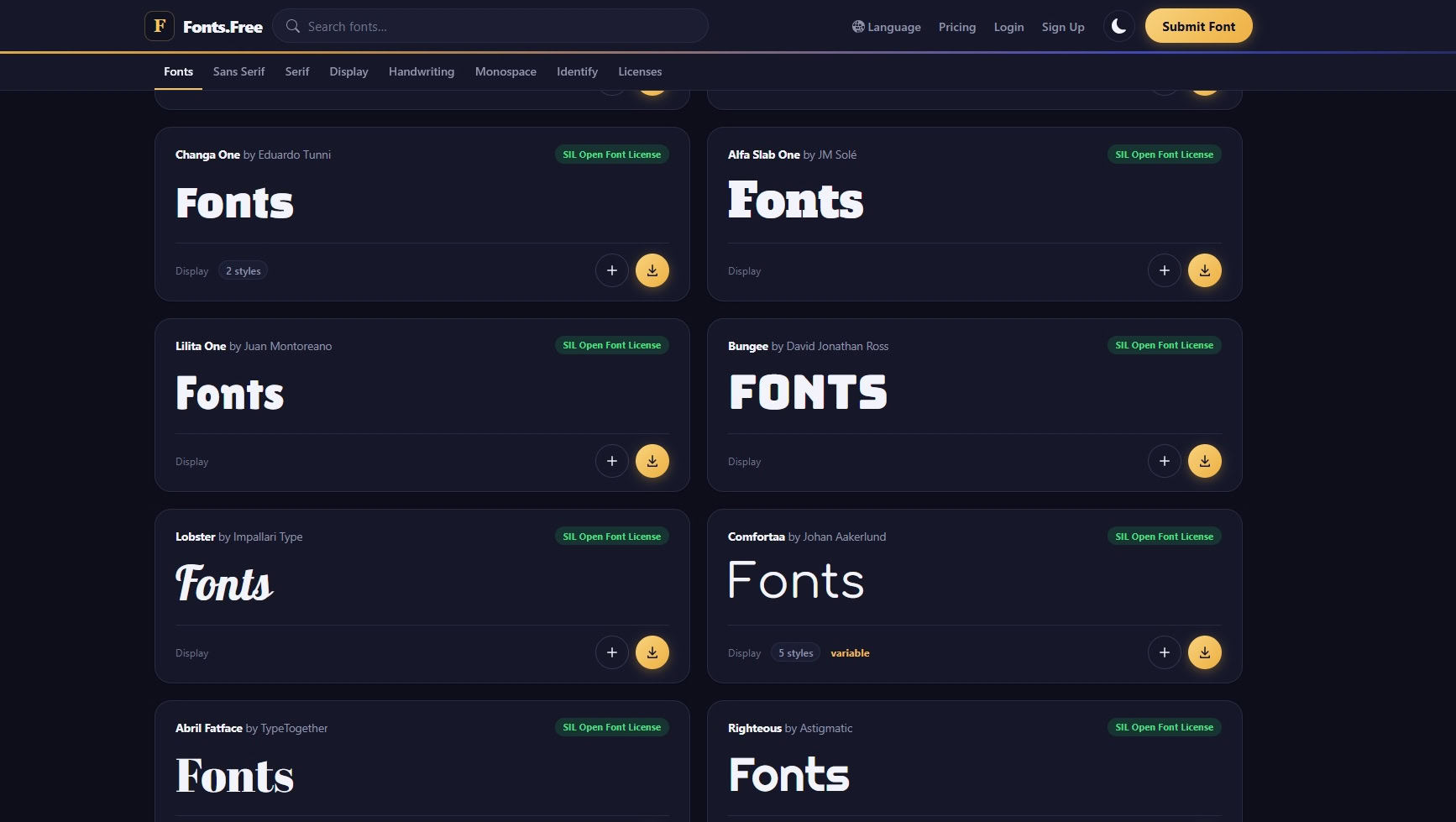
Shifting from entertainment to productivity, Fonts.free emerges as a noteworthy "vibecoded" project designed with practical utility in mind. This online library boasts a collection of over 2,000 fonts from licensed owners, providing a valuable resource for designers, developers, and casual users alike. While numerous font repositories exist across the internet, Fonts.free distinguishes itself through its streamlined user experience, making the process of discovering and downloading fonts exceptionally intuitive and efficient.
The utility of a robust and accessible font library cannot be overstated in the modern digital landscape. For graphic designers, web developers, and even hobbyists customizing their digital interfaces, the availability of diverse and legally licensed typefaces is crucial. The original article specifically highlights its value for KWGT (Kustom Widget Maker) users on Android, who frequently require third-party fonts to personalize their device widgets. Fonts.free simplifies this often cumbersome process, allowing users to easily acquire and integrate new fonts into their custom designs.

While the explicit role of AI in Fonts.free is not detailed, its "vibecoded" nature suggests that AI likely plays a role in optimizing the platform’s functionality. This could include AI-powered search algorithms that improve font discovery based on user queries or design trends, intelligent categorization systems that enhance browsing, or even predictive analytics to suggest fonts that align with a user’s aesthetic preferences. The ability to quickly and reliably access a vast array of fonts directly impacts productivity and creative output, reducing the friction typically associated with font management and licensing. This tool exemplifies how AI can be leveraged to refine existing digital services, making them more user-friendly and efficient, thereby supporting a wide spectrum of creative endeavors.
F1Predictions: AI’s Foray into Sports Analytics and Forecasting
The application of AI extends into the realm of sports, as evidenced by F1Predictions, a specialized tool for Formula 1 enthusiasts. Following the previous edition’s highlight of Predicd for football outcomes, F1Predictions offers a similar analytical approach for motorsport, generating forecasts for race weekends that are subsequently "scored against real results." This platform showcases the growing integration of sophisticated data analytics and machine learning into sports, moving beyond simple statistics to predict complex outcomes.
Formula 1, with its intricate interplay of driver skill, car performance, team strategy, track characteristics, and unpredictable environmental factors (such as weather), presents a rich dataset for AI analysis. An AI model like F1Predictions would likely process vast amounts of historical race data, qualifying times, practice session results, tire performance metrics, driver and constructor championship standings, and potentially even real-time telemetry, to formulate its predictions. The site’s polished interface, with dedicated tabs for each session (practice, qualifying, sprint, and main race), enhances user engagement and allows for detailed scrutiny of its forecasts.
For instance, the tool’s prediction for the upcoming Dutch Grand Prix, projecting Lando Norris to dominate the weekend by securing pole positions in both qualifying sessions, winning the Sprint, and ultimately the race, provides a tangible example of its analytical output. Such predictions not only fuel fan discussions and speculation but also offer potential insights for sports bettors and even strategic analysis for teams, albeit with the inherent uncertainties of live sports. The practice of "scoring against real results" is crucial, serving as a continuous validation mechanism for the AI model, allowing for refinement and improvement over time. This ongoing feedback loop is fundamental to the development of reliable predictive AI systems.
F1Predictions underscores the broader trend of AI revolutionizing sports analysis, offering deeper insights into performance, strategy, and potential outcomes. It exemplifies how "vibecoded" projects, even those developed with accessible tools, can deliver sophisticated, data-driven applications that resonate with passionate communities and demonstrate the practical power of AI in forecasting complex real-world events.
Coolcakebro: Digital Celebrations Enhanced by AI Creativity
Rounding out this selection of innovative AI tools is coolcakebro, a "vibecoded" application designed to facilitate digital celebrations among friends and family. This platform allows users to virtually craft personalized cakes and send them to loved ones, offering a unique blend of digital interaction and heartfelt sentiment. The cakes can assume various forms, incorporate customized messages, and feature up to 12 interactive candles that can be "blown out" by the recipient, mimicking a real-life birthday ritual.
Coolcakebro taps into the increasing reliance on digital communication for expressing affection and celebrating milestones, particularly in an era where geographical distances often separate loved ones. The application’s simplicity and charm lie in its ability to create a personalized, interactive experience that transcends a mere text message or static image. Once a cake is designed and personalized, it can be easily shared with the intended recipient, providing an instant, engaging form of digital gifting.
The role of AI in coolcakebro can be inferred in several aspects. AI might be instrumental in generating diverse cake designs based on user preferences, ensuring smooth customization of messages and visual elements, or even optimizing the interactive elements like the candle extinguishing mechanism for a seamless user experience. The platform’s emphasis on user-friendliness and the ability to create unique, personalized digital artifacts aligns perfectly with the capabilities of generative AI in facilitating creative expression for non-technical users.
While coolcakebro offers a delightful digital alternative, the article prudently advises users to still send real cakes to their loved ones, highlighting the tool’s supplementary role rather than a complete replacement for tangible expressions of care. Nonetheless, it showcases the potential of AI to enrich social interactions and celebrations in the digital realm, providing new avenues for connection and personalization.
Broader Implications and the Future of AI-Assisted Creation

The diverse array of "vibecoded" AI projects — from a whimsical firewood simulator to practical font libraries, sports prediction engines, and digital celebration tools — illustrates a profound shift in how software and digital experiences are conceived and created. This movement, characterized by the accessibility afforded by generative AI and low-code/no-code platforms, is democratizing development, empowering individuals and small teams to innovate without the traditional barriers of extensive programming expertise.
The common thread uniting these applications is the synergistic relationship between human creativity and AI augmentation. Projects like Gavin Shapiro’s simulator demonstrate that the most compelling AI tools are often those where human artistry, meticulous data capture, and specific design intentions guide the AI’s generative capabilities. Similarly, Fonts.free enhances a practical need with intuitive design, F1Predictions leverages AI for sophisticated data analysis, and coolcakebro adds a touch of digital magic to personal connections. These examples collectively debunk the notion that AI-generated content is inherently devoid of soul or utility, instead showing a future where AI serves as a powerful co-creator and enabler.
The market for AI tools and services is experiencing unprecedented growth. Investment in AI startups continues to surge, driven by the recognition of AI’s transformative potential across industries. This rapid expansion is leading to a proliferation of niche AI solutions, much like the "app store" revolution for mobile applications. As AI models become more sophisticated and easier to integrate, we can anticipate an even greater influx of specialized tools catering to increasingly specific needs and creative desires.
However, this rapid evolution also brings forth critical considerations. Discussions around data privacy, ethical AI development, and the responsible deployment of generative models remain paramount. While "vibecoding" opens doors, the distinction between genuinely innovative, human-curated AI projects and "AI slop" — content generated with minimal human input and often lacking quality or originality — becomes increasingly important. The projects highlighted here exemplify a higher standard, demonstrating how AI can be harnessed to create valuable, engaging, and thoughtfully designed digital products.
In conclusion, the current landscape of AI applications signifies a pivotal moment in technological development. Generative AI is not merely a tool for automation but a catalyst for creativity, accessibility, and new forms of digital interaction. As this series continues to explore the cutting edge of AI, it will undoubtedly uncover further innovations that promise to redefine our relationship with technology and reshape the digital experiences of tomorrow.