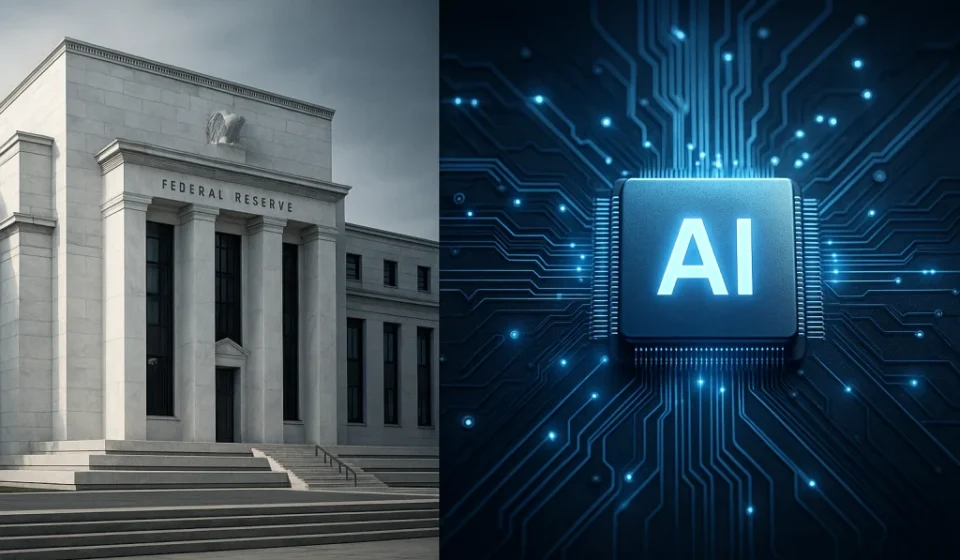

The Federal Open Market Committee (FOMC) concluded its most recent policy meeting by maintaining the federal funds rate at a target range of 3.5% to 3.75%, a decision that reflects both a cautious approach to current economic data and a significant internal shift in the central bank’s communication strategy. Under the leadership of the newly appointed Federal Reserve Chairman, Kevin Warsh, the committee’s 9-to-3 vote highlighted a burgeoning ideological divide within the institution. While the majority opted for stability, three regional presidents—Beth Hammack of Cleveland, Neel Kashkari of Minneapolis, and Lorie Logan of Dallas—cast dissenting votes in favor of a 25-basis-point increase. This split marks a departure from the era of near-unanimous consensus and signals a "family fight" regarding the persistence of inflationary pressures.
A Shift in Communication and the Removal of Forward Guidance
In a move that aligns with Chairman Warsh’s previously stated philosophy, the official FOMC statement was notable for what it excluded. For years, market participants have relied on "forward guidance"—formulaic language intended to signal the future trajectory of interest rates. Under Warsh, the Fed has moved toward a "just the facts" approach. The latest statement was a near-verbatim replica of the June release, documenting current economic indicators without providing the usual roadmap for upcoming meetings.
During the subsequent press conference, Warsh maintained a disciplined, if elusive, rhetorical stance. He avoided providing specific economic forecasts or definitive timelines for future policy shifts. Instead, he focused on the internal cohesion of the committee and the gravity of their mandate. "We have an amazing team," Warsh noted, emphasizing that the committee agreed on more points than they disagreed on. However, critics and market analysts observed that the Chairman’s responses were carefully calibrated to offer minimal substantive detail regarding the "neutral rate" or the specific triggers for a potential September hike.
Despite the ambiguity, Warsh was unequivocal on one point: the Federal Reserve’s commitment to its 2% inflation target remains absolute. Addressing speculation that the central bank might quietly tolerate a higher inflation floor, Warsh stated that five years of elevated prices have created a mistaken impression of a "soft" target. He reiterated that there is no implicit target above 2%, and the committee’s primary focus remains on restoring price stability to that specific benchmark.
The Chronology of Policy Dissent and Economic Uncertainty
The current friction within the FOMC did not emerge in a vacuum. The roots of the 9-to-3 split can be traced back to the April meeting, where Hammack, Kashkari, and Logan first voiced opposition to statement language that implied future rate cuts were imminent. Their continued dissent in the current cycle suggests a conviction that the "last mile" of the inflation fight may require more restrictive policy than the majority currently favors.
The timeline of recent events provides context for the Fed’s current hesitation:
- Late April: Three Fed presidents oppose "dovish" language, signaling a shift toward a more hawkish minority.
- June FOMC Meeting: The committee holds rates steady but maintains a cautious outlook as CPI data shows signs of cooling, albeit slowly.
- Early July Senate Hearings: Chairman Warsh testifies before the Senate Banking Committee, where he is questioned on the inflationary impact of the Artificial Intelligence (AI) buildout.
- Late July (Current): The Fed maintains the 3.5%–3.75% range, while the CME Group’s FedWatch Tool indicates that the market is pricing in a 53.3% probability of a rate hike in September.
This chronology suggests a central bank that is increasingly data-dependent but struggling with how to interpret non-traditional economic shocks, particularly those stemming from rapid technological advancement.
The AI Paradox: Inflationary Pressure vs. Productivity Gains
A central theme of the current economic debate—and a key factor in the Fed’s decision-making—is the role of Artificial Intelligence in the broader economy. Traditionally, massive capital expenditure (capex) and high demand for specialized components are viewed as inflationary. The AI boom has triggered a surge in demand for Graphics Processing Units (GPUs), high-bandwidth memory chips, networking hardware, and massive amounts of electricity. This "spending spree" has already begun to manifest in higher costs for consumer electronics and industrial power.
However, Chairman Warsh has presented a more nuanced view, one that suggests the bar for a rate hike may be higher than many hawks realize. During his confirmation and subsequent Senate testimony, Warsh argued that while AI investment might push "measured prices" higher in the short term, it should not necessarily be categorized as "bad" inflation. His reasoning hinges on the "supply response."
Warsh’s thesis, supported by his previous writings in The Wall Street Journal, posits that AI is ultimately a significant disinflationary force. By increasing productivity, AI allows the economy to produce more goods and services at a lower cost over the long term. Warsh noted that a mere one-percentage-point increase in annual productivity growth could double the standard of living within a single generation. From this perspective, the current price spikes in memory and energy are "one-time changes" or "bottlenecks" rather than the start of a sustained inflationary spiral.
This perspective is shared by some in the private sector, including veteran investors who argue that the Fed is unlikely to raise rates based on temporary supply-side constraints in the tech sector. The distinction between "demand-pull inflation" and a "productivity-driven price adjustment" is critical; if the Fed views the current spending as an investment in future efficiency, it may be willing to overlook short-term price volatility.
Corporate Impact: The Hyperscaler Capex Dilemma
The Federal Reserve’s macro-level decisions are currently colliding with the micro-level realities of corporate earnings. The "hyperscalers"—tech giants like Alphabet, Microsoft, and Meta—are at the forefront of the AI investment cycle. The market’s reaction to their spending plans has been volatile.
Last week, Alphabet (GOOGL) reported an increase in its capital expenditure plans to support its AI infrastructure. Despite strong earnings, Wall Street reacted negatively, sending the stock nearly 7% lower as investors questioned the timeline for a return on these massive investments. Today, the focus shifts to Microsoft (MSFT) and Meta (META), both of which are expected to provide updated guidance on their AI-related spending.
The implications for the broader market are twofold:
- Direct Capex Beneficiaries: Companies providing the "picks and shovels" for AI—semiconductor manufacturers, data center operators, and cooling system providers—continue to see record revenues from hyperscaler spending.
- The M&A Landscape: Beyond purchasing hardware, tech giants are increasingly using their capital to acquire talent and intellectual property. This trend is exemplified by historical moves such as Google’s acquisition of DeepMind and Microsoft’s multi-billion-dollar partnership with OpenAI.
Analysts suggest that if Microsoft and Meta continue to aggressively fund AI development, it will further test the Fed’s theory that this spending is a precursor to a productivity miracle. If the market continues to punish these companies for high capex, it could signal a shift in investor sentiment that might eventually influence the Fed’s assessment of economic stability.
Analysis of Broader Implications
The current state of the Federal Reserve under Chairman Warsh represents a significant experiment in monetary policy and communication. By removing forward guidance, Warsh is attempting to reclaim "policy optionality," ensuring the Fed is not trapped by its own previous statements if economic conditions shift rapidly.
However, this lack of transparency can lead to increased market volatility. Growth stocks, particularly in the tech and AI sectors, are highly sensitive to the "discount rate." When the Fed’s future path is unclear, the risk premium on these stocks tends to rise. If the market continues to price in a better-than-even chance of a September hike, while the Fed remains non-committal, a "repricing event" could occur in late Q3.
Furthermore, the 9-to-3 split within the FOMC suggests that the "neutral rate"—the interest rate that neither stimulates nor restrains the economy—is a moving target. The hawkish dissenters likely believe the neutral rate is higher than previously thought, meaning the current 3.5%–3.75% range is not restrictive enough to bring inflation down to 2%. Conversely, Warsh’s focus on AI productivity suggests he believes the economy can handle higher activity without triggering traditional inflationary consequences.
Conclusion and Outlook
As the Federal Reserve maintains its current stance, the financial world remains focused on two variables: the next round of inflation data and the earnings reports of the world’s largest technology companies. The "Warsh era" at the Fed has begun with a commitment to simplicity in messaging but a complex underlying theory regarding the transformative power of technology.
The coming months will determine whether the three dissenting voices on the committee were a "canary in the coal mine" for a necessary rate hike or if the Chairman’s optimism regarding AI-driven productivity will allow the Fed to remain on hold. For now, the central bank has chosen a path of watchful waiting, leaving investors to parse "just the facts" in an increasingly complex global economy. The transition from a demand-driven economy to one reshaped by AI infrastructure represents a historic shift, and the Federal Reserve’s ability to navigate this transition without triggering a recession or a new inflationary wave remains the paramount concern for global markets.