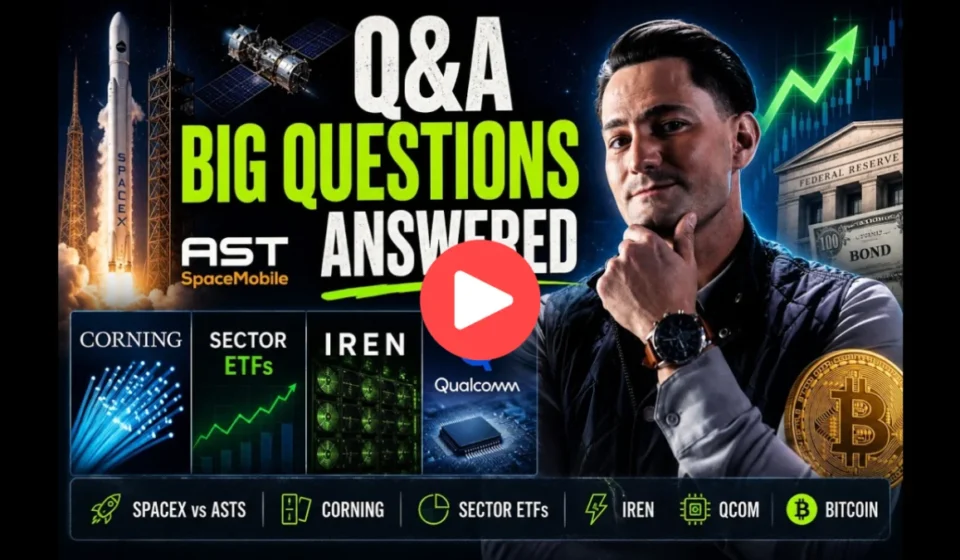
The Future of Tech Investing Diversifying Exposure Across Space Communications AI Infrastructure and the Next Generation of Physical Hardware

The landscape of high-growth technology investing is undergoing a fundamental shift as emerging industries such as space communications, neocloud infrastructure, and physical artificial intelligence (AI) reach commercial maturity. This evolution was recently punctuated by the public debut of SpaceX Corp. (SPCX) on June 12, an event that ignited a surge of retail and institutional interest in the space economy. However, as financial advisors and market analysts have noted, the current market environment rewards a strategy of broad sector exposure rather than concentrated bets on single "winner-take-all" candidates. This principle of "owning the field" is becoming the standard for navigating sectors where the rules of competition are still being written and where technological leadership can shift within a single fiscal quarter.
The Satellite Communications Race: AST SpaceMobile and the SpaceX Factor
The satellite communications sector has become a primary focal point for investors seeking to capitalize on the "direct-to-cell" revolution. This technology aims to provide cellular connectivity directly to unmodified smartphones via satellite constellations, eliminating dead zones globally. Currently, the market is witnessing a strategic divergence between AST SpaceMobile Inc. (ASTS) and Elon Musk’s SpaceX.
Market analysts observe that AST SpaceMobile currently holds a technical lead in the specific niche of direct-to-cell service. The company’s architecture is designed to handle high-bandwidth data and voice calls through massive phased-array antennas, a feat that has positioned it as a frontrunner in commercial development. However, the entry of SpaceX into the public markets on June 12 has altered the capital landscape. With a battle-tested track record in launch services and a rapidly expanding Starlink constellation, SpaceX brings a level of vertical integration and capital access that few competitors can match.
Historical precedents in the technology sector suggest that technical leads in early-stage industries are often fluid. For example, Tesla Inc. (TSLA) was not the first company to produce an electric vehicle, yet it eventually became the industry standard through scale and infrastructure. Investors are increasingly being advised to hold positions in both AST SpaceMobile and SpaceX. This "multiple shots on goal" approach acknowledges that while ASTS may have the current technological edge, SpaceX’s massive capital reserves and internal launch capabilities provide a significant "moat" that could allow it to overtake competitors as the industry reaches commercial scale.
The Optics Transition: Corning and the Infrastructure Backbone
While satellite communications capture the public’s imagination, the physical backbone of the internet—fiber optics—is undergoing a massive upgrade cycle driven by the demands of AI data centers. Corning Inc. (GLW) has emerged as a central figure in this transition. Despite some market skepticism regarding valuation, Corning’s recent performance highlights a broader trend: the shift from 800G to 1.6T (terabit) optics.
This transition is essential for the next generation of AI training clusters, which require unprecedented data transfer speeds between GPUs. Earnings reports from industry peers such as Lumentum, Coherent, and Applied Optoelectronics confirm that this upgrade cycle is happening in real-time. Corning, specifically, has seen its stock rebound from the $110–$115 range to highs near $170, driven by robust demand for its optical connectivity solutions.
The "read-through" from this earnings season suggests that optics will remain one of the strongest trades for the latter half of the year. For investors, the pattern has become predictable: sharp rallies followed by healthy consolidations and rebounds off major support levels. As data centers migrate to 1.6T infrastructure, the demand for high-density fiber and advanced optical components is expected to outpace general semiconductor growth, making the optics sector a critical component of any AI-focused portfolio.
Semiconductor Strategy: Managing Volatility Through Diversification
The semiconductor market remains the primary engine of the current tech bull market, yet it is also home to extreme volatility, particularly in the memory and DRAM (Dynamic Random Access Memory) sub-sectors. Companies like Micron, Western Digital, and Seagate have historically exhibited "whipsaw" price movements, with some names seeing valuations swing by hundreds of percentage points within a single year.
For investors who have experienced the volatility of individual names like Broadcom Inc. (AVGO), the move toward sector-based Exchange Traded Funds (ETFs) is gaining traction. The VanEck Semiconductor ETF (SMH) and the PHLX Semiconductor Index (SOX) offer two distinct paths for AI infrastructure exposure. Data indicates that while both track the broader chip industry, the SOX index typically exhibits 1.5 times more volatility than the SMH.
Financial experts suggest that for most investors, the SMH serves as a more stable vehicle for capturing the broader AI buildout. By holding a basket of the world’s leading chipmakers, including Nvidia and TSMC, investors can participate in the structural growth of the industry without the specific "stomach-churning" risks associated with memory-focused stocks or the high-stakes movements of single-company bets. The consensus is clear: in a "gold rush" for AI chips, owning the index is often more profitable and less stressful than trying to pick the single most efficient shovel-maker.
The Rise of Neoclouds: A New Tier of AI Infrastructure
As traditional cloud providers like Amazon Web Services (AWS) and Microsoft Azure face capacity constraints, a new category of "neoclouds" has emerged. These are specialized cloud providers designed specifically for high-performance AI compute, often utilizing the latest Nvidia H100 and B200 GPUs.
The competitive landscape of neoclouds is currently being ranked by growth rates, financial firepower, and operational experience. Nebius Group (NBIS) has recently claimed the top spot among analysts due to its aggressive growth trajectory and substantial liquidity. Following closely is CoreWeave Inc. (CRWV), which has demonstrated strong earnings but carries a heavier debt load to fund its rapid hardware acquisitions. Applied Digital Corp. (APLD) and IREN Ltd. (IREN) round out the group.
The case of IREN is particularly illustrative of the broader market trend. Originally a Bitcoin miner, IREN has pivoted toward providing neocloud services. While this strategic shift makes sense given the company’s existing power infrastructure, it currently ranks lower than its peers due to a lack of deep operational experience in AI-specific compute. Nevertheless, the "rising tide" of AI demand is expected to lift all major players in this category over the next 12 to 18 months, provided they can manage the high capital expenditures required to stay relevant.
Qualcomm: The "Sleeping Dragon" of Data Centers and Physical AI
Perhaps the most significant "sleeper" in the current tech landscape is Qualcomm Inc. (QCOM). Traditionally known for its dominance in the smartphone processor market, Qualcomm is currently executing a "one-two punch" that market analysts believe is not yet fully priced into the stock.
First, Qualcomm has officially entered the data center chip market, placing it in direct competition with Nvidia, AMD, and Intel. This move allows Qualcomm to leverage its expertise in low-power, high-efficiency chip design—a critical requirement for modern data centers looking to manage energy costs. Second, and perhaps more importantly, Qualcomm is positioned at the heart of the "physical AI" movement.
Physical AI refers to the integration of artificial intelligence into wearable devices, such as smart glasses, necklaces, and other form factors that move beyond the traditional smartphone. Industry data suggests that approximately 90% of prototype physical AI devices currently under development by major technology firms utilize Qualcomm’s Snapdragon processors. While many of these prototypes may never reach mass-market adoption, the probability is high that the "next iPhone"—the device that eventually defines the post-smartphone era—will be powered by Qualcomm silicon. This long-term potential, combined with the near-term catalyst of data center expansion, makes Qualcomm a unique play on both current infrastructure and future consumer hardware.
Broader Impact and Market Implications
The convergence of these trends—space-based connectivity, advanced optics, specialized AI clouds, and physical AI hardware—points toward a more decentralized and technologically diverse investment environment. The "SpaceX vs. AST SpaceMobile" or "Nvidia vs. AMD" debates are increasingly viewed as false dichotomies. In the early stages of a massive technological growth story, the most successful strategy is often to hold multiple leaders within a category.
The broader implication for the market is a move toward infrastructure-heavy investments. Whether it is the fiber optics of Corning, the satellite constellations of SpaceX, or the neocloud data centers of Nebius, the current investment cycle is defined by the physical hardware that makes AI and global connectivity possible. As these industries continue to write their own rules, the investors who maintain broad exposure to these essential "rails" of the modern economy are best positioned to weather the volatility of individual company performance while capturing the overall growth of the sector.
In summary, the transition from speculative tech bets to foundational infrastructure investments marks a new chapter for the markets. By focusing on sectors with high barriers to entry and essential utility—such as 1.6T optics and direct-to-cell satellite networks—investors can participate in the exponential growth of the digital age with a strategy grounded in industrial reality.