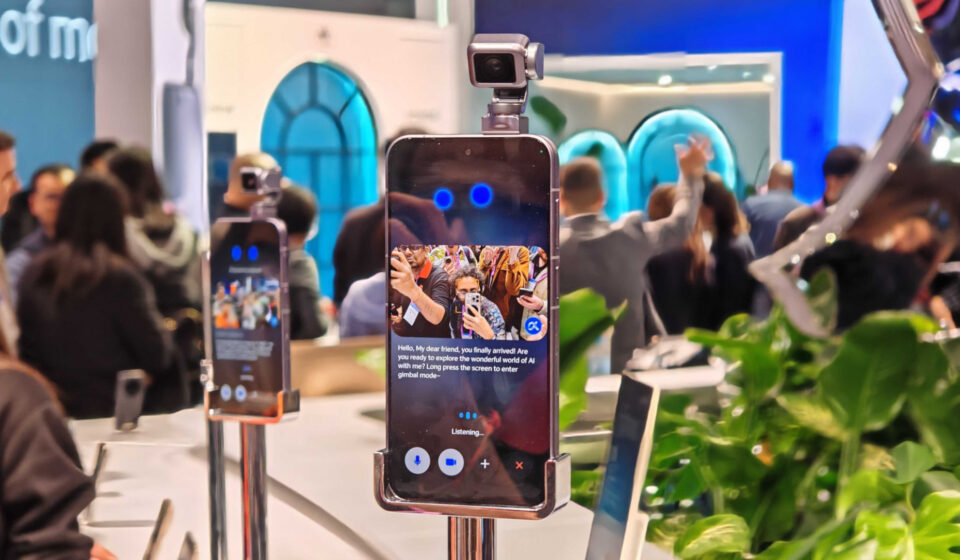
The Honor Robot Phone: A Glimpse into the Future of Mobile Interaction at MWC 2026

Mobile World Congress (MWC) 2026, the premier global exhibition for the mobile industry, has once again served as a crucible for technological innovation, showcasing a plethora of advancements that hint at the future of connected devices. Amidst the dazzling array of smartphones, wearables, and emerging technologies, one device has captured significant attention for its audacious departure from conventional smartphone design: the Honor Robot Phone. While initially appearing as a sleek, contemporary mobile handset, its true revolutionary potential unfolds with the unexpected emergence of an integrated, AI-powered gimbal system, a feature that could redefine mobile content creation and user interaction.
Unveiling a Transformative Mobile Concept at MWC 2026
The official reveal of the Honor Robot Phone at MWC 2026 marked a pivotal moment in the conference’s narrative. While whispers of its existence had circulated prior to the event, the live demonstration provided concrete evidence of a device poised to challenge established norms. The core of its innovation lies in a sophisticated, three-axis gimbal mechanism ingeniously concealed within the phone’s chassis, capable of deploying from the top. This is not merely a cosmetic addition; the gimbal is designed to be an active participant in the user’s experience, responding dynamically to its environment and the user’s cues.
During a closely watched presentation at Honor’s expansive MWC booth, attendees witnessed the gimbal in action. It demonstrated an uncanny ability to "dance" in sync with music, its movements meticulously adapting to the rhythm and tempo of the audio. More remarkably, it exhibited an interactive capacity, capable of performing subtle head nods or shakes, seemingly in response to dialogue – a testament to the seamless integration of advanced engineering and sophisticated artificial intelligence. This fusion of hardware and AI suggests a future where mobile devices transcend their passive roles and become more intuitive, responsive companions.
The Gimbal’s Genesis and Technological Underpinnings
The development of such an intricate mechanism within the confines of a smartphone presents a significant engineering feat. While specific technical schematics remain proprietary, the functionality observed points to a complex interplay of miniaturized motors, advanced sensors, and powerful AI algorithms. The three-axis gimbal system is crucial, providing stability and a wide range of motion essential for professional-grade videography and photography. This level of articulation allows the camera to maintain a steady shot even during movement, a capability previously requiring external stabilizers or professional equipment.
The AI component, as alluded to by Honor representatives, is the intelligence that drives the gimbal’s responsiveness. This likely involves sophisticated object recognition and tracking capabilities, enabling the phone to follow subjects autonomously, maintain focus, and adapt framing without manual intervention. The "dancing" to music, for instance, implies an audio processing module that analyzes sound frequencies and beats, translating them into physical movements for the gimbal. Similarly, the interactive nods and shakes suggest natural language processing and sentiment analysis, allowing the device to interpret and react to spoken commands or statements in a rudimentary, yet impressive, manner.
Addressing the "Who Needs This?" Question: Implications for Content Creators and Beyond
The immediate question that arises for many consumers, particularly those less invested in mobile content creation, is the practical utility of such a feature. For the average user whose primary smartphone needs revolve around communication, browsing, and casual gaming, the elaborate gimbal might appear to be an extraneous addition. However, the landscape of mobile usage is rapidly evolving, with a significant portion of digital content now being produced and consumed on smartphones.

For content creators, the Honor Robot Phone presents a compelling proposition. The inherent limitations of handheld smartphone videography – shakiness, difficulty in tracking subjects, and the need for external accessories like tripods and gimbals – are directly addressed by this integrated solution. The ability to achieve smooth, cinematic shots with minimal effort can democratize high-quality video production, making it more accessible to vloggers, social media influencers, and even small businesses looking to enhance their online presence. The AI-powered tracking could automate complex camera movements, freeing creators to focus on their performance or subject matter.
Beyond content creation, the AI-driven interaction capabilities hint at broader applications. Imagine a future where your smartphone can act as a dynamic personal assistant, not just responding verbally but also physically orienting its camera to capture moments you might miss or to provide a visual perspective during video calls. The ability to "agree" or "disagree" with a nod or shake, while seemingly a novelty, could evolve into more nuanced forms of non-verbal feedback, enhancing the perceived intelligence and personality of the device.
Market Reception and Future Prospects: A Bold Move in a Competitive Arena
The critical question surrounding the Honor Robot Phone is its potential market viability. Honor, a brand that has consistently pushed boundaries in mobile technology, particularly in the foldable and camera segments, appears to be positioning this device not as a fleeting concept but as a potential commercial product. The absence of the word "concept" during the official launch is a strong indicator of Honor’s intentions to bring this innovation to consumers.
However, the smartphone market remains fiercely competitive, dominated by established giants like Apple and Samsung. Introducing a device with such a unique, and potentially polarizing, feature requires a strategic approach to market education and adoption. The success of the Honor Robot Phone will depend on several factors: the perceived value proposition for its target audience, the durability and reliability of the gimbal mechanism, the seamlessness of the AI integration, and, crucially, its pricing strategy.
The ability of the Honor Robot Phone to carve out a niche in a market still largely defined by the iPhone’s ecosystem and Android’s widespread adoption remains an open question. Nevertheless, Honor deserves commendation for its bold vision. In an industry often characterized by incremental updates, the pursuit of genuinely groundbreaking features is essential for driving progress. Should Apple or other major players in the mobile industry fail to acknowledge and adapt to such innovative leaps, they risk being outmaneuvered by competitors willing to embrace the unconventional.
MWC 2026: A Hub of Anticipatory Technologies
The Honor Robot Phone is not an isolated marvel at MWC 2026. The event has consistently served as a barometer for future technological trends. This year’s congress has also seen the unveiling of other intriguing devices and concepts that suggest a broader industry shift towards more interactive and specialized mobile experiences. For instance, the Lenovo Legion Go Fold, while perhaps more of a conceptual exploration, showcases the ongoing experimentation with form factors and dual-purpose devices. Similarly, the rumored Nothing Phone (4a) lineup, if it materializes as speculated, will likely continue Nothing’s ethos of distinctive design and user experience.
These developments, alongside Honor’s ambitious offering, paint a picture of a mobile industry that is increasingly looking beyond the standard rectangular slab. The focus is shifting towards enhancing specific user needs, whether it’s through foldable displays, integrated creative tools, or novel interaction methods. The ongoing reviews and hands-on analyses of devices like the Xiaomi 17 and the Honor Magic V6 provide further context, illustrating the current state of high-end smartphone technology that the Honor Robot Phone aims to disrupt or augment. MWC 2026, therefore, stands as a crucial event, not just for the devices launched, but for the strategic directions they signal for the entire mobile ecosystem. The Honor Robot Phone, with its unique blend of robotics and artificial intelligence, is undeniably a significant part of that forward-looking narrative.