
The public’s data-center revolt spreads… even Texas taps the brakes… will it kill the AI trade?… why the move is “sort,” not “sell”

The rapid expansion of artificial intelligence infrastructure is encountering a significant and growing obstacle: a widespread public and political backlash against the construction of hyperscale data centers. While the demand for AI processing power continues to accelerate globally, local communities and state governments are increasingly questioning the trade-offs involved in hosting these massive facilities. This tension has created a complex environment for investors, characterized by a conflict between long-term economic productivity and immediate concerns regarding resource management, power grid stability, and environmental protection.
The Rise of Regulatory Resistance and the "Messy Middle"
The current landscape of AI infrastructure development is increasingly defined by what analysts describe as the "Messy Middle." This framework suggests that the proliferation of AI does not present a binary choice between progress and stagnation, but rather a difficult prioritization between two competing "goods." On one side are the long-term benefits of AI, including enhanced productivity, job creation in the technology sector, and a broadened tax base for municipalities. On the other side are the immediate needs of the public: stable electricity prices, the preservation of natural resources, and the protection of local communities from industrial disruption.
New York recently became a focal point for this conflict when Governor Kathy Hochul signed legislation effectively pausing the construction of certain high-energy data center projects. This move made New York the first state to implement a formal moratorium, signaling a shift in how state executives view the technology sector’s footprint. The decision prioritized the stabilization of the state’s power grid and the protection of environmental resources over the immediate economic gains offered by data center developers. This sentiment is not isolated to the Northeast; it is gathering momentum across the United States as the physical requirements of the "cloud" become more apparent to the average citizen.
Texas and the Shift Toward Grid Accountability
Even in traditionally pro-business environments like Texas, the tide is turning. Texas Governor Greg Abbott recently directed state regulators to audit data centers seeking connection to the state’s independent power grid, managed by the Electric Reliability Council of Texas (ERCOT). The directive requires regulators to deny grid access to facilities that do not meet specific criteria regarding their impact on the state’s energy infrastructure.
This regulatory shift in Texas is particularly noteworthy given the state’s status as a primary hub for both energy production and technology infrastructure. The audit is designed as a screening mechanism rather than an outright ban. However, it introduces a significant "loophole" that favors established players: facilities that can provide their own on-site power or operate independently of the primary grid are largely exempt from these new hurdles. This has created a bifurcated market where existing capacity and self-sustaining infrastructure have become significantly more valuable than planned projects that remain dependent on public utilities.

The Economic Value of Pre-Existing Infrastructure
As new capacity becomes harder to permit and build, the market value of existing data center assets has surged. This scarcity has transformed the business models of several companies, most notably those previously focused on cryptocurrency mining. These firms already possess the three most critical components for AI development: land, massive power allocations, and established grid connections.
A primary example of this trend is the recent agreement between AI startup Anthropic and Riot Platforms, Inc. (RIOT). Anthropic reportedly signed a 20-year, $9.1 billion deal to utilize 191 megawatts of capacity at Riot’s Rockdale, Texas, campus. The deal, which could eventually scale to a value of $16.1 billion, demonstrates how pre-existing industrial sites are being repurposed to meet AI demand. Because Riot already possesses the necessary power infrastructure, it can bypass the administrative and political bottlenecks currently stalling new "greenfield" developments.
Similarly, companies like Core Scientific (CORZ) and CleanSpark (CLSK) are leveraging their existing gigawatt-scale power footprints. Core Scientific has pioneered long-term contracts with hyperscalers for high-performance computing (HPC), while CleanSpark maintains a pipeline of powered industrial sites with approved grid connections. For these firms, the "backlash" against new data centers acts as a competitive moat, increasing the premium on their "plug-and-play" facilities.
Supply Chain Constraints and the Role of "Picks and Shovels"
The data center ecosystem extends far beyond the physical buildings. To convert a powered site into a functional AI hub, a complex supply chain of hardware and industrial equipment is required. This includes power generators, transformers, substations, and transmission gear. Furthermore, the high thermal output of AI chips requires advanced industrial-scale cooling solutions.
Vertiv Holdings Co. (VRT) has emerged as a key player in this "picks and shovels" segment. The company’s order backlog recently surpassed $12 billion, driven by the demand for specialized power and cooling systems. However, the recent market performance of such companies highlights the risks inherent in the current environment. Despite reporting record demand and raising full-year guidance in the second quarter, Vertiv’s stock experienced a sharp 12% decline. The drop was attributed to "project timing" and supply chain snags, illustrating that even when demand is high, the pace of delivery is vulnerable to regulatory delays and logistical hurdles.
Chronology of the Data Center Backlash (2022–2024)
- Late 2022: Community protests intensify in Northern Virginia’s "Data Center Alley" over noise pollution and land use, leading to stricter local zoning ordinances.
- Early 2023: Major hyperscalers (Microsoft, Google, Amazon) announce record-breaking capital expenditure plans for AI, totaling hundreds of billions of dollars.
- Mid-2023: Environmental advocacy groups in various states begin filing lawsuits to block data center permits, citing concerns over water usage for cooling systems.
- July 2024: New York Governor Kathy Hochul signs a landmark moratorium on certain high-energy data center operations, citing the need to protect the state’s climate goals.
- August 2024: Texas Governor Greg Abbott orders an audit of the state’s data center connections, signaling a shift toward more stringent grid management.
- Present: Hyperscaler spending continues to rise, with projected capital expenditures for the top four firms reaching approximately $725 billion for the current year—a 77% increase over the previous year’s projections.
Data Analysis: Hyperscaler Spending vs. Regulatory Hurdles
The financial data surrounding AI infrastructure presents a striking paradox. While political and social resistance is at an all-time high, the capital flowing into the sector is also at record levels. The four largest "hyperscalers"—Microsoft, Alphabet (Google), Meta, and Amazon—are projected to spend nearly three-quarters of a trillion dollars on infrastructure this year.
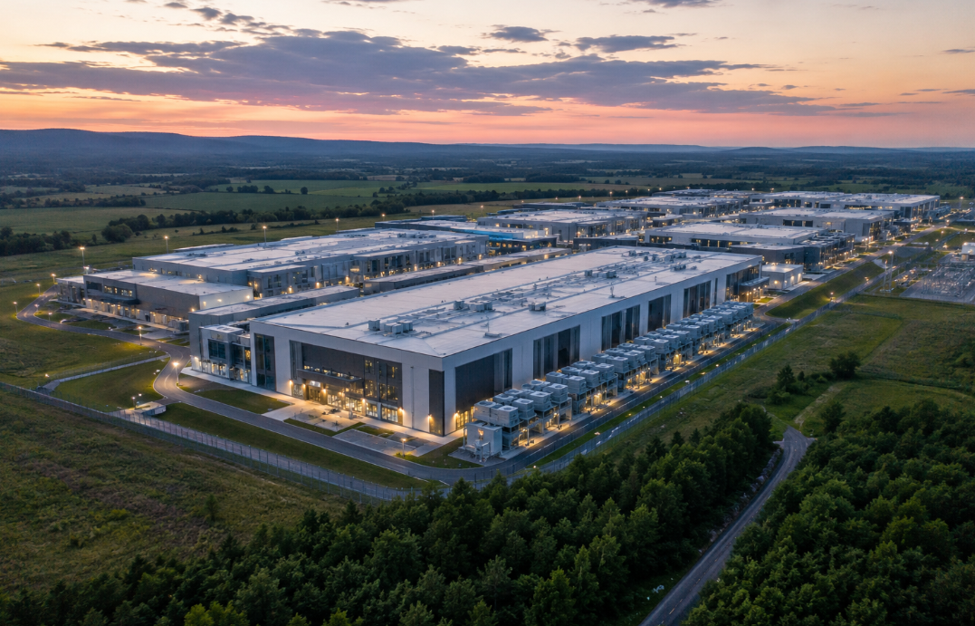
This massive investment suggests that while moratoriums in specific states like New York or Georgia may slow down individual projects, they do not dampen the overall global demand for AI compute. Instead, the capital is being redistributed. When a project is blocked in a restrictive jurisdiction, the investment typically migrates to "friendlier" corridors, other states with underutilized grids, or international locations. Consequently, the "AI trade" remains intact, but the geographical distribution of winners is shifting.
Broader Implications for the AI Trade
The current environment suggests that for investors, the appropriate strategy is not a wholesale exit from AI infrastructure ("sell"), but rather a rigorous re-evaluation of holdings ("sort"). The beneficiaries of the current scarcity are those who control "stranded" or "locked-in" power and those who provide the essential components that make data centers more efficient.
The primary risk to the sector is not isolated state-level pushback, but the potential for a coordinated federal pause or a widespread national moratorium. If enough states act simultaneously to restrict grid access, it could create a bottleneck that even the most well-funded tech giants cannot bypass. However, as of now, this remains a tail risk rather than the base case.
Another critical metric for the market is the guidance provided by hyperscalers. As long as the companies buying the chips and building the centers continue to raise their spending forecasts, the underlying demand remains robust. The "Messy Middle" indicates that while the path forward for AI infrastructure will be characterized by legal battles, public protests, and regulatory audits, the fundamental drive toward increased computational capacity shows no signs of reversing.
In summary, the "data center revolt" is a signal of the physical limits of the digital age. As electricity and land become the primary constraints on technological growth, the market is shifting its rewards toward companies that have already secured these resources. For the broader economy, the challenge remains balancing the transformative potential of artificial intelligence with the tangible resource needs of the communities that host its physical heart.