The Rules Have Changed: What 10 Billion Citations Reveal About Winning AI Search

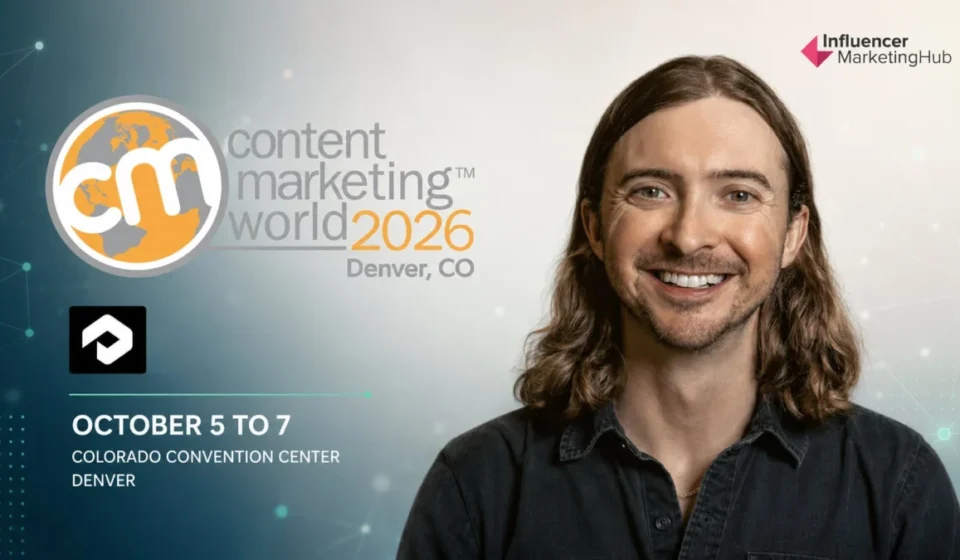
The landscape of digital discovery is undergoing its most significant transformation since the inception of the commercial internet, as traditional search engines transition into generative artificial intelligence platforms. Nick Lafferty, the Founding Marketing Engineer at Profound, is scheduled to address this shift at Content Marketing World 2026 in Denver, Colorado. His session, drawing on an unprecedented dataset of 10 billion AI citations, aims to provide a data-driven roadmap for brands navigating the complexities of AI-generated answers and the shifting metrics of online visibility.
The presentation, titled “The Rules Have Changed: What 10 Billion Citations Reveal About Winning AI Search,” is slated for Monday, October 5, 2026, from 11:30 a.m. to 12:00 p.m. at the Colorado Convention Center. As marketing departments grapple with the decline of traditional click-through rates and the rise of zero-click environments, Lafferty’s insights offer a rare empirical look at how large language models (LLMs) select, interpret, and cite brand information.
The Shift from Ranking to Citation
For over two decades, search engine optimization (SEO) was governed by a relatively stable set of rules: keywords, backlinks, and technical site health led to higher rankings, which in turn drove traffic. The emergence of AI search—led by platforms like Google’s AI Overviews, Perplexity, and OpenAI’s SearchGPT—has introduced a new layer of intermediation. Instead of a list of links, users receive a synthesized response.
Profound’s research into 10 billion citations suggests that "visibility" in this new era is no longer just about being the first link on a page; it is about being the primary source of truth within an AI-generated paragraph. The dataset reveals that AI models prioritize sources that provide high-density information in formats that are easily ingestible by scrapers and crawlers. This shift necessitates a move away from traditional performance indicators toward "citation share" and "mention accuracy."
Lafferty’s session will explore the specific signals that lead an AI to choose one brand’s content over another. While traditional SEO emphasized authority through external links, AI search appears to place a higher premium on the semantic clarity and factual density of the content itself. This change places a renewed burden on content creators to produce material that serves both the human reader and the machine-learning model simultaneously.
Unsolicited Content and the Accuracy Crisis
One of the most significant findings from Profound’s recent analysis of 50,000 AI answers across seven major industries is the prevalence of "unsolicited information." According to the study, 47% of the content delivered by AI models regarding specific brands consisted of information that the brands themselves never wrote or authorized.
Lafferty has noted that nearly half of what an AI says about a brand may be hallucinated, outdated, or pulled from secondary sources such as competitor comparisons, Reddit threads, or outdated news archives. This creates a critical vulnerability for enterprises. When an AI model synthesizes a response, it may inadvertently include retired product features, incorrect pricing, or legacy branding that no longer reflects the company’s current positioning.
The implications for brand reputation are profound. In a traditional search environment, a user might click an outdated link but would eventually find the correct information on the brand’s official website. In an AI search environment, the user may never leave the search interface, accepting the AI’s synthesized—and potentially incorrect—summary as the absolute truth. Lafferty’s research suggests that monitoring these citations is no longer an optional task for PR and marketing teams but a foundational requirement for brand safety.
Chronology of the AI Search Evolution
To understand the context of Lafferty’s 2026 presentation, it is necessary to trace the rapid evolution of search technology over the preceding four years:
- Late 2022: The launch of ChatGPT introduces the general public to conversational AI, sparking immediate speculation regarding the future of Google’s search dominance.
- 2023: Microsoft integrates GPT-4 into Bing, while Google announces "Search Generative Experience" (SGE) as an experimental feature. Marketers begin to notice a shift in referral traffic patterns.
- 2024: Google rolls out AI Overviews to the general public. Perplexity AI gains traction as a "discovery engine," emphasizing direct citations and source transparency. Brands begin to see their content synthesized without receiving clicks.
- 2025: The "Zero-Click" era matures. Major publishers and brands begin filing lawsuits or entering licensing agreements with AI firms. Profound and other analytics firms begin scaling their data collection to track "LLM optimization" (LLMO).
- 2026: Content Marketing World arrives in Denver, focusing heavily on the integration of "Marketing Engineering"—a discipline that treats content as data to be managed rather than just copy to be read.
This timeline illustrates a move from curiosity to necessity. By the time Lafferty takes the stage in October 2026, the industry will have moved past the "hype" phase of AI and into a phase of rigorous, data-led execution.
The Rise of the Marketing Engineer
A central theme of the upcoming session is the evolution of the marketing professional. Lafferty’s own title, Founding Marketing Engineer, reflects a growing trend in the industry where the boundaries between content strategy and technical infrastructure are blurred.
A marketing engineer does not merely oversee the creation of a blog post or a white paper. Instead, they build systems that ensure content is structured for maximum machine readability. This involves the use of advanced schema markup, JSON-LD, and specialized data feeds that "feed" AI models the most accurate and up-to-date information.
During the Denver session, Lafferty will demonstrate how marketing teams can scale their efforts through automation and data analysis. The goal is to move away from manual "isolated brand checks"—where a marketer simply types their brand name into an AI to see what happens—and toward a systematic approach that monitors billions of data points to identify trends and inaccuracies in real-time.
Industry Reactions and Broader Implications
The marketing community has responded to these shifts with a mix of urgency and caution. Industry analysts suggest that the "47% unsolicited content" figure cited by Profound is a wake-up call for the C-suite. If nearly half of a brand’s AI-driven narrative is outside of its control, the traditional marketing funnel is effectively broken.
"The challenge is no longer just about being found," notes one industry observer following the announcement of the 2026 agenda. "The challenge is about being accurately represented. If the AI is hallucinating your pricing or your service capabilities, your conversion rate at the bottom of the funnel will suffer, regardless of how much ‘visibility’ you have."
Furthermore, the scale of Profound’s dataset—10 billion citations—highlights the sheer volume of information being processed by LLMs daily. For small to mid-sized enterprises, the barrier to entry for AI visibility is rising. Without a technical approach to content distribution, smaller brands risk being eclipsed by larger competitors who have the resources to "engineer" their content for AI consumption.
Event Context: Content Marketing World 2026
Content Marketing World remains the premier event for the content industry, produced by the Content Marketing Institute. The 2026 iteration in Denver is expected to draw thousands of attendees, ranging from CMOs of Fortune 500 companies to independent creators.
The choice of Denver as the host city reflects the event’s continued growth and its need for the state-of-the-art facilities provided by the Colorado Convention Center. The 2026 agenda is heavily weighted toward AI integration, data ethics, and the "human-plus-machine" workflow. Lafferty’s session is positioned as a cornerstone of the technical track, providing the empirical evidence needed to back up the more theoretical discussions occurring elsewhere at the conference.
Conclusion: A Data-Led Strategy for the Future
As the session in October 2026 approaches, the core message for brand leaders is clear: the era of "guesswork SEO" is over. Winning in the age of AI search requires a deep understanding of citation mechanics and a proactive approach to accuracy.
By leveraging insights from 10 billion citations, Nick Lafferty and Profound are providing the industry with the tools to reclaim their brand narratives. Whether through the adoption of marketing engineering principles or the implementation of rigorous AI monitoring, brands must adapt to a world where the search engine is no longer a directory, but an author. The presentation at Content Marketing World 2026 will likely serve as a pivotal moment for many organizations as they transition from traditional content creators to data-driven authority sources in the AI-first economy.