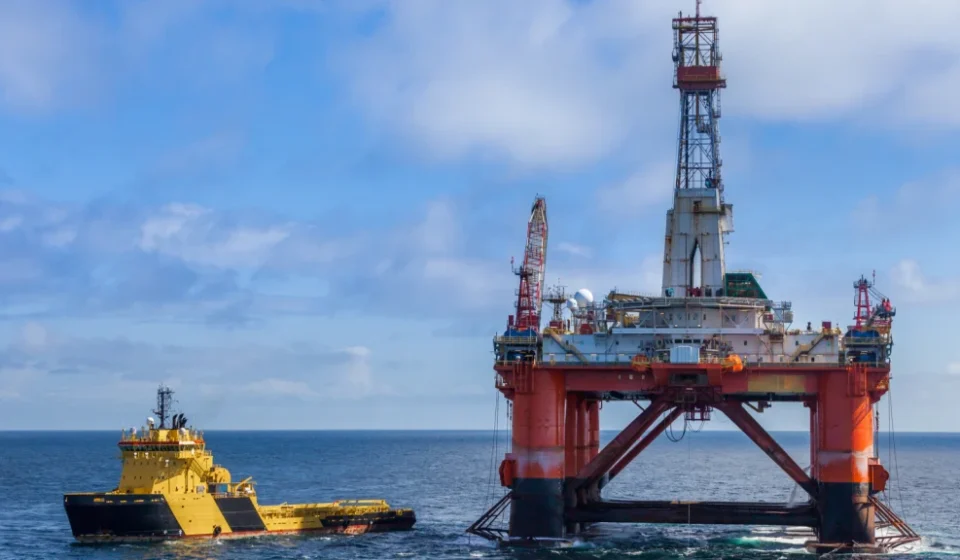
The Strategic Consolidation of Offshore Drilling Giants Valaris and Transocean Signals a Structural Shift in Global Capital Markets

The global investment landscape is currently witnessing a significant transition as the dominance of mega-cap technology firms, colloquially known as the Magnificent Seven, faces a robust challenge from the resurgence of the industrial and energy sectors. This rotation, which began to accelerate in late 2025, reflects a broader market realization that the digital revolution remains fundamentally tethered to the physical constraints of the real economy. As investors pivot toward asset-heavy sectors, the energy industry—particularly offshore drilling—has emerged as a focal point for long-term capital allocation. The most prominent evidence of this trend is the pending $5.8 billion merger between Valaris Limited and Transocean Ltd., a move that seeks to consolidate the high-specification drilling market and capitalize on the growing demand for deepwater exploration.
The market’s long-standing concentration in high-growth technology stocks is showing signs of fragmentation. For much of the early 2020s, the Magnificent Seven—comprising Nvidia, Apple, Microsoft, Alphabet, Amazon, Meta, and Tesla—captured the lion’s share of investor interest and capital inflow. However, since the latter half of 2025, sectors such as energy, industrials, and materials have begun to outperform their technology counterparts. This shift is driven by the increasing necessity for physical infrastructure to support the very AI boom that initially fueled the tech rally. Data centers, hardware manufacturing, and the power grids required to sustain them demand massive quantities of energy and raw materials, leading to a renewed valuation of companies that manage these critical resources.
The Valaris and Transocean Merger: Strategic Rationale and Terms
In a move that signifies the bottoming of the offshore drilling cycle and the beginning of a sustained recovery, Transocean Ltd. announced on February 9, 2026, its intention to acquire Valaris Limited. The transaction, valued at approximately $5.8 billion, is structured as an all-stock deal, reflecting the industry’s preference for scale and balance sheet stability over aggressive cash expenditure. Under the terms of the agreement, Valaris shareholders are slated to receive 15.235 shares of Transocean for each share of Valaris held. This exchange ratio represents a 31.6% premium over the trading price of Valaris shares prior to the announcement.
Upon the successful completion of the merger, which is anticipated in the fourth quarter of 2026, Transocean shareholders will hold a 53% stake in the newly formed entity, while Valaris shareholders will retain the remaining 47%. The combined company is projected to possess an enterprise value of approximately $17 billion. Perhaps most importantly for institutional investors, the merger will create an industry-leading backlog of roughly $10 billion in contracted work, providing a high degree of revenue visibility in an traditionally volatile sector.
Operational Synergy and the Global Offshore Fleet
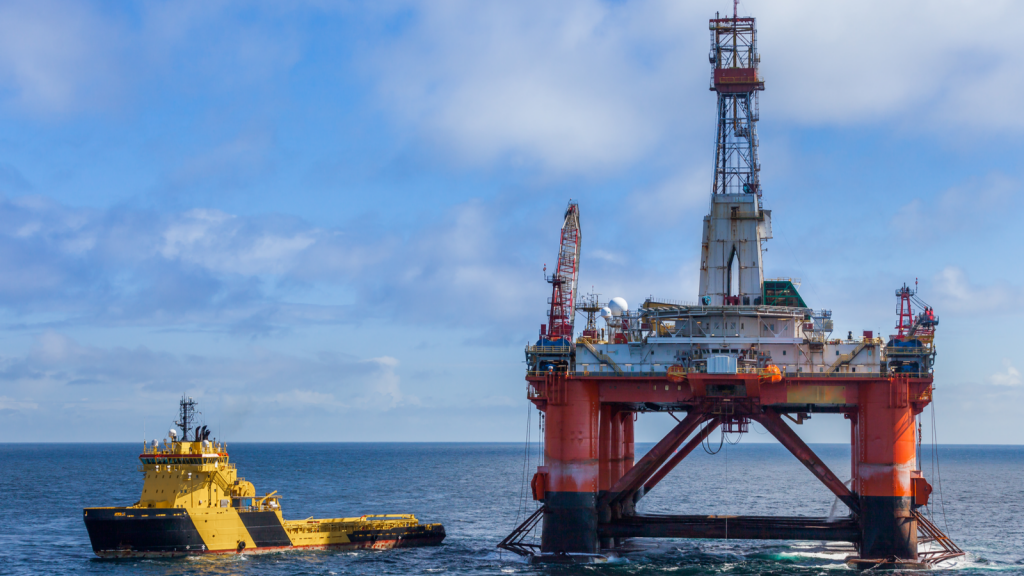
The consolidation of Valaris and Transocean will result in one of the most technologically advanced offshore drilling fleets in the world. The combined inventory will consist of 73 rigs, a figure that includes 33 ultra-deepwater drillships, nine semisubmersibles, and 31 modern jackups. This fleet composition is strategically aligned with current market trends, where oil and gas majors are increasingly prioritizing high-specification rigs capable of operating in harsh environments and extreme depths.
Ultra-deepwater drillships, in particular, are the most sought-after assets in the current environment. These vessels are equipped with advanced dynamic positioning systems and dual-derrick capabilities, allowing for more efficient drilling operations in water depths exceeding 7,500 feet. By controlling nearly half of the world’s active ultra-deepwater fleet, the combined Transocean-Valaris entity will gain significant pricing power and the ability to optimize rig mobilization across global offshore basins, including the U.S. Gulf of Mexico, Brazil, and West Africa.
Financial Resilience and Quarterly Performance
Despite the historical volatility associated with crude oil prices, Valaris Limited has demonstrated remarkable financial stability leading up to the merger. In the second quarter of 2026, the company reported operating revenue of $539 million, net income of $47 million, and an adjusted EBITDA of $97 million. A key metric highlighting the company’s operational excellence was its 98% revenue efficiency, a measure of how effectively the company converts its contracts into actual billable time by minimizing rig downtime.

Furthermore, Valaris has continued to secure new contracts even as the merger process unfolds. The company recently confirmed that two additional drillships are scheduled to begin new multi-year contracts before the end of 2026. This steady accumulation of work underscores the "sticky" nature of the current offshore cycle; unlike land-based shale drilling, which can be scaled up or down rapidly, offshore projects involve multi-billion-dollar investments and multi-year timelines that are less sensitive to short-term fluctuations in the spot price of oil.
Historical Context: Navigating the Cyclicality of Offshore Drilling
The offshore drilling industry is famously cyclical, characterized by periods of intense capital investment followed by prolonged downturns. The industry reached notable lows in 2010, following the Deepwater Horizon incident, and again in 2016 during the global oil glut. During these periods, many companies were forced to restructure or consolidate to survive. However, history also demonstrates that recoveries in this sector tend to be abrupt and powerful.
The current recovery is distinct from previous cycles due to the "high-grading" of assets. In the 2010-2014 boom, the market was flooded with older, less efficient rigs. Today, the supply of rigs has been rationalized through scrapping and consolidation, while demand is concentrated on the highest-tier technology. This has created a supply-demand imbalance that favors rig owners. Industry analysts suggest that the market is entering a "golden age" for deepwater production, as the depletion of easy-to-reach onshore reserves forces producers back into the ocean.
Regulatory Landscape and the Path to Closing
A merger of this magnitude inevitably attracts the attention of federal regulators. The U.S. Department of Justice (DOJ) conducted a thorough antitrust investigation under the Hart-Scott-Rodino (HSR) Act to determine if the combination of Valaris and Transocean would result in a monopoly that could unfairly drive up costs for energy producers. On September 30, 2026, the DOJ officially closed its investigation without challenging the merger, removing a significant hurdle for the two companies.

The deal now moves into its final stages, with the companies working to satisfy remaining closing conditions, including shareholder approvals and final regulatory clearances in international jurisdictions where both firms operate. Management teams from both Valaris and Transocean have expressed confidence that the combination will be finalized by the end of the fourth quarter of 2026. This timeline aligns with the broader market’s expectation for a stronger, more consolidated energy sector heading into 2027.
The AI Connection: Why Infrastructure is the New Growth Engine
The rotation away from traditional Big Tech is not necessarily a rejection of artificial intelligence, but rather a strategic expansion into the infrastructure required to power it. The massive compute requirements of AI have led to a surge in demand for electricity. For instance, Anthropic recently indicated a decade-long commitment of over $500 billion toward compute infrastructure. This level of investment is creating bottlenecks not just in semiconductor chips, but in the power generation and cooling systems that support them.
Copper, for example, has seen a significant demand spike due to its necessity in electrical wiring and data center construction. Companies like Freeport-McMoRan have become "AI plays" by proxy because of their role in supplying the copper required for the digital transition. Similarly, the energy sector—both renewable and traditional—is being re-evaluated as a critical utility for the tech industry. Offshore drilling, by providing a stable and scalable source of global energy, sits at the foundation of this new industrial hierarchy.
Implications for Investors and the Global Economy
The rise of Valaris and its impending merger with Transocean represent more than just a corporate transaction; they are bellwethers for a regime change in the financial markets. The "Magnificent Seven" era was defined by software, platform dominance, and low interest rates. The emerging era appears to be defined by "scarce assets"—tangible resources that cannot be easily replicated or digitized.

For investors, the implications are clear: the search for value is moving down the supply chain. While Valaris has already seen a year-to-date appreciation of approximately 65%, the long-term catalysts remain in place. The combination of improving rig utilization rates, higher day-rates for ultra-deepwater vessels, and the synergies gained from the Transocean merger suggest that the sector still has room for growth.
As the real economy reasserts its importance, the companies that facilitate the extraction and delivery of energy will likely remain at the forefront of the market’s attention. The Valaris-Transocean merger is a testament to the belief that the future of the global economy is not just found in the cloud, but also in the deep, resource-rich waters of the world’s oceans. The successful integration of these two giants will likely set the standard for energy consolidation in the years to come, providing a blueprint for how legacy industries can thrive in an increasingly tech-driven world.