

The Engineering Paradox of the Lunar Surface
The technical requirements for a lunar spacesuit in the 1960s presented a paradox that stumped the primary industrial contractors of the era. The moon’s environment is one of the most hostile known to man, characterized by a complete lack of atmospheric pressure and extreme thermal volatility. Temperatures on the lunar surface fluctuate from a searing 260°F in direct sunlight to a frigid -297°F in the shade. To survive, an astronaut required a portable, pressurized ecosystem.
Early designs from major defense and aeronautics firms resembled rigid suits of armor. While these hard-shell designs provided protection and maintained pressure, they were prohibitively heavy and lacked the mobility required for scientific work. An astronaut in a rigid suit could not easily bend over to collect geological samples or climb the ladder of the Lunar Module. NASA required a solution that offered the strength of a pressurized vessel with the flexibility of high-end athletic wear.
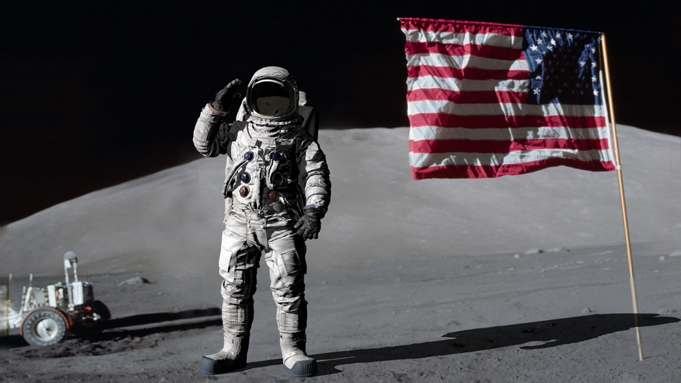
The solution came from the International Latex Corporation (ILC), then a division of the company known for the Playtex brand. While other contractors approached the problem through the lens of hard engineering and rigid structures, ILC’s engineers and seamstresses approached it through the science of "living" fabrics. They understood how to combine layers of latex, nylon, and neoprene to create a garment that could expand and contract with the human body while maintaining a life-sustaining internal environment.
Chronology of the Apollo Suit Development
The path to the final A7L spacesuit was fraught with institutional skepticism. In 1962, NASA initially awarded the primary suit contract to Hamilton Standard, which then subcontracted the pressure garment to ILC. However, cultural clashes between the rigid management style of the aerospace prime and the experimental, hands-on approach of the latex specialists led to a cancellation of the partnership.
By 1965, with the Apollo program falling behind schedule, NASA held an unprecedented "bake-off" competition. ILC entered as an underdog, competing against the established industry leaders. The ILC prototype outperformed all rivals in mobility tests and pressure integrity. NASA subsequently awarded ILC the prime contract for the pressure garment, with Hamilton Standard providing the life-support backpack.
The manufacturing process was an exercise in extreme precision. The Apollo suits consisted of 21 layers of material, including Beta cloth (a fireproof material developed after the tragic Apollo 1 fire), Kapton for heat reflection, and Teflon-coated fabrics for abrasion resistance. Because a single misplaced stitch could lead to a catastrophic pressure leak, ILC employed master seamstresses who were accustomed to the intricate assembly required for high-end foundation garments. These technicians worked with tolerances of 1/64th of an inch, sewing by hand what machines could not reliably produce.

The Modern Parallel: The AI Infrastructure Supercycle
Just as NASA’s lunar ambitions were tethered to the specialized capabilities of a latex manufacturer, today’s artificial intelligence (AI) revolution is dependent on a complex web of suppliers that extend far beyond the well-known "hyperscalers." While companies like Microsoft, Amazon, Google, and Meta dominate the headlines with their multi-billion-dollar AI investments, the viability of their vision rests on a specialized global computing stack.
Market analysts have identified a multi-year "infrastructure supercycle" currently underway. The four major hyperscalers are projected to spend more than $400 billion in capital expenditures in 2025, a figure expected to climb to $700 billion by 2026. This capital is being deployed to rebuild the global digital architecture to support Large Language Models (LLMs) and generative AI applications.
While much of the market’s attention has focused on the "compute" layer—specifically the Graphics Processing Units (GPUs) produced by firms like NVIDIA—the "storage" layer is emerging as a critical bottleneck. Training an LLM requires the ingestion of datasets that can reach multiple petabytes (one million gigabytes) in size. Furthermore, running these models in real-time (inference) requires rapid access to model weights that can exceed hundreds of gigabytes.
The Role of NAND Flash and Specialized Storage
In this context, companies like SanDisk (now a pure-play NAND flash company following its spin-off from Western Digital) have become the modern equivalent of ILC. NAND flash is the non-volatile storage technology that allows for the high-speed data retrieval necessary for AI operations. Unlike traditional hard disk drives, NAND flash has no moving parts, making it faster, more durable, and more energy-efficient—essential qualities for the massive data centers powering AI.
The semiconductor industry recently emerged from a severe downturn in 2023–2024, caused by post-pandemic oversupply and price collapses. However, the surge in AI demand has catalyzed a sharp recovery. Industry data suggests that the storage requirements for AI-optimized servers are significantly higher than those of traditional enterprise servers. This shift has created a dual-growth engine for specialized storage suppliers: a cyclical recovery in consumer electronics and a secular explosion in AI infrastructure.
Strategic Convergence: The Emergence of "XPANSE"
The reliance on specialized suppliers is perhaps most evident in the evolving technological empire of Elon Musk. Analysts have noted a growing convergence between Musk’s various ventures—Tesla, SpaceX, xAI, and X (formerly Twitter). This unified ecosystem, often referred to as "XPANSE," aims to integrate artificial intelligence, orbital logistics, robotics, and energy manufacturing into a single vertical.
Two specific projects within this vision highlight the necessity of external specialists:
- Orbital Data Centers: To solve the massive energy and cooling requirements of AI, Musk has proposed placing data centers in orbit. In space, these facilities could utilize near-constant solar energy and dissipate heat into the vacuum, avoiding the terrestrial costs of land use and water cooling. This requires specialized aerospace hardware that can protect sensitive semiconductors from cosmic radiation and extreme thermal cycling—a challenge reminiscent of the Apollo suit requirements.
- The Texas "Terafab": A proposed 100-million-square-foot semiconductor and manufacturing complex in Texas aims to localize the production of advanced chips and robotics components. To make this a reality, Musk requires a steady supply of rare earth elements, high-performance semiconductor manufacturing equipment (SME), and advanced neodymium magnets for the Optimus robotic actuators.
Economic Implications for Small-Cap Specialists
From a journalistic and economic perspective, the "supplier effect" creates a unique dynamic in the financial markets. While a major contract from a company like SpaceX or Tesla might represent a incremental gain for a large-cap prime contractor, that same contract can be transformative for a small or mid-cap specialist.
History shows that the "unexpected specialists" often capture a disproportionate share of the innovation’s value. During the Apollo era, while North American Rockwell and Grumman built the massive spacecraft, the reliability of the mission—and the lives of the crew—rested on the artisanal precision of ILC’s seamstresses. In the modern era, as AI and space exploration move from theoretical concepts to industrial realities, the market is seeing a similar flight to quality among niche providers of aerospace alloys, specialized memory, and power management systems.
Broader Impact and Conclusion
The story of the Apollo spacesuit serves as a reminder that the most visible face of progress is rarely the only one. Neil Armstrong’s "one small step" was supported by a literal fabric of innovation woven by people who had never built a rocket.
As the global economy enters a new phase of technological expansion, the lesson for observers and industry participants is clear: the most ambitious visions are only as viable as their smallest components. Whether it is the $15 aerospace stock providing a critical component for Starship or the NAND flash provider enabling the next generation of AI, these specialists are the silent architects of the future. Just as NASA found its answer in a lingerie factory, the next great leap in technology will likely depend on a supplier that currently operates far outside the glare of the mainstream spotlight.
The success of the "XPANSE" vision or the AI supercycle will not be determined solely by the CEOs of the world’s largest companies, but by the engineers and specialized manufacturers who solve the "life-or-death" technical challenges that the giants cannot solve alone. In the history of innovation, the most critical link in the chain is often the one that was least expected.