
Overconfidence Bias and the Psychological Pitfalls of Financial Investing: A Quantitative Analysis of Market Behavior

The human psychological framework, while optimized for survival in ancestral environments, frequently serves as a significant impediment to success within the complex landscape of modern financial markets. Behavioral economists and market analysts have long identified a series of cognitive "bugs" or biases that lead investors to make irrational decisions, often resulting in substantial capital losses. Among these, overconfidence bias—frequently cited as the "mother of all cognitive biases"—stands out as a primary driver of market inefficiency and individual portfolio underperformance. By prioritizing subjective judgment over objective data, investors often fall victim to the illusion of knowledge, a phenomenon where their confidence in their own predictions far exceeds the statistical accuracy of those outcomes.
The Cognitive Architecture of Overconfidence
Overconfidence in a financial context is defined as the tendency for an individual to overestimate their own abilities, the quality of their information, and their capacity to predict future market movements. While healthy confidence is a prerequisite for taking the calculated risks necessary for entrepreneurship and career advancement, overconfidence functions as a blind spot. It obscures the reality of market volatility and the limitations of personal expertise.
Statistical evidence consistently supports the prevalence of this bias across various sectors of society. Research indicates that approximately 65% of Americans believe they possess above-average intelligence, a mathematical impossibility. In the realm of daily activities, 93% of American drivers categorize their skills as being in the top 50th percentile. This "better-than-average" effect translates directly to the stock market, where retail investors often believe they can outmaneuver institutional algorithms and professional fund managers through intuition or "gut feelings."
The consequences of this psychological state are not merely theoretical. Historical precedents, such as the sinking of the RMS Titanic—a vessel famously deemed "unsinkable" by its builders and operators—serve as metaphors for the catastrophic failures that occur when confidence is decoupled from empirical reality. In the financial sector, this manifests as a failure to implement stop-loss orders, an over-concentration in "hot" sectors, and the dismissal of contradictory evidence.
A Chronology of Psychological Market Cycles
The impact of psychological biases typically follows a predictable timeline within market cycles. Understanding this chronology is essential for investors seeking to mitigate the effects of their own cognitive predispositions.
- The Accumulation Phase and Recency Bias: Following a period of market stability or growth, investors begin to exhibit "Recency Bias," the tendency to believe that recent trends will continue indefinitely into the future. This leads to an initial surge in confidence.
- The Euphoria Phase and Crowd-Seeking Behavior: As prices rise, "Crowd-Seeking Bias" takes hold. Overconfidence peaks as investors see their peers making gains, leading to a disregard for traditional valuation metrics. At this stage, the belief in one’s "superior" insight is often at its highest, despite the increased risk of a market correction.
- The Precipice of Overconfidence: Investors often ignore early warning signs or shifts in fundamental data, convinced that their chosen assets are immune to broader market downturns.
- The Realization and Correction: When the market inevitably corrects, the gap between the investor’s confidence and the reality of the asset’s value closes abruptly. This often results in "panic selling," the inverse of the overconfidence that led to the initial bubble.
Quantitative Analysis vs. Subjective Intuition
To combat the inherent flaws of the human brain, professional analysts have turned toward quantitative systems that prioritize hard data over emotional responses. The core of this approach lies in the transition from qualitative "hunches" to empirical evidence.

A primary example of this methodology is the tracking of institutional buying pressure, often referred to as "Precursor Intelligence." Because large institutional investors—such as pension funds, hedge funds, and investment banks—account for the vast majority of market volume, their movements serve as a more reliable indicator of future price action than individual sentiment.
Case Study: Sezzle Inc. (SEZL)
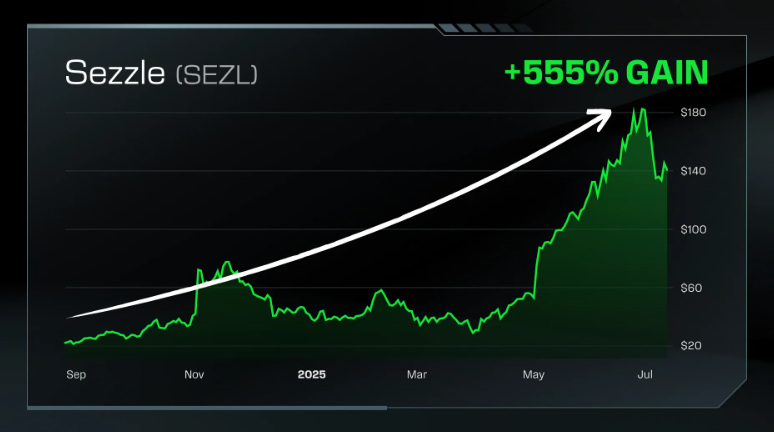
The efficacy of a data-driven approach was demonstrated through the performance of Sezzle Inc. (SEZL) between late 2024 and mid-2025. In September 2024, quantitative models identified a significant shift in Sezzle’s ownership structure, indicating that large-scale institutional investors were beginning to accumulate positions. This signal appeared well before the stock became a point of interest for the broader retail public.
By following the numbers rather than waiting for media confirmation or a "feeling" about the company’s "Buy Now, Pay Later" business model, investors who utilized these quantitative signals were able to enter the position early. By July 2025, the stock had realized a gain of approximately 555%. This instance underscores the value of neutralizing overconfidence by outsourcing decision-making to a disciplined, math-based system.
Supporting Data: The Cost of Emotional Investing
The disparity between market returns and the returns achieved by the average investor provides a stark illustration of the "behavioral gap." According to various annual studies by firms like Dalbar, the average retail investor consistently underperforms the S&P 500. This underperformance is frequently attributed to poorly timed entries and exits driven by the very biases currently under discussion.
Furthermore, the 2024 Retirement Confidence Survey conducted by the Employee Benefit Research Institute (EBRI) highlighted a significant disconnect between confidence and preparation. The survey found that 61% of American workers feel confident they will have enough money to live comfortably throughout their retirement. However, when contrasted with actual savings data and the rising cost of living, this confidence often lacks a foundation in actuarial reality. For many, overconfidence serves as a psychological defense mechanism that prevents the necessary—and often uncomfortable—steps of rigorous financial planning and disciplined saving.
Institutional Response and Market Implications
The financial industry has responded to the prevalence of cognitive biases by increasingly automating the investment process. High-frequency trading (HFT) and algorithmic portfolios are designed specifically to exploit the emotional mistakes of human traders. When a retail investor holds a losing position too long due to overconfidence, or sells a winning position too early due to fear, institutional algorithms are often on the other side of the trade.
Market analysts suggest that the "democratization" of trading through mobile apps has, paradoxically, increased the impact of overconfidence bias. The ease of access to markets can create an "illusion of control," where the user mistakes a user-friendly interface for a mastery of market dynamics.
To mitigate these risks, experts recommend several structural strategies:
- Rule-Based Selling: Establishing predetermined exit points (both for profit-taking and loss-mitigation) to remove the emotional burden of the decision.
- Diversification Based on Correlation Data: Using mathematical models to ensure that assets are truly diversified, rather than simply holding different stocks within the same over-hyped sector.
- The "Precursor" Approach: Monitoring 13F filings and institutional flow data to align individual portfolios with "smart money" movements rather than retail trends.
Broader Impact: The Future of Behavioral Finance
The study of overconfidence and other cognitive biases is no longer a niche field of psychology; it has become central to modern portfolio theory. As markets become more volatile and information moves faster, the ability to remain objective is becoming a more valuable commodity than the information itself.
The reality remains that the human brain, while a marvel of biological engineering, was not designed for the abstractions of 21st-century equity markets. Analysts argue that attempting to "out-think" the market using the same brain that evolved for immediate physical survival is akin to using an antiquated tool for a precision task.
The move toward "Precursor Intelligence" and other quantitative frameworks represents a maturation of the investing discipline. By acknowledging the "bugs" in the human mind—specifically the tendency toward overconfidence—investors can build robust systems that rely on institutional signals and fundamental shifts. In an era dominated by noise and rapid sentiment shifts, the most successful market participants will likely be those who recognize their own psychological limitations and choose to let the data lead the way.
As institutional buying continues to dictate the primary direction of the market, the gap between data-driven investors and those relying on overconfident intuition is expected to widen. The lesson for the modern investor is clear: confidence is a tool for action, but objective data is the only reliable tool for sustained performance. Eliminating the "human element" from the execution of a strategy may be the most effective way to ensure that the human element ultimately enjoys the rewards of financial security.