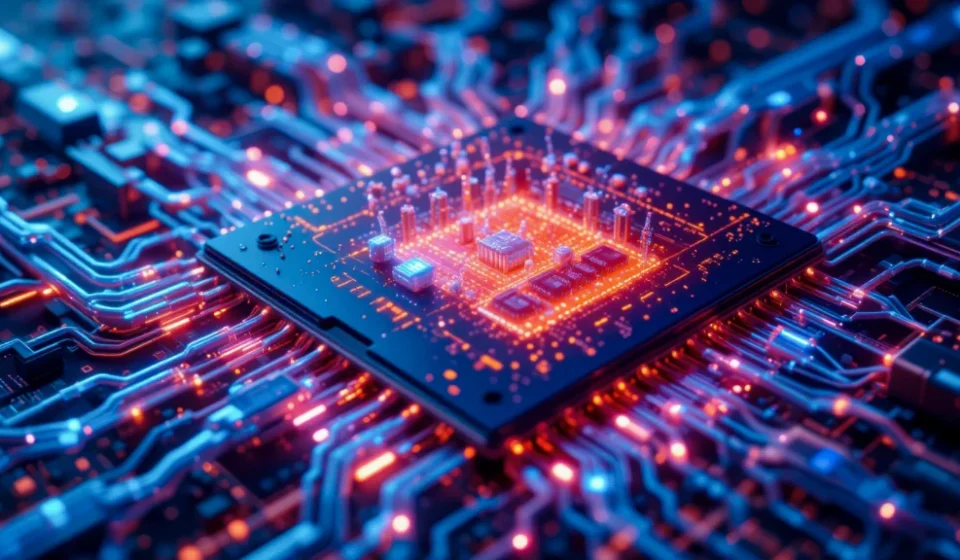
The Quantum Leap in Computing and the Transition from Artificial Intelligence to Scalable Quantum Systems and Robotics

The trajectory of modern computing is currently undergoing a fundamental shift, moving from the refinement of classical artificial intelligence to the realization of scalable quantum computing and advanced robotics. This evolution mirrors the historical "AlexNet moment" of 2012, when University of Toronto graduate student Alex Krizhevsky demonstrated that scale and raw computing power could outperform programmed precision in image recognition. By utilizing two Nvidia Corp. (NVDA) graphics cards and a dataset of over a million images, Krizhevsky’s AlexNet model transformed the AI industry, establishing the "more is better" training philosophy that eventually led to the development of Large Language Models like ChatGPT. Today, a similar paradigm shift is occurring within the quantum computing sector, catalyzed by breakthroughs in hardware scaling and error reduction.
The 2024 Quantum Breakthrough: Alphabet’s Willow Chip
In December 2024, the quantum computing landscape reached a critical inflection point with the introduction of the Willow chip by Alphabet Inc. (GOOGL). For three decades, the primary obstacle to practical quantum computing was the scaling problem: as systems grew larger, error rates typically increased, making complex calculations impossible. The Willow chip successfully reversed this trend, demonstrating that increasing the number of qubits could actually reduce error rates through sophisticated error-correction techniques.
The performance metrics of the Willow chip are staggering. In a benchmark test, the processor completed a specific calculation in five minutes that would have required the world’s most powerful classical supercomputers approximately 10 septillion years to finish. This achievement has provided a definitive roadmap for the industry, suggesting that quantum supremacy is no longer a theoretical goal but a matter of engineering and scale. As investors look for the "next AI," quantum computing has emerged as the primary candidate, echoing the early-stage volatility and massive potential of the AI sector a decade ago.
Understanding the Quantum Mechanism: Bits vs. Qubits
To appreciate the significance of recent breakthroughs, it is essential to distinguish between classical and quantum architecture. Traditional computers are digital, operating on a binary system of "1s" and "0s." Every piece of software, from word processors to advanced video games, is ultimately a sequence of these two states. Quantum computing, however, leverages the principles of quantum mechanics—specifically superposition and entanglement—to allow "qubits" to exist in multiple states simultaneously.
This capability allows quantum computers to process information in "shades of gray," exploring millions of possibilities at once rather than sequentially. While the science has long been applied in technologies such as magnetic resonance imaging (MRI) and atomic clocks, the challenge has remained the stability of the qubits. Atoms used in quantum systems are notoriously difficult to contain, often slipping through physical barriers or losing their quantum state—a phenomenon known as decoherence. The 2024 Willow chip breakthrough addressed this by proving that larger, more complex chips could stabilize these environments, paving the way for commercial-grade hardware.
The Competitive Landscape: Trapped Ions and the IonQ Strategy
IonQ Inc. (IONQ) currently stands as the most prominent pure-play quantum computing firm. The company utilizes "trapped ion" technology, which is often characterized as the "precision approach" to quantum computing. In this method, individual ions are suspended in a vacuum using electromagnetic fields and manipulated with lasers. IonQ’s laboratory tests have demonstrated a qubit reliability rate of 99.99%, making it a leader in hardware fidelity.
The company’s growth strategy has been aggressive and capital-intensive. In July 2025, IonQ successfully raised $1 billion at approximately $55 per share, followed three months later by a $2 billion round at $93 per share, representing a significant premium over market prices. This capital has been deployed to acquire smaller rivals and build a vertically integrated empire. Key acquisitions include:
- Oxford Ionics: A specialist in electronic qubit control.
- Bleximo: A firm focused on application-specific integrated circuits (ASICs) for quantum systems.
- Pacific Northwest National Laboratory (PNNL) Assets: Enhancing the company’s manufacturing capabilities for ion traps.
This consolidation has resulted in a 287% year-over-year revenue increase, reaching $80 million in the most recent quarter. IonQ’s roadmap is the most ambitious in the sector, with a target of shipping 2 million physical qubits and 80,000 error-corrected qubits by 2030. For comparison, IBM Corp. (IBM), a major player in the space, is targeting only 200 qubits for its flagship 2029 machine. Despite a 50% decline in share price since early 2024 due to broader market cooling, IonQ maintains a valuation of roughly $16 billion, or 35 times forward sales, reflecting high investor expectations for its first-mover advantage.
Scaling Through Neutral Atoms: The Case for Infleqtion
While IonQ focuses on precision, Infleqtion Inc. (INFQ) is pursuing a "scaling approach" known as neutral-atom quantum computing. Often referred to as "cold" quantum, this technology uses lasers to chill atoms to near-absolute zero, holding them in a dense grid with beams of light. The primary advantage of neutral atoms is the ability to pack thousands of qubits into a very small area without the interference issues seen in other methods.
Infleqtion has distinguished itself through fiscal discipline and government partnership. With a quarterly burn rate of $14 million and nearly $600 million in cash reserves, the company is positioned to sustain operations into the 2030s. Unlike many of its competitors, Infleqtion is already generating revenue through the shipment of quantum-adjacent hardware. This includes:
- Quantum Clocks: High-precision timing devices for global positioning.
- Atom-based Receivers: Advanced communication tools for the defense sector.
- Quantum Navigational Tools: Systems that allow for navigation without reliance on GPS satellites.
The firm has secured contracts with NASA and the Pentagon and recently received a letter of intent from the U.S. Commerce Department that could provide up to $100 million in additional funding. This combination of government backing and commercialized hardware provides a margin of safety that is rare in the early-stage quantum industry.
Superconduction and the European Front: IQM Quantum Computers
The third major pillar of the quantum industry is superconductivity, the approach currently favored by tech giants Alphabet and IBM. IQM Quantum Computers Oyj (IQMX), a spin-off from Aalto University in Finland, has emerged as Europe’s leader in this field. Superconducting quantum computers operate by etching tiny circuits onto silicon chips and cooling them to temperatures colder than deep space, causing the circuits to behave like artificial atoms.
The primary benefit of superconductivity is speed. Silicon gates can transition between states in nanoseconds, making these chips up to 1,000 times faster than trapped ion or neutral-atom systems. However, these chips suffer from high rates of "forgetfulness," or short coherence times, often losing their memory in less than a millisecond.
IQM has successfully sold 26 quantum computers to research laboratories worldwide, establishing itself as a key supplier for the academic and scientific communities. With a valuation of approximately $1.8 billion, IQM is significantly smaller than IonQ, making it a potential acquisition target for larger tech conglomerates looking to bolster their quantum portfolios. However, the company faces liquidity risks, with approximately $337 million in cash, likely necessitating a capital raise by 2028.
The Parallel Evolution of AI-Powered Robotics
While quantum computing represents a long-term technological horizon, the field of robotics is experiencing a more immediate "AlexNet moment." For decades, the primary limitation of robotics was not mechanical—humanoid robots have been able to perform complex physical feats like backflips for years—but rather the software required to navigate unstructured environments.
The same "more is better" data training techniques that revolutionized AI are now being applied to robotics. By training neural networks on massive datasets of human movement and environmental interaction, engineers are finally bridging the gap between laboratory prototypes and commercialized humanoid robots. Recent demonstrations at the World Humanoid Robot Games in Beijing highlighted robots capable of learning new tasks autonomously, a development that suggests mass commercialization could occur as early as 2026.
Unlike quantum computing, which may require another decade to reach full maturity, AI-powered robotics is nearing a technological finish line. Industry analysts, including Luke Lango of InvestorPlace, suggest that the convergence of computer vision, generative AI, and advanced actuators is creating a "megadeal" environment for private and early-stage robotics startups.
Financial Analysis and Market Outlook
The quantum computing sector experienced a period of extreme mania in 2024 and early 2025, characterized by firms like Quantum Computing Inc. (QUBT) surging 1,900% despite negligible revenue. That speculative bubble has since deflated, with many stocks down 50% or more. This correction has created an entry point for long-term investors who recognize that the fundamental breakthroughs, such as Alphabet’s Willow chip, remain intact.
The industry currently faces a "waiting period" similar to the gap between the 2012 AlexNet breakthrough and the 2022 launch of ChatGPT. While the roadmap for quantum supremacy is clear, the transition from laboratory success to a "useful" machine—one capable of solving real-world problems in drug discovery, cryptography, or materials science—is estimated to take until at least 2030, and possibly 2034.
Conclusion: The Long-Term Trajectory of Deep Tech
The integration of quantum computing and AI-powered robotics represents the next great frontier of the digital age. While quantum computing offers a decade-long growth horizon with the potential to redefine the limits of mathematics and physics, robotics offers a more immediate shift in the global labor and manufacturing landscape.
Investors in these sectors must account for significant risks, including high cash burn rates, the lack of immediate revenue, and the uncertainty of which specific quantum architecture—ions, atoms, or superconductors—will become the industry standard. However, as the 2024 breakthroughs in scaling have demonstrated, the transition from "if" to "when" has already occurred. The companies currently building the infrastructure for this quantum future are positioned to become the next generation of technology titans, provided they can navigate the long road to commercialization.