Diablo IV on Nintendo Switch 2: A Resurrected Masterpiece Redefining Handheld ARPGs

The much-anticipated release of Diablo IV on the Nintendo Switch 2 marks a significant moment for both the venerable franchise and the hybrid console’s growing library of high-fidelity experiences. After initial skepticism and a period of personal engagement with the game on other platforms, this reviewer found a compelling reason to dive back into the grim world of Sanctuary, with the Switch 2 port proving to be a remarkably robust and engaging rendition of Blizzard’s acclaimed action RPG. Despite minor visual concessions and occasional performance hiccups, the core gameplay loop of satisfying combat, intricate build crafting, and addictive loot acquisition shines through, transforming Diablo IV into an experience that is difficult to put down.
A Grim Dawn for a New Era of Gaming
Diablo IV, originally launched in 2023, presented a complex and often overwhelming introduction to the series for many players, including this reviewer. The game’s intricate lore, deep skill systems, and wealth of itemization can be a daunting prospect for newcomers. However, the Nintendo Switch 2 version, which conveniently bundles all post-launch expansions including the Lord of Hatred DLC featuring the Paladin and Warlock classes, offers an immediate and comprehensive entry point. This comprehensive package ensures that players have access to the full spectrum of character options and narrative content from the outset, a significant advantage for those embarking on their first journey into Sanctuary.
The narrative of Diablo IV plunges players into a world teetering on the brink of infernal chaos. Lilith, the Daughter of Hatred, has returned to Sanctuary, a world she co-created with the angel Inarius. Her motivations are complex: she seeks to empower humanity with the latent abilities of their Nephalem ancestors, a move that threatens the established order of both Heaven and Hell. Caught in the crossfire are the remnants of the Horadrim, an ancient order dedicated to combating demonic threats. The player’s role is to navigate this perilous landscape, deciphering Lilith’s true intentions and confronting the escalating demonic incursions. While the overarching narrative is rich and engaging, its intricate details can sometimes take a backseat to the immediate demands of combat and loot acquisition, a hallmark of the Diablo series.

Navigating the Labyrinth of Sanctuary: Initial Impressions and Player Investment
Upon booting up Diablo IV on the Nintendo Switch 2, players are immediately presented with a deluge of information. The extensive skill trees, the nuances of item affixes, and the constant stream of in-game notifications can create a steep learning curve, even for those with prior experience with the franchise. This initial phase can feel akin to requiring a dedicated notepad and pen to fully grasp the game’s mechanics. However, this initial hurdle is surmountable, and the game’s intuitive design soon allows players to acclimate to its complexities.
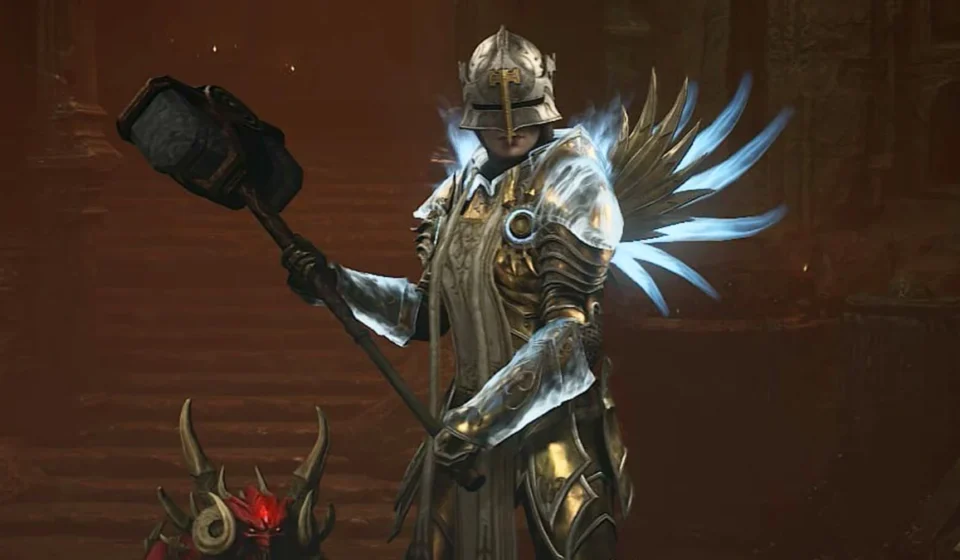
The character creation process is the first step in shaping one’s destiny in Sanctuary. Players choose from a diverse roster of classes, each offering a unique playstyle. The inclusion of the Paladin and Warlock, recent additions to the Diablo IV roster, adds further depth and replayability. This reviewer opted to revisit the series with a Paladin, a class renowned for its blend of melee prowess and divine power. The Paladin’s four distinct specializations—Juggernaut, Zealot, Judicator, and Disciple—offer a multifaceted approach to combat, allowing players to cleave through demonic hordes with brutal melee attacks while simultaneously smiting foes with holy buffs and devastating beams of celestial energy. The game’s leveling system is designed to be intrinsically rewarding, offering a constant influx of new abilities and passive enhancements that encourage experimentation and strategic adaptation.
The Art of the Build: Deep Customization and the Allure of Loot
Diablo IV’s robust build crafting system is a cornerstone of its enduring appeal. The skill tree provides a granular level of control, allowing players to meticulously customize their character’s abilities. Active skills can be augmented through multiple ranks, with further enhancements often derived from equipped gear and other character bonuses. As players progress beyond level 50, the Paragon system introduces an additional layer of customization, enabling further specialization and the synergistic interplay of abilities. This ongoing process of refinement ensures that players are not merely increasing their character’s power but are actively shaping and evolving their combat effectiveness. The ability to respec skill points offers a crucial safety net, encouraging bold experimentation without the fear of permanent commitment to a suboptimal build.
The true gravitational pull of Diablo IV, however, lies in its meticulously designed loot system. The pursuit of ever-more-powerful gear is a relentless and deeply satisfying endeavor. Legendary items, in particular, introduce unique affixes that can fundamentally alter the behavior of skills, thereby unlocking entirely new build possibilities. This constant chase for superior equipment—whether it’s a specific weapon, a coveted armor set, or an elusive ring—provides an inexhaustible wellspring of motivation. The allure of rare drops often leads players to deviate from the main questline, venturing into treacherous dungeons even when outmatched, simply for the thrill of the encounter and the potential for a game-changing reward.

A World of Shadows: Atmosphere and Unwavering Brutality
Diablo IV’s oppressive atmosphere remains one of its most potent assets. From the nightmarish designs of its demonic adversaries to the war-torn, desolate landscapes of Sanctuary, Blizzard has meticulously crafted a world that feels consistently bleak and unforgiving. This visual artistry is amplified by a haunting soundtrack and impactful sound design, which imbue every combat encounter with a visceral sense of brutality. The satisfying clang of a Paladin’s Blessed Hammer as it connects with an enemy is a testament to the game’s immersive audio-visual presentation.
Beyond the main campaign, Diablo IV offers a wealth of endgame content designed to keep players engaged for hundreds of hours. Activities such as Helltides, Nightmare Dungeons, and other challenging encounters provide persistent opportunities for progression and reward. This commitment to post-launch content ensures that the game remains a vibrant and dynamic experience long after the initial story has concluded.
Performance and Presentation: A Seamless Transition to Handheld
The Nintendo Switch 2 port of Diablo IV, while impressive, is not without its compromises. Given the frenetic pace of the game’s combat, concerns about performance in handheld mode were understandable. However, the port largely overcomes these challenges, with only infrequent stutters marring the experience during particularly intense battles. Playing with the "Performance" toggle activated, which disables ray tracing and other advanced visual effects, prioritizes a smoother frame rate at a 1080p resolution in both handheld and docked modes. For those prioritizing visual fidelity, a "Quality" mode offers a 1440p resolution in docked mode at a stable 30 frames per second, albeit with a slight reduction in overall fluidity.
Loading times have been optimized, with swift transitions into dungeons and efficient teleportation. The developers have correctly identified that Diablo IV’s core appeal lies in its consistent and responsive gameplay rather than its graphical extravagance. Therefore, the performance-oriented mode is arguably the superior choice for an uninterrupted and engaging experience.

The port’s technical prowess is further highlighted when playing in docked mode, where it stands toe-to-toe with its PlayStation 5 and Xbox Series X|S counterparts. The control scheme has been expertly adapted to the Nintendo Switch 2’s input methods, ensuring responsive movement and satisfying combat feedback. Navigating the intricate inventory and skill menus can require a touch more patience, particularly on the smaller handheld screen when comparing gear, but these minor inconveniences do not detract from the overall enjoyment.
A Portable Sanctuary: The Handheld Advantage
Diablo IV’s design inherently lends itself to portable play. The ability to seamlessly jump into Sanctuary, clear a few dungeons, fine-tune a character’s build, and then readily set the console aside without the need for extended commitment is a significant advantage for busy players. The inclusion of cross-play and cross-progression further enhances the game’s versatility, allowing players to seamlessly transition their progress across different platforms. This feature, increasingly becoming a standard in the RPG genre, is a welcome addition that significantly amplifies the game’s accessibility and player convenience.
Verdict: A Triumph of Portability and Persistence
After numerous attempts to fully immerse myself in Diablo IV, it was the Nintendo Switch 2 version that ultimately captured my dedication. The promise of ever-more-ridiculous gear and the irresistible urge to embark on "just one more dungeon" have become a familiar refrain. While Blizzard’s port acknowledges certain concessions, such as occasional frame rate dips and subtle visual adjustments, these are easily overshadowed by the sheer quality of the core gameplay experience. The Diablo IV port for the Nintendo Switch 2 stands as a testament to modern game development, proving that even the most demanding AAA titles can find a compelling and enjoyable home on a portable platform. It is a must-have for fans of the genre and a strong contender for one of the Switch 2’s standout titles.