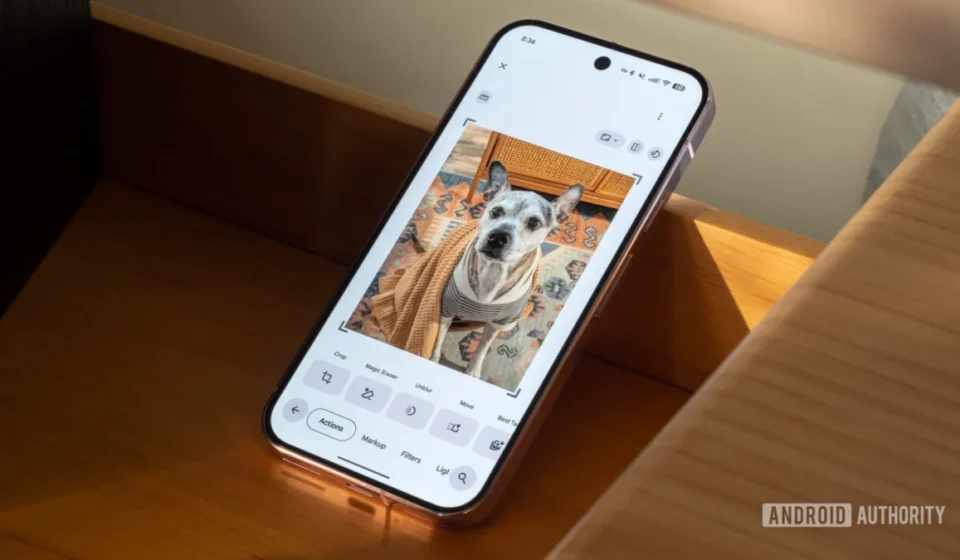
Google Photos Addresses Critical Bug Causing Edited Images to Disappear from Third-Party Applications

A recent and highly frustrating bug within Google Photos, which caused edited images to become inexplicably invisible to other Android applications, has reportedly been resolved by Google. The issue, which left users unable to share their carefully curated photographs directly from the Google Photos gallery to popular messaging platforms like WhatsApp and Telegram, has been addressed in Photos version 7.97, bringing a much-needed sigh of relief to a segment of its vast user base. This resolution follows diligent reporting by Artem Russakovskii, the founder of APKMirror, who brought the anomaly directly to the attention of the Google Photos development team and subsequently verified the efficacy of the implemented fix.
The "disappearing act" was more than a mere inconvenience; it fundamentally disrupted the seamless workflow that users have come to expect from their primary photo management application. Imagine the scenario: a user meticulously edits a photograph, perhaps enhancing colors, cropping, or applying a filter, within the Google Photos editor. Confident in their masterpiece, they then navigate to a social media or messaging application, intending to share their creation. However, upon opening the image picker within the third-party app, the freshly edited image is nowhere to be found. No error message, no warning – just an empty space where the picture should have been. Crucially, the edited photograph was not deleted; it remained perfectly accessible within the Google Photos application itself. The problem lay in its inability to be indexed or recognized by other applications on the Android operating system, creating a silo effect for newly processed media.
Understanding the "Disappearing Act": A Deep Dive into the Bug
The core of the problem stemmed from how Android’s media indexing system interacted with non-destructive edits made within Google Photos. Non-destructive editing is a feature highly valued by photographers, as it allows users to make changes to an image without permanently altering the original file. Instead, the edits are often stored as a set of instructions or metadata, or a new version of the image is created, preserving the original. While this approach offers flexibility and peace of mind, it introduces a layer of complexity for the underlying operating system. In this specific bug, it appears that after an image was edited and saved in a non-destructive manner, the Android MediaStore — the system component responsible for indexing media files and making them discoverable by all applications — was not properly updated or triggered.
A related report on Google’s Issue Tracker (issues/571218875) provides further insight, specifically identifying a problem with "local media URI indexing after non-destructive edits." This technical detail suggests that the unique identifiers (URIs) that other applications use to locate files on the device’s storage were either not being generated correctly for the edited versions, or the MediaStore was failing to refresh its index to include these new or modified URIs. The consequence was that applications like WhatsApp or Telegram, which rely on the MediaStore to present a gallery of available images, simply wouldn’t "see" the recently edited photos. The report even noted that in some cases, a full device reboot was required for the edited images to become visible again, a testament to the depth of the indexing failure. This workaround, while effective, was hardly a practical or elegant solution for routine photo sharing. Users were forced to either save a separate copy of the edited image – adding unnecessary duplication and steps – or resort to a device restart, severely hampering efficiency and user experience.
The Chronology of Discovery and Resolution
The journey from bug discovery to resolution highlights the collaborative nature of the Android ecosystem, where dedicated community members often play a pivotal role in identifying and escalating issues. The first signs of this problem emerged as isolated reports from "some Google Photos users," suggesting a gradual or specific manifestation rather than a universal, sudden breakdown. These anecdotal reports likely coalesced into a discernible pattern over time, catching the attention of power users and tech journalists.
Artem Russakovskii, a prominent figure in the Android community and founder of APKMirror, proved instrumental in bringing this particular bug to Google’s direct attention. His technical acumen and established communication channels allowed him to bypass general support queues and report the issue directly to the Google Photos development team. This direct line of communication is often crucial for expediting the resolution of complex software bugs. Russakovskii publicly documented his reporting and subsequent interactions on X (formerly Twitter), providing transparency to the community and pressure for a swift resolution.
Following his report, Google officially acknowledged the existence of the bug, confirming that the "disappearing act" was indeed a legitimate software flaw. This acknowledgment is a critical step in the bug resolution process, signaling that the development team has reproduced the issue and is actively working on a fix. The subsequent release of Google Photos version 7.97 marked the deployment of the corrective measures. To ensure the fix was truly effective, Russakovskii undertook independent testing of the updated application, verifying that the edited images now appeared correctly and promptly in third-party applications. This independent verification provided crucial confidence in the stability of the update and the thoroughness of Google’s response. The timeline, from initial reports to acknowledged fix and verified resolution, underscores Google’s commitment to addressing critical user-facing issues, especially when they impact core functionality.
Broader Context: Google Photos and Media Management Challenges
Google Photos occupies a uniquely prominent position within the Android ecosystem, serving as the default photo gallery, backup solution, and increasingly, an advanced editing suite for billions of users worldwide. Its deep integration with Android means that any instability or bug can have far-reaching implications for daily user interactions. The application is not merely a viewer; it’s a central hub for memories, artistic expression, and digital communication.
The complexity of managing media files on a modern mobile operating system cannot be understated. Android’s MediaStore is a sophisticated database designed to efficiently catalog all media — photos, videos, audio — on a device, making it instantly accessible to any authorized application. When an application like Google Photos performs an action that modifies a media file, it is expected to notify the MediaStore of these changes. If this notification process is flawed, or if the MediaStore itself fails to re-index correctly, then other applications that query the MediaStore will be presented with outdated or incomplete information. This was precisely the suspected technical breakdown in the "disappearing photos" bug.
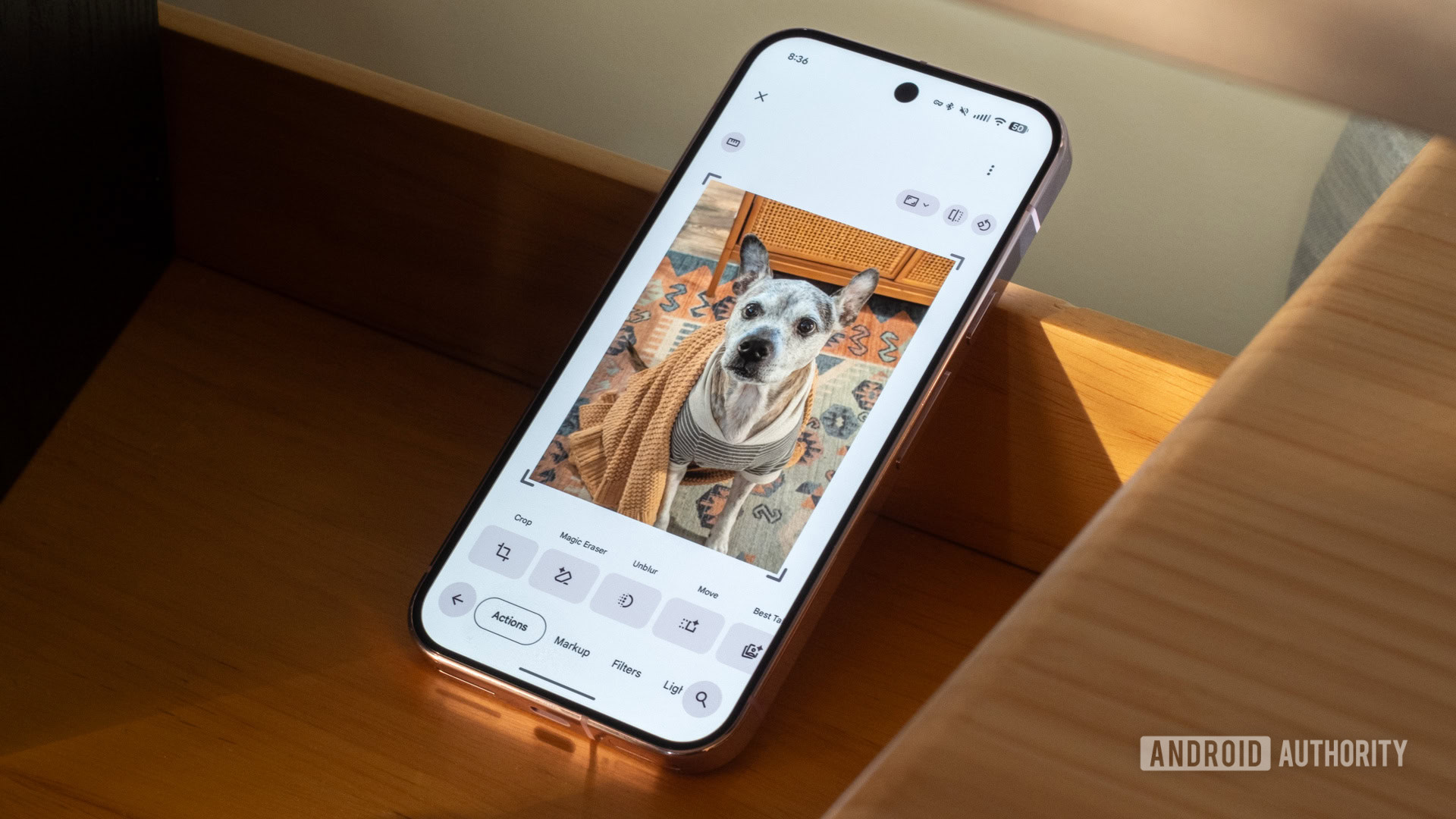
The rise of non-destructive editing adds another layer of technical challenge. While immensely beneficial for users, it requires a robust system to manage multiple versions, metadata, and pointers to the original files, all while ensuring that the "current" or "saved" version is always correctly presented to other applications. This requires meticulous handling of file paths, URIs, and database updates. The fact that a full device reboot sometimes resolved the issue pointed towards a caching problem or a stuck indexing process within the MediaStore, which a system restart would force to rebuild or refresh.
Previous Challenges and Ongoing Stability Concerns
This "disappearing photos" bug was not an isolated incident in Google Photos’ recent history. Just the month prior, users reported another significant glitch that made the app’s Share, Edit, Add to, and Trash buttons unresponsive after editing a picture. This earlier bug, while different in its manifestation, also directly impacted the post-editing workflow, frustrating users who were unable to immediately act upon their newly edited images. Google had also acknowledged this issue and subsequently announced a fix in version 7.94 of the application.
However, the efficacy of that previous fix was not universally experienced. Reports from users, including feedback received by Android Authority, indicated that for some, the problem of unresponsive buttons persisted even after updating to version 7.94. This highlights a common challenge in software development: fixes can sometimes be partial, or certain edge cases might remain unaddressed across the highly fragmented Android device landscape.
While the symptoms of the two bugs — unresponsive buttons versus invisible photos to other apps — are distinct, their proximity in time and their shared focus on post-editing functionality raise questions about the overall stability and quality assurance processes for Google Photos updates. It’s "quite a double act for an app whose entire job revolves around managing photos," as the original report aptly put it. Such recurring issues, even if swiftly addressed, can erode user confidence and disrupt the expected seamless experience of a flagship application. They underscore the continuous pressure on development teams to maintain robust testing protocols across a myriad of device configurations and Android versions.
Statements and Reactions
The user community’s reaction to such bugs is typically one of frustration and inconvenience. For many, Google Photos is not just an app but an integral part of their digital life, used daily to capture, curate, and share personal moments. When a core function like sharing an edited photo becomes problematic, it can lead to significant workflow disruptions. Imagine a professional photographer trying to quickly share a client proof, or a parent attempting to send a photo of their child to family members, only to encounter these hurdles. The temporary workaround of saving a separate copy, while functional, adds unnecessary steps and clutter, detracting from the user experience.
From a developer’s perspective, these incidents are reminders of the immense challenge involved in maintaining complex software. The Android ecosystem is incredibly diverse, with countless device manufacturers, hardware specifications, and software overlays. Ensuring an application functions flawlessly across all these variations is a monumental task. The prompt response from Google to Artem Russakovskii’s direct report, however, demonstrates a commitment to addressing critical issues, especially when they are clearly articulated and reproducible. This responsiveness is crucial for maintaining trust within the developer and power-user communities. While bugs are an inevitable part of software development, the speed and effectiveness of their resolution are key indicators of a company’s dedication to its user base.
Implications for Users and the Ecosystem
The successful resolution of the "disappearing photos" bug in Google Photos version 7.97 carries several important implications. For the end-user, the most immediate and significant impact is the restoration of a seamless workflow. Users can now edit their photos within Google Photos with confidence, knowing that their masterpieces will be instantly visible and shareable across all other Android applications, without the need for workarounds or device reboots. This restores a fundamental aspect of the integrated mobile experience and reinforces Google Photos’ role as a reliable media hub.
For the broader Android ecosystem, this incident serves as a crucial reminder of the importance of robust inter-app communication and media indexing. When core system components like the MediaStore falter, the entire user experience can be fragmented. Google’s swift action to patch this vulnerability underscores the critical need for vigilance in software development, particularly for applications as deeply embedded and widely used as Google Photos. The collaboration between community members like Artem Russakovskii and Google’s development teams also highlights the value of open communication channels and responsive bug reporting mechanisms. Such interactions strengthen the ecosystem by ensuring that issues are identified and addressed efficiently, leading to a more stable and user-friendly platform for everyone.
Looking ahead, while bugs are an unavoidable aspect of complex software, the commitment to rapid identification and resolution is paramount. The Google Photos team has demonstrated this commitment by addressing not one, but two significant post-editing bugs in recent months. As the application continues to evolve with new features and AI capabilities, maintaining core stability and ensuring a flawless user experience across its vast array of functions will remain a perpetual challenge and a top priority. The latest fix for the "disappearing act" is a positive step forward, ensuring that users’ edited memories can finally travel beyond Google Photos without requiring a rescue mission.