WhatsApp Enhances Group Communication with Permanent Pins, Group Status, and Smarter Message Discovery

WhatsApp is rolling out a suite of four significant updates to its group chat functionality, designed to tackle the perennial challenge of information overload and enhance user engagement within busy conversations. These enhancements aim to streamline message management, improve the discoverability of crucial information, and provide more context for new group members. The most prominent of these new features are permanent message pinning and a novel Group Status option, alongside a dedicated filter for mentions and replies, and an improved method for sharing recent message history.
The impetus behind these updates stems from the inherent nature of group chats on platforms like WhatsApp. As user bases expand and conversations become more dynamic, the sheer volume of messages can quickly become overwhelming. In highly active groups, hundreds, if not thousands, of messages can accumulate within a single day, making it a significant undertaking for users to sift through the noise to find critical announcements, important links, or direct replies. This new feature set represents WhatsApp’s strategic effort to equip users with better tools to navigate these digital social spaces more effectively.
Permanent Message Pinning: Anchoring Key Information
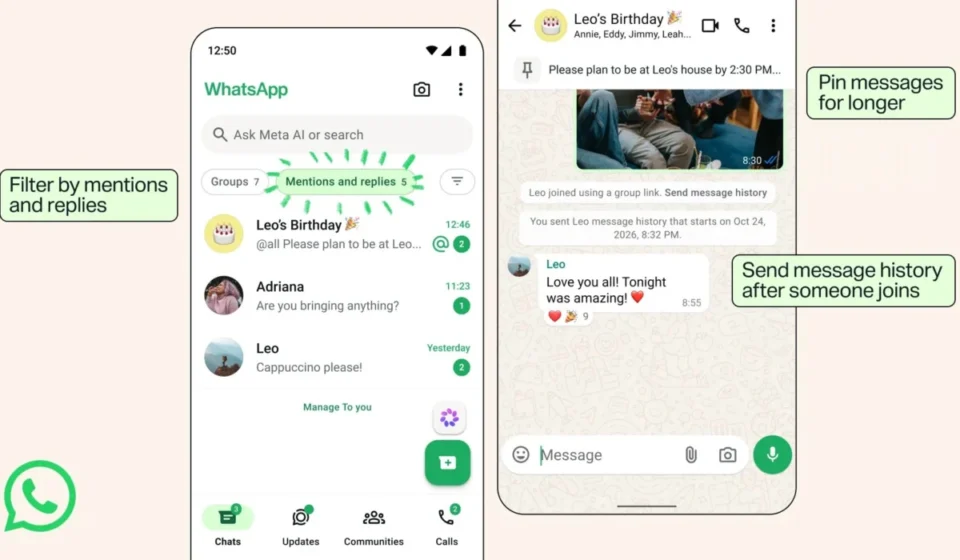
One of the most impactful additions is the removal of the time limit for pinned messages. Previously, users could pin a message to the top of a group chat, but they were required to select an expiry duration, typically ranging from 24 hours to 7 days. This limited the utility of pinning for information that needed to remain accessible for extended periods, such as group rules, event details, or contact information. The new update introduces an "unlimited" pinning option, allowing administrators and participants to permanently anchor vital messages to the top of the chat window.

This enhancement is particularly beneficial for community groups, project teams, or family group chats where important information needs to be readily available without recurring re-sharing. For instance, in a neighborhood watch group, the pinned message could contain emergency contact numbers and local crime reporting procedures. In a work project group, it could be a link to shared project documentation or key deadlines. The ability to permanently pin messages signifies a shift towards treating group chats not just as ephemeral conversations but as evolving repositories of shared knowledge and important announcements. The implications for group efficiency are substantial, reducing the need for repeated inquiries and ensuring that critical information is never lost in the digital deluge.
Group Status: Exclusive Updates for Defined Circles
In parallel with permanent pinning, WhatsApp is introducing "Group Status," a feature that allows users to share ephemeral updates exclusively with members of a specific group. This differs from the general "Status" feature, which broadcasts updates to a broader audience selected from a user’s contact list. Group Status creates a dedicated space for content relevant only to the members of that particular group.
These updates function similarly to regular Status updates, disappearing after 24 hours. Group members can view, react to, and even share their own Group Status updates, fostering a more contained and context-specific form of communication. This feature could be leveraged for a variety of purposes, from sharing real-time updates during an event organized by the group, to providing exclusive behind-the-scenes content for a fan group, or even for quick, informal check-ins within a close-knit social circle. The introduction of Group Status suggests WhatsApp’s recognition of the diverse communication needs within its user base, catering to scenarios where information sharing should be strictly compartmentalized. This could also lead to more focused and relevant content consumption, as users are less likely to be bombarded with status updates from individuals outside their immediate interest groups.
Enhanced Message Discovery: Mentions, Replies, and History Sharing
Two other key features are designed to improve the process of finding and catching up on conversations. The first is a dedicated filter for mentions and replies. This new filter consolidates all messages where a user has been directly mentioned (@username), has had a message replied to directly, or has been included in an @all notification. Previously, users would have to manually scroll through various group chats to locate these specific interactions.

This filter acts as a personalized notification hub within the group chat interface. It significantly reduces the time spent searching for messages that require immediate attention or direct engagement. For users participating in multiple large groups, this functionality is invaluable, ensuring that direct calls to action or personal acknowledgments are not missed. The introduction of this filter underscores WhatsApp’s commitment to user experience by proactively addressing common pain points in digital communication.
Furthermore, WhatsApp is building upon its earlier feature that allowed sharing recent message history with new group members upon their invitation. The platform is now extending this capability, enabling users to share these historical messages even after the new member has joined the group. By tapping on the new member’s name within the conversation, users can initiate the sharing of earlier messages. Crucially, these shared messages remain end-to-end encrypted, maintaining WhatsApp’s core privacy commitment. This enhancement is particularly useful for onboarding new members into active groups, providing them with essential context and background information without requiring them to read through an entire backlog of conversations. It facilitates a smoother integration into the group’s ongoing dialogue and decision-making processes.
Background and Chronology of Updates
WhatsApp has been systematically enhancing its group chat features over the past few years, recognizing the growing importance of these functionalities. The ability to create larger groups, administer permissions, and mute notifications were early steps in managing group dynamics. The introduction of message replies and quoted messages provided more structured conversational threads.
The feature allowing the sharing of recent message history with new members was first introduced earlier in the year. This was a significant step towards improving the onboarding experience for new participants in active groups. The subsequent refinement, allowing this sharing even after a member has joined, demonstrates a continuous iterative approach to user feedback and feature development.

The introduction of permanent message pins and Group Status represents a more significant overhaul, directly addressing the challenges of information management and content relevance. These features are not isolated additions but part of a broader strategy to make WhatsApp groups more functional, organized, and user-friendly. The rollout of these features typically occurs in phases, with specific regions or user groups receiving access first, followed by a wider global release. This phased approach allows for testing and feedback collection, ensuring a smoother deployment.
Data and User Impact Analysis
While specific user engagement data for these new features will emerge over time, the underlying problems they address are well-documented. Studies on digital communication often highlight "information overload" as a significant challenge, leading to decreased productivity and increased stress. For platforms like WhatsApp, which serve as primary communication channels for billions globally, addressing this issue is paramount.
The permanent pinning feature, for example, could demonstrably reduce the time spent searching for information. If an average user spends even five minutes per week searching for pinned information that is now permanently accessible, across WhatsApp’s user base, this could translate into millions of hours saved annually. Similarly, the mentions and replies filter could significantly reduce the mental effort required to stay on top of important conversations.
The Group Status feature, while ephemeral, taps into the social aspect of group communication, allowing for more exclusive and targeted content sharing. This could lead to increased engagement within specific groups, fostering a stronger sense of community and shared experience. The ability to share message history, especially when refined to be available post-join, directly addresses the friction point of new members feeling out of the loop, which can often lead to disengagement.

Official Statements and Industry Context
While specific quotes from WhatsApp executives regarding these particular updates were not immediately available at the time of reporting, the company has consistently emphasized its commitment to improving user privacy and enhancing communication tools. Meta, WhatsApp’s parent company, has a broad strategy focused on interconnectedness and facilitating seamless communication across its platforms. These group chat enhancements align with this overarching goal, making WhatsApp a more robust and versatile communication hub.
Industry analysts have noted that messaging platforms are increasingly moving beyond simple chat functionalities to become comprehensive communication and community-building tools. Features like enhanced group management, content organization, and richer interaction options are becoming standard expectations. WhatsApp’s latest updates position it competitively in this evolving landscape, particularly against other popular messaging applications that have also introduced similar organizational tools.
Broader Impact and Future Implications
The long-term implications of these WhatsApp updates extend beyond mere convenience. By making group conversations more manageable and information more accessible, WhatsApp is likely to see increased engagement and reliance on its platform for both personal and professional interactions. The ability to permanently pin important information could transform group chats into more effective collaborative spaces, akin to lightweight project management tools.
The introduction of Group Status also hints at potential future monetization opportunities, perhaps through more advanced features for businesses or community organizers. However, given WhatsApp’s current stance on user privacy and its ad-free model for personal accounts, any such developments are likely to be carefully considered and implemented with user experience at the forefront.

As WhatsApp continues to refine its group chat features, the platform is solidifying its position not just as a messaging app, but as a dynamic environment for connection, collaboration, and information sharing. These updates represent a significant step forward in making the experience of participating in even the busiest of groups more productive and less frustrating.