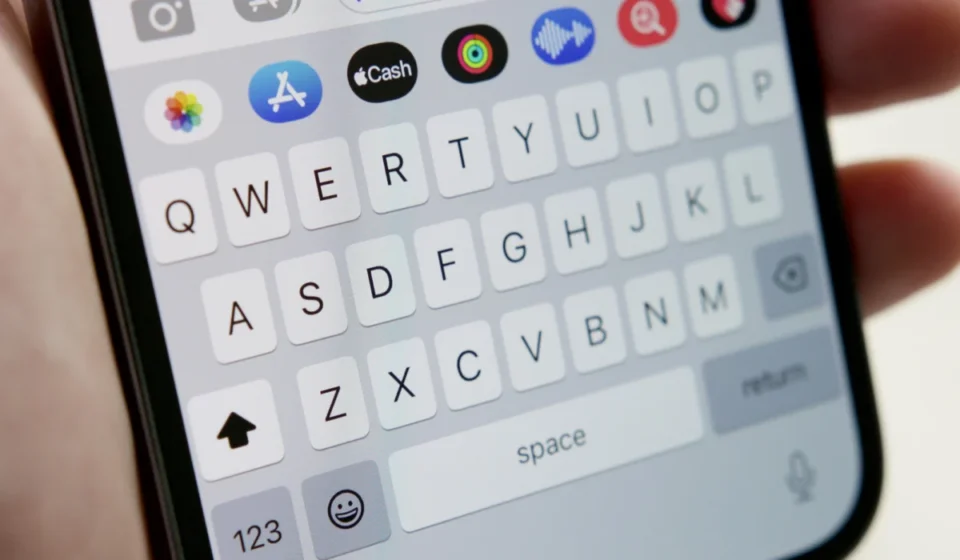

The predictive text and swipe-typing features on Apple’s iPhone keyboards contain a vast, undisclosed list of words and phrases that the system actively avoids suggesting. This “gray list,” discovered by an independent researcher, includes terms ranging from overtly offensive language to politically charged phrases and terms related to sensitive geopolitical issues, sparking debate about censorship and user experience on a global scale. While users can still manually type these words, the intelligent suggestions that typically facilitate rapid communication are conspicuously absent, effectively censoring them from the most common input methods.
The extent of this hidden filtering mechanism was brought to light by researcher Derik Kauffman, who detailed his findings on the Swipe Blocked website. Kauffman’s investigation revealed that the system, present across various iOS languages, systematically ignores tens of thousands of entries. While many of these are unsurprising—encompassing profanity, hate speech, and terms related to illegal substances or explicit content—a significant portion raises concerns about Apple’s content moderation policies and their geopolitical implications.
Among the surprising inclusions on this invisible blacklist are phrases such as "dictator Trump" and "sleepy Joe," widely used in political discourse, particularly within the United States. The deliberate exclusion of such common descriptors, even when applied to prominent political figures, suggests a deliberate effort by Apple to steer users away from specific linguistic associations, regardless of their common usage in public commentary.

Apple, when contacted by Reuters for comment on the matter, provided a brief statement indicating that the iPhone’s built-in keyboard is designed to “avoid suggesting words that could be offensive or inappropriate.” However, this general explanation offers little insight into the specific criteria or the vastness of the list, leaving many to question the universality and transparency of Apple’s approach.
The implications of this filtering extend far beyond American political discourse. Kauffman’s research indicated that terms related to international political movements and aspirations are also subject to this suppression. For instance, phrases like "Tibetan independence" and "United Ireland," which represent significant political aspirations for certain populations, are reportedly absent from the predictive text suggestions. This suggests that Apple’s content filtering may extend to placate or avoid controversy with governments sensitive to such discussions. Furthermore, the system appears to extend to mocking or critical phrases directed at international leaders, including Indian Prime Minister Narendra Modi and Leader of the Opposition Rahul Gandhi, indicating a broad, albeit opaque, censorship strategy.
The discovery process itself highlights the sophisticated nature of modern operating system design and the challenges in uncovering hidden functionalities. Kauffman initially became suspicious of the keyboard’s behavior when common swipe-typing attempts for phrases like "bad boy" and "white man" yielded unexpected or incorrect suggestions. This led him to employ advanced tools, including OpenAI’s Codex and Anthropic’s Claude Code, to delve into the underlying architecture of iOS. Through meticulous analysis, he was able to identify the extensive gray list of suppressed terms.

Reuters’ own verification of Kauffman’s findings corroborated the suppression of certain terms. When attempting to swipe-type "Tibetan independence," the keyboard often corrected it to "Tibetan independences." Similarly, "United Ireland" was frequently altered to "United Iceland." The selective suppression was further illustrated by the treatment of phrases like "white man," which was altered to "white mean," while "red man" and "blue man" were allowed to pass through without interference. This inconsistency in how similar phrases are treated raises further questions about the logic and bias inherent in the filtering algorithm.
The reaction from digital rights advocates has been mixed, reflecting the complex balance between user safety and freedom of expression. David Greene, a lawyer at the Electronic Frontier Foundation, described the existence of such a list as "creepy," while acknowledging the potential justification for curbing inflammatory suggestions. This sentiment underscores the ongoing debate surrounding the role of technology platforms in moderating content and the fine line between protecting users and limiting speech.
A Timeline of Discovery and Concern
The genesis of this revelation can be traced back to subtle user experiences that, when aggregated and investigated, pointed towards a systemic issue. While isolated reports of predictive text malfunctions or unusual word corrections have likely occurred for years, Derik Kauffman’s systematic investigation marks a pivotal moment in understanding the scope of Apple’s internal word filtering.

Early Observations and Suspicion: Users, including Kauffman, began noticing peculiar autocorrection patterns and the absence of certain common phrases in predictive text suggestions. These initial observations, often dismissed as minor glitches, laid the groundwork for deeper inquiry.
Systematic Investigation: Driven by these anomalies, Kauffman embarked on a comprehensive research project. This involved utilizing advanced programming tools and code analysis to probe the iOS operating system’s text input mechanisms. The use of AI coding assistants like OpenAI’s Codex and Anthropic’s Claude Code was crucial in navigating the complexities of the software.
Discovery of the Gray List: Through this rigorous process, Kauffman identified a substantial, hidden list of words and phrases that the iPhone keyboard’s predictive and swipe-typing functionalities actively suppress. This list was found to be integrated at the system level, affecting all supported languages.

Verification and Reporting: Kauffman’s findings were subsequently verified by independent news organizations, such as Reuters, which conducted their own tests to confirm the existence and nature of the filtered terms. This journalistic verification lent significant weight to the discovery.
Public Disclosure and Reaction: The revelation of the hidden word list generated significant public interest and concern, prompting reactions from privacy advocates, civil liberties groups, and the general public. Apple’s initial, brief statement offered a rationale but did not quell the underlying questions about transparency and control.
Supporting Data and Context
The sheer volume of terms on Apple’s gray list is a significant data point. While exact numbers remain unconfirmed by Apple, reports suggest tens of thousands of entries. This scale suggests a deliberate and extensive effort to curate the language available through the iPhone’s primary input method.

The inclusion of politically charged phrases, particularly those that are critical of or used to label specific political figures, points to a potential strategy of neutrality or appeasement in politically sensitive markets. China, a major market for Apple, has stringent internet censorship laws, and tech companies operating there often face pressure to comply with content restrictions. While the current findings relate to a global iOS feature, the precedent set by such policies in other markets cannot be ignored when analyzing the motivations behind system-level filtering.
The specific examples of "Tibetan independence" and "United Ireland" are particularly telling. These are terms associated with long-standing nationalistic and political movements that are sensitive to certain governments. Their exclusion from predictive text suggests that Apple’s filtering is not solely based on universally accepted notions of offensiveness but may also be influenced by geopolitical considerations aimed at avoiding international friction.
Furthermore, the inconsistent application of filters, as seen with "white man" versus "red man" and "blue man," raises questions about the algorithm’s objectivity. The modification of "white man" to "white mean" implies a specific bias or interpretation that is not applied to other racial identifiers in similar contexts. This raises concerns about potential unintended biases within the system.

Broader Impact and Implications
The discovery of Apple’s hidden word list has several significant implications:
- Transparency and User Control: The lack of public disclosure surrounding this filtering mechanism undermines user trust. Consumers expect their devices to function transparently, and the existence of an invisible censorship layer raises questions about what other functionalities are being controlled without user knowledge. This also impacts the ability of users to express themselves freely, as the very tools designed to aid communication are subtly shaping it.
- Freedom of Speech and Expression: While platforms have a responsibility to moderate harmful content, the broad nature of Apple’s list, encompassing political commentary and aspirations, treads into the territory of restricting legitimate expression. The question arises as to who defines what is "offensive or inappropriate" and whether such definitions are universally applicable or subject to external pressures.
- Geopolitical Influence on Technology: The findings suggest that the design and functionality of widely used consumer technology can be influenced by the political landscapes of global markets. This raises concerns about whether technology is being shaped to conform to authoritarian regimes, potentially limiting global discourse.
- The Future of Predictive Text: This revelation could spur a broader conversation about the ethical design of AI-powered features. As predictive text and autocorrect become more sophisticated, understanding the algorithms and their potential biases is crucial for ensuring fair and unfettered communication. Users may begin to demand greater insight and control over how their devices "correct" or "suggest" their words.
- Competitive Landscape: The discovery may prompt competitors to highlight their own transparency in text prediction, or conversely, to implement similar, albeit perhaps less restrictive, filtering mechanisms. It also places pressure on Apple to either provide greater transparency or to revise its approach to content filtering.
In conclusion, the hidden word list within Apple’s iPhone keyboard represents a significant development in the ongoing dialogue about technology, censorship, and freedom of expression. The lack of transparency and the broad scope of the filtering raise critical questions about Apple’s responsibilities to its users and the broader implications for global communication in an increasingly interconnected world. The debate over what is deemed "offensive or inappropriate" and who has the authority to make those decisions is far from over, and this discovery only adds another complex layer to the discussion.