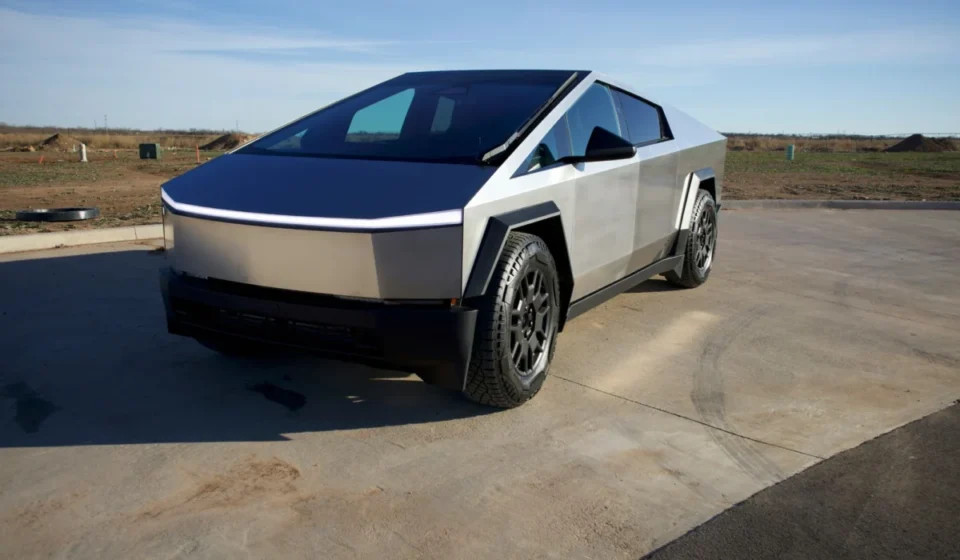
Elon Musk says Cybertruck demand still exceeds production, but Tesla is shutting down the line anyway to focus on the Cybercab.

Tesla is set to halt production of its highly anticipated Cybertruck, a decision accompanied by a surprising explanation from CEO Elon Musk. Despite claims of demand exceeding manufacturing capabilities, the electric truck’s production line is slated for a shutdown in approximately eight months. This move will impact a significant number of customers who have already placed deposits, many of whom will not receive their vehicles.
In a recent communication on the social media platform X, Musk articulated that the Cybertruck’s order rate significantly outpaces its production capacity. Tesla intends to maximize output before ceasing operations, a process that will necessitate the return of deposits to a substantial portion of its clientele. The exact number of pending orders remains undisclosed. The abrupt discontinuation of the Cybertruck, which only began customer deliveries in late 2023, marks a surprisingly early end for the ambitious project.

The Rationale Behind the Shutdown: A Strategic Pivot
Elon Musk has attributed the decision to a complex manufacturing process, suggesting that the resources allocated to Cybertruck production could be more effectively utilized elsewhere. He explicitly stated that the halt is not a reflection of the Cybertruck’s profitability, countering what he described as "misreported" information.
The primary beneficiary of this strategic reallocation appears to be Tesla’s Cybercab, the company’s autonomous robotaxi. Musk indicated that the value proposition of scaling Cybercab production far surpasses the financial benefits of continuing Cybertruck manufacturing. This suggests a significant shift in Tesla’s product roadmap, prioritizing the development and deployment of its autonomous vehicle technology.
Reports suggest that the Texas Gigafactory, the primary production site for the Cybertruck, will see its dedicated production line dismantled around mid-2027 to accommodate the expanded Cybercab manufacturing efforts. To fulfill existing orders before the shutdown, Tesla is reportedly adding an extra production shift.

A Contradictory Market Performance
Musk’s assertions regarding overwhelming demand for the Cybertruck stand in stark contrast to publicly available sales data. Kelley Blue Book reported that Tesla sold only 20,237 Cybertrucks in the U.S. during 2025, a significant 48% decrease from the preceding year. The trend has continued into 2026, with Cox Automotive estimating 11,586 sales through September, representing a further 28% decline. These figures fall considerably short of Musk’s earlier projections of approximately 250,000 annual sales.
Tesla has not released its current reservation backlog, making independent verification of demand difficult. The market reception of the Cybertruck also comes at a time when other automakers are re-evaluating their electric pickup strategies. Ford, for instance, has discontinued its battery-electric F-150 Lightning, although plans for an extended-range electric version with an onboard gasoline generator are in development. This suggests a broader market recalibration for electric pickup trucks, which may not be meeting initial industry expectations. For Tesla, the decision appears to be a definitive pivot towards its robotaxi ambitions.
The Timeline of Cybertruck’s Short Stint
The journey of the Cybertruck, from its audacious unveiling to its impending production halt, can be traced through a series of key milestones:

- November 2019: The Tesla Cybertruck is unveiled to the public with a dramatic presentation, showcasing its unconventional stainless-steel exoskeleton design and purported bulletproof capabilities. Initial production targets are ambitious.
- Late 2023: After multiple delays and design refinements, the first customer deliveries of the Cybertruck commence, marking the beginning of its limited market presence.
- Early 2025: Sales figures for the Cybertruck begin to show a downward trend, with reports indicating a significant year-over-year decline in U.S. sales.
- Mid-2025: Industry analysts and news outlets begin to question the market performance of the Cybertruck, citing the discrepancy between projected and actual sales numbers.
- November 2026: Elon Musk announces via X that Cybertruck production will cease in approximately eight months, citing overwhelming demand but an inability to meet it due to manufacturing complexities. He also states that deposits will be returned to many customers.
- Mid-2027 (Projected): Tesla is expected to dismantle the Cybertruck production line at the Texas Gigafactory to make way for increased Cybercab manufacturing.
Production Complexities and Strategic Reallocation
The Cybertruck’s unique design, featuring a thick stainless-steel exoskeleton, has been widely cited as a significant manufacturing challenge. Unlike traditional automotive manufacturing processes that rely on stamping and welding, the Cybertruck’s construction involves bending and forming large sheets of hardened stainless steel, a technique that requires specialized equipment and expertise. This complexity is believed to have contributed to production delays and higher manufacturing costs.
Musk’s statement suggests that Tesla has identified a more efficient and potentially more profitable application for the resources, labor, and factory space currently dedicated to the Cybertruck. The Cybercab, as a fully autonomous vehicle, aligns with Tesla’s long-term vision of a future dominated by self-driving transportation services. The company has been investing heavily in its Full Self-Driving (FSD) technology, and the Cybercab represents a direct application of this advanced software and hardware.
The decision to prioritize the Cybercab also reflects a broader trend in the automotive industry, with many manufacturers shifting their focus from personal vehicle ownership to mobility-as-a-service. Tesla’s potential success in this sector could offer a new and significant revenue stream, potentially surpassing the profits derived from individual vehicle sales.

The Broader Implications for the EV Market
The Cybertruck’s premature departure from the production line could have several implications for the electric vehicle market. Firstly, it underscores the significant challenges associated with mass-producing radical new vehicle designs. Tesla’s ability to navigate these complexities with the Cybertruck has proven more difficult than initially anticipated.
Secondly, it highlights the evolving priorities within the EV sector. While pickup trucks remain a popular segment, the focus may be shifting towards more established designs or towards entirely new mobility solutions like robotaxis. The struggles of both the Cybertruck and the F-150 Lightning (in its initial battery-electric form) suggest that the electric pickup truck market is still finding its footing.
Furthermore, Tesla’s decision to emphasize robotaxis over a potentially high-demand product like the Cybertruck signals a bold strategic gamble. If the Cybercab proves successful and can be deployed at scale, it could solidify Tesla’s position as a leader in autonomous transportation. However, if the Cybercab program faces significant delays or fails to gain traction, the decision to prematurely end Cybertruck production could be viewed as a missed opportunity.

The company’s commitment to returning deposits to affected customers, while necessary, will likely lead to some disappointment and potentially damage customer goodwill among those who had eagerly awaited their Cybertrucks. The long-term impact of this decision on Tesla’s brand perception and its ability to attract and retain customers in the highly competitive EV market remains to be seen.
The narrative surrounding the Cybertruck’s production halt also raises questions about the future of innovative but complex vehicle designs. While the market may not always be ready for radical departures from conventional automotive norms, Tesla’s willingness to experiment and pivot based on strategic imperatives is a defining characteristic of the company. The success of the Cybercab will ultimately determine whether this latest strategic maneuver proves to be a visionary move or a costly miscalculation.