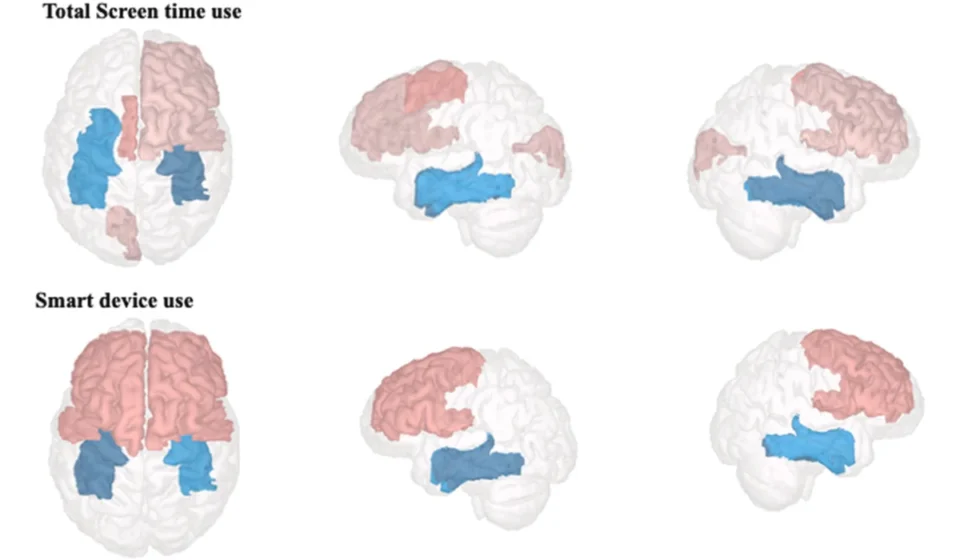
MRI scans reveal differences in brain regions associated with memory, attention, and visual processing

A groundbreaking study conducted by researchers at the University of Eastern Finland has unveiled potential associations between adolescent screen time and distinct structural differences within the teenage brain. Utilizing advanced Magnetic Resonance Imaging (MRI) technology, the research identified variations in grey matter volume across critical brain regions responsible for memory formation, attentional control, decision-making processes, and visual information processing. While these findings are significant, it is crucial to note that the study establishes correlations rather than direct causation, meaning it does not definitively prove that screen use directly alters brain structure.
Screen Habits Correlate with Brain Structure Variations in Adolescents
The comprehensive study, published in the esteemed journal NeuroImage: Reports, meticulously examined a cohort of 44 healthy adolescents, aged between 16 and 19 years. This group comprised 25 females and 19 males. The research methodology involved high-resolution MRI scans to accurately quantify grey matter volume, a key indicator of neural density and processing capacity. Alongside these neuroimaging techniques, participants completed detailed questionnaires to assess their leisure screen time, including usage patterns of smartphones and other smart devices, as well as their engagement in physical activity. To provide a holistic view of their physical condition, participants also underwent standardized fitness assessments, including shuttle runs and standing long jumps, to measure their cardiovascular endurance and explosive power.
The findings unearthed by the research team were particularly compelling. Adolescents who reported higher levels of screen time and more extensive smart device usage exhibited a tendency towards reduced grey matter volumes in the medial temporal lobe. This region of the brain is fundamentally important for learning and the consolidation of memories, suggesting a potential link between extensive screen engagement and altered memory function.

Conversely, the study also revealed an association between increased screen usage and enlarged grey matter volumes in specific areas of the frontal lobe. These regions are intricately involved in higher-cognitive functions such as sustained attention, working memory capacity (the ability to hold and manipulate information temporarily), executive functions like decision-making, and motor planning. Furthermore, a significant correlation was observed with a region within the occipital lobe, the primary processing center for visual information, indicating that high screen time might also influence how visual stimuli are processed.
Interpreting the Significance of Grey Matter Volume Differences
The researchers proposed a nuanced interpretation of these observed differences in grey matter volume. They posited that larger grey matter volumes in certain frontal and visual processing areas could, in part, reflect the intense cognitive demands imposed by modern digital environments. Applications and video games often require sustained attention, rapid visual processing, and intricate motor coordination, potentially leading to heightened neural activity and subsequent structural adaptations in these brain regions.
However, the study also put forth an alternative, and perhaps more concerning, possibility: that these variations could indicate a delayed or altered trajectory of brain maturation during adolescence. This critical developmental period is characterized by synaptic pruning, a natural biological process where less-used neural connections are eliminated, and more frequently used pathways are strengthened, leading to greater efficiency and specialization of brain networks. Larger grey matter volumes in specific areas might suggest that this crucial synaptic pruning process is not occurring as typically expected, potentially impacting the refinement of neural circuitry.

Dr. Hannamari Skog, the lead researcher on the study, emphasized the complexity of these findings. "The results provide new information on how everyday lifestyle factors, such as screen time, physical activity, and physical fitness, are linked to brain structure in adolescence," she stated. "However, in light of the results, the connections between lifestyle factors and brain structures in adolescence are complex, and more research is needed to understand their long-term significance." This statement underscores the preliminary nature of the findings and the imperative for further investigation.
The study also explored the interplay between physical activity, fitness, and brain structure. While associations were noted, these relationships were generally more intricate and, in some instances, did not maintain statistical significance after accounting for multiple comparisons. This suggests that while lifestyle factors are demonstrably linked to brain development, the specific mechanisms and the strength of these links require further elucidation.
It is vital to reiterate the limitations of this study. The relatively small sample size and the cross-sectional nature of the research, capturing a single point in time rather than tracking changes over an extended period, mean that definitive causal conclusions cannot be drawn. The study does not provide evidence to support sensational claims that excessive screen use is directly "shrinking" adolescent brains. Instead, it contributes a valuable piece to the burgeoning body of scientific literature exploring the intricate relationship between digital engagement, physical activity, and the developing adolescent brain.

The Developing Adolescent Brain: A Period of Profound Change
Adolescence is a pivotal period of brain development, characterized by significant structural and functional transformations. From approximately age 12 to 25, the brain undergoes a process of remodeling, particularly in the prefrontal cortex, which is responsible for executive functions like planning, decision-making, impulse control, and social behavior. During this time, synaptic pruning and myelination (the insulation of nerve fibers) occur, leading to more efficient and specialized neural pathways. This makes the adolescent brain particularly sensitive to environmental influences, including the pervasive digital stimuli that characterize modern life.
The rise of smartphones and ubiquitous internet access has introduced novel and intense forms of sensory input and cognitive engagement for this demographic. Understanding how these digital habits interact with the ongoing maturation of the adolescent brain is a critical area of scientific inquiry. Previous research has highlighted potential links between heavy screen use and issues such as sleep disturbances, attention deficits, and increased risk of mental health challenges, though often with similar caveats regarding correlation versus causation. This new study adds a neurobiological dimension to these concerns, by identifying tangible differences in brain structure associated with screen time.
Expert Commentary and Future Directions
Dr. Sarah Johnson, a neurodevelopmental pediatrician not involved in the study, commented on the findings: "This research is a valuable contribution to our understanding of how screen time might be influencing the adolescent brain. The identification of specific brain regions affected, particularly those related to memory and executive functions, is noteworthy. However, it’s essential for parents and educators to interpret these findings within their broader context. Adolescence is a dynamic period, and the brain is incredibly adaptable. The key lies in promoting a balanced lifestyle that includes ample opportunities for physical activity, social interaction, and diverse cognitive experiences alongside responsible technology use."

The researchers themselves have called for more extensive longitudinal studies to track these associations over time. Understanding whether the observed differences in grey matter volume are transient or have lasting implications for cognitive abilities and mental well-being is a crucial next step. Future research could also explore the impact of different types of screen content (e.g., educational apps versus passive video consumption) and the role of individual genetic predispositions in mediating these effects.
Broader Societal Implications
The implications of this research extend beyond the scientific community, resonating with parents, educators, policymakers, and technology developers. As digital immersion becomes increasingly ingrained in the fabric of adolescent life, understanding its potential neurobiological correlates is paramount. This study serves as a reminder of the need for mindful technology consumption and encourages a proactive approach to fostering healthy digital habits.
This research underscores the ongoing dialogue about the role of technology in shaping human development. While smartphones and digital devices offer unprecedented opportunities for learning, connection, and entertainment, their pervasive influence necessitates careful consideration of their potential impact on developing minds. The University of Eastern Finland study, while preliminary, offers a compelling glimpse into these complex interactions, emphasizing the need for continued research and a balanced approach to integrating technology into the lives of young people. The findings advocate for a holistic view of adolescent well-being, where digital engagement is considered alongside physical health, social development, and overall cognitive flourishing.