
What the Internet Boom’s Biggest Winners Teach About the Next Phase of AI

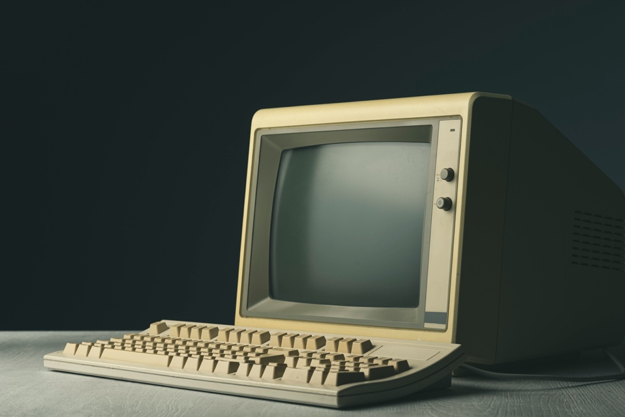
In the autumn of 1980, International Business Machines (IBM), then the undisputed titan of the computing world, entered into a partnership that would inadvertently shift the center of gravity in the technology industry for decades to come. As the company prepared to launch its first personal computer, the IBM Model 5150, it faced a critical bottleneck: the machine lacked an operating system. To resolve this, IBM executives turned to a relatively small software firm based in Washington state, led by a 24-year-old entrepreneur named Bill Gates. The resulting agreement allowed Microsoft to provide the operating system, known as MS-DOS, but with a pivotal caveat that IBM’s legal team overlooked at the time. Gates retained the right to license the software to other manufacturers.
This decision effectively commoditized the hardware while monopolizing the software. While IBM spent millions on research, development, and marketing to legitimize the personal computer market, Microsoft was able to profit from every "IBM-compatible" clone produced by competitors like Compaq, Dell, and HP. The historical parallel serves as a foundational lesson for modern investors: in every major technological revolution, the companies that build the infrastructure often pave the way for a second wave of winners that capture the long-term value through software and applications. As the artificial intelligence (AI) sector enters its next phase of maturity, market analysts suggest a similar decoupling between hardware providers and software integrators is currently underway.
The Infrastructure Phase: Nvidia and the "Pick and Shovel" Dominance
The current state of the AI market mirrors the early 1980s computer boom or the late 1990s internet build-out. At the center of this modern expansion is Nvidia (NVDA), which has become the "poster child" of the AI revolution. Nvidia’s H100 and H200 Tensor Core GPUs (graphics processing units) have become the essential building blocks for training large language models (LLMs) like OpenAI’s GPT-4. Under the leadership of Jensen Huang, Nvidia has seen its market capitalization soar, briefly surpassing the $3 trillion mark, driven by insatiable demand from "hyperscalers" such as Microsoft, Alphabet, Meta, and Amazon.
Data from the first half of 2024 indicates that capital expenditure (CapEx) among these major tech firms has reached record levels. For instance, Microsoft and Google have collectively committed tens of billions of dollars per quarter toward AI infrastructure and data centers. However, global macro investing expert Eric Fry, editor of The Speculator, posits that investors must now look beyond the hardware gold rush. Fry, who successfully identified Nvidia’s potential as early as April 2020—long before AI dominated headlines—is now focusing on the transition from infrastructure to implementation.
The logic follows a historical pattern. During the dot-com era, Cisco Systems (CSCO) played the role Nvidia plays today. Cisco manufactured the routers and switches necessary to build the backbone of the internet. In March 2000, Cisco was the most valuable company in the world. However, as Fry warned in October 2000, once the infrastructure was largely in place, the growth shifted to the companies that utilized that infrastructure to create new services, such as Google, Amazon, and Netflix. Cisco’s stock eventually fell approximately 84% from its peak as the market realized that the "plumbing" of the internet had been over-provisioned.

Identifying "The Crossing": A Critical Turning Point for AI ROI
The central thesis of the next phase of AI investment revolves around a concept Fry calls "The Crossing." This term refers to a specific inflection point where the revenue generated by AI-powered software and services begins to eclipse the capital being spent on the hardware to build those systems. For the past two years, the market has been characterized by "Supply-Side AI," where the focus is on buying chips and building data centers. We are now entering the "Demand-Side AI" era, where the focus shifts to return on investment (ROI).
Recent financial data suggests that the pressure is mounting for companies to prove the profitability of their AI investments. According to reports from Goldman Sachs and Barclays, investors are increasingly scrutinizing the "AI spend-to-revenue" ratio. If a company spends $10 billion on Nvidia chips but only realizes $1 billion in incremental software revenue, the valuation of the hardware provider may eventually face a correction. Fry’s "The Crossing" identifies the moment when these two lines on the balance sheet intersect—a development he believes will soon be visible in the quarterly results of major tech firms, including Nvidia itself.
Chronology of the AI Market Evolution
The trajectory of the AI boom can be categorized into four distinct chronological stages:
- The Foundation (2012–2021): The development of deep learning and transformer architectures. Nvidia begins pivoting its GPU technology toward data centers rather than just gaming.
- The Catalyst (November 2022): The release of ChatGPT by OpenAI. This event triggered a global "arms race" among enterprise companies to secure the compute power necessary to stay competitive.
- The Infrastructure Surge (2023–2024): Nvidia’s revenue grows by triple digits as every major tech firm buys H100 chips. The market focuses almost exclusively on "pick and shovel" plays.
- The Implementation Phase (2025 and Beyond): The current transition point. Companies move from "experimenting" with AI to deploying it at scale in cybersecurity, drug discovery, logistics, and customer service.
In this fourth stage, the primary beneficiaries are likely to be companies that provide the "operating systems" of the AI era—firms that can take raw compute power and turn it into specialized, high-margin software solutions.
Market Analysis: The Risks of Infrastructure Overcapacity
While Nvidia remains a formidable company with high margins, historical data from previous tech cycles suggests that infrastructure booms often lead to periods of digestion. In the early 2000s, the world had an excess of "dark fiber" (unused fiber optic cable) that took years for the market to utilize. Some analysts argue that the current build-out of AI data centers could face a similar fate if the "killer apps" of AI do not materialize quickly enough to justify the cost of the electricity and hardware.
Industry reactions to this potential shift are mixed. On one hand, Jensen Huang has described the current era as the "beginning of the next industrial revolution," suggesting that the demand for compute is infinite. On the other hand, venture capital firms like Sequoia Capital have raised questions about the "AI $600 Billion Question," noting that the industry needs to generate roughly $600 billion in annual revenue to pay for the hardware and energy currently being deployed. This gap reinforces the importance of identifying the software-centric companies that will bridge the divide between raw processing power and commercial utility.
Broader Impact and the Shift to "Life After Nvidia"
The shift toward the next phase of AI wealth creation has significant implications for retail and institutional investors alike. If the "Microsoft of AI" is currently a small or mid-cap company, its growth potential could far exceed that of the established hardware giants. Eric Fry’s research suggests that the next wave of winners will likely come from three specific sectors:
- Vertical AI: Companies building AI models tailored for specific industries (e.g., law, medicine, or engineering) rather than general-purpose models.
- Edge Computing: Companies that allow AI to run locally on devices (phones, cars, factory robots) rather than in centralized data centers, reducing the reliance on massive GPU clusters.
- AI Orchestration: Software layers that manage the complexity of multiple AI models, acting as the "operating system" that Gates envisioned for the PC in 1980.
The transition does not necessarily mean the "death" of Nvidia, but rather its evolution into a mature, cyclical component of the tech stack, much like Intel became after the PC boom. For investors, the challenge is to avoid the "Cisco Trap"—holding onto infrastructure providers long after the market has moved on to applications.
Conclusion: The Lessons of 1980 Applied to 2025
The 1980 agreement between IBM and Microsoft remains one of the most studied cases in business history because it perfectly illustrates the difference between creating a market and owning it. IBM created the personal computer market, but Microsoft owned the standards that governed it. In the current landscape, Nvidia has created the AI market through its technological brilliance, but the "rights to the software" are still being contested.
As the market approaches "The Crossing," the evidence suggests that the highest percentage gains may no longer be found in the companies selling the chips, but in those using the chips to revolutionize global industry. For those watching the earnings reports in early 2025, the key indicator will not just be how many GPUs were sold, but how much value those GPUs are finally generating for the end user. Just as the internet boom eventually moved from the router to the search engine and the social network, the AI boom is moving from the silicon to the solution. Recognizing this shift before it becomes consensus on Wall Street is the primary objective for the next generation of technology investors.