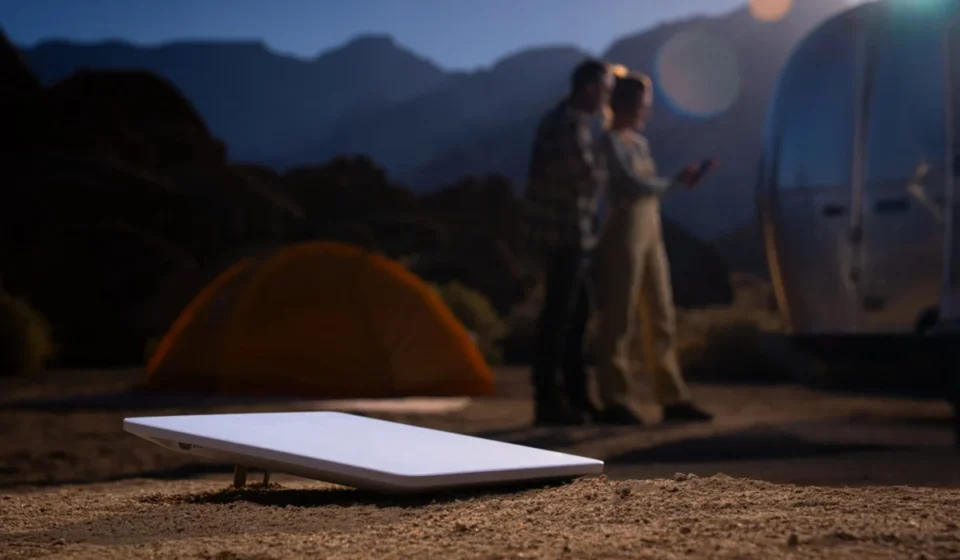
A removable battery, Wi-Fi 6, and a slimmer design make the new Starlink Mini more useful for traveling off-grid.

SpaceX has officially launched the Starlink Mini 2, a significant upgrade to its portable satellite internet offering. Building on the foundational concept of the original Starlink Mini, which aimed to bring reliable internet access to remote locations and travelers, the Mini 2 introduces a suite of enhancements designed to bolster its usability and convenience, most notably its integrated, removable battery. This development directly addresses a key limitation of its predecessor, which, while portable, still required an external power source to operate.
The initial whispers of an integrated battery for the Starlink Mini began circulating in May, fueled by firmware references that indicated SpaceX’s commitment to further developing its mobile internet solution. The original Mini was a compelling proposition for campers, RV enthusiasts, digital nomads, and anyone venturing beyond the reach of traditional terrestrial networks. However, the necessity of carrying and managing a separate power bank presented a logistical hurdle for true off-grid independence. The Starlink Mini 2 appears poised to overcome this by offering a self-contained, battery-powered experience.
Key Innovations in the Starlink Mini 2
The most impactful advancement in the Starlink Mini 2 is its built-in, removable 71Wh battery. This integral power source is designed to provide users with up to 4.5 hours of continuous internet connectivity on a single charge. This duration is a crucial metric for mobile users, allowing for extended periods of operation without immediate access to grid power. The battery is engineered for seamless integration, attaching to the rear of the dish via a quick-release mechanism. This design not only simplifies setup but also facilitates effortless battery swapping for users who require longer operational times. When the battery is depleted, users have the option to replace it with a charged spare or connect the dish directly to a USB-C power source, offering flexibility in various scenarios.

Beyond the pivotal battery integration, the Starlink Mini 2 boasts several other notable hardware upgrades. The device now supports Wi-Fi 6, a modern wireless standard that promises faster speeds, lower latency, and improved performance in congested network environments. This enhancement is particularly beneficial for users connecting multiple devices or streaming high-bandwidth content while off the grid. The wireless coverage area has also been expanded, now reaching up to 1,800 square feet, providing a more robust Wi-Fi signal across a wider space.
Furthermore, the Starlink Mini 2 has achieved an IP67 rating, indicating a high level of protection against dust ingress and submersion in water up to one meter for 30 minutes. This ruggedization is essential for a device intended for outdoor and potentially harsh environmental use. Physical enhancements include the addition of a power button, which offers direct control over the device, and LED indicators that provide a clear visual status of the battery level.
In terms of its physical design, SpaceX has managed to slim down the dish itself to a mere 23.1mm. While the integrated battery and kickstand add to its overall form, the unit weighs approximately 1.6kg, maintaining a manageable profile for transport. The inclusion of a standard tripod mount ensures compatibility with existing mounting solutions, further simplifying deployment in diverse locations. The package also comes equipped with a 60W USB-C charger and a 3-meter cable, providing essential accessories for power management.
Contextualizing the Evolution of Starlink for Mobile Use

The development of the Starlink Mini 2 is a natural progression in SpaceX’s mission to provide global internet coverage. The initial Starlink service, utilizing larger, fixed dishes, primarily targeted residential users seeking an alternative to existing broadband options. As the technology matured and satellite constellations expanded, SpaceX began to address the needs of mobile users. The introduction of the Starlink Roam (formerly Mobile) plan and the first iteration of the Starlink Mini were key steps in this direction.
The original Starlink Mini, while smaller and more portable than the standard dish, still presented a power dependency that limited its "cut the cord" appeal for truly remote operations. The need for an external power bank meant users had to factor in an additional piece of equipment, its capacity, and charging requirements. This is where the Starlink Mini 2’s integrated battery makes a significant difference, streamlining the user experience and enhancing the device’s autonomy.
The potential implications of such portable, high-speed internet solutions extend beyond individual users. Industries reliant on remote operations, such as disaster response, scientific research, construction, and agriculture, could benefit immensely from reliable, easily deployable internet. The ability to establish connectivity quickly in areas without existing infrastructure is invaluable for communication, data transmission, and coordination.
Potential Applications and Future Implications

The enhancements in the Starlink Mini 2 open up new possibilities for its application. The removable battery design, coupled with the Wi-Fi 6 capabilities, makes it an attractive option for various mobile scenarios. For instance, it could be integrated into vehicles, including recreational vehicles (RVs), boats, and even potentially private aircraft, offering a seamless internet experience while in transit or stationary in remote areas. The recent explorations by companies like Tesla into integrating satellite internet directly into vehicles highlight the growing demand for such connectivity solutions on the move. While the Mini 2 is not an integrated system, its portable nature and power autonomy make it a viable add-on for automotive applications.
The device’s rugged IP67 rating further bolsters its suitability for demanding environments, such as expeditionary use, remote fieldwork, or emergency services. The ability to withstand dust and water ingress provides peace of mind for users operating in challenging conditions.
Pricing and Availability: An Evolving Landscape
As of the current reporting, SpaceX is taking preorders for the Starlink Mini 2 in the United States, though access is initially limited to select customers. This phased rollout is typical for new hardware releases, allowing SpaceX to manage demand, gather user feedback, and refine its distribution and support networks.

While official retail pricing has not been finalized, reports from tech enthusiasts and backend listings on SpaceX’s website suggest a potential beta kit price of $249 for the Mini 2. A spare battery is reportedly priced at $50, indicating a strategy to offer extended power solutions. Furthermore, some invited U.S. customers have reportedly been presented with a $999 package that includes a year of Roam Unlimited service alongside the hardware. This pricing structure suggests a tiered approach, potentially offering different service tiers or bundles to cater to various user needs and budgets.
The broader availability of the Starlink Mini 2, both domestically and internationally, remains to be announced. SpaceX’s global expansion of its satellite constellation is ongoing, and the rollout of new hardware often follows a strategic geographical deployment plan. Customers outside the U.S. will likely need to await official announcements regarding regional availability and pricing.
Analyzing the Competitive Landscape and Market Impact
The Starlink Mini 2 enters a growing market for portable and satellite-based internet solutions. While traditional satellite internet providers have long served remote areas, they often come with high latency and complex installations. Starlink, with its low-Earth orbit (LEO) satellite constellation, has significantly reduced latency, making it more competitive for real-time applications like video conferencing and online gaming.

Competitors like HughesNet and Viasat offer different approaches, often focusing on fixed residential or enterprise solutions. However, the emergence of highly portable and self-sufficient devices like the Starlink Mini 2 signals a shift towards catering to the mobile and transient user base. Companies offering mobile satellite hotspots or specialized connectivity solutions for adventurers and remote workers will likely face increased competition from Starlink’s increasingly refined offerings.
The success of the Starlink Mini 2 will depend on its ability to deliver on its promises of reliable performance, ease of use, and sustained battery life in real-world conditions. Its compact design, integrated power, and modern Wi-Fi standard position it as a compelling choice for individuals and organizations seeking untethered internet access. As SpaceX continues to expand its satellite network and refine its hardware, the landscape of connectivity in remote and underserved areas is poised for further transformation. The Starlink Mini 2 represents a significant step in democratizing high-speed internet, making it more accessible and practical for a wider range of users, especially those who live or work beyond the reach of conventional infrastructure.