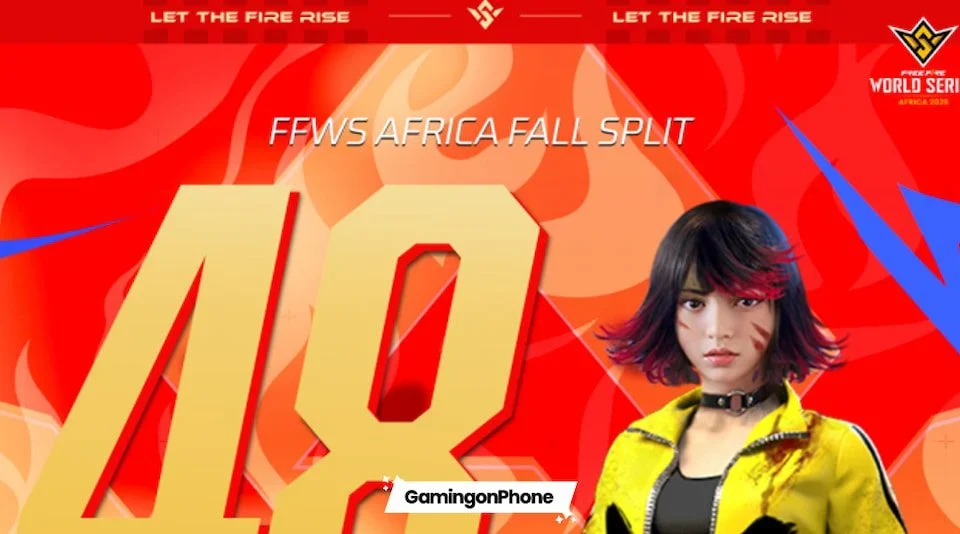
Free Fire World Series Africa (FFWS AF) 2026 Fall is underway with a World Finals slot at stake.

The highly anticipated Free Fire World Series Africa (FFWS AF) 2026 Fall, the official regional league for the burgeoning esports landscape of South Africa and the wider African continent, has officially commenced. Organized by Garena, the developer and publisher of the globally popular mobile battle royale title, this tournament brings together 18 elite teams vying not only for regional supremacy but also for a coveted direct qualification slot to the Free Fire World Series (FFWS) World Finals later this year. The event underscores Garena’s significant commitment to cultivating a robust and accessible esports ecosystem, particularly in rapidly growing mobile gaming markets like Africa.
Garena’s dedication to maintaining a dynamic and comprehensive esports calendar is evident across its global operations. A meticulous examination of the game’s esports handles across various countries and regions reveals a strategic investment in competitive gaming unparalleled by many other titles in the mobile sector. This commitment is further exemplified by a significant structural change implemented from the year 2026: the former Middle East & Africa (MEA) region has been formally divided into two distinct sub-regions. These now comprise the Middle East and North Africa (MENA) and the dedicated Africa region. This strategic bifurcation aims to foster more localized and concentrated competitive action, providing tailored support and increased opportunities for players and organizations within each respective territory. The FFWS Africa 2026 Fall represents a cornerstone of this new, refined regional strategy, promising a surge of high-stakes gameplay and intense rivalries.
Background: Free Fire’s Ascendancy and Garena’s Strategic Expansion in Africa
Free Fire has cemented its position as one of the most downloaded and highest-grossing mobile games globally, with a particularly strong foothold in emerging markets across Southeast Asia, Latin America, and significantly, Africa. Its accessibility, optimized performance on a wide range of mobile devices, and engaging battle royale mechanics have resonated deeply with millions of players on the continent. This widespread adoption has naturally led to a vibrant casual and competitive scene, which Garena has strategically sought to formalize and professionalize through structured esports leagues.
For years, the African competitive scene was largely integrated into the broader Middle East & Africa (MEA) circuit. While this provided a platform, the immense geographical and cultural diversity, coupled with varying internet infrastructures across such a vast region, often presented unique challenges. The decision to split the MEA region into distinct MENA and Africa circuits from 2026 is a testament to Garena’s evolving understanding of these regional nuances and its commitment to fostering truly localized esports development. This move is expected to streamline operations, allow for more region-specific marketing and outreach, and ultimately create a more equitable and competitive environment for African teams. Industry analysts suggest this division could significantly accelerate the growth of professional esports in both regions by allowing Garena to implement more targeted development programs, engage local partners more effectively, and address specific community needs. This strategic shift is not merely an organizational change but a fundamental re-investment in the unique potential of African esports.
Tournament Structure and Schedule: A Path to Global Glory
The Free Fire World Series Africa (FFWS AF) 2026 Fall is meticulously structured into three progressive stages, designed to rigorously test the skills and resilience of the participating teams. The initial phase, the Play-ins, commenced on July 27th. This preliminary stage is crucial, featuring two distinct phases and a prelim stage to filter the initial pool of contenders, ensuring only the most prepared teams advance.
Following the Play-ins, the main competitive action will ignite with the Knockout Stage, scheduled to kick off on August 21st. This stage will see the qualifying teams divided into three groups, each comprising six formidable squads. Over the course of two intensive weeks, a comprehensive round-robin format will be applied, ensuring that every team faces each of its group rivals. Each team is slated to play a total of 18 matches, contributing to an impressive cumulative total of 36 matches contested across six dedicated matchdays. This extensive format is designed to mitigate the impact of individual match outcomes and reward consistent performance, allowing teams to demonstrate their strategic depth and adaptability across various in-game scenarios. The intense match schedule, combined with the pressure of a round-robin format, ensures that only the most resilient and strategically sound teams will emerge to contend for the ultimate prize.
The tournament will culminate in the Grand Finals, a high-stakes showdown set for September 5th. This final stage will feature the top 12 teams that have successfully navigated the rigorous Knockout Stage. The Grand Finals itself is structured into two distinct segments. The initial six matches will follow a "Points Rush" format, a dynamic segment designed to build early momentum and establish initial standings. Teams will aggressively vie for placement points, knowing that strong early performances can provide a critical advantage. Following the Points Rush, the remaining eight matches will constitute the core Grand Finals. The ultimate champion will be determined by the team accumulating the highest total points across all Grand Finals matches, showcasing their consistent performance under immense pressure. The map rotation, crucial for competitive balance and strategic diversity, includes iconic Free Fire battlegrounds such as Bermuda, Purgatory, and Kalahari. These maps offer varied terrain, from dense urban environments to open deserts, demanding different tactical approaches and fostering diverse team compositions. For instance, Bermuda’s multi-level structures favor close-quarters combat and strategic rotations, while Kalahari’s arid landscape often leads to long-range engagements and careful positioning. Garena’s careful selection of these maps ensures that teams must master a wide array of strategies to secure victory.
Prize Pool and World Finals Qualification: Beyond the Cash Reward
The Free Fire World Series Africa (FFWS AF) 2026 Fall features a total prize pool of $10,000, which will be distributed among the top-performing teams. While this figure might appear modest when compared to the prize pools of some established global esports events, it is critically important to contextualize it within the framework of a nascent, dedicated regional circuit. As a "starter event" for the newly defined Africa region, this prize pool serves as foundational support for the emerging professional scene. Analysts and Garena representatives alike often emphasize that for developing regions, the true value of such tournaments extends far beyond the immediate cash reward.
The champion team will receive the lion’s share of $3,500, a significant boost for any emerging esports organization. However, the most coveted prize is undoubtedly the direct ticket to the main stage of the FFWS World Finals 2026, scheduled to take place later in the year. This qualification slot offers unparalleled exposure on an international stage, an opportunity to compete against the world’s best Free Fire teams, and a chance to earn significantly larger prize money at the global event. For aspiring African esports athletes, this pathway to global competition is invaluable, representing a critical step in their professional development and recognition. The prize pool breakdown further details the distribution: the runner-up will secure $2,000, the third-place team $1,200, teams placing 4th-6th will each receive $700, 7th-9th place teams $300, and teams in 10th-12th positions will each be awarded $100. This tiered distribution aims to incentivize strong performances across the board, providing financial support to a broader range of teams participating in the Grand Finals. This structure is a clear signal of Garena’s commitment to nurturing a sustainable competitive ecosystem in Africa, where initial investments pave the way for future growth and larger stakes.

Participating Teams: A Blend of Established Talent and Rising Stars
A total of 18 teams are set to compete in the FFWS AF 2026 Fall, representing a dynamic mix of seasoned contenders and promising new talent from across the African continent. This diverse roster ensures a high level of competition and compelling narratives throughout the tournament. Eight of the participating teams have earned their slots through their strong performances in the Free Fire World Series MEA 2025, bringing with them invaluable experience from previous top-tier regional competition. These teams are often considered the established powerhouses, possessing refined strategies and proven competitive resilience.
The remaining ten teams have qualified through the Free Fire Open Championship (FFOC) Season 1, representing a fresh wave of talent eager to make their mark. The FFOC serves as a crucial pipeline, identifying and nurturing promising amateur and semi-professional teams, providing them with a clear pathway into the professional circuit. This blend of veteran experience and burgeoning skill promises exciting matchups and unpredictable outcomes. While the complete list of all 18 locked-in teams is still being finalized and will be updated by Garena as qualifications conclude, the presence of both established organizations and emerging squads ensures a vibrant competitive landscape. The competition is expected to be fierce, with every team eyeing the ultimate prize – a chance to represent Africa on the global Free Fire stage. For many, this is more than just a tournament; it is an opportunity to validate their skills, build their brand, and inspire a new generation of esports enthusiasts in their respective countries.
Where to Watch: Accessible Online Broadcasts
Recognizing the widespread digital penetration and mobile-first consumption habits across Africa, Garena has strategically chosen to broadcast the Free Fire World Series Africa (FFWS AF) 2026 Fall entirely online. This approach ensures maximum accessibility for fans across the continent, allowing them to follow every intense moment from the comfort of their homes or on the go. Viewers can tune into the live action by heading to the official social media handles of Garena Free Fire. The primary platforms for the live streams include Facebook (facebook.com/ffesportsmena) and YouTube (youtube.com/@GarenaFreeFireMENA).
These platforms are widely used across the region, facilitating broad viewership and fan engagement. By leveraging established social media channels, Garena aims to tap into the massive Free Fire player base and broader esports audience in Africa, fostering a sense of community and excitement around the regional league. The online-only format also allows for interactive elements, such as live chat and fan polls, further enhancing the viewing experience. This commitment to digital broadcasting is integral to Garena’s strategy of making esports accessible and engaging for a global audience, particularly in regions where traditional broadcast media might be less prevalent for esports content. A Garena spokesperson, in an inferred statement, might comment on the importance of digital platforms: "Our commitment to broadcasting FFWS Africa online is rooted in our desire to reach every Free Fire fan across the continent. We believe in providing an accessible, high-quality viewing experience that allows our community to cheer for their favorite teams and witness the birth of new legends from Africa."
Broader Impact and Future Implications for African Esports
The launch of a dedicated Free Fire World Series Africa (FFWS AF) league signifies a pivotal moment for the esports landscape on the continent. Beyond the immediate competition, this event carries profound implications for the growth and professionalization of esports in Africa.
Firstly, the establishment of a dedicated regional circuit creates a clear, structured pathway for aspiring players to transition from casual gaming to professional competition. This formalized structure provides the necessary incentives, support, and exposure for talent development, potentially leading to the emergence of globally competitive African esports athletes. Team organizations will find it easier to secure sponsorships and investments with a consistent and well-defined competitive calendar, fostering greater stability and growth within the ecosystem.
Secondly, the increased visibility generated by a dedicated regional league is expected to draw more attention from local and international brands. As viewership numbers grow and the league gains prominence, it will become an attractive platform for marketing and engagement, injecting crucial financial resources into the African esports economy. This influx of investment can support better training facilities, player salaries, and overall infrastructure development, further professionalizing the scene.
Thirdly, the FFWS AF is a powerful statement about Garena’s long-term vision for Free Fire esports globally. By investing heavily in regional circuits like Africa, Garena is not only expanding its player base but also strengthening its global competitive integrity. A robust regional ecosystem ensures a constant supply of top-tier talent for the World Finals, elevating the overall quality and excitement of international events. This strategic global-to-local approach positions Free Fire as a leader in fostering inclusive and diverse esports communities.
Finally, the success of FFWS Africa could serve as a blueprint for other game developers and publishers looking to tap into the immense potential of the African market. It demonstrates that with tailored strategies, regional understanding, and consistent investment, a thriving professional esports scene can be cultivated. The aspirational journey of African teams from regional champions to global contenders will inspire millions, not just within the Free Fire community but across the broader gaming and entertainment sectors, highlighting the continent’s growing significance in the global digital economy. The FFWS AF 2026 Fall is not merely a tournament; it is a foundational step towards cementing Africa’s place on the global esports map.