
The pursuit of academic excellence in South Korea, a nation renowned for its rigorous educational system and high-stakes examinations, has been dramatically underscored by a recent confession that has sent shockwaves through the country’s professional certification landscape. The individual who achieved a near-perfect score on the national exam for aspiring tax accountants, a feat that typically garners widespread admiration, has admitted to employing generative artificial intelligence (AI) to secure his exceptional results. This revelation not only challenges the integrity of a crucial professional qualification but also ignites a broader conversation about the evolving role of AI in academic and professional assessment.
The individual in question, identified only by his surname Han, achieved an astonishing 397.5 out of a possible 400 points in the first round of the tax accountant exam. This remarkable score translates to missing only one question out of a total of 160, a level of precision that immediately drew scrutiny from fellow test-takers and observers. The suspicion intensified when Han subsequently ranked first in both the first and second rounds of testing, held in April and July respectively. Such consistent, extraordinary performance naturally fueled speculation and debate online, with many questioning the legitimacy of his achievements.
Initially, Han reportedly denied accusations of cheating, particularly those circulating on online forums that suggested he had used sophisticated smart glasses during the examination. While technically accurate in his initial denial regarding the specific technology, the truth, as later revealed, was far more technologically advanced and deeply concerning for examination authorities.

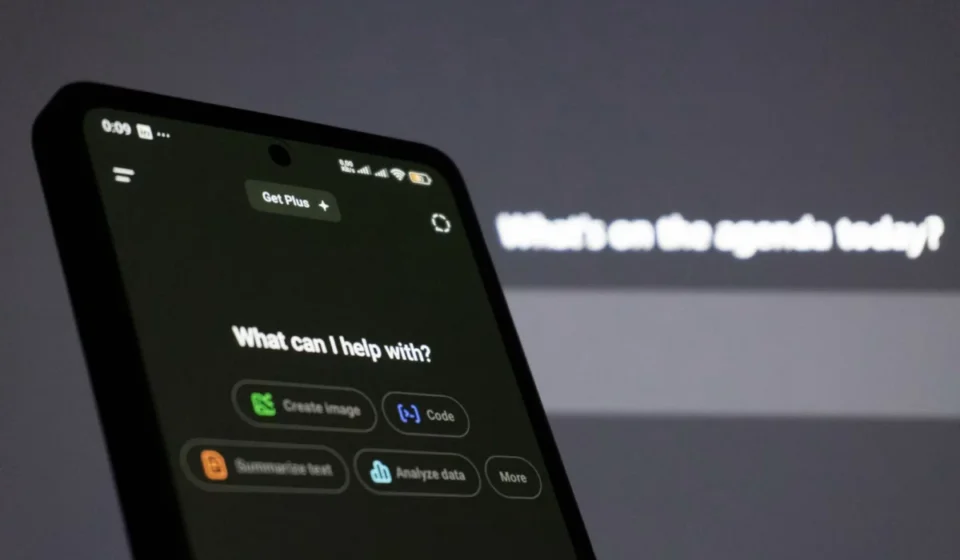
In a candid confession delivered on the YouTube channel of Attorney Lee Don-ho, Han, visibly masked, detailed his elaborate method of circumventing the exam’s security protocols. His confession clarified that the rumors about smart glasses were a misdirection. Instead, he employed a discreet setup comprising a tiny microcamera and a standard smartphone. According to his account, he would photograph the exam questions with the microcamera, transmit these images to a generative AI tool for analysis and answer generation, and then discreetly access the correct answers on his smartphone. This sophisticated, albeit illicit, approach allowed him to bypass the need for personal knowledge recall and instead leverage the computational power of AI.
"I cheated using electronic devices and generative AI. My passing the exam with the top score was not the result of fair effort," Han stated unequivocally in the YouTube video. His admission was not confined to a public forum; he also formally submitted a written confession to the Seoul police through his legal representative. Authorities confirmed the receipt of this confession on Sunday morning, indicating that the case has been promptly handed over to investigators for further scrutiny and legal proceedings.
The implications of this confession extend far beyond the individual case, creating significant challenges for the examination organizers in South Korea. The timing of this scandal is particularly sensitive, as the nation’s highly anticipated annual college entrance exam, known as the Suneung, is scheduled to take place on the upcoming Thursday. Standardized tests hold immense cultural and societal weight in South Korea, with students dedicating years of their lives to intensive preparation for this singular event. The knowledge that a competitor might have gained an unfair advantage through AI could foster widespread anxiety and disillusionment among legitimate candidates who have invested considerable effort and time in their studies.
This incident is not an isolated occurrence within the realm of professional certifications. Reports of similar suspected AI-assisted cheating have also emerged in connection with the certified public accountant exam, suggesting a broader trend that necessitates urgent governmental attention. In response to the growing concerns, government officials have initiated emergency measures. A senior official from the presidential office announced on Sunday that the presidential chief of staff for policy convened an urgent meeting to devise and implement countermeasures to safeguard the integrity of the upcoming college entrance exam. Prime Minister Han Seong-sook also issued a statement on Friday, pledging that the government would maintain close oversight of the entire examination process to ensure its fairness and transparency.

The integration of generative AI into academic and professional testing environments presents a multifaceted challenge. While AI tools offer unprecedented opportunities for learning and efficiency, their potential for misuse in cheating necessitates a re-evaluation of existing security protocols and assessment methodologies. The sophistication of Han’s method—combining discreet hardware with advanced AI—highlights the difficulties in detecting such forms of academic dishonesty.
Chronology of Events:
- April [Year]: First round of the national tax accountant exam is conducted. Candidate Han achieves an exceptionally high score.
- July [Year]: Second round of the national tax accountant exam is conducted. Han again ranks first.
- Post-July: Online speculation and rumors begin to circulate regarding Han’s unusually high scores and potential cheating methods, including the use of smart glasses.
- [Date of Confession Video]: Han appears on the YouTube channel "Attorney Lee Don-ho," confesses to using generative AI and a microcamera/smartphone setup for cheating.
- [Date of Police Confirmation]: Seoul police confirm receiving Han’s written confession through his lawyer.
- [Upcoming Thursday]: The national college entrance exam (Suneung) is scheduled to take place.
- [Date of Presidential Office Statement]: Senior official announces an emergency meeting to implement AI cheating countermeasures for the Suneung.
- [Date of Prime Minister’s Statement]: Prime Minister Han Seong-sook assures public of government oversight for exam fairness.
Supporting Data and Context:
South Korea consistently ranks among the top countries globally for educational attainment, with a strong emphasis placed on academic achievement as a pathway to social and economic mobility. The pressure to succeed in highly competitive examinations, such as the college entrance exams and professional certifications, is immense. For instance, the Suneung is a single-day, high-stakes exam that has a profound impact on a student’s future academic and career prospects. The national tax accountant exam, while perhaps less widely publicized than the Suneung, is equally critical for those aspiring to enter the accounting profession, a field requiring a high degree of trust and ethical conduct.

The market for generative AI tools has experienced exponential growth in recent years. Platforms like ChatGPT, Bard (now Gemini), and others have demonstrated remarkable capabilities in natural language processing, content generation, and problem-solving. While these tools are invaluable for research, education, and creative endeavors, their accessibility also means they can be weaponized for dishonest purposes. The reported success of Han’s method suggests that current exam security measures, often reliant on physical surveillance and anti-plagiarism software, may be insufficient to counter AI-driven cheating.
Broader Implications and Analysis:
The confession of Han raises critical questions about the future of assessment in an AI-augmented world. Educational institutions and professional bodies worldwide are now grappling with how to adapt their testing environments to mitigate AI-assisted cheating. Potential strategies include:
- Enhanced Proctoring: Implementing more sophisticated AI-powered proctoring systems that can detect unusual behavior or the use of external devices.
- AI Detection Software: Developing and deploying advanced AI detection tools to identify AI-generated content in written responses.
- Rethinking Assessment Methods: Moving towards more varied assessment formats that are less susceptible to AI manipulation, such as oral examinations, project-based evaluations, and in-person, supervised practical tests.
- Ethical AI Education: Increasing emphasis on academic integrity and the ethical use of AI tools within educational curricula.
- Technological Arms Race: A potential ongoing battle between those developing AI for cheating and those developing AI to detect it.
The incident also highlights a potential disparity between the perceived "fairness" of traditional academic meritocracy and the emerging reality of AI-augmented capabilities. While Han’s actions are clearly unethical and illegal, the ease with which he was able to exploit AI may lead some to question the fundamental fairness of a system where human effort is pitted against machine intelligence.

The South Korean government’s swift response indicates a recognition of the severity of the issue. The emergency meetings and public assurances aim to restore confidence in the examination system, particularly ahead of the crucial Suneung. However, this incident serves as a stark warning that the integration of advanced AI technologies into society will necessitate continuous adaptation and innovation in how we assess knowledge, skills, and integrity. The long-term implications for professional licensing, academic admissions, and the very definition of intellectual achievement will undoubtedly be shaped by how effectively these challenges are addressed in the coming years. The case of Han, the tax accountant exam cheater, is likely to be a landmark event in the ongoing discourse surrounding AI and its impact on human endeavor.