Motorola Razr Flex 2027 leaks point to a new Snapdragon chip, Android 17, and a wide design

Motorola, a venerable pioneer in mobile technology, appears poised to redefine the burgeoning foldable smartphone market with its upcoming device, the Razr Flex 2027. After years of perfecting pocket-sized clamshell designs and recently venturing into the larger, book-style form factor with the Razr Fold, the company’s latest initiative suggests a strategic pivot towards an innovative "in-between" design. Recent leaks, including official website sightings, comprehensive security certification documents, and an alleged live image, have painted a vivid picture of what Motorola intends to deliver: a unique, wider foldable experience powered by Qualcomm’s unannounced Snapdragon SM8845 Pro chipset and running on the futuristic Android 17 operating system. This development signals Motorola’s ambition not just to compete, but to carve out a distinct niche in an increasingly crowded and diverse foldable ecosystem.
The Genesis of a New Foldable Paradigm
Motorola’s journey in the foldable space has been marked by a blend of nostalgia and innovation. The original Razr V3, a clamshell icon, provided the blueprint for its modern foldable descendants. The company first reintroduced the Razr as a vertically folding smartphone, emphasizing compact portability and a fashion-forward design. These devices, like the Razr 40 Ultra (known as Razr+ in some markets), aimed to deliver a full-sized smartphone experience that could be neatly tucked away. Following this, Motorola expanded its portfolio into the horizontal, book-style foldable segment with the Razr Fold, directly challenging established players like Samsung’s Galaxy Z Fold series. This evolution demonstrated Motorola’s commitment to exploring different form factors within the foldable spectrum.
The emergence of the Razr Flex 2027, initially hinted at through vague leaks suggesting a "different kind of foldable," marks the next logical step in this iterative process. The first concrete evidence surfaced earlier this month when the device was reportedly spotted on Motorola’s own website, lending significant credibility to the whispers. This initial discovery was swiftly followed by regulatory filings in the UAE, which officially linked the model number XT2761 to the moniker "Razr Flex 27." These early signals pointed towards a device that would diverge from both the compact clamshell and the expansive book-style form factors, suggesting a deliberate attempt to blend the advantages of both while mitigating their respective drawbacks.
Unpacking the Leaked Specifications: A Glimpse into the Future
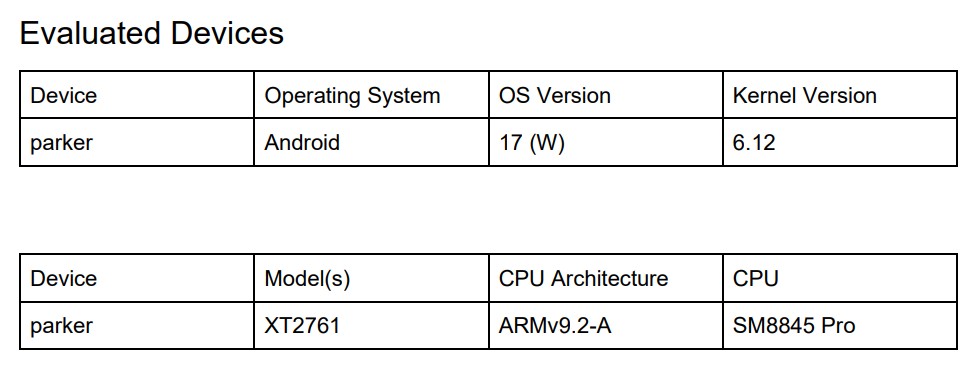
The most comprehensive insights into the Razr Flex 2027 have emerged from a security certification document, which identifies the Motorola device codenamed "Parker" (XT2761). This document serves as a critical window into the device’s core technological architecture, revealing a series of cutting-edge features and components.
The Next-Generation Processing Power: Snapdragon SM8845 Pro
Perhaps the most compelling revelation from the certification document is the inclusion of Qualcomm’s Snapdragon SM8845 Pro processor. This is not the standard Snapdragon 8 Gen 5 (SM8845) that earlier rumors had suggested for flagship devices of this era, but rather an unannounced, more potent variant. Industry analysts and tech enthusiasts are speculating that this "Pro" designation signifies a higher-clocked version of Qualcomm’s next-generation flagship system-on-a-chip (SoC), potentially offering enhanced CPU and GPU performance, or specialized AI acceleration capabilities.
Qualcomm has a history of introducing incremental or specialized variants of its flagship chips, often dubbed "Plus" or "for Galaxy" editions, to provide a competitive edge. The "Pro" designation for the SM8845 hints at a premium offering, designed to power devices that require exceptional computational horsepower, such as advanced foldable phones. This strategic choice by Motorola underscores its intention for the Razr Flex 2027 to be a top-tier performer, capable of handling demanding multitasking, high-refresh-rate gaming, and complex AI-driven applications that are becoming increasingly central to the smartphone experience. The Notebookcheck report linking the upcoming OnePlus Turbo 7 Pro to this same processor further solidifies the notion that the SM8845 Pro will be a highly sought-after component for future flagship devices across the Android ecosystem.
Android 17 and Seamless Software Updates
Another significant detail is the listing of Android 17 as the operating system. Considering the current pace of Android releases, Android 17 would likely be the version released in late 2026 or early 2027. This indicates that Motorola is designing the Razr Flex 2027 to be at the forefront of software innovation, benefiting from the very latest optimizations and features Google will introduce for foldable devices and beyond.
The certification also highlights "seamless software updates," a feature that has been slowly gaining traction in the Android world. Seamless updates, often facilitated by A/B partitions, allow devices to install updates in the background while the user continues to use the phone, minimizing downtime. Upon reboot, the device switches to the updated partition, making the update process far less intrusive and more reliable. This commitment to a streamlined update experience, combined with a cutting-edge Android version, suggests a focus on long-term user satisfaction and device longevity.
Advanced Connectivity and Security Features
Further delving into the technical specifications, the Razr Flex 2027 is set to feature a robust suite of modern connectivity and security technologies:
- Bluetooth 6.0: This next-generation Bluetooth standard promises further improvements in power efficiency, range, and data transfer speeds, enhancing connectivity with a growing array of wireless accessories.
- Face Unlock: A standard biometric security feature on modern smartphones, providing convenient and secure access.
- Under-Display Fingerprint Scanner: This detail is particularly noteworthy as it contradicts earlier leaks suggesting a side-mounted sensor. An under-display sensor, especially in a foldable form factor, often signifies a more premium and aesthetically integrated design choice, offering a cleaner look and potentially more intuitive unlocking experience when the device is unfolded.
- Wi-Fi 7: Confirmed by previous FCC filings, Wi-Fi 7 (802.11be) is the latest wireless standard, offering significantly faster speeds, lower latency, and increased capacity compared to Wi-Fi 6E, crucial for high-bandwidth applications like 8K video streaming and cloud gaming.
- Ultra-Wideband (UWB): Also noted in FCC filings, UWB technology enables highly precise spatial awareness, facilitating advanced features like secure digital car keys, enhanced item tracking (e.g., Apple’s AirTag or Samsung’s SmartTag equivalent), and more accurate augmented reality applications.
- 5G and NFC: Standard inclusions for modern flagship smartphones, ensuring high-speed cellular connectivity and convenient contactless payments/data transfer.
- Wireless Charging: The FCC filings confirm wireless charging capabilities, aligning with premium device expectations.
The Physical Manifestation: A "Compact Wide" Design
Beyond the internal specifications, an alleged image of the Razr Flex 2027, shared on Reddit and reportedly originating from Chinese sources, provides the most tangible look at its exterior design. While its authenticity remains unverified, the image broadly aligns with earlier concept renders and descriptions.
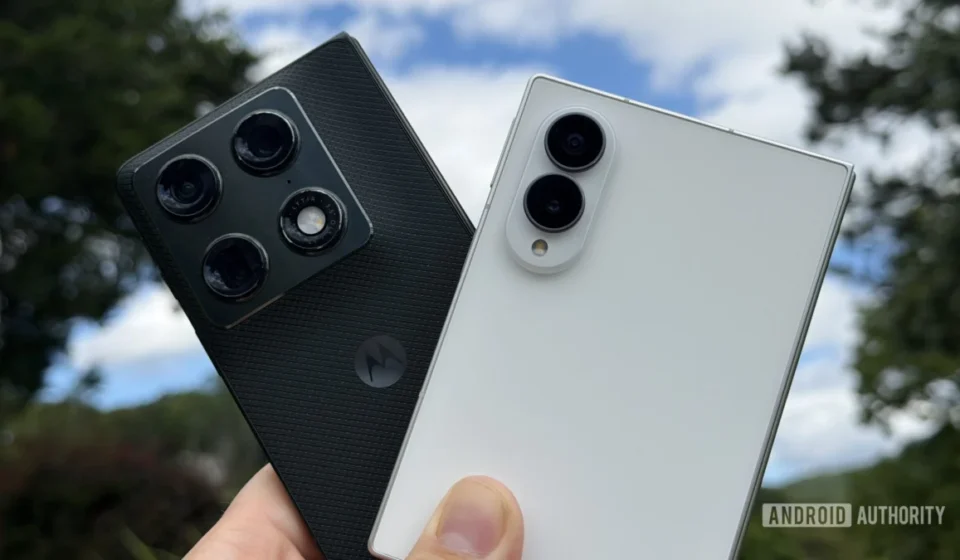
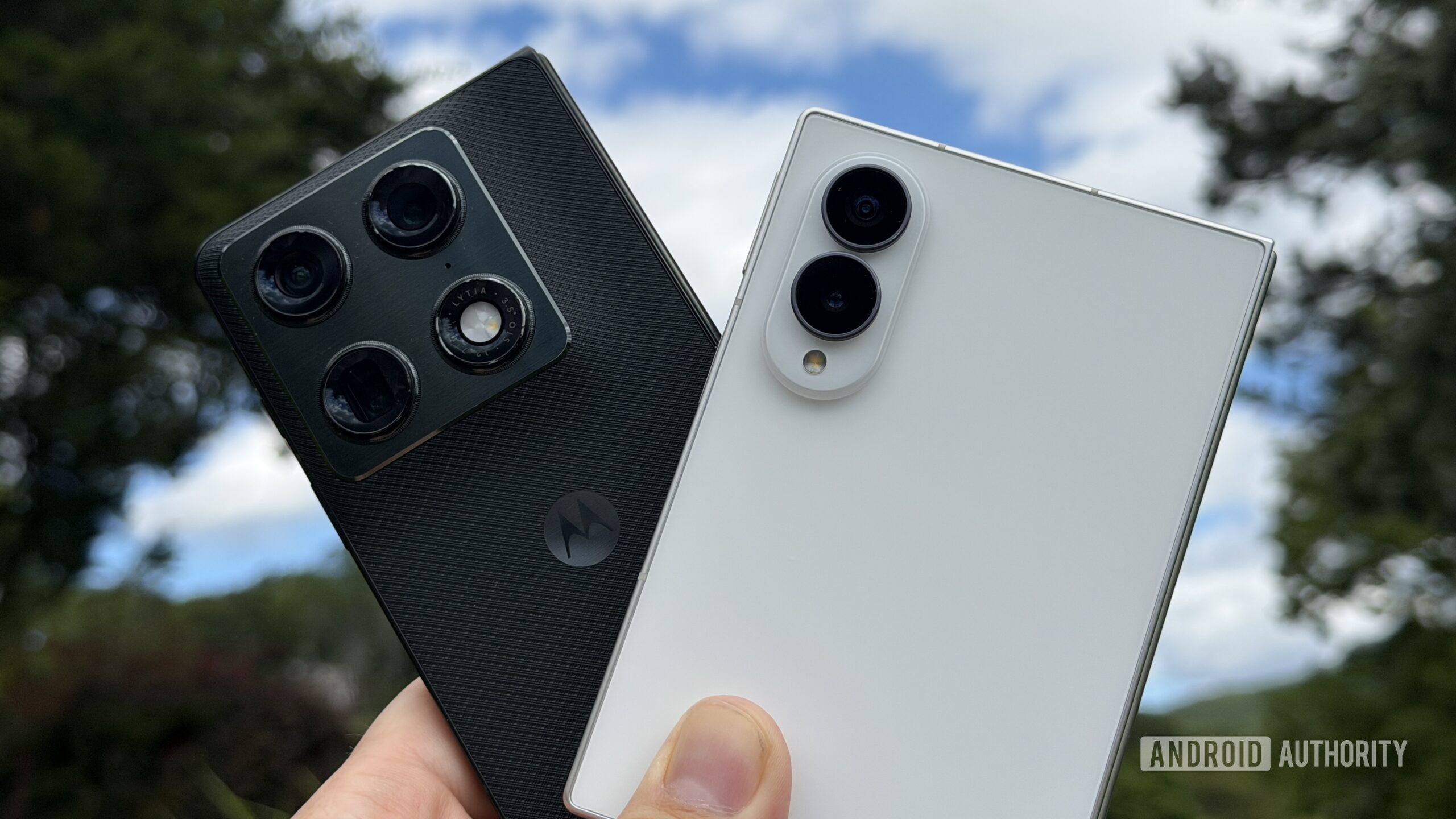
The device reportedly showcases a "short, wide body" with a distinct horizontal camera housing and a sophisticated beige finish. This physical description strongly supports the narrative of Motorola pursuing an "in-between" form factor. Unlike the tall and narrow aspect ratio of traditional clamshell foldables when unfolded, or the square-like dimensions of book-style foldables, the Razr Flex 2027 appears to adopt a wider, more compact footprint when open.
The leaked image’s proportions are said to match earlier details suggesting a 6.92-inch, 165Hz folding display. This size, while substantial, is slightly smaller than the main displays found in many current book-style foldables (which often hover around 7.6 to 8 inches). The 165Hz refresh rate is exceptional, promising incredibly fluid scrolling, responsive touch interaction, and an immersive gaming experience – a specification usually reserved for high-performance gaming phones.
Complementing the main display is a generous 4.97-inch cover screen. This is significantly larger and more functional than the external displays typically found on clamshell foldables, which are often used for quick notifications and widgets. A nearly 5-inch cover screen implies a much more versatile "closed" experience, potentially allowing for full app usage, media consumption, and more without needing to unfold the device. This could be a major selling point for users who appreciate the utility of a larger external display but desire a more compact unfolded device than a traditional book-style foldable.
For photography, the Razr Flex 2027 is expected to feature dual 50MP rear cameras. This high-resolution setup, coupled with the processing power of the Snapdragon SM8845 Pro, suggests a strong emphasis on computational photography, allowing for detailed images, advanced low-light performance, and potentially sophisticated video capabilities.
Powering this innovative hardware is a rumored 5,000mAh battery, a substantial capacity for a foldable device, especially given its "compact wide" design. This, combined with 25W wireless charging, indicates a commitment to delivering robust battery life and convenient charging options, essential for a premium foldable experience.
Motorola’s Strategic Positioning in the Foldable Arena
Motorola’s decision to pursue this "compact wide" form factor with the Razr Flex 2027 is a calculated move in an increasingly competitive and diversifying foldable market. For years, the market has largely been segmented into two main categories: the vertically folding clamshells (like Motorola’s own Razr series and Samsung’s Z Flip series) and the horizontally folding book-style devices (like Samsung’s Z Fold series, Google’s Pixel Fold, and OnePlus’s Open).
Clamshells excel in portability and fashion, offering a full-sized phone that can shrink to half its size. However, their external displays are often secondary, and their unfolded internal displays typically retain a traditional smartphone aspect ratio, which may not offer significant productivity advantages over a regular slab phone. Book-style foldables, on the other hand, prioritize screen real estate and productivity, transforming into tablet-like devices. Yet, they are often thicker, heavier, and can feel cumbersome when closed, with some having an awkward tall-and-narrow external display.
The Razr Flex 2027 appears to be designed to bridge this gap. By offering a wider, yet potentially shorter, unfolded display compared to traditional book-style foldables, Motorola could be targeting users who want more screen real estate than a clamshell provides, but in a package that is more pocketable and less bulky than a Z Fold or Pixel Fold. The emphasis on a large, functional cover screen further reinforces this idea, suggesting a seamless transition between a highly capable "closed" phone experience and an optimized "unfolded" experience that doesn’t feel overly large.
This strategy is not entirely unique in its ambition to explore new foldable dimensions. Competitors like Samsung with its rumored Galaxy Z Fold 8, Apple with its anticipated "iPhone Duo," and Huawei with its Pura X family are all reportedly exploring wider foldable designs. However, Motorola’s rumored dimensions for the Razr Flex 2027 suggest it might be taking the compact aspect of this wider approach even further than its rivals, potentially offering a more distinct and genuinely "in-between" solution.
Market Implications and the Future of Foldables
The introduction of a device like the Motorola Razr Flex 2027 could have significant implications for the broader foldable market. As the foldable segment matures, differentiation will become increasingly crucial. Early adopters were content with the novelty of folding screens, but mainstream consumers demand practical benefits, robust performance, and compelling designs.
Motorola’s approach could appeal to a segment of users who find current book-style foldables too large or too expensive, but want more than a clamshell can offer. The combination of a powerful, next-gen Snapdragon Pro chip, a high-refresh-rate display, versatile camera setup, and a well-optimized Android 17 experience positions the Razr Flex 2027 as a serious contender in the premium segment.
Moreover, the emphasis on seamless software updates and future-proof connectivity standards like Wi-Fi 7 and Bluetooth 6.0 underscores a commitment to longevity and an enhanced user experience. Should the Razr Flex 2027 deliver on these promises, it could not only boost Motorola’s market share in the premium segment but also encourage other manufacturers to explore more diverse foldable form factors beyond the established clamshell and book-style designs.
However, challenges remain. Motorola will need to ensure robust hinge durability, optimize software for its unique aspect ratios, and price the device competitively to attract consumers in a market still dominated by non-foldable flagships. The authenticity of the leaked image and the final specifications will ultimately determine its success, but the current picture paints an exciting future for Motorola and the foldable smartphone landscape. The Razr Flex 2027 stands as a testament to ongoing innovation, pushing the boundaries of what a smartphone can be and how it integrates into our daily lives.