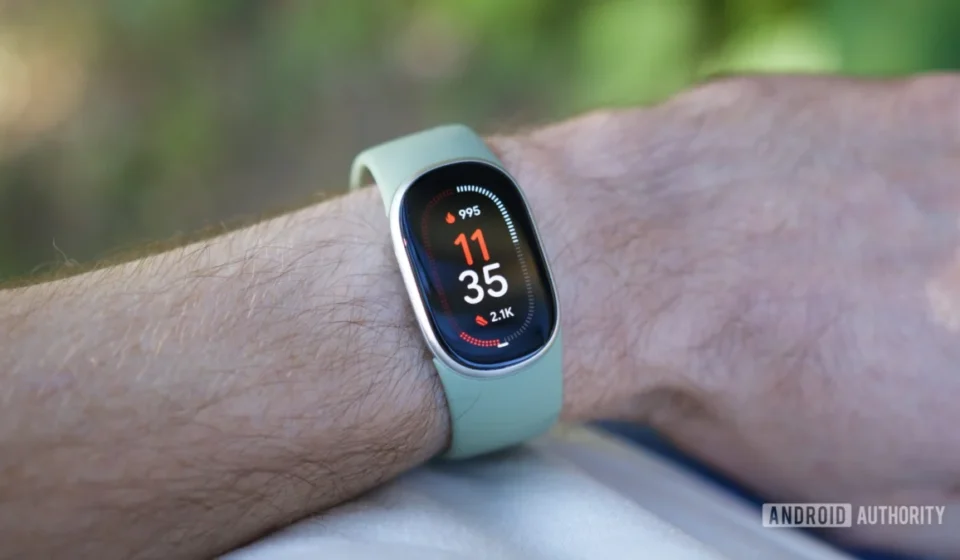

The newly released Google Fitbit Edge, a device positioned to be a prominent offering in the competitive fitness tracker market, has unexpectedly launched without a crucial and long-established feature: hourly reminders to move. This omission, which has quickly become a point of significant contention among its user base, marks a departure from a core tenet of Fitbit’s design philosophy that has guided its products for nearly a decade. Since as far back as the original Fitbit Alta in 2016, the brand has actively encouraged users to maintain consistent activity throughout their day, not just during dedicated workout sessions, by gently nudging them to achieve a minimum of 250 steps per hour. This proactive engagement tool, designed to combat the pervasive issue of sedentary lifestyles, appears to be absent on Google’s latest iteration, leaving many users feeling that a vital component of their daily wellness regimen has been silently removed.
A Long-Standing Feature’s Sudden Absence
The "reminders to move" feature has been a hallmark of the Fitbit experience, serving as a simple yet highly effective mechanism for promoting sustained physical activity. Its primary function was to alert users, typically with a gentle vibration on their wrist, approximately 10 minutes before the end of an hour if they had not yet met their 250-step goal. This timely prompt was particularly invaluable for individuals whose routines involve prolonged periods of sitting, such as office workers, students, or those engaged in sedentary hobbies. It provided an unobtrusive yet consistent cue to stand up, stretch, and take a short walk, breaking up long stretches of inactivity that are increasingly recognized as detrimental to overall health. The absence of this feature on the Fitbit Edge means that while the device still tracks hourly activity, it no longer provides the crucial, actionable feedback that many users have come to rely upon for integrating movement into their daily lives.
The Genesis of "Reminders to Move": Fitbit’s Core Philosophy
To understand the depth of user disappointment, it is essential to contextualize the "reminders to move" feature within Fitbit’s historical mission. From its inception, Fitbit aimed to make health and fitness accessible and actionable for everyday people. Unlike devices solely focused on intense athletic performance, Fitbit championed the idea that small, consistent actions could lead to significant health improvements. The 250-step hourly reminder was a direct embodiment of this philosophy.
Scientific research has consistently underscored the health risks associated with prolonged sedentary behavior. Studies published in journals like the Annals of Internal Medicine and the British Journal of Sports Medicine have linked excessive sitting to an increased risk of cardiovascular disease, type 2 diabetes, certain cancers, and premature mortality, even among individuals who otherwise engage in regular exercise. The World Health Organization (WHO) also emphasizes the importance of breaking up long periods of sitting with activity. The "reminders to move" feature directly addressed this public health concern by providing a practical, immediate solution. It helped users foster healthier habits, improve circulation, boost energy levels, and even enhance mental focus by incorporating micro-breaks into their day. For many, it wasn’t just a notification; it was an integral part of their personal health management strategy, a digital coach on their wrist gently steering them towards better well-being. Its inclusion across various Fitbit models, from the entry-level Alta to more advanced smartwatches, cemented its status as a foundational element of the Fitbit ecosystem.
User Outcry: A Community United in Disappointment
The omission of hourly movement reminders on the Fitbit Edge has not gone unnoticed by its user community. Reports detailing the feature’s absence have rapidly proliferated across various online platforms, including Reddit threads, Facebook groups dedicated to Fitbit users, and the official Google Health Community forums. Users express a collective sense of frustration and disappointment, highlighting how deeply integrated this seemingly simple feature had become into their daily routines.
One user on Reddit lamented, "I’ve relied on these hourly reminders for years to ensure I don’t sit still for too long during my workday. Without it, I find myself forgetting to move, and my step count is suffering. This feels like a downgrade, not an upgrade." Similar sentiments echoed across Facebook groups, with comments like, "It’s the most basic and essential feature for someone with a desk job. Why would they remove it from a newer, more expensive device?" The Google Health Community forums show multiple threads with titles like "Bring Back Hourly Move Reminder to Edge" and "No Reminders to Move with Fitbit Edge," indicating a widespread and consistent pattern of user feedback. These digital spaces have become a sounding board for collective discontent, illustrating that for a significant portion of the user base, the "reminders to move" feature was not a minor add-on but a fundamental utility that justified their loyalty to the Fitbit brand. The consistent nature of these complaints across multiple independent channels suggests a genuine and significant impact on the user experience, underscoring that the feature’s value was both perceived and practical.
A Troubling Precedent: The Fitbit Air and Its Explanations
This is not the first instance of a Google-era Fitbit device launching without the hourly movement reminders. Back in June, a Google Health Community Specialist confirmed the feature’s absence on the Fitbit Air. The initial explanation provided for the Fitbit Air’s omission cited the device’s lack of a screen, which would prevent it from displaying the remaining steps needed to meet the hourly goal. A subsequent explanation further elaborated that the Fitbit Air was designed to minimize interruptions and focus on a more passive form of health tracking, suggesting a strategic shift towards less overt user prompts.
However, these justifications do not logically extend to the Fitbit Edge. The Edge is equipped with a clear, functional display capable of showing various metrics, including step counts, and it fully supports on-wrist notifications. This stark difference renders the previous explanations for the Air largely inapplicable to the Edge. If the absence on the Air was due to hardware limitations (no screen) or a philosophical choice for passive tracking (minimizing interruptions), then the Edge’s design, which includes a screen and notification capabilities, should theoretically accommodate the feature. The discrepancy has led many users to question Google’s consistency in product development and feature prioritization across its Fitbit line, fueling speculation about the underlying reasons for this repeated omission. The situation suggests a potential divergence in design philosophy or a lack of cohesive feature integration strategy following Google’s acquisition of Fitbit.
The Fitbit Edge: A Premium Device, Missing Fundamentals?
The Fitbit Edge is positioned as a premium fitness tracker with a price point of approximately $180. At this price, consumers generally expect a robust feature set that at least matches, if not surpasses, capabilities found in older or more affordable alternatives. However, as noted in various reviews, including Android Authority’s own Fitbit Edge review, the device already lacks several features that were standard on previous Fitbit models or are commonly found on competitors. For instance, the original article specifically points out the absence of NFC capabilities for contactless payments, a feature that has been available on many smartwatches and even some fitness trackers for several years.
The removal of "reminders to move" further exacerbates this perceived value gap. When a newer, more expensive device omits features present in its predecessors or cheaper alternatives, it inevitably leads to user dissatisfaction and questions about the product’s overall value proposition. This trend, if continued, could erode user trust and loyalty, potentially driving consumers towards competing brands that offer a more comprehensive or consistent feature set for their investment. The implications extend beyond just user convenience; it touches upon the core promise of a fitness tracker to actively support and encourage healthy habits. If a device fails to deliver on these fundamental expectations, its appeal, regardless of other advanced features it might possess, can be significantly diminished.
The Broader Implications: Google’s Vision for Fitbit
The repeated omission of "reminders to move" on newer Fitbit devices under Google’s stewardship raises important questions about the broader strategic direction for the Fitbit brand. Google’s acquisition of Fitbit, finalized in 2021 for $2.1 billion, was touted as a move to bolster Google’s presence in the wearables market and enhance its health and wellness offerings. However, product decisions like these suggest a potential shift in focus that may not align with the expectations of long-time Fitbit users.
One interpretation is that Google might be attempting to streamline the Fitbit user experience, perhaps to align it more closely with Google’s broader ecosystem or to differentiate it from other Google-branded wearables. Another possibility is a re-evaluation of what constitutes "essential" health tracking. Perhaps Google is prioritizing more advanced biometric data collection, sleep analysis, or integration with Google Health services over simple activity prompts. This could be part of a strategy to push Fitbit devices towards a more passive, data-driven health insights model, rather than an active, prompt-driven behavior modification tool. However, such a shift, if not clearly communicated or if it sacrifices beloved features, risks alienating a loyal user base that values Fitbit for its accessible and actionable health encouragement. The challenge for Google lies in innovating and integrating without losing the unique identity and core functionalities that made Fitbit successful in the first place.
Seeking Clarity: Google’s Silence and the Path Forward
As of the latest reports, Google has yet to provide an official explanation for the omission of hourly movement reminders on the Fitbit Edge. The absence of a formal statement leaves users and industry observers to speculate about the reasons behind this decision. Android Authority has reached out to Google for comment, seeking clarification on whether this omission is intentional or an oversight, and crucially, whether the feature could be reintroduced through future software updates.
The resolution of this issue will be critical for Google’s relationship with its Fitbit user base. If the omission is indeed intentional, Google will need to articulate a compelling rationale that justifies removing a feature so central to the Fitbit experience. If it is an oversight or a temporary measure, a prompt commitment to reintroducing the feature via a software update would go a long way in assuaging user concerns and rebuilding trust. The precedent set by the Fitbit Air, where the feature remained absent, casts a shadow of doubt, but the Edge’s hardware capabilities offer a more plausible path for a software-based solution. The company’s response, or lack thereof, will significantly influence how users perceive the future of Fitbit products under Google’s ownership and could dictate future purchasing decisions in a highly competitive market.
The Future of Wearable Wellness: Redefining User Engagement
The situation with the Fitbit Edge’s missing movement reminders reflects a larger ongoing debate within the wearable technology industry: how should these devices best engage with users to promote health and wellness? Is the future in active, prompt-based encouragement, or in passive data collection and insightful analytics? While advanced sensors and sophisticated algorithms can provide deep insights into sleep patterns, heart rate variability, and stress levels, the efficacy of simple, consistent behavioral nudges, like the hourly move reminder, cannot be understated. These small prompts have proven to be powerful catalysts for habit formation and sustained lifestyle changes for millions of users.
The move away from such direct engagement tools by a brand like Fitbit, traditionally known for its approachable and actionable health guidance, could signal a broader industry trend towards a more hands-off approach. However, it also presents an opportunity for competitors to emphasize their commitment to active user encouragement. As wearable technology continues to evolve, finding the right balance between advanced data, intelligent insights, and practical, motivational tools will be key to meeting diverse user needs and truly empowering individuals to take control of their health. For now, Fitbit Edge users remain hopeful that Google will listen to their feedback and restore a feature that, for many, defines the very essence of what a Fitbit should be.