BYD’s Blade Battery 2.0 Promises to Reshape the Electric Vehicle Landscape with Unprecedented Range and Charging Speeds

The global electric vehicle (EV) industry is still processing the ramifications of BYD’s "Disruptive Technology" event held on March 5th. The Chinese automotive giant unveiled its second-generation Blade Battery, a significant advancement in lithium iron phosphate (LFP) battery technology, engineered to directly address two of the most persistent challenges hindering widespread EV adoption: driving range and charging time. This innovation, demonstrated through compelling performance metrics and a commitment to mass-market integration, signals a pivotal moment that could fundamentally alter the competitive dynamics of the EV sector.
The unveiling event, held at BYD’s facilities, showcased not just a technological leap but also BYD’s strategic positioning within the rapidly evolving automotive market. For years, the EV industry has grappled with consumer concerns regarding "range anxiety" – the fear of an EV running out of power before reaching a charging station – and the inconvenience of lengthy charging stops, which often extend beyond a traditional fuel refill. BYD’s Blade Battery 2.0 appears to offer a robust solution, potentially rendering these concerns obsolete for a significant portion of the market.
A Quantum Leap in Battery Performance: Range and Charging Redefined
At the heart of BYD’s announcement is the remarkable performance of the Blade Battery 2.0. The company claims a range exceeding 1,000 kilometers on China’s CLTC (China Light-Duty Vehicle Test Cycle). While direct comparisons across different test cycles can be complex, this figure translates to approximately 725 kilometers (about 450 miles) on the more stringent US EPA (Environmental Protection Agency) scale and around 900 kilometers (about 560 miles) on the WLTP (Worldwide Harmonised Light Vehicles Test Procedure) standard, commonly used in Europe. To contextualize this achievement, the previous generation of the Blade Battery achieved 600 kilometers CLTC, which was considered a strong performance. Today, even premium long-range EVs from established manufacturers often fall short of these newly announced figures.
For instance, Tesla’s Model S Long Range, a benchmark for EV range in the US market, typically offers around 660 kilometers (approximately 412 miles) on the EPA cycle. BYD’s latest battery technology appears to have surpassed this industry leader in a single generation. This substantial increase in range directly tackles the psychological barrier of range anxiety, allowing for more extensive travel and reducing the perceived need for frequent charging.
Equally impressive is the charging capability of the Blade Battery 2.0, powered by BYD’s new "flash charging" system. The company demonstrated an astonishing ability to charge the battery from 10% to 70% in a mere five minutes, and from 10% to 97% in just nine minutes. This represents a dramatic acceleration compared to current charging standards.
To illustrate the magnitude of this advancement, consider the current fastest widely deployed charging network, Tesla’s V4 Supercharger. While capable of peak charging speeds of up to 325 kW for certain vehicles (though most are limited to around 250 kW), it typically requires approximately 15 to 20 minutes to add a comparable amount of charge. Even high-performance EVs like the Porsche Taycan, equipped with an 800-volt architecture designed for rapid charging, necessitate around 18 minutes for a 10% to 80% charge. BYD’s flash charging technology appears to operate at a significantly higher echelon, potentially reducing charging stops to the duration of a brief coffee break.

Supporting Data: A Comparative Analysis of EV Charging and Range
To provide a clearer picture of BYD’s breakthrough, a comparative table highlights the performance of the Blade Battery 2.0 against other leading EVs:
| Brand | Battery Technology | Best Range (WLTP/EPA) | Peak Charging Speed | 10-80% Charge Time (Approx.) |
|---|---|---|---|---|
| BYD | Blade Battery 2.0 | ~900 km WLTP | 1,500 kW | ~5 min (10-70%) |
| Tesla | Model S Long Range | ~560 km EPA | 325 kW (V4) | ~15-20 min |
| Porsche | Taycan Turbo S | ~530 km WLTP | 320 kW | ~18-21 min |
| Hyundai | Ioniq 6 Long Range | ~614 km WLTP | 350 kW | ~18 min |
| Lucid | Air Grand Touring | ~837 km EPA | 420 kW (peak) | ~22 min |
Note: Range figures are approximate and depend on specific model configurations and testing methodologies. Charging speeds and times are also subject to vehicle limitations and charging infrastructure.
The table underscores BYD’s disruptive potential. The claimed 1,500 kW peak charging speed of the flash charger is an order of magnitude higher than current industry standards, suggesting a fundamental shift in how EVs can be replenished. This level of power delivery is unprecedented and, if realized consistently, would redefine the user experience of EV ownership.
Addressing a Critical Weakness: Cold Weather Performance
Beyond exceptional range and rapid charging in temperate conditions, BYD has also made significant strides in improving cold-weather battery performance. The Blade Battery 2.0 is reported to maintain its charging capabilities even in frigid environments. Specifically, it can reportedly charge from 20% to 97% in just 12 minutes at temperatures as low as -30°C (-22°F). This is a crucial development, particularly for regions experiencing harsh winters, such as Northern Europe and Canada. Historically, battery performance degradation in cold weather has been a significant barrier to EV adoption, impacting range and charging speeds. BYD’s claimed improvement in this area directly addresses a long-standing concern for consumers in colder climates.
To support these extraordinary charging speeds, BYD has introduced a new 1,500 kW flash charger. This charging unit’s power output dwarfs anything currently available from Tesla or the broader public charging infrastructure. The development of such high-power charging hardware suggests a comprehensive approach by BYD, ensuring that its battery technology is complemented by the necessary infrastructure to realize its full potential.
The First Wave: Luxury Flagship and Mass-Market Integration

The first vehicle to integrate the revolutionary Blade Battery 2.0 will be the Yangwang U7, BYD’s forthcoming luxury flagship sedan. This high-end model will feature a substantial 150 kWh Blade Battery 2.0, paired with a quad-motor powertrain. Its projected CLTC range of 1,006 kilometers (approximately 625 miles) positions it as a direct competitor to other ultra-luxury EVs and further validates the battery’s capabilities.
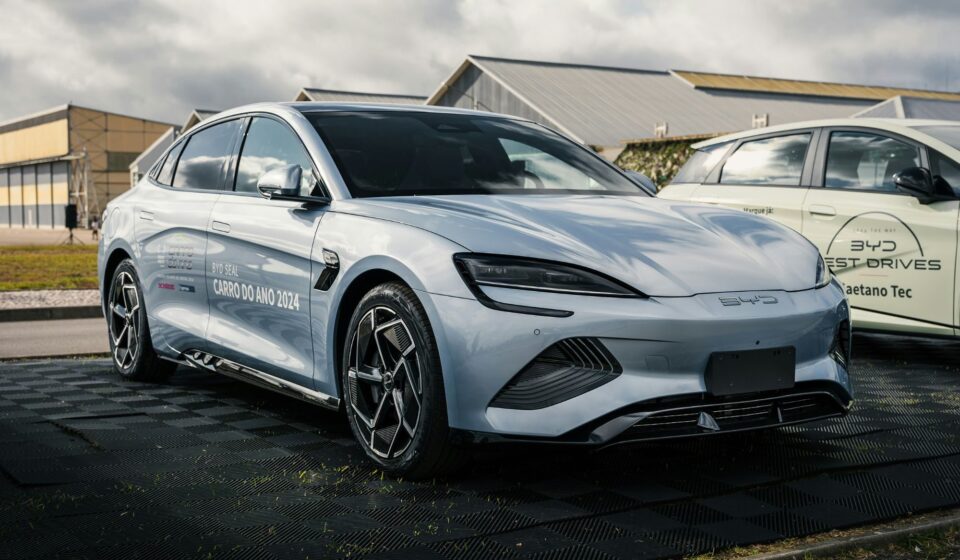
However, BYD’s strategy extends far beyond the premium segment. The true impact of the Blade Battery 2.0 is poised to be felt in the mass market with the introduction of the BYD Seal 07 EV. This mid-size sedan, belonging to BYD’s mainstream "Ocean" lineup, is comparable in size to the Toyota Camry. Crucially, it will incorporate the same Blade Battery 2.0 and flash charging technology. Priced competitively, with a converted starting price of around $24,600 USD, the Seal 07 EV offers a compelling proposition: cutting-edge battery technology at an accessible price point. Early real-world tests have already corroborated BYD’s claims, with a 10% to 70% charge reportedly achieved in an impressive 4 minutes and 51 seconds, even surpassing the advertised five minutes.
This dual-pronged approach – showcasing the technology in a luxury vehicle while simultaneously deploying it in an affordable mass-market model – demonstrates BYD’s commitment to democratizing advanced EV technology. By making such significant range and charging capabilities available in a car with a sticker price competitive with internal combustion engine vehicles, BYD is directly challenging the established order.
Implications for the Global EV Market
The implications of BYD’s Blade Battery 2.0 are profound and far-reaching. The company has effectively dismantled two of the most significant barriers to mainstream EV adoption: range anxiety and slow charging times.
- Accelerated EV Adoption: By offering EVs with comparable or superior range to gasoline cars and charging times that rival a quick stop, BYD is poised to make EVs a more practical and attractive option for a much wider consumer base.
- Intensified Competition: Traditional automakers and other EV manufacturers will face immense pressure to match or exceed BYD’s advancements. This could spur a rapid acceleration in battery technology development across the industry. Competitors will need to invest heavily in R&D to keep pace, potentially leading to price reductions and further innovation.
- Infrastructure Rethink: The development of 1,500 kW charging technology necessitates a parallel evolution in charging infrastructure. This could lead to a global push for higher-power charging stations, transforming the charging landscape and potentially requiring significant grid upgrades.
- Shifting Market Dominance: BYD, already a dominant force in China and a growing player globally, could solidify its position as a technology leader. Its ability to offer advanced features at competitive prices poses a direct threat to established players, particularly those heavily invested in legacy internal combustion engine technology.
- Geopolitical Dynamics: As China continues to lead in EV technology and manufacturing, BYD’s innovations will likely further influence global trade dynamics and the geopolitical landscape of the automotive industry.
While specific details regarding the exact chemical composition or manufacturing processes of the Blade Battery 2.0 remain proprietary, the performance claims have sent ripples through the industry. Skepticism is natural with such ambitious figures, and the true real-world performance will be closely scrutinized as these vehicles reach consumers. However, the history of BYD’s innovation, particularly with the original Blade Battery which was praised for its safety and longevity, lends significant credibility to these new claims.
The automotive world has been anticipating a true paradigm shift in EV technology, and BYD’s "Disruptive Technology" event appears to have delivered it. The combination of extended range, ultra-fast charging, and a commitment to affordability suggests that the era of the internal combustion engine may be facing an accelerated timeline, with BYD at the forefront of this electrifying revolution. The coming months and years will reveal the full extent of this technological disruption, but for now, the EV industry has a new benchmark to chase.