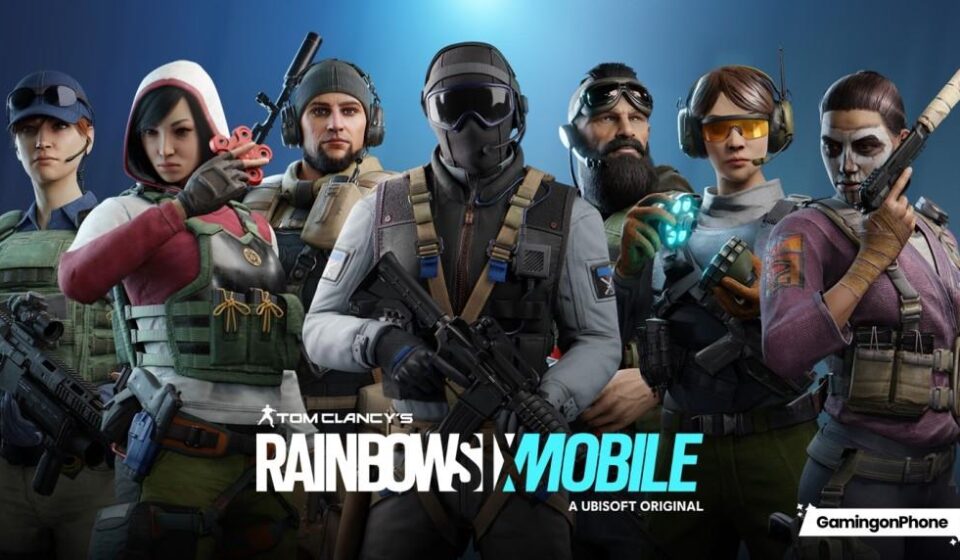
Rainbow Six Mobile Review: Ubisoft’s Tactical Shooter Entry to the Mobile Market

Ubisoft’s latest foray into the competitive mobile shooter landscape, Rainbow Six Mobile, emerges as a dedicated mobile adaptation of the critically acclaimed PC/Console title, Rainbow Six Siege. This new standalone experience aims to translate the intense 5v5 close-quarters combat (CQB) that defines its predecessor, where players are granted a single life per round, necessitating meticulous coordination for objective-based attack and defense scenarios. With a diverse roster of operators, a selection of iconic maps, and distinct game modes, Rainbow Six Mobile is poised to introduce a unique brand of strategic CQB gameplay to a mobile audience, a niche currently underserved in a market dominated by more traditional battle royale and run-and-gun offerings. This article provides a comprehensive review and initial impressions of the game, examining its mechanics, design philosophy, and potential impact on the burgeoning mobile gaming sector.
Ubisoft’s Strategic Entry into the Mobile FPS Arena
The decision by Ubisoft to launch Rainbow Six Mobile underscores a significant strategic pivot towards the lucrative mobile gaming market, mirroring the successful ventures of other industry giants. Titles such as Activision’s Call of Duty Mobile and Tencent’s PUBG Mobile have demonstrated the immense potential for high-fidelity, competitive shooters on handheld devices, collectively generating billions in revenue and attracting hundreds of millions of players globally. These games have established a precedent for translating complex PC/console experiences into accessible and engaging mobile formats. Ubisoft, with Rainbow Six Mobile, seeks to carve out its own distinct territory by promising an experience that retains the tactical depth and strategic intensity of Rainbow Six Siege, rather than merely offering a simplified port. Developers have explicitly stated their commitment to upholding the core gameplay pillars, a critical factor for both new players and veterans of the franchise. If successful, this project could significantly bolster Ubisoft’s presence in the mobile space and redefine expectations for tactical shooters on the platform.
The Genesis of Rainbow Six Mobile: From Siege to Small Screens
The Rainbow Six franchise, rooted in Tom Clancy’s tactical fiction, has historically been synonymous with realism and strategic gameplay, evolving from its early PC incarnations to the globally recognized esports phenomenon that is Rainbow Six Siege. Launched in 2015, Siege revitalized the franchise with its focus on environmental destruction, operator-specific abilities, and high-stakes 5v5 combat, garnering a player base exceeding 80 million by 2022 and establishing a robust professional esports circuit. The journey to Rainbow Six Mobile began with its official announcement in April 2022, followed by several closed beta phases throughout 2022 and into early 2023. These testing periods were crucial for optimizing the complex mechanics of Siege for mobile controls and hardware, gathering player feedback, and ensuring a faithful yet distinct experience. Ubisoft Mobile’s development team has been tasked with the delicate balance of preserving the intricate strategic layers that define Siege while making it intuitive and responsive for touchscreen interfaces. The aim is not a direct port but a standalone title built from the ground up for mobile, leveraging the existing intellectual property to attract a broad audience while offering a tailored experience.
Responsive Gameplay and Tactical Depth: A Core Differentiator
Central to any first-person shooter’s appeal is its responsiveness and fluidity, and Rainbow Six Mobile notably excels in this aspect. The game delivers a control scheme and movement system that "feels right," providing a smooth and satisfying experience from the outset. However, in a saturated market, mere responsive controls are insufficient. Rainbow Six Mobile distinguishes itself through its foundational tactical mechanics, directly inherited and adapted from its PC/console counterpart. The game’s emphasis on close-quarters tactical combat is paramount, characterized by maps with limited movement space, extensive destructible environments, and a diverse arsenal of weapons and gadgets.

This destructibility is a game-changer, allowing players to breach walls, floors, and ceilings to create new lines of sight or entry points, fundamentally altering map layouts mid-round. This level of environmental manipulation demands strategic foresight and coordination. Attackers must plan breaching points, drone ahead for enemy positions, and utilize operator abilities to counter defender setups. Defenders, conversely, must reinforce key walls, deploy gadgets to deny entry, and create rotation holes to move between sites efficiently. Every decision, from the choice of operator to the placement of a reinforcement, carries significant weight and can pivot the outcome of a round. This intricate interplay fosters a balanced, end-to-end gameplay loop that prioritizes strategic thinking and synchronized teamwork. While the learning curve for this genre can be steep for newcomers accustomed to more straightforward shooters, the highly rewarding nature of executing a successful strategy encourages continued engagement and mastery. This unique blend of precise gunplay and profound tactical planning positions Rainbow Six Mobile as a fresh and compelling entry for FPS enthusiasts.
A Mobile Port with Unique Adaptations for Accessibility
For veterans of Rainbow Six Siege, many core concepts seamlessly transition to the mobile platform, including crucial roles like anchoring (defending the objective directly), roaming (flanking and harassing attackers), breaching (creating entry points), and droning (scouting enemy positions). Despite its inherent strategic complexity, Ubisoft has implemented features aimed at making the game more approachable for beginners without diluting its core identity. One such innovation is the "Tactical Focus" feature. This mechanic allows players to hard-scope on an angle with enhanced precision, reducing movement speed but providing a degree of auto-fire assistance when an enemy enters the reticle. While powerful when deployed judiciously, its potential impact on gameplay balance suggests it may undergo further refinement. The intent behind Tactical Focus is clear: to encourage a more deliberate, conservative playstyle over aggressive "run-and-gun" tactics, aligning with the strategic ethos of Rainbow Six. This feature, alongside other subtle design choices, guides players towards a more thoughtful engagement, fostering an environment where tactical prowess can often trump raw mechanical skill.
Content Offering and Future Roadmap: Ensuring Longevity
Upon its initial release, Rainbow Six Mobile offers a substantial content package, featuring 18 unique operators, 3 distinct maps, and 2 primary game modes. While the foundational concepts for operators, maps, and modes are drawn directly from Rainbow Six Siege, they have been meticulously optimized and tweaked for the mobile experience.
Operators, redesigned with Rainbow Six Mobile’s distinct graphical style, each possess unique appearances and specialized skill sets. They are categorized into attackers and defenders, with further subdivisions such as hard breachers (e.g., Thermite, Hibana, capable of destroying reinforced walls), soft breachers (e.g., Sledge, Ash, for destroying unreinforced surfaces), and anti-gadget specialists (e.g., Thatcher, Twitch, for disabling enemy utilities). This extensive diversity ensures that each round presents different strategic possibilities and challenges, encouraging experimentation with numerous operator combinations and fostering deep team synergy. The progression system, including the excitement of unlocking new operators and anticipating future content releases, serves as a powerful engagement driver.

The initial map selection includes iconic locations such as a modern bank with a secure underground vault, a multi-story building featuring numerous soft walls (likely a rendition of Border or Kafe, given the "Middle East" descriptor), and a sprawling three-floor clubhouse filled with entertainment rooms. These maps are not merely aesthetic backdrops; their intricate designs, multiple entry points, and varied destructibility necessitate adaptive strategies for both offense and defense.
The two launch game modes are:
- Bomb: The classic "defuse the bomb" scenario, where attackers must locate and plant a defuser at one of two bomb sites, while defenders work to prevent the plant or defuse it once active. This mode is a cornerstone of competitive Siege.
- Secure Area: Attackers aim to control a designated room for a continuous 10-second period, while defenders must prevent this capture. Both modes demand different tactical approaches and teamwork, offering varied gameplay experiences.
Ubisoft has committed to a robust post-launch content strategy, promising regular additions of new operators, maps, and game modes, ensuring the game remains fresh and engaging for its player base.
Visuals and Performance: A Distinct Aesthetic Approach
Rainbow Six Mobile adopts a refreshingly distinct visual style that surprisingly complements its tactical gameplay. Rather than pursuing hyper-realistic graphics akin to some competitors like Call of Duty Mobile or venturing into the futuristic sci-fi aesthetic of titles like Apex Legends Mobile, R6M leans into a more minimalist yet vibrant design. Operators feature animated appearances that are both distinctive and visually appealing, while map environments are rendered with eye-catching detail and bright colors. Subtle, soft details contribute to the overall visual polish without overwhelming the player, maintaining clarity in the often-chaotic close-quarters engagements.
In-game elements such as maps and weapon models are well-polished, and environmental effects like smoke and explosions strike a balance between realism and a clean, simplified presentation. This aesthetic choice makes the game feel approachable and easy on the eyes, reducing visual clutter that might otherwise hinder quick decision-making in a fast-paced tactical environment. The game successfully achieves a vibrant and immersive experience while optimizing for mobile performance and visual clarity. This unique artistic direction allows Rainbow Six Mobile to stand out visually, reinforcing its identity as a distinct mobile experience rather than a mere graphical downgrade of its PC counterpart.

Early Impressions and Community Reception
The overall reception from early access and beta participants has been largely positive, highlighting the game’s fidelity to the Rainbow Six Siege experience on mobile. Players consistently commend the responsive controls and the general "feel" of the gameplay, which are crucial for a tactical FPS. The learning curve, while present, is seen as a worthwhile investment due given the depth of gameplay. Many players appreciate the inclusion of the Tactical Focus feature, even if its balance is still under scrutiny, as it provides a valuable tool for new players to adapt to the game’s demanding pace. Community feedback has also emphasized the importance of team communication and coordination, reinforcing that the core strategic elements of Siege have successfully transitioned. The distinct visual style has also been a point of positive discussion, praised for its clarity and unique charm. While specific data on player retention and monetization engagement from beta phases is proprietary, the sentiment points towards a strong foundation for a successful launch.
Challenges and Opportunities: Navigating the Mobile FPS Landscape
Rainbow Six Mobile enters a highly competitive mobile gaming market, facing both significant opportunities and inherent challenges. Its unique tactical gameplay is a major draw, offering a refreshing alternative to the dominant battle royale and arcade-style shooters. This distinctiveness could allow it to carve out a dedicated niche, potentially even fostering a thriving mobile esports scene, given the strategic depth that lends itself well to competitive play.
However, Ubisoft must meticulously navigate several critical areas to ensure long-term success. Maintaining a fair and balanced competitive environment is paramount, requiring robust anti-cheat measures to combat hackers and a vigilant approach to balancing operator abilities, weapons, and game mechanics. Monetization strategies will also be crucial; while free-to-play elements are essential for mass adoption, avoiding "overused micro-transactions" that feel predatory or create a "pay-to-win" environment is vital for player retention and community trust. The developers’ commitment to continuous content updates, including new operators, maps, and modes, will be key to keeping the game fresh and engaging, preventing player fatigue. Furthermore, optimizing performance across a wide range of mobile devices will be an ongoing challenge, ensuring a smooth experience for as many players as possible. If these hurdles can be effectively managed, Rainbow Six Mobile has the potential to not only attract a massive player base but also to set a new standard for tactical shooters on mobile platforms.
Strategic Implications for Ubisoft and the Mobile Market
Rainbow Six Mobile represents a pivotal move for Ubisoft, signalling a more aggressive and targeted strategy in the mobile gaming sector. Beyond the immediate commercial prospects, the game’s success could have broader implications. It demonstrates Ubisoft’s capability to adapt its flagship intellectual properties to new platforms while preserving their core identity, potentially paving the way for other mobile adaptations of their extensive portfolio. For the mobile gaming market, R6M could instigate a new trend, encouraging other developers to explore more complex, strategic genres beyond the established battle royale and MOBA formats. Its emphasis on teamwork, environmental destruction, and operator utility introduces a sophisticated layer of gameplay that could elevate player expectations for mobile titles. Should Rainbow Six Mobile successfully foster a vibrant esports ecosystem, it would further legitimize mobile gaming as a serious competitive platform, attracting investment and expanding the global reach of competitive gaming.

Final Verdict: A Breath of Fresh Air for Mobile FPS
From a comprehensive review perspective, Ubisoft has largely succeeded in translating the essence of Rainbow Six Siege into a compelling mobile experience. While not a direct port, Rainbow Six Mobile stands on its own with a unique graphical style and a gameplay loop that is both intense and profoundly exciting. Every round offers the potential for memorable moments—be it a cunning maneuver under pressure, a perfectly executed team strategy, or simply moments of exhilarating chaos.
The rich diversity of operators, meticulously designed maps, and engaging game modes provide substantial depth beyond the core gunplay, establishing a robust framework for consistent content refreshment. This structured approach, coupled with the inherent strategic depth, positions Rainbow Six Mobile as a strong candidate for breaking into the competitive esports category, capable of delivering sustained entertainment. As long as Ubisoft maintains its commitment to avoiding common pitfalls such as major bugs, rampant cheating, and overly aggressive monetization, Rainbow Six Mobile is poised for significant success. For mobile FPS enthusiasts, R6M genuinely offers a breath of fresh air—a distinct and strategic alternative that could very well inaugurate a new era for tactical shooters on handheld devices.
Gameplay Mechanics – 9/10
Gamemodes – 9/10
Graphics and Music – 8.5/10
Controls and UI – 8.5/10
Free-to-Play Elements – 8/10
Overall Score: 8.6/10
Verdict: Good

Ubisoft has expertly adapted Rainbow Six Siege for the mobile platform, crafting a distinct experience. With excellent gameplay, compelling graphics, and rich content depth, the game is well-positioned to significantly influence the mobile FPS market.