Google Maps Integrates Gemini AI for Enhanced Navigation and Information Discovery

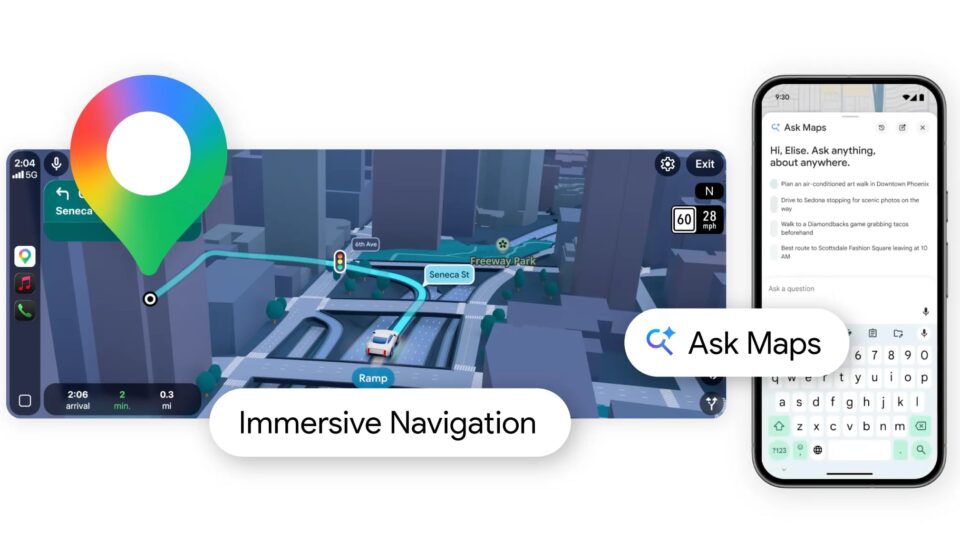
Google today unveiled a significant advancement for its Maps application, integrating the powerful Gemini AI to introduce a new "Ask Maps" feature. This groundbreaking addition promises to transform how users interact with and extract information from the popular mapping service, moving beyond traditional directional queries to address complex, real-world questions that were previously beyond the scope of map-based applications. The integration marks a pivotal moment in the evolution of digital mapping, blending sophisticated artificial intelligence with vast geographical data to offer unprecedented levels of personalized and context-aware assistance.
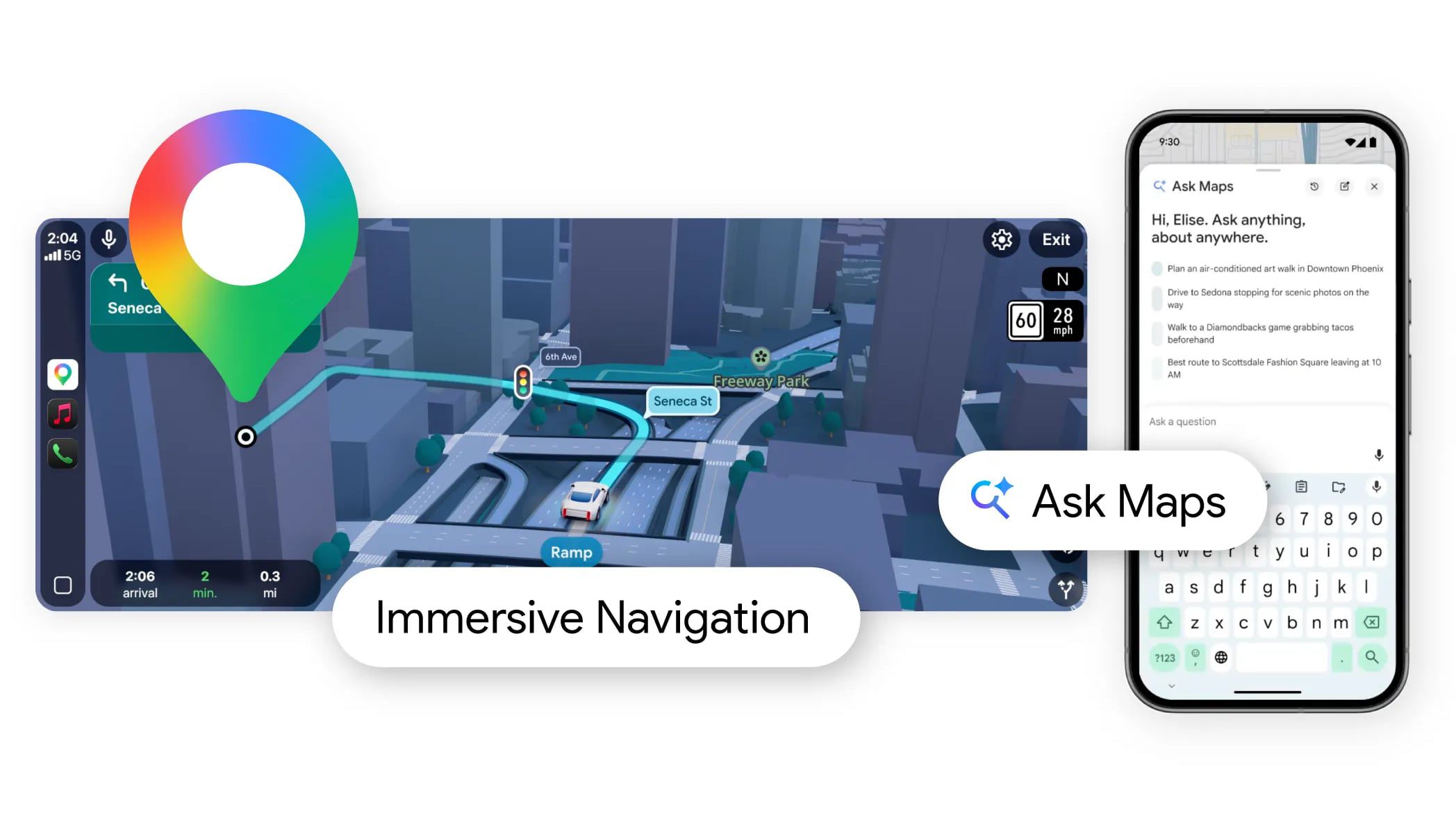
The "Ask Maps" feature, powered by Gemini, empowers users to pose intricate questions that require a deeper understanding of local environments and user needs. Instead of merely finding a location, users can now inquire about specific amenities, conditions, and suitability for particular activities. For instance, a query like "Is there a public tennis court with lights on that I can play at tonight?" can now be directly answered by Google Maps. Previously, obtaining such specific information would necessitate extensive manual searching through reviews, business listings, and community forums, often resulting in time-consuming and frustrating research. Gemini’s ability to synthesize information from a multitude of sources within Google Maps, including user-generated reviews, business data, and real-time information, allows for a more efficient and accurate response, often accompanied by a custom-generated map highlighting relevant options.
This enhanced informational capability extends significantly to trip planning. Gemini can now leverage a user’s past searches, saved locations, and preferences within Google Maps to provide highly tailored recommendations and itinerary suggestions. The AI’s capacity to process data from over 300 million places, coupled with the rich tapestry of Google community reviews, enables the creation of personalized travel plans that cater to individual interests and logistical requirements. This holistic approach to trip planning aims to reduce the friction associated with organizing travel, making the process more intuitive and enjoyable.
Beyond the "Ask Maps" feature, Google also launched "Immersive Navigation," an update described as the most substantial enhancement to driving directions in Google Maps in over a decade. This new navigation mode introduces a rich 3D visualization of the driving environment, displaying buildings, overpasses, and terrain with remarkable detail. Crucially, Immersive Navigation highlights essential road elements such as lanes, crosswalks, traffic lights, and stop signs directly within the navigation interface. This spatial understanding is made possible by Gemini’s advanced analytical capabilities, which process real-world imagery from Street View and aerial photography to create a more comprehensive and intuitive representation of the route ahead.
The improved navigation offers users a broader perspective of their upcoming journey, providing more detailed insights into road conditions and potential hazards. It also enhances the presentation of alternative routes, offering clearer explanations of the trade-offs involved, such as estimated time differences, potential traffic congestion, and scenic value. Furthermore, route previews are enriched with information relevant for pre-arrival planning, including details on parking availability and other logistical considerations, aiming to reduce the stress of reaching a destination.
This dual rollout of "Ask Maps" and "Immersive Navigation" signals Google’s strategic commitment to leveraging AI to deepen user engagement and utility within its core services. The integration of Gemini into Google Maps represents a significant leap forward in how digital mapping platforms can serve as intelligent assistants, anticipating user needs and providing proactive, contextually relevant information.
Background and Development Context
The introduction of Gemini AI into Google Maps is the culmination of years of research and development in artificial intelligence, particularly in the domain of large language models and computer vision. Google has consistently invested in AI technologies, with Gemini representing its most advanced and versatile AI model to date. Designed to understand and operate across different modalities, Gemini’s integration into Maps allows it to process and interpret a wide range of data types, from textual queries and reviews to visual information from Street View and satellite imagery.
The need for more sophisticated information retrieval within mapping applications has become increasingly apparent as urban environments grow more complex and user expectations for personalized services rise. Traditional search functions within maps often relied on keyword matching, which could be insufficient for nuanced queries. The development of "Ask Maps" addresses this gap by enabling natural language understanding and reasoning, allowing Gemini to interpret the intent behind complex questions and retrieve relevant information from a vast and interconnected dataset.
The evolution of Immersive Navigation also stems from advancements in 3D mapping technologies and the desire to provide drivers with a more intuitive and less distracting navigation experience. By overlaying critical road information onto a realistic 3D representation of the environment, Google aims to improve driver awareness and reduce the cognitive load associated with following directions. This is particularly important in complex urban intersections or challenging weather conditions.
Rollout and Availability
The "Ask Maps" feature is currently rolling out to users in the United States and India on both iOS and Android platforms. Google has indicated that expansion to the desktop version of Google Maps is planned for the near future, suggesting a comprehensive integration across all user touchpoints.
Immersive Navigation is also commencing its rollout in the United States, with initial availability expected to be gradual. Google anticipates that the feature will become accessible to a broader range of users on eligible iOS and Android devices over the coming months. Furthermore, the company has confirmed plans to extend Immersive Navigation to CarPlay and Android Auto, ensuring a consistent and enhanced navigation experience for drivers across various in-car infotainment systems. This phased rollout strategy allows Google to monitor performance, gather user feedback, and refine the features before wider global deployment.
Supporting Data and Technological Underpinnings
The effectiveness of "Ask Maps" and Immersive Navigation relies on several key technological advancements and data sources:
- Gemini AI Models: At the core of these new features are Google’s Gemini AI models. These models are designed for multimodal understanding, meaning they can process and connect information from text, images, audio, and video. In the context of Maps, this allows Gemini to interpret user queries, analyze Street View imagery, understand the context of reviews, and generate coherent and informative responses.
- Extensive Geographical Data: Google Maps has accumulated an unparalleled dataset of over 300 million places worldwide. This includes detailed business listings, user reviews, photos, ratings, operating hours, and more. Gemini’s ability to query and synthesize this vast repository of information is crucial for answering complex questions.
- Street View and Aerial Imagery: The high-resolution imagery captured by Google’s Street View vehicles and aerial photography provides the foundational visual data for Immersive Navigation. Gemini models analyze these images to build detailed 3D models of the environment and identify key navigational elements.
- Real-time Data Integration: Both features likely benefit from real-time data feeds, such as traffic conditions, public transport schedules, and local event information, further enhancing the accuracy and relevance of the provided answers and navigation guidance.
- User Interaction Data: Google’s ongoing collection of anonymized user interaction data within Maps, including search queries and navigation patterns, provides valuable feedback loops for improving the AI’s performance and understanding of user needs.
The technical infrastructure supporting these features is substantial, requiring robust cloud computing resources and sophisticated algorithms for data processing, AI model inference, and real-time rendering of navigational elements.
Broader Impact and Implications
The integration of Gemini AI into Google Maps has far-reaching implications for both users and the broader digital landscape:
- Enhanced User Experience: For users, the primary benefit is a more intuitive, efficient, and personalized way to interact with mapping services. The ability to ask complex questions and receive tailored answers or navigate with enhanced visual cues can significantly improve daily commutes, travel planning, and local exploration. This moves Maps from a purely utilitarian tool to an intelligent, proactive assistant.
- Competitive Landscape: This move intensifies the competition in the navigation and mapping sector. By integrating advanced AI, Google is setting a new benchmark for what users can expect from mapping applications, potentially pressuring competitors to accelerate their own AI integration strategies.
- Data Utilization and Monetization: The enhanced capabilities of "Ask Maps" demonstrate new ways in which Google can leverage its vast datasets. This could lead to more sophisticated advertising opportunities within Maps, such as personalized recommendations for businesses or services based on complex user queries and preferences.
- Accessibility and Inclusivity: While not explicitly stated in the initial announcement, advanced AI features in mapping can have positive implications for accessibility. For example, more detailed visual cues in Immersive Navigation could aid drivers with certain visual impairments, and the ability to ask complex questions in natural language could benefit users who struggle with traditional search interfaces.
- Future of AI in Location-Based Services: This integration is a significant indicator of the future direction of AI in location-based services. It suggests a trend towards more predictive, context-aware, and conversational interactions with digital maps, blurring the lines between digital information and the physical world. The ability of AI to understand and act upon real-world context is a key frontier, and Google Maps is now at the forefront of this evolution.
The success of these new features will likely depend on their continued refinement, the accuracy and reliability of Gemini’s responses, and user adoption. However, the strategic integration of cutting-edge AI into a widely used platform like Google Maps signals a substantial shift in how we navigate and understand our world through digital interfaces.