Nothing Headphone A Signals Strategic Shift Towards Tactile Excellence and Enduring Performance in Over-Ear Audio Market

The recent introduction of the Nothing Headphone A marks a significant expansion of Nothing’s audio product portfolio, drawing attention for its distinctive industrial design, emphasis on tactile controls, and remarkable battery longevity. Positioned within the competitive mid-range segment, these over-ear headphones represent a deliberate effort by the London-based tech company to appeal to users seeking a blend of aesthetic uniqueness, robust functionality, and extended usability, moving beyond the compact convenience typically offered by earbuds. Initial market observations suggest a strong positive reception, particularly among consumers prioritizing tangible control interfaces and extended power reserves over ultra-portability.
Nothing’s Ascent and Entry into Over-Ear Audio
Nothing, founded by former OnePlus co-founder Carl Pei, has rapidly carved out a niche in the consumer electronics landscape since its inception in 2020. The company’s core philosophy revolves around "making tech fun again" through innovative design, a focus on transparency, and a user-centric approach. Its journey began with the acclaimed Nothing Ear (1) earbuds, followed by the distinctive Nothing Phone (1), Phone (2), and various iterations of its Ear series (Ear (stick), Ear (2), Ear (a)). Each product has consistently demonstrated a commitment to a unique aesthetic, often incorporating transparent elements and a minimalist, yet intricate, industrial design language that sets it apart from more conventional competitors.
The decision to enter the over-ear headphone market with the Headphone A is a strategic diversification, building on the brand’s established reputation in personal audio. While earbuds have dominated the market for their portability and discrete form factor, a substantial segment of consumers continues to prefer over-ear headphones for their superior sound isolation, larger drivers, potentially richer audio profiles, and often, significantly longer battery life. Nothing’s entry into this segment suggests a recognition of this demand and an ambition to apply its distinctive design and user experience principles to a new form factor. The Headphone A, therefore, is not merely another product; it is a statement about Nothing’s broadening vision and its intent to offer a comprehensive ecosystem of audio solutions.
Design Philosophy: Embracing Tactile Control and Industrial Aesthetics
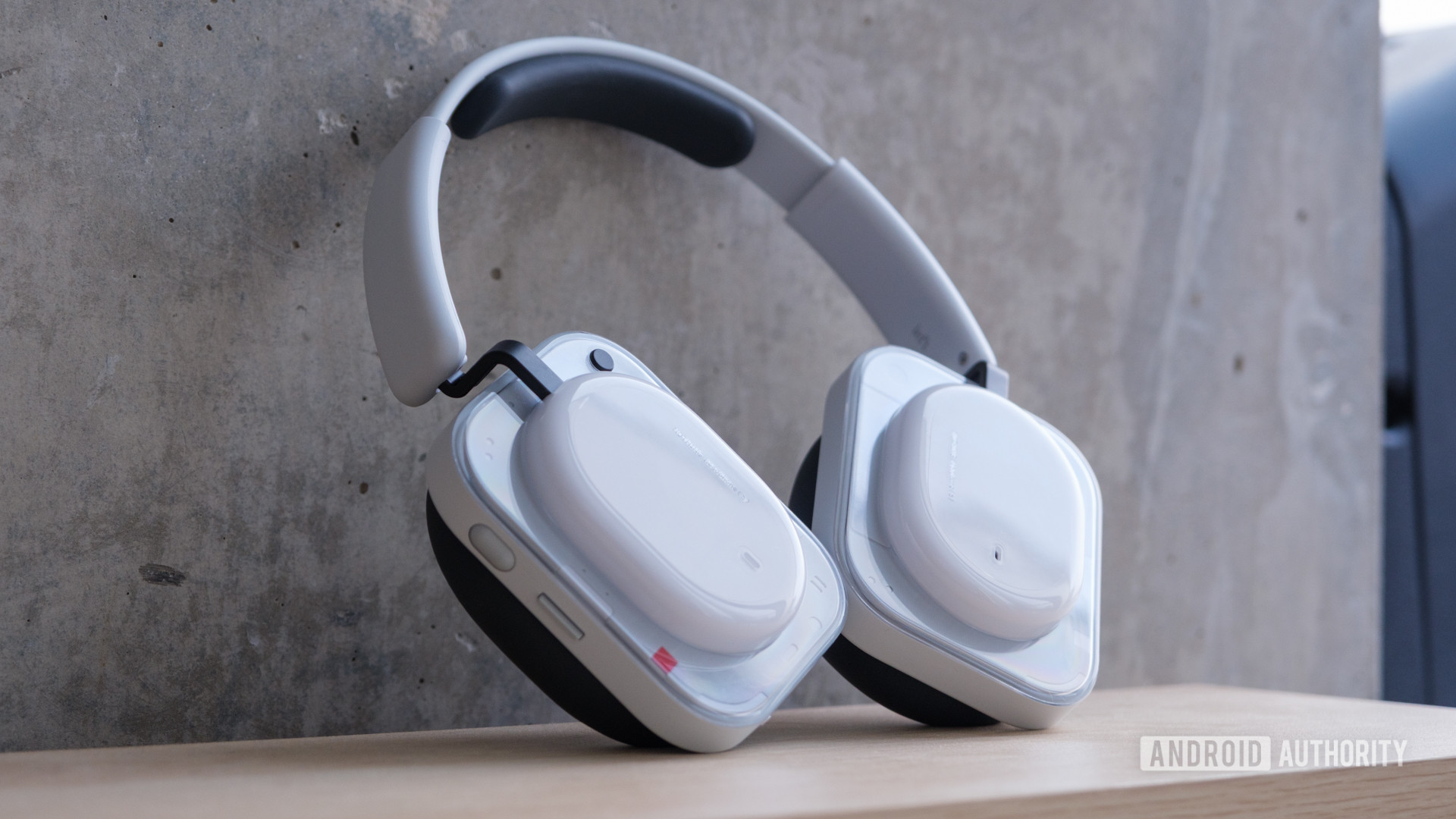
The Headphone A distinguishes itself immediately through its design, which is described as an "industrial design nerd’s dream." Unlike many contemporary audio devices that lean heavily on touch-sensitive surfaces, the Headphone A champions manual, tactile controls. This design choice is a direct response to a common frustration among users of touch-controlled earbuds and headphones: accidental inputs, difficulty in operation with gloves, or simply a lack of reassuring physical feedback.
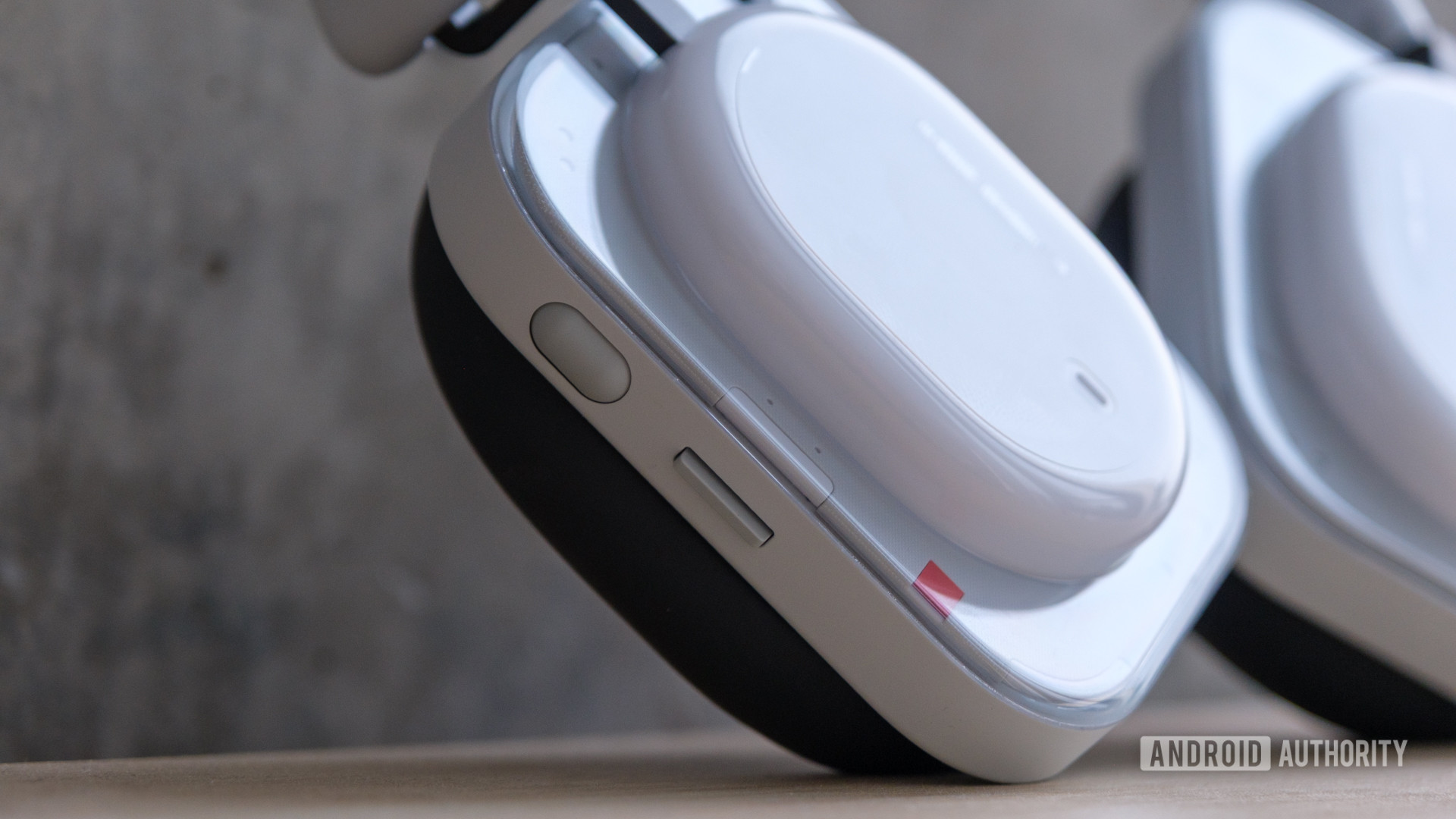
The primary control mechanisms on the Headphone A include a smooth, responsive volume roller and a "nice and clicky" playback paddle. These physical interfaces provide immediate, unambiguous feedback, minimizing errors and enhancing the user experience. The volume roller offers audible (though not haptic) cues for adjustment, while the paddle facilitates play/pause, track skipping, and other playback functions. This deliberate move away from capacitive touch controls underscores Nothing’s commitment to functional design that prioritizes user interaction and reliability.
Further enhancing the control scheme is a physical toggle for power management, offering a clear visual and tactile indicator of the device’s on/off state—a simple yet effective feature often overlooked in digital-first designs. An additional multifunction button on the earcup, programmable for actions like voice assistant activation or even remote camera shutter control, adds another layer of utility. While the camera shutter function might seem niche, it exemplifies Nothing’s innovative approach to integrating diverse functionalities into its hardware, potentially appealing to content creators or those seeking unconventional tech integrations.
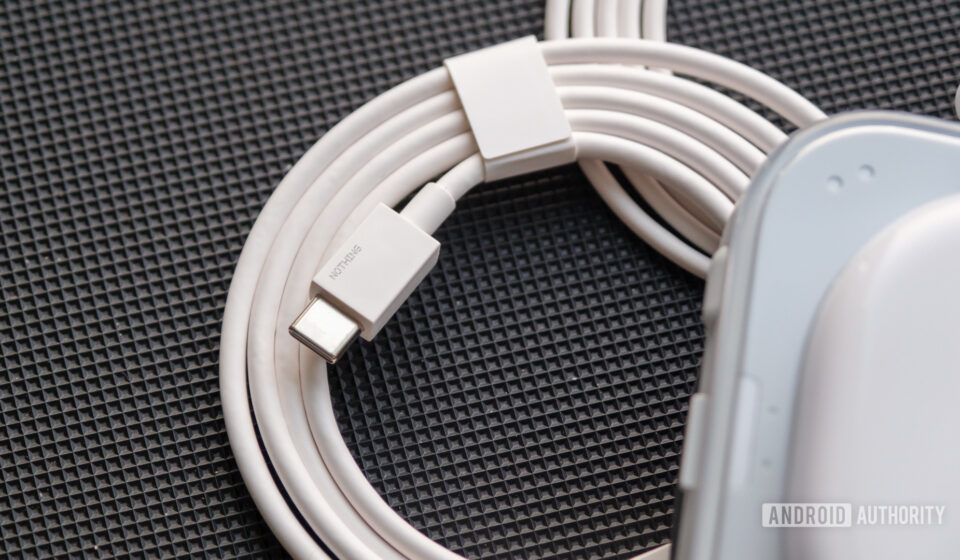
Aesthetically, the Headphone A continues Nothing’s tradition of bold visual identity. Available in four distinct finishes, including a classic white frame with various colored earcups and an all-black version, the headphones are designed to stand out. The white variant, in particular, is noted for highlighting the intricate industrial-inspired details, while the glossy black option offers a sleeker, more understated appeal. This variety allows consumers to choose a style that best fits their personal aesthetic. However, in a slight departure from Nothing’s signature transparency, the included USB-C and 3.5mm audio cables feature opaque ends, a minor detail that nonetheless reflects a practical decision for cable durability and manufacturing consistency, even if it deviates from the brand’s more iconic transparent motifs.
Audio Fidelity and Active Noise Cancellation
Beyond their distinctive exterior, the internal components and audio performance of the Nothing Headphone A are engineered to deliver a compelling listening experience. Central to its acoustic architecture is a 40mm titanium-coated diaphragm. Titanium, known for its rigidity and lightweight properties, allows for precise and fast driver movement, contributing to a clear and dynamic sound reproduction across a broad frequency range. This driver technology is crucial for delivering accurate bass, detailed mids, and crisp highs, catering to a wide array of music genres.
For wireless connectivity, the Headphone A incorporates LDAC technology. LDAC, a proprietary audio coding technology developed by Sony, enables the transmission of high-resolution audio over Bluetooth connections, supporting 24-bit audio at sampling rates up to 96 kHz. This capability means that users can enjoy near-lossless audio quality wirelessly, provided their source device also supports LDAC and they are streaming high-fidelity content. While the article notes that "true audiophiles" might seek more premium options, the inclusion of LDAC significantly elevates the wireless audio experience above standard Bluetooth codecs like SBC or AAC, making it highly suitable for streaming services like YouTube Music and Spotify, which offer varying tiers of audio quality. The option to connect via an included 3.5mm auxiliary cord further appeals to audiophiles or those with legacy devices, offering a direct, uncompressed audio pathway for potentially even higher fidelity.
The active noise cancellation (ANC) system in the Headphone A is highlighted as a significant improvement over typical earbud performance. The headphones offer three selectable levels of noise blocking, allowing users to adapt the ANC intensity to their environment. This flexibility is crucial, as optimal ANC performance can vary depending on the type of ambient noise (e.g., low-frequency rumble vs. high-frequency chatter). The reported effectiveness in muting "nearby roadwork" underscores its capability to significantly reduce common urban and travel noises. While effective ANC can sometimes lead to an overly isolated feeling, the Headphone A includes a transparency mode, easily activated with a button press, which allows ambient sounds to pass through, ensuring situational awareness when needed. This balance between immersion and awareness is a critical feature for modern headphones.
Unprecedented Battery Life: A Marathon Runner’s Dream
One of the most compelling features of the Nothing Headphone A is its exceptional battery life, a metric where over-ear headphones generally outperform earbuds, but the Headphone A sets a new benchmark. Nothing claims an astonishing 135 hours of playback without active noise cancellation and approximately 75 hours with ANC engaged. To put these figures into perspective, most leading premium over-ear headphones, such as the Sony WH-1000XM5 or Bose QuietComfort Ultra, typically offer around 30-40 hours of battery life with ANC enabled. The Headphone A’s reported 75 hours with ANC represents almost double the industry standard, making it a standout feature.
This extended battery duration translates into practical benefits for a wide range of users. For frequent travelers, it means fewer charging cycles and less anxiety about running out of power on long flights or journeys. For daily commuters or remote workers, it could mean weeks of usage on a single charge. The article’s analogy of "five days of charge" or "three straight days of usage" underscores the transformative impact this battery life can have on user habits, significantly reducing the frequency of recharging and enhancing convenience. This longevity positions the Headphone A as an ideal companion for extended periods away from power sources, making them particularly attractive for individuals who find the limited battery life of earbuds restrictive.
Market Positioning and Strategic Implications
The Nothing Headphone A enters a highly competitive mid-range headphone market, a segment where consumers seek a balance between premium features and affordability. While the specific pricing is not detailed in the provided content, the reference to "mid-range headphones" suggests a price point that makes these features accessible to a broader audience than high-end flagship models.
Nothing’s strategy appears to be multi-pronged:
- Design Differentiation: The unique industrial aesthetic and tactile controls offer a distinct alternative to the often homogeneous designs of competitors. This appeals to consumers who value style and a non-digital interaction experience.
- Performance Value: Offering high-resolution audio support (LDAC), effective ANC, and unparalleled battery life at a mid-range price point presents a strong value proposition. These features are often associated with more expensive headphones.
- Brand Ecosystem Expansion: The Headphone A further solidifies Nothing’s position as a lifestyle tech brand, offering a complete audio solution alongside its smartphones and earbuds. This integration can foster brand loyalty and encourage users to invest further in the Nothing ecosystem.
The implications for the broader audio market are noteworthy. Nothing’s success with the Headphone A could prompt other manufacturers to re-evaluate their reliance on touch controls and consider the renewed appeal of physical buttons. Furthermore, the benchmark set by the Headphone A’s battery life might pressure competitors to innovate further in power efficiency, ultimately benefiting consumers across the board. Nothing’s ability to deliver such robust performance and design within the mid-range category challenges the notion that these features are exclusive to premium-priced devices.
In conclusion, the Nothing Headphone A is more than just a new audio product; it is a meticulously designed device that challenges established norms in the over-ear headphone market. Its emphasis on tactile controls, distinctive industrial design, high-fidelity audio capabilities, and truly groundbreaking battery life positions it as a compelling option for a wide array of users. For those seeking an alternative to the ubiquity of touch-controlled, short-lived earbuds, the Headphone A offers a refreshing and highly practical solution, marking a significant step in Nothing’s journey to redefine consumer technology.