
Cupertino, California – Apple Inc. has reportedly postponed the launch of its much-anticipated smart home display, internally codenamed J490, pushing its release further into the year. The delay is primarily attributed to ongoing efforts to overhaul its voice assistant, Siri, which is expected to be a cornerstone of the device’s user experience. This setback comes as Apple continues to refine its broader artificial intelligence strategy, with the next-generation Siri deemed critical for the display’s successful debut.
The smart home display, which analysts and industry observers have eagerly awaited as Apple’s direct competitor to established devices like the Google Nest Hub and Amazon Echo Show, was initially anticipated for an imminent release. However, according to a report by Bloomberg’s Mark Gurman, a prominent Apple insider, the company is now targeting a launch closer to September. This revised timeline suggests a potential alignment with the expected unveiling of the iPhone 18 Pro and the next iteration of tvOS, the operating system speculated to power the new device.
The Core Delay: Siri at the Crossroads
The primary reason cited for the delay underscores the strategic importance Apple places on a thoroughly revamped Siri. While the hardware for the J490 display has reportedly been finalized for several months, Apple is reluctant to release the product without the enhanced capabilities of its voice assistant. This decision highlights a recurring theme in Apple’s product development: a steadfast commitment to delivering a polished, integrated user experience, even if it means deferring launch dates.
Siri, first introduced with the iPhone 4S in 2011, revolutionized human-device interaction with its natural language processing capabilities. However, in recent years, it has faced increasing criticism for lagging behind competitors such as Google Assistant and Amazon Alexa in terms of contextual understanding, multi-turn conversations, and overall functionality. This perceived stagnation has become a significant point of concern for Apple, especially as artificial intelligence rapidly advances and becomes central to modern technological ecosystems.
The current overhaul of Siri is believed to be a monumental undertaking, aimed at addressing these shortcomings and positioning the assistant at the forefront of Apple’s generative AI push. This next-generation Siri is expected to feature more sophisticated on-device processing, enhanced multi-modal understanding, and the ability to execute complex, multi-step commands with greater accuracy and contextual awareness. Such advancements are crucial for a smart home display, where seamless, intuitive voice control is paramount for managing connected devices, accessing information, and personalizing user interactions. Apple’s insistence on perfecting Siri before launching the J490 indicates its recognition that a subpar AI experience could severely undermine the device’s potential impact and reception in a competitive market.
A Glimpse into Apple’s Smart Home Vision: The J490 Display
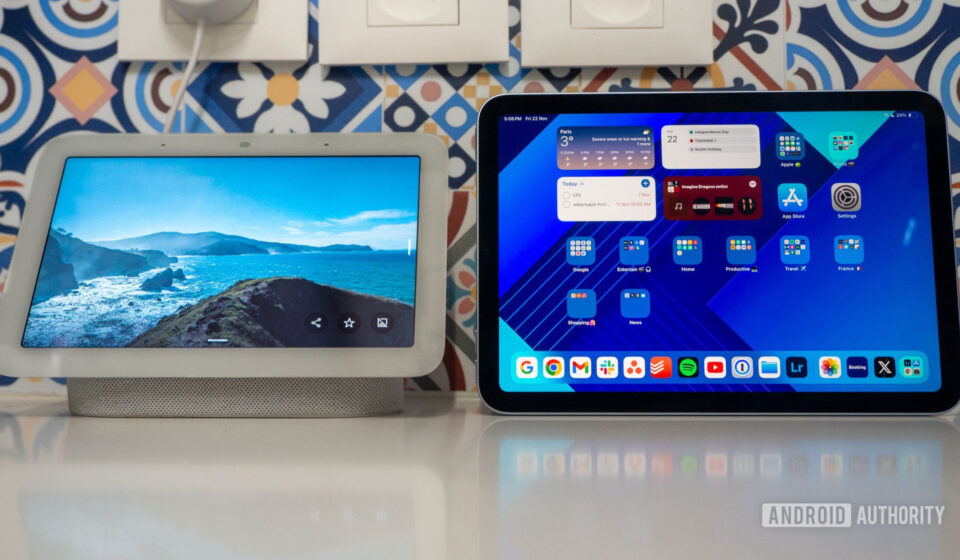
The delayed smart home display is described as a square, iPad-like device featuring a roughly 7-inch screen. This form factor suggests a design optimized for visual information display and interactive touch controls, similar to existing smart displays from rival companies. Its versatility is a key design element, with reports indicating it can either be mounted directly on a wall, akin to a permanent fixture in a smart home, or attached to a half-dome speaker base, offering a more traditional tabletop or countertop placement.
Functionally, the J490 is envisioned as a central hub for smart home control and information access. This aligns with the growing trend of centralized command centers within residential environments, allowing users to manage lights, thermostats, security systems, and other connected devices from a single interface. A particularly innovative feature reportedly integrated into the device is facial recognition technology. This capability would enable the display to identify individuals approaching it, subsequently surfacing personalized details such as calendar appointments, tailored music recommendations, and specific notifications relevant to that user. This level of personalization aims to elevate the smart home experience beyond generic interactions, making it more intuitive and user-centric.
The adoption of a 7-inch screen size positions the J490 as a direct competitor to popular models like the Google Nest Hub (which comes in 7-inch and 10-inch variants) and various Amazon Echo Show models. Apple’s entry into this segment signifies its intent to capture a share of the burgeoning smart display market, leveraging its renowned design aesthetic, robust ecosystem integration, and now, a significantly enhanced AI assistant. The device’s integration within the Apple ecosystem, particularly with HomeKit for smart home device management and Apple Music for personalized audio experiences, is expected to be a major draw for existing Apple users.
The Broader Context: Apple’s Expanding Smart Home Strategy
The J490 display is not merely a standalone product but is poised to be the inaugural device in a more extensive push by Apple into the smart home hardware sector. Bloomberg‘s report also hints at several other ambitious projects tied to Apple’s evolving AI initiatives, signaling a comprehensive strategy to deepen its footprint in ambient computing.
Among these rumored future products is a version of the smart display attached to a robotic arm. While details remain sparse, this concept evokes visions of a dynamic, adaptive display that could potentially track users, adjust its viewing angle, or even move within a space to provide information or facilitate interactions more effectively. Such a device would represent a significant leap in interactive home technology, potentially offering functionalities that go beyond what current stationary smart displays can provide. The implications for accessibility, personal assistance, and even entertainment are vast, suggesting Apple is exploring truly innovative interfaces for the future smart home.
Additionally, reports suggest that new HomePod and Apple TV hardware are also in development. The HomePod line, Apple’s smart speaker offering, could see enhanced audio capabilities, deeper Siri integration, and potentially new form factors. The Apple TV, traditionally a media streaming device, might evolve to incorporate more robust smart home hub functionalities, leveraging its existing presence in the living room as a central entertainment and control unit. These developments collectively paint a picture of Apple building a cohesive, interconnected smart home ecosystem, where various devices work in concert, powered by an intelligent and responsive Siri, to offer a seamless and highly personalized user experience.
A Chronology of Siri’s Evolution and Challenges
Siri’s journey has been marked by periods of innovation followed by criticisms regarding its pace of development. When it launched in 2011, it was hailed as a breakthrough, offering a natural language interface that was years ahead of its time. For many users, it was their first experience conversing with a digital assistant, capable of setting reminders, sending messages, and answering basic queries with surprising accuracy.
However, as the smartphone market matured and competitors like Google and Amazon invested heavily in their respective AI assistants, Siri’s growth appeared to slow. Google Assistant, with its deep integration into Google’s vast knowledge graph and advanced contextual understanding, began to surpass Siri in many benchmarks. Amazon Alexa, benefiting from an open ecosystem and a rapid expansion of third-party skills, quickly became a dominant force in the smart home segment.
Throughout the mid-2010s, Apple made incremental improvements to Siri, but these were often perceived as insufficient to close the widening gap. Features like "Hey Siri" for hands-free activation and deeper integration with iOS applications were welcome additions, yet the core AI often struggled with complex commands, multi-turn conversations, and understanding nuanced user intent. This led to user frustration and a growing sentiment that Siri was falling behind its rivals.
In recent years, Apple has reportedly ramped up its efforts to revitalize Siri. This includes significant internal restructuring of its AI teams, increased investment in machine learning research, and a strategic shift towards on-device intelligence to enhance privacy and speed. The current "next-generation Siri" is the culmination of these sustained efforts, representing a pivotal moment for the assistant’s future. The company has acknowledged that several promised features tied to Siri have been pushed back, underscoring the complexity and scale of this overhaul. The delay of the J490 display is a direct consequence of Apple’s determination to ensure that when the new Siri finally debuts, it lives up to the company’s high standards and user expectations, offering a truly competitive and compelling AI experience.
Implications of the Delay: Market Dynamics and Consumer Expectations
The delay of Apple’s smart home display carries several implications for the market, competitive landscape, and consumer sentiment. In the competitive smart display arena, every month counts. Google and Amazon have had years to refine their offerings, build extensive ecosystems of compatible devices, and cultivate user loyalty. A further delay for Apple’s entry means granting these competitors more time to solidify their market positions and potentially innovate further. While Apple often enters mature markets late but with a disruptive, highly polished product, the smart home market is characterized by rapid technological advancements and evolving user expectations.
For consumers, particularly loyal Apple enthusiasts, the news of another delay might bring a mix of frustration and understanding. While there’s an eagerness to see Apple’s unique take on the smart display, many users also appreciate Apple’s reputation for prioritizing quality and user experience over rushed releases. The expectation, therefore, will be exceptionally high for the J490 to deliver a truly superior and differentiated experience that justifies the wait. Should the revamped Siri fall short of these elevated expectations, it could temper the initial enthusiasm for Apple’s broader smart home ambitions.
Strategically, the delay underscores the critical importance of AI to Apple’s future. The company is under immense pressure to demonstrate its prowess in generative AI, particularly in light of rapid advancements from competitors like Google with Gemini and OpenAI with ChatGPT. Siri’s capabilities are seen as a litmus test for Apple’s AI leadership. A successful, intelligent Siri powering the J490 could validate Apple’s approach and serve as a powerful differentiator. Conversely, a continued perception of Siri lagging behind could damage Apple’s brand image in a domain increasingly vital for consumer technology.
The financial implications, while not immediately severe, include delayed revenue generation from a new product category and continued investment in research and development for Siri’s overhaul. More broadly, it raises questions about Apple’s ability to swiftly adapt and innovate in the fast-paced AI landscape while maintaining its stringent quality control.
The Road Ahead: A September Unveiling?
With the revised target of September, Apple’s smart display could arrive alongside some of the company’s most significant annual announcements. The potential launch alongside the iPhone 18 Pro would place it in a high-profile marketing window, leveraging the immense global attention drawn by Apple’s flagship smartphone. Furthermore, the possibility of the J490 running a variation of the next version of tvOS suggests a strategic choice by Apple. tvOS, designed for stationary entertainment and information consumption, could provide a stable and optimized platform for a smart display, potentially offering a more streamlined and secure experience compared to adapting iPadOS. This would allow Apple to tailor the user interface specifically for glanceable information, smart home controls, and interactive voice commands.
The success of the J490, and indeed Apple’s broader smart home and AI strategy, will hinge heavily on the performance of the revitalized Siri. Expectations are high for Siri to demonstrate significant improvements in natural language understanding, contextual awareness, and proactive assistance. If Apple can deliver on these promises, the J490 could mark a significant turning point for the company in the smart home market, potentially carving out a premium niche based on seamless ecosystem integration, robust privacy features, and a highly intelligent personal assistant.
Analysts will be closely watching for how Apple differentiates its offering beyond mere technical specifications. The company’s historical strength lies in creating cohesive user experiences that blend hardware, software, and services. The J490, if executed flawlessly with a truly next-generation Siri, could represent Apple’s vision for ambient computing – a future where technology seamlessly integrates into daily life, anticipating needs and offering assistance without intrusive interaction. The coming months will reveal whether Apple’s patience in perfecting Siri will ultimately pay off in delivering a groundbreaking smart home experience.