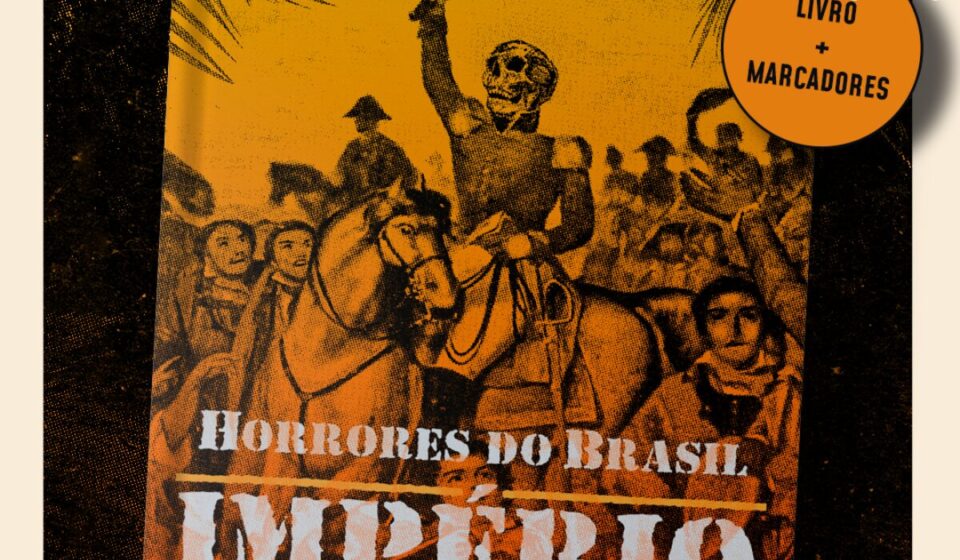
Horrores do Brasil Império Anthology Explores the Dark Underbelly of 19th Century Brazil Through the Lens of Survival Horror

The literary landscape in Brazil is witnessing a unique convergence of historical revisionism and modern genre fiction with the upcoming release of Horrores do Brasil: Império. This new anthology, currently in its pre-sale phase, seeks to recontextualize the 19th-century Brazilian Imperial era—a period often romanticized in traditional textbooks—as a harrowing backdrop for survival horror. By blending the supernatural with the stark realities of a nation in its formative and often violent years, the work promises to offer a visceral experience akin to iconic psychological and survival horror video games such as Silent Hill, Resident Evil, and Bloodborne.
Published by Climax Editorial, the anthology arrives at a time when Brazilian horror literature is experiencing a significant resurgence, driven by a new generation of authors eager to explore national identity through the macabre. The project does not merely aim to frighten; it serves as a sociocultural autopsy of the 1800s, utilizing the tropes of the horror genre to expose the deep-seated contradictions, inequalities, and shadows of the Imperial regime.
A New Frontier in Brazilian Gothic Literature
The 19th century in Brazil was a period of seismic shifts. Following the Declaration of Independence in 1822, the country grappled with the construction of a national identity while maintaining the brutal infrastructure of colonial-era systems, most notably chattel slavery. Horrores do Brasil: Império taps into this inherent tension. The anthology’s narrative structure is designed to mirror the "exploration and tension" found in modern gaming, where the protagonist—and by extension, the reader—is an outsider navigating a landscape that is both beautiful in its architectural ambition and terrifying in its hidden cruelties.
The decision to frame these stories within the "survival horror" subgenre is a deliberate aesthetic choice. In gaming, survival horror is defined by limited resources, oppressive atmospheres, and an emphasis on the psychological state of the character. By applying these elements to the Brazilian Empire, the authors are able to transform historical settings—such as burgeoning urban centers, decaying coffee plantations, and isolated frontier outposts—into labyrinthine stages where the threat is often as much human as it is spectral.
The Historical Framework: 19th Century Brazil as a Horror Setting
To understand the impact of this anthology, one must consider the historical context of the era it depicts. The 19th century was defined by the reigns of Dom Pedro I and Dom Pedro II. It was an age of Enlightenment ideals clashing with the grim reality of a monarchy built on the backs of enslaved people. This duality provides fertile ground for horror. The "progress" of the era—symbolized by the arrival of the steam engine, the telegraph, and European-style opera houses—stood in stark contrast to the dark, unlit alleys of Rio de Janeiro and the silent, blood-soaked fields of the interior.
The anthology explores several distinct environments that characterized this period:
- Expanding Urban Centers: As cities like Rio de Janeiro and Salvador began to modernize, they created pockets of extreme density and poverty. The anthology uses these settings to explore themes of plague, social rot, and the "invisible" people who inhabited the fringes of high society.
- Isolated Rural Regions: In the vast hinterlands, the law of the land was often dictated by powerful "coronéis" (landowners). The isolation of these regions allowed for the persistence of ancient legends and the development of localized cults or superstitions, providing a perfect setting for folk horror.
- The Shadows of the Plantation: The "fazendas" of the Imperial era were sites of immense trauma. The anthology acknowledges that the true horror of the 19th century was the institutionalized violence of slavery, often manifesting in these stories as vengeful spirits or psychological manifestations of guilt and cruelty.
Thematic Pillars: Blending Folklore with Societal Contradictions
One of the primary strengths of Horrores do Brasil: Império is its integration of Brazilian folklore. However, rather than presenting these myths in a whimsical or educational light, the anthology treats them as tangible, terrifying threats. Creatures of the Brazilian woods and spirits born of syncretic religious traditions are woven into the historical narrative, suggesting that the supernatural was an ever-present force in the lives of 19th-century citizens.
Furthermore, the work posits that the "greatest horrors" often emerged from the societal structure itself. The rigid class hierarchy of the Empire, the subjugation of women, and the erasure of indigenous cultures are presented as the true monsters of the age. This approach aligns with the modern "prestige horror" movement in cinema and literature, where the monster is a metaphor for a deeper, more systemic trauma.
Market Analysis and the Rise of Brazilian Horror
The publication of this anthology is representative of a broader trend within the Brazilian publishing market. According to recent industry data, interest in genre fiction—specifically horror and dark fantasy—has grown by approximately 15% over the last five years in Brazil. This growth is partly attributed to the success of publishers like DarkSide Books and the increasing visibility of Brazilian authors in international markets.
Climax Editorial’s strategy of using a pre-sale model with targeted promotional codes (such as "AUTOR-AMON") reflects the shifting dynamics of the industry. By engaging directly with niche communities—fans of history, horror, and gaming—independent publishers can bypass traditional distribution hurdles and build a dedicated readership. The use of gaming references (Silent Hill, Bloodborne) in marketing materials is also a savvy recognition of the "cross-media" consumption habits of younger audiences, who often view literature and digital media as interconnected forms of storytelling.
Chronology of the Release and Pre-Sale Logistics
The campaign for Horrores do Brasil: Império follows a strict timeline designed to build momentum within the literary community. The key dates and details of the release are as follows:
- Pre-Sale Phase: Currently active and scheduled to conclude on March 12.
- Promotional Period: During this window, readers can access a specialized discount by utilizing the coupon code "AUTOR-AMON" at the point of purchase.
- Availability: The book is being sold exclusively through the Climax Editorial official webstore, ensuring that the publisher retains control over the first edition’s distribution and quality.
- Format: The anthology is presented as a collection of short stories, each penned by different authors, providing a diverse range of perspectives on the Imperial era.
This structured release is intended to ensure that the book reaches its core audience before a wider retail rollout, fostering a sense of exclusivity and community among early adopters.
Industry Responses and Literary Implications
While official reviews are pending the full release, early reactions from the Brazilian literary blogosphere and horror enthusiasts have been overwhelmingly positive. Critics have noted that "historical horror" is a genre with significant untapped potential in Brazil. Unlike the United States or Europe, which have long traditions of Victorian Gothic or Civil War-era horror, Brazil is only now beginning to fully excavate its Imperial past through a dark lens.
The implications of this work extend beyond mere entertainment. By revisiting the 19th century through the medium of horror, the authors are participating in a form of cultural reclamation. They are challenging the sanitized versions of history that were often promoted during the 20th century, replacing them with a narrative that acknowledges the "terreno fértil" (fertile ground) for stories of violence and inequality that defined the nation’s birth.
Broader Impact on National Identity
Horrores do Brasil: Império serves as a reminder that the past is never truly dead. For a country like Brazil, which continues to grapple with the legacy of its Imperial era—including systemic racism and vast wealth disparity—the horror genre provides a safe yet provocative space to confront these issues. When a reader encounters a ghost in a 19th-century Rio alleyway or a monster in a coffee field, they are also encountering the ghosts of Brazil’s unresolved history.
As the pre-sale deadline of March 12 approaches, the anthology stands as a testament to the evolving nature of Brazilian fiction. It is a work that respects the historical record while refusing to be limited by it, choosing instead to find the "darkness behind the progress" and the "shadows within the soul" of a country in transition. For fans of the atmospheric dread found in modern survival horror, this book offers a unique opportunity to explore a terrifyingly familiar past.
The anthology can be secured via the Climax Editorial website, marking a new chapter in the ongoing effort to define what "Brazilian Horror" truly means in the 21st century. Through this collection, the 19th century is no longer just a period of emperors and treaties; it is a realm of shadows, secrets, and survival.