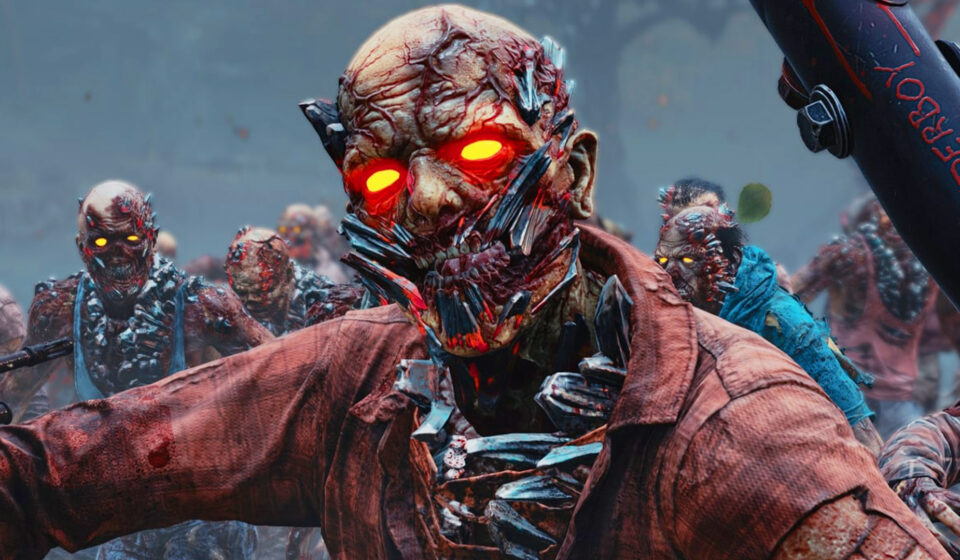
John Carpenter’s Toxic Commando: A Nostalgic Horde Shooter That Delivers on Retro Charm and Modern Performance

John Carpenter’s Toxic Commando is a throwback to co-op shooters of yesteryear, filled with bombastic action, 1980s cheese, and a wicked soundtrack. It impressively holds its own on the Asus ROG Ally, making it an ideal handheld experience that’s worth sinking a few hours into. If you’re eager to relive the glory days of Left 4 Dead and classic era Call of Duty Zombies, then Toxic Commando gets you closer enough.
A Return to Form for Cooperative Zombie Slaying
Nearly two decades have passed since the groundbreaking launches of Left 4 Dead and Call of Duty: World at War, titles that undeniably ignited a fervor for cooperative undead-slaying experiences. In the intervening years, numerous games have attempted to capture that same lightning in a bottle, often falling short of replicating the unique blend of unbridled chaos, infectious laughter, and unapologetic B-movie sensibilities that defined those early hits. Saber Interactive’s John Carpenter’s Toxic Commando emerges as a compelling contender, a title that expertly navigates the treacherous waters of nostalgia while delivering thrilling, modern action with remarkable ease.
While initial trailers and gameplay demonstrations offered glimpses of promise, the reviewer admitted to a degree of initial skepticism. Concerns were raised regarding standard FPS camera settings, such as an 80-degree field of view, and a perceived lack of naturalistic player movement in early footage. However, a deep-seated affection for zombie-themed shooters—evidenced by a personal tattoo of the iconic Call of Duty Zombies Ray Gun—maintained a persistent hope for something genuinely worthwhile.
The Genesis of the Toxic Commando Threat
The narrative premise of Toxic Commando positions players in a near-future where ambitious scientific endeavors to harness the Earth’s core energy for economic and resource growth have gone catastrophically awry. This catastrophic event has unleashed a terrifying, tar-like entity known as the Sludge God, plunging the planet into a state of widespread contamination and zombie infestation. Faced with this apocalyptic scenario, humanity’s last resort is to contain the monstrous threat behind crumbling fortifications and deploy a motley crew of mercenaries tasked with the grim objective of eliminating the undead horde.
This narrative framework is steeped in the visceral, over-the-top aesthetic of 1980s horror cinema. It evokes the spirit of cult classics such as The Dead Pit, City of the Living Dead, The Keep, and, of course, John Carpenter’s own The Fog. The game embraces the genre’s hallmarks: sharp, sarcastic banter between characters, archetypal "madcat" personalities, reliance on B-movie plot devices, and an abundance of visceral gore.

Carpenter’s Sonic Signature: A Pervasive Influence
A significant draw for John Carpenter’s Toxic Commando is the direct involvement of the legendary filmmaker himself, not just in a supervisory capacity but through his distinctive musical contributions. Carpenter’s score permeates every moment of gameplay, a pulsating synth-driven soundscape that effectively amplifies the game’s retro-futuristic atmosphere. The soundtrack is populated with memorable earworms, seamlessly integrating into the action and enhancing the overall experience.
Saber Interactive demonstrates a keen understanding of the potential pitfalls of leaning too heavily into such a niche aesthetic. There’s a delicate balance to be struck between celebrating the "lovably trashy" tone of 80s horror and veering into an irritatingly derivative or overly comedic territory, akin to some contemporary superhero fare. However, the development team successfully navigates this fine line, imbuing the game with an authentic appreciation for its inspirations.
The inclusion of John Carpenter’s name in the title is not merely a marketing ploy; it signifies a tangible influence on the game’s world-building and lore. Saber Interactive has skillfully woven Carpenter’s thematic elements into the fabric of Toxic Commando while simultaneously injecting the game with its own distinct identity. This fusion is reminiscent of the developer’s previous work on World War Z, retaining a core gameplay loop of intense swarm combat while infusing it with Carpenter’s characteristic wit and stylistic flair.
Performance on the Asus ROG Ally: A Handheld Triumph
The reviewer’s extensive playtesting of John Carpenter’s Toxic Commando was primarily conducted on the Asus ROG Ally Z1E, utilizing ROG Ally Bazzite, a Linux-based operating system designed to provide a Steam Deck-like user experience on Windows handhelds. While performance differences between Bazzite and a standard Windows 11 installation were noted as marginal, the game’s demanding nature raised initial concerns for a three-year-old handheld PC.
Upon its initial launch, Toxic Commando requires a shader compilation process lasting approximately five to ten minutes. This upfront investment is crucial for ensuring smooth gameplay, particularly given the game’s visually intensive and action-packed nature.
At a 15W TDP (Thermal Design Power) and 1080p resolution with default graphical settings, the game consistently maintained a framerate hovering around 30 frames per second. While this is playable, a preference for a higher framerate, typically between 40 and 60fps, was expressed for optimal handheld immersion. A brief issue was encountered where the game reported insufficient VRAM despite ample allocation, though this problem did not recur.

Crucially, enabling frame generation and targeting a 60fps cap proved highly effective. On average, Toxic Commando maintained approximately 50fps, even during intense combat sequences with numerous enemies and particle effects. Occasional dips to around 45fps were observed but were deemed negligible in their impact on gameplay.
Significantly, increasing the TDP to 25W or 30W resulted in a substantial performance boost, allowing the game to consistently achieve the targeted framerate with ease. This marked a noticeable improvement over the game’s demo, suggesting that the retail version benefits from optimizations and post-launch patches. For users employing third-party performance enhancement plugins, such as Lossless Scaling or Decky LSFG-VK, framerates could theoretically reach between 115 and 120fps, albeit with a potential increase in input latency.
The developer’s commitment to optimizing for handheld devices is evident, and the ability of Toxic Commando to perform admirably under these demanding conditions positions it as an ideal candidate for portable play. The prospect of a future Nintendo Switch 2 port is also a tantalizing possibility, given Saber Interactive’s track record with bringing their titles to Nintendo platforms. Players can be assured that the game is designed to provide a robust experience on handheld PCs without compromising its core gameplay.
Gameplay Mechanics and Progression: A Familiar Yet Fresh Approach
A concise 15-20 minute tutorial effectively introduces players to the fundamental mechanics, encompassing shooting, vehicle interaction, and basic puzzle-solving elements crucial for defense stages. From this point, the core gameplay loop of Toxic Commando unfolds.
The game embraces a cinematic structure, with missions presented through stylized title cards reminiscent of Stranger Things, setting a distinct visual tone before each incursion. For players seeking an elevated challenge, difficulty tiers can be adjusted to push the limits of their combat prowess. While some horde-based shooters necessitate higher difficulty settings to reveal their full potential, Toxic Commando strikes a commendable balance, even on its equivalent of medium settings, ensuring that the sheer scale of enemy swarms remains awe-inspiring.
Leveraging the advanced swarm technology pioneered in World War Z, Toxic Commando unleashes overwhelming waves of enemies upon players. This design choice deliberately evokes the signature moments found in Left 4 Dead, where players are relentlessly besieged by hordes of relentless, flesh-eating adversaries. The introduction of specialized, beefier enemy types further amplifies the intensity, capable of eliciting moments of genuine frustration and challenge.
Base of Operations and Customization: Deepening the Experience

The game incorporates a central hub area that functions as a pre-mission lobby. Here, players can manage their loadouts, invest in skill upgrades, and engage with a selection of mini-games. Four distinct operators are available for selection, each accompanied by a range of cosmetic items unlockable through both in-game and premium currency. While the cosmetic options may not be the primary draw for all players, the true depth of customization lies within the robust weapon loadout system.
Echoing the celebrated weapon progression of earlier Call of Duty titles, players can equip their firearms with a vast array of attachments, enabling a highly personalized approach to combat. A notable feature is the early accessibility of many of the game’s weapons, encouraging immediate experimentation and discovery of preferred arsenals. The reviewer expresses a personal fondness for assault rifles, though the game offers a broad spectrum of weaponry.
The weapon customization system allows for a granular level of detail, enabling players to modify specific components of their firearms. This ensures that each weapon can be visually and functionally unique to the individual player’s preferences. Beyond the standard arsenal, players can discover and wield powerful special weapons that significantly impact combat effectiveness.
Gunplay Evolution and Superpower Integration
While the gunplay might feel slightly floaty and less impactful in the game’s initial hours—a sensation exacerbated by the absence of an FOV slider at launch (though a promised update is forthcoming)—the experience demonstrably improves as players delve deeper into the game’s escalating madness. The visceral satisfaction of mowing down waves of enemies with an AK-47, described as a "twisted hit of dopamine," captures the Rambo-esque fantasy that many players seek.
Importantly, Toxic Commando acknowledges the enduring effectiveness of simpler firearms. Whether wielding a formidable revolver or a precise semi-automatic pistol, Saber Interactive ensures that even the game’s more understated weaponry delivers a satisfying and fun combat experience.
However, the game introduces a unique twist on the "Wonder Weapon" concept popularized by Call of Duty Zombies. Instead of relying solely on esoteric armaments, players themselves become the source of extraordinary power. Toxic Commando grants players access to four distinct "powersets," offering abilities ranging from the deployment of possessed drones for crowd control to devastating electrical assaults. These powers are not tied to specific operators, allowing for a flexible and synergistic approach to squad composition.
The reviewer initially gravitated towards "The Strike" ability, which unleashes area-of-effect explosions. However, the sheer volume of enemies encountered led to a preference for "The Operator" powerset, specifically the aforementioned drone, which excels at managing large groups of adversaries. For players who enjoy a supportive role, "The Medic" powerset offers dedicated healing capabilities.

Environmental Interaction and Potential for Repetitiveness
Beyond the intense combat encounters, each mission map in Toxic Commando offers a surprising degree of scope. Players can commandeer various vehicles, each providing distinct tactical advantages. Trucks, for instance, are equipped with winch claws for navigating difficult terrain and an EMP strike to clear obstacles. Other vehicles offer speed boosts, with their appearance determined by random spawns at the start of each mission. This element of unpredictability adds a layer of replayability.
The integration of vehicles proves to be one of the game’s most exhilarating aspects, often leading to moments of frantic escape and shared amusement. Nevertheless, despite its many strengths, Toxic Commando is not without its potential drawbacks. The core gameplay loop, which primarily involves reaching designated areas, engaging in defense or offense, and then proceeding to the next objective, can become somewhat repetitive over extended play sessions.
While the reviewer, who enjoys relentless horde clearing, finds this structure acceptable within the context of the campaign’s relatively brisk pace, it raises questions about the long-term engagement potential of the game’s post-launch content. The anticipation for future updates and expansions to address this concern will be a key factor in the game’s sustained appeal.
Conclusion: A Refreshing Blast from the Past
John Carpenter’s Toxic Commando stands as a testament to the enduring appeal of classic cooperative shooter design. It delivers a potent cocktail of visceral action, nostalgic charm, and a soundtrack that resonates with the best of 1980s horror. The game’s successful performance on a handheld device like the Asus ROG Ally further enhances its accessibility and appeal, offering a portable gateway to its frenetic zombie-slaying chaos.
In an era dominated by live-service games that often rely on FOMO (fear of missing out) to retain player engagement, Toxic Commando offers a refreshing departure. It is a game that prioritizes pure, unadulterated fun and camaraderie, making it a title that players will likely find themselves revisiting time and again. The game successfully recaptures the spirit of those cherished multiplayer nights of the past, providing a genuine sense of shared adventure and explosive excitement.