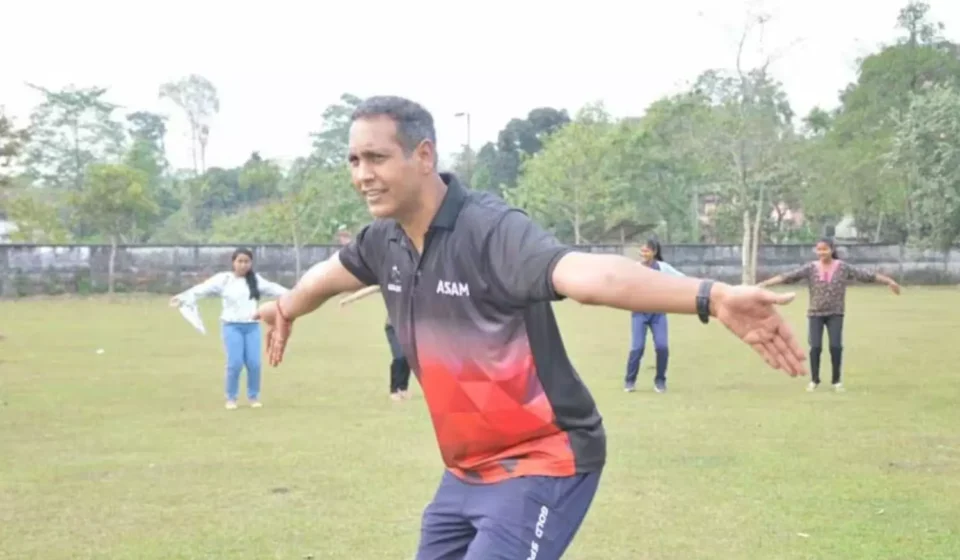

The International Olympic Committee (IOC) has officially announced Abhijit Bhattacharya, the former captain of the Indian men’s national volleyball team, as the Global Winner of the 2025 Gender Equality, Diversity and Inclusion (GEDI) Champions Award. This prestigious international accolade serves as a testament to Bhattacharya’s transformative work in utilizing sport as a vehicle for social change, specifically through his efforts to democratize access to athletics for children in the rural hinterlands of Assam. By dismantling systemic barriers and fostering a culture of inclusivity, Bhattacharya has successfully bridged the gap between gender and opportunity in one of India’s most geographically challenging regions.
The GEDI Champions Award, which evolved from the former IOC Women and Sport Awards, recognizes individuals and organizations that have made outstanding contributions to promoting gender equality and diversity within the sporting ecosystem. Bhattacharya’s selection as the global recipient underscores the scalability and impact of his community-driven model, which has transitioned from a localized equipment distribution drive into one of the largest self-sustained grassroots sports leagues in the world.
The Genesis of a Movement: From Professional Courts to Village Fields
Abhijit Bhattacharya’s journey from an elite athlete to a grassroots reformer is rooted in his deep connection to his home state of Assam. After a distinguished career representing India on the international stage, including leading the national team as its captain, Bhattacharya observed a significant disconnect between the professional sporting infrastructure and the untapped talent residing in India’s villages. He noted that while passion for sport was high, the lack of equipment, coaching, and organized competition prevented rural youth—particularly girls—from engaging in formal athletics.
In 2019, Bhattacharya launched the "Assam Volleyball Mission 100." The initial objective was straightforward but ambitious: to distribute high-quality volleyballs to 100 villages across the state. This initiative was designed to ignite interest in the sport at the most basic level. However, the overwhelming response from these communities revealed a deeper need for structured engagement. This realization led to the conceptualization of the Brahmaputra Volleyball League (BVL), a community-based competition framework that shifted the focus from mere participation to organized excellence.
Chronology of Growth: Scaling Inclusivity Since 2019
The timeline of Bhattacharya’s initiatives reflects a rapid and disciplined expansion:
- 2019: Launch of Assam Volleyball Mission 100. The project begins with the distribution of equipment to rural areas, focusing on districts where sports infrastructure was historically neglected.
- 2020: Conceptualization of the Brahmaputra Volleyball League. Despite the global challenges posed by the COVID-19 pandemic, the framework for a decentralized league was established. The focus was on "local play," ensuring that children did not have to travel long distances to participate.
- 2021–2022: Rapid Expansion and Gender Parity Mandates. The league introduced strict regulations requiring participating villages to register both boys’ and girls’ teams. This period saw the participant base grow from a few hundred to several thousand.
- 2023–2024: Technological Integration and Scouting. The BVL began utilizing digital platforms for registration and score-tracking, allowing for better data collection on athlete progress. Scouting networks were established to link rural talent with state and national academies.
- 2025: Global Recognition. The IOC selects Bhattacharya as the Global GEDI Champion, highlighting the league’s success in reaching over 12,000 children across more than 400 teams.
Data-Driven Impact: Measuring Success in Rural Assam
The success of the Brahmaputra Volleyball League is best illustrated through its statistical reach. Currently, the league encompasses over 400 teams spread across more than 30 districts in Assam. A defining feature of the BVL is its commitment to gender balance; nearly 50% of all registered participants are girls. This parity is not accidental but is a result of a mandatory registration policy that encourages village communities to invest equally in their daughters’ sporting aspirations.
By bringing organized sports directly to the villages, the BVL has effectively removed the primary barriers to participation: travel costs and safety concerns. In traditional sporting models, young athletes are often required to travel to urban centers for training and competition—a logistical hurdle that frequently disqualifies girls from rural families due to societal or financial constraints. The BVL’s "home-and-away" village format ensures that matches are played in the athletes’ own communities, fostering local pride and ensuring a safe, accessible environment for all participants.
Global Context: The 2025 Continental GEDI Champions
While Abhijit Bhattacharya took the top global honor, the IOC also recognized five other trailblazers as continental winners, each representing a unique facet of the fight for equality in sport:
- Africa: Racheal Kundananji (Zambia), recognized for her influence as a high-profile footballer and her advocacy for women’s professional pathways in African sports.
- Americas: Mónica Elvira Franco Luzcando (Panama), honored for her administrative and developmental work in enhancing female participation in Central American athletics.
- Asia: Kim Yeon-koung (South Korea), the legendary volleyball player whose foundation has been instrumental in promoting sports for underprivileged children and advocating for athletes’ rights.
- Europe: Michele Kang (France/USA), a prominent sports owner and businesswoman who has revolutionized the investment landscape for women’s professional soccer.
- Oceania: Robyn Cockburn (New Zealand), a veteran consultant and advocate known for her work in policy development and gender-inclusive sports governance.
The inclusion of Bhattacharya alongside these global figures highlights the importance the IOC places on grassroots, community-led initiatives in addition to professional and corporate advocacy.
Official Responses and Industry Reactions
The announcement of Bhattacharya’s award has been met with widespread acclaim from both the international sporting community and Indian sports administrators. While official statements from the IOC emphasized the "extraordinary dedication to breaking down social and economic barriers," local leaders in Assam have hailed the award as a milestone for the region.
"Abhijit Bhattacharya has shown that you do not need a multi-million dollar stadium to create a world-class movement," noted a senior official from the Indian Olympic Association (IOA). "His model of community ownership is a blueprint for how India can utilize its vast rural population to become a sporting powerhouse while simultaneously addressing gender disparities."
Supporters of the Brahmaputra Volleyball League have also pointed out that the initiative’s success relies on "social capital." Unlike many sports programs that depend on government grants or corporate CSR (Corporate Social Responsibility) funds, the BVL is largely sustained by the villagers themselves, who contribute labor, land, and local resources to host matches. This sense of ownership has been cited by analysts as the key to the program’s sustainability.
Analysis of Implications: A Blueprint for Developing Nations
The recognition of the BVL by the IOC carries significant implications for the future of sports development in the Global South. Bhattacharya’s work demonstrates that gender equality in sports is not merely an "urban" or "elite" pursuit but is achievable in conservative, rural settings when the approach is culturally sensitive and community-oriented.
- Economic Empowerment through Sport: By providing girls in rural Assam with a platform to excel, the BVL is creating pathways for scholarships, government jobs, and professional careers that were previously inaccessible.
- Social Norm Transformation: The sight of girls playing volleyball in the center of their villages has begun to shift local perceptions regarding the role of women in society. This "normalization" of female physical activity is a critical step toward broader social equality.
- Decentralization of Talent: The BVL model challenges the traditional centralized "academy" system. By keeping talent in the villages longer, the program prevents the "drain" of young athletes to cities before they are emotionally or physically ready, while also strengthening the local sporting culture.
Conclusion and Future Outlook
As Abhijit Bhattacharya prepares to receive the 2025 GEDI Champions Award, the focus shifts to the future of the Brahmaputra Volleyball League. With the global spotlight now on Assam, there is potential for the "BVL Model" to be replicated in other Indian states and across other sports. The IOC’s endorsement provides the necessary validation to attract further investment and perhaps influence national sports policy toward a more decentralized, inclusive approach.
Bhattacharya’s achievement serves as a reminder that the Olympic values of excellence, friendship, and respect are most potent when they reach the smallest of villages. Through his vision, the riverbanks of the Brahmaputra have become a fertile ground for a new generation of athletes who no longer see gender or geography as a barrier to their dreams. The 2025 IOC GEDI Champions Award is not just a personal victory for a former captain; it is a victory for 12,000 children who have found their voice on a volleyball court.