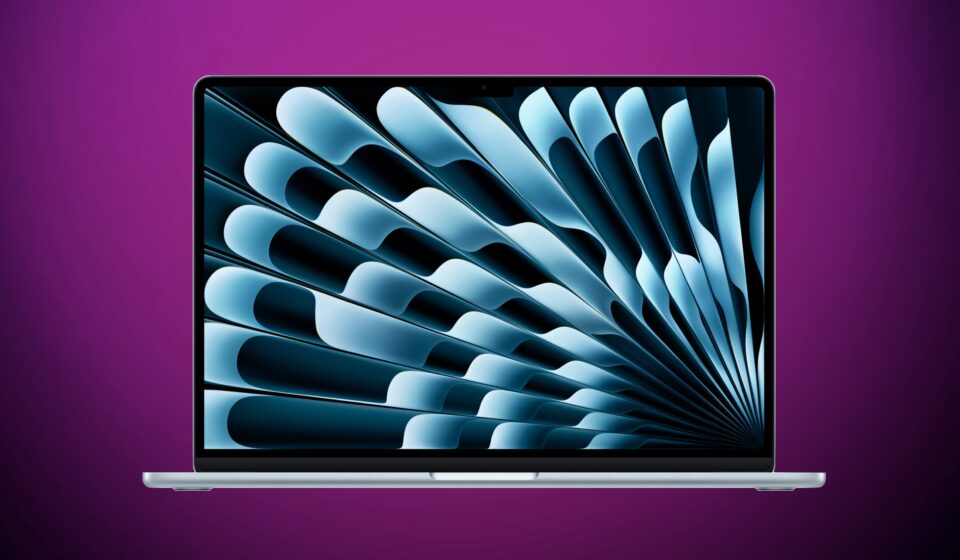

Apple is planning to equip its MacBook Air lineup with cutting-edge OLED display technology, a significant upgrade that will bring enhanced visual fidelity to its most accessible laptop line. However, this transformative shift is not expected to materialize for several years, with industry analysts projecting a launch no earlier than 2028. This timeline positions the MacBook Air’s OLED adoption subsequent to its higher-end MacBook Pro sibling, a strategic decision likely influenced by the considerable cost associated with large-format OLED panels and Apple’s phased approach to integrating premium display technologies across its product ecosystem.
The anticipation surrounding OLED MacBooks has been building for some time, with the technology already making its debut in Apple’s premium tablet offerings. In 2024, Apple introduced its first large-screen OLED displays with the 11-inch and 13-inch iPad Pro models. This marked a pivotal moment, as OLED, a display technology long featured in iPhones and Apple Watches, proved its viability for larger screen sizes. The transition to OLED for larger displays presents unique manufacturing and cost challenges compared to smaller form factors, necessitating careful planning and market maturation before wider implementation. Apple’s stated ambition to transition its flagship Mac and iPad models to OLED, with a long-term vision for its integration across all product lines, underscores the strategic importance of this display technology.
The inherent advantages of OLED technology are substantial and promise a significant leap in user experience for MacBook Air users. Unlike the current LCD and mini-LED displays employed in many Macs, OLED panels offer superior contrast ratios, resulting in richer, more vibrant colors and deeper, more true-to-life blacks. This enhanced contrast is particularly beneficial for content creation, media consumption, and general productivity, providing a more immersive and visually pleasing experience. Furthermore, OLED displays boast wider viewing angles, ensuring consistent image quality even when viewed from off-center positions. An often-cited benefit of OLED is its potential for improved power efficiency. Because each pixel generates its own light and can be individually turned off, black areas of the screen consume no power, leading to more efficient energy usage, especially in scenarios where dark themes or content are prevalent.
The OLED Roadmap: MacBook Pro Precedes MacBook Air
The strategic sequencing of OLED adoption suggests a clear hierarchy within Apple’s product development. The MacBook Pro is slated to receive the OLED treatment considerably sooner than the MacBook Air. Reports indicate that a MacBook Pro model featuring a touchscreen OLED display is currently in development. Initial rumors hinted at a possible release as early as late 2026. However, prominent Apple analyst Ming-Chi Kuo has provided a more conservative estimate, suggesting that consumers might need to wait until early 2027 for this significant upgrade. This slight divergence in projected timelines underscores the complexity and iterative nature of bringing such advanced display technology to market.
Following the MacBook Pro’s OLED integration, the MacBook Air will be the next beneficiary. Kuo’s projections place the OLED MacBook Air’s debut in 2028 or, potentially, as late as 2029. This extended timeline for the MacBook Air is largely attributed to the economic realities of OLED manufacturing. Large, high-quality OLED displays are inherently more expensive to produce than their LCD or mini-LED counterparts. For Apple, which meticulously balances innovation with accessibility, it is crucial for the cost of this technology to decrease sufficiently to align with the MacBook Air’s positioning as a more budget-friendly and mainstream device. Until then, the MacBook Air is expected to continue utilizing its current display technology, likely LCD, with the possibility of an interim mini-LED update remaining speculative, as no concrete rumors currently support such a move.
The Economics of OLED and Apple’s Strategy
The decision to delay OLED for the MacBook Air is a calculated one, rooted in the economics of display manufacturing and Apple’s tiered product strategy. The cost of producing large OLED panels has historically been a significant barrier to widespread adoption in mainstream laptops. While Apple has been a driving force in advancing OLED technology in smaller devices like smartphones and wearables, scaling this to the larger displays required for laptops and tablets necessitates a more gradual rollout. As manufacturing processes mature and economies of scale are achieved, the cost of OLED panels is expected to decline, making them a more feasible option for mid-range devices like the MacBook Air.
Apple’s approach is consistent with its historical product launch cycles, where premium features are often introduced in higher-end models before trickling down to more affordable lines. This strategy allows Apple to gauge market reception, refine the technology, and leverage initial investment in research and development before committing to broader implementation. Furthermore, it creates distinct value propositions for different product tiers, encouraging consumers to upgrade to higher-end models for immediate access to the latest innovations.
The Technical Advantages of OLED Displays
The technical superiority of OLED displays over current technologies like LCD and mini-LED is well-documented and forms the basis of their desirability.
-
Contrast Ratio and Color Accuracy: OLED pixels are self-emissive, meaning each pixel generates its own light. This allows for perfect blacks, as pixels can be individually turned off. This results in an effectively infinite contrast ratio, a significant improvement over LCD and mini-LED technologies, which rely on backlights that can cause light bleed and reduce black levels. The precise control over individual pixels also leads to more accurate color reproduction and a wider color gamut, offering a more lifelike visual experience.
-
Viewing Angles: Traditional LCDs can suffer from color shift and contrast degradation when viewed from oblique angles. OLED displays, however, maintain their color accuracy and contrast across a much wider viewing cone, making them ideal for collaborative work or sharing content.
-
Power Efficiency: While high-brightness OLED displays can consume significant power, their ability to turn off individual pixels makes them more power-efficient in certain scenarios. For example, when displaying dark content or using dark mode interfaces, OLED can offer substantial power savings compared to backlit displays. This contributes to potentially longer battery life, a critical factor for portable computing devices.
-
Response Time: OLED displays typically have much faster response times than LCDs. This means pixels can change color and brightness more rapidly, reducing motion blur and ghosting, which is particularly beneficial for gaming, fast-paced video, and dynamic visual content.
Industry Context and Analyst Perspectives
The insights from sources like Bloomberg and Ming-Chi Kuo are invaluable in understanding Apple’s product roadmap. Bloomberg’s reporting has consistently highlighted Apple’s internal development of OLED MacBooks, often citing the company’s ambition to eventually transition its entire Mac lineup to this advanced display technology. Mark Gurman, a prominent journalist at Bloomberg, has been a consistent source for such information, detailing potential features and timelines for future Apple hardware.
Ming-Chi Kuo, an analyst with a strong track record in predicting Apple’s product strategies and supply chain developments, offers a more granular view. His projections for the OLED MacBook Air’s timeline, placing it in the 2028-2029 timeframe, reflect a detailed understanding of the manufacturing capabilities, component costs, and Apple’s strategic phasing of new technologies. Kuo’s consistent analysis suggests that the cost-effectiveness of large OLED panels remains a key gating factor for their inclusion in more affordable product lines.
Implications for Consumers and the Market
The eventual adoption of OLED displays by the MacBook Air will have several significant implications for consumers and the broader laptop market.
For consumers, it signifies a future where a more affordable and mainstream laptop offers a premium visual experience previously reserved for high-end models. This democratizes access to superior display technology, enhancing the usability and enjoyment of everyday computing tasks for a wider audience. The improved color accuracy and contrast will be particularly welcomed by students, casual content creators, and anyone who values a high-quality visual output.
For the market, Apple’s continued push towards OLED will undoubtedly accelerate the adoption of this technology across the PC industry. As a market leader, Apple’s strategic decisions often influence the direction of its competitors. The successful integration of OLED into the MacBook Air could put pressure on other manufacturers to follow suit, potentially leading to increased competition and further innovation in display technology. This could also drive down overall OLED panel costs more rapidly, benefiting consumers across various brands and device categories.
The introduction of an OLED MacBook Air, even several years down the line, represents a significant evolution in Apple’s laptop strategy. It underscores a commitment to enhancing the core user experience through advanced display technology, reinforcing the MacBook Air’s position as a highly desirable and technologically advanced personal computing device. The wait, while considerable, is likely to be met with a refined and cost-optimized product that aligns with Apple’s meticulous approach to product development and market introduction.