Apple’s First Foldable iPhone, the "iPhone Ultra," Faces Feature Gaps Despite Premium Price Tag

Apple’s highly anticipated entry into the foldable smartphone market, widely rumored to be branded as the "iPhone Ultra," is reportedly poised to launch with a significant number of feature omissions, according to recent leaks and industry analysis. Despite an anticipated retail price point of at least $2,000, the device may lack at least five key functionalities currently standard on even the company’s Pro-tier iPhone models, including those expected in the iPhone 18 Pro lineup. This revelation raises questions about Apple’s strategy for its premium foldable offering and its positioning in a competitive landscape.
The emerging details, largely derived from dummy models and supply chain insights, suggest a device that prioritizes a novel form factor and an ultra-thin design at the expense of established user conveniences. This development comes at a time when foldable technology is maturing, with competitors often integrating robust feature sets into their flexible devices.
Unpacking the Feature Deficit: Key Omissions Revealed
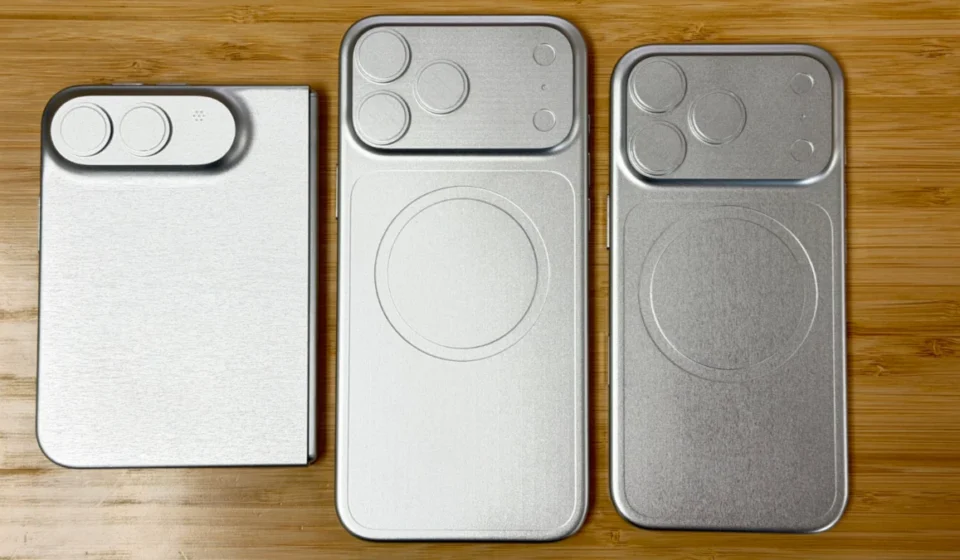
Recent insights, amplified by prominent leakers such as Sonny Dickson and Vadim Yuryev, have shed light on specific functionalities that appear to be absent from the iPhone Ultra. These include the ubiquitous MagSafe charging and accessory system and the versatile Action Button, a feature that has become a hallmark of Apple’s recent Pro iPhones.
Dummy units, crucial for accessory manufacturers to prepare for new device launches, offer tangible clues. These models are constructed with a high degree of precision, mirroring the internal and external dimensions of the final product. The absence of specific design elements on these dummies, such as the magnetic alignment ring for MagSafe, strongly indicates their exclusion from the final device.
1. The Curious Case of the Missing Action Button:
One of the most striking omissions is the apparent lack of an Action Button. Introduced with the iPhone 15 Pro as a customizable replacement for the traditional silent switch, the Action Button has since been adopted across Apple’s flagship smartphone range. Its absence on the iPhone Ultra would mark the first time a new iPhone model, especially one positioned at the pinnacle of Apple’s product stack, foregoes this feature. Dummy models reportedly show volume buttons repositioned to the top edge, aligned to the right side. This deviation from the current left-side placement on all other iPhone models is theorized to be an internal space-saving measure, with the motherboard purportedly situated on the right. Running volume button cables directly upwards, rather than across the device, is seen as a way to optimize internal architecture. However, the lack of any discernible placeholder for an Action Button on these dummies is a significant indicator of its exclusion.
2. MagSafe: A Potential Victim of Slimness?
Further analysis of the dummy units suggests the potential absence of MagSafe technology. Mock-ups of the iPhone 18 Pro and iPhone 18 Pro Max dummies clearly feature the characteristic indentations for the internal MagSafe magnet array, facilitating accurate alignment for accessories like chargers and wallets. Crucially, these indentations are reportedly absent on the iPhone Ultra dummies. While speculative, this omission could be directly linked to the device’s projected ultra-thin profile. Rumors suggest the iPhone Ultra could measure a mere 4.5mm in thickness, making it Apple’s thinnest iPhone to date. Integrating the necessary magnetic components for MagSafe might simply be unfeasible within such stringent physical constraints.
3. The Return of Touch ID, the Departure of Face ID:
The extremely thin design of the iPhone Ultra is also believed to preclude the integration of Apple’s TrueDepth camera system, which powers Face ID and is housed within the Dynamic Island. Consequently, it is anticipated that Apple will revert to Touch ID as the primary biometric authentication method. This would represent a significant departure from the company’s recent strategy. The last iPhone to feature Touch ID was the budget-oriented iPhone SE (3rd generation) in 2022. For a flagship device, the last iPhone to rely solely on Touch ID was the iPhone 7 in 2016. The return of Touch ID, particularly as the sole security feature on a device positioned as Apple’s most advanced, would be an unprecedented move for its premium line. This suggests a design compromise driven by the foldable form factor and the desire for an exceptionally slim profile.
4. A Simplified Camera System:
Contrary to the multi-lens configurations found on Pro models, the iPhone Ultra is expected to feature a more modest dual-camera setup on its rear. These are anticipated to be a wide and an ultra-wide lens, similar to the configuration seen on the standard iPhone 17 model. This means the absence of a telephoto lens, a staple on Pro iPhones for optical zoom capabilities. This reduction in camera hardware further underscores a potential prioritization of form factor over photographic versatility in the iPhone Ultra’s design.
5. The eSIM-Only Future:
Adding to the list of potential feature omissions is the elimination of a physical SIM card slot. Similar to the rumored "iPhone Air" concept, the iPhone Ultra is expected to be eSIM-only. This move aligns with a broader industry trend towards digital SIMs, offering convenience for some users and potentially allowing for further internal space optimization and sealing against environmental elements. However, it does mean that users who rely on physical SIM cards will need to ensure their carrier supports eSIM technology.
Chronology of Rumors and Development
The journey towards a foldable iPhone has been a protracted one, marked by years of patent filings, supply chain speculation, and intermittent rumors. Initial whispers of Apple exploring foldable technology surfaced as early as 2017, with patents detailing flexible display mechanisms and hinge designs appearing in subsequent years.
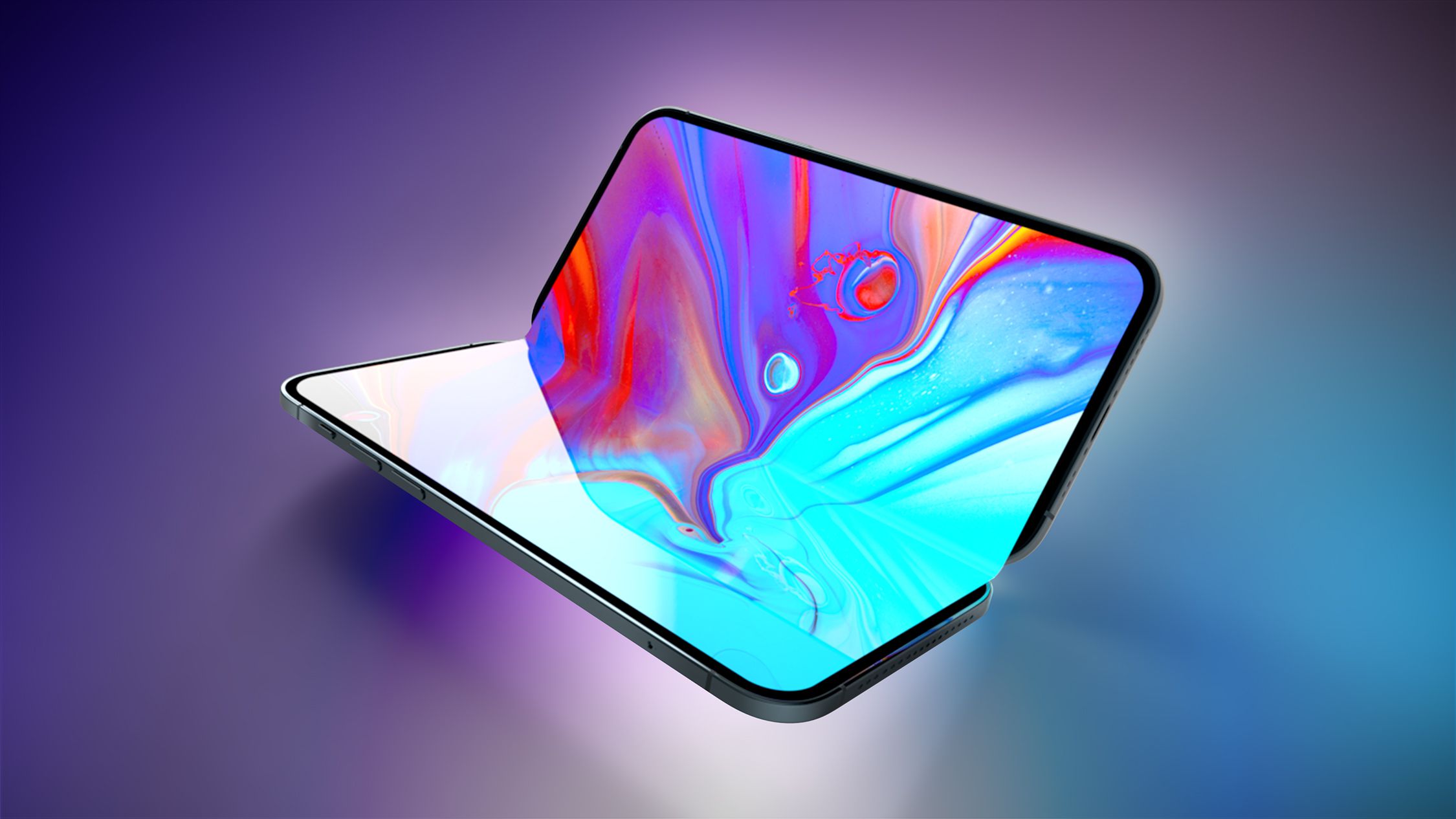
The term "iPhone Ultra" itself emerged as a potential designation for a higher-end, possibly foldable, iPhone in early 2023, further fueling speculation about a distinct product category beyond the standard and Pro models. More concrete design elements began to surface in late 2025 and early 2026. Reports from sources like Instant Digital on Weibo indicated that the initial design concepts for a foldable iPhone were circulating.
By early 2026, leakers like Sonny Dickson and Vadim Yuryev began sharing images and details of dummy units. These physical representations of the device proved invaluable, offering a tangible glimpse into its potential dimensions, button placements, and port configurations. The timing of these leaks, preceding a likely fall launch, aligns with Apple’s typical product announcement cycles, providing accessory manufacturers with ample time to prepare their product lines.
Trial production for a foldable iPhone, codenamed "iPhone Flip," was reportedly initiated by Apple partner Foxconn in April 2026, according to Chinese leaker Instant Digital. This trial phase is a critical step before mass production, allowing for testing and refinement of manufacturing processes. While this report focused on the "iPhone Flip," it strongly suggests that development on Apple’s foldable ambitions is progressing across its rumored device portfolio, including the "iPhone Ultra."
Analysis of Implications and Market Positioning
The prospect of a $2,000+ foldable iPhone lacking features readily available on significantly cheaper iPhone 17 Pro or iPhone 18 Pro models presents a complex strategic challenge for Apple. The company has historically commanded premium prices by offering a perceived superior user experience, cutting-edge technology, and seamless integration of hardware and software.
The Price-Feature Discrepancy:
With the iPhone 17 Pro starting at $1,099 and the iPhone 18 Pro expected to be in a similar price bracket, the iPhone Ultra’s projected starting price of $1,999 or higher makes the feature omissions particularly noteworthy. Consumers are accustomed to paying more for more features, not fewer. This suggests that the foldable form factor itself, and the engineering required to achieve it, will be the primary justification for the significant price increase.
Target Audience and Market Strategy:
Apple’s strategy with the iPhone Ultra appears to be a deliberate focus on early adopters and a segment of the market that prioritizes the novelty and distinctiveness of a foldable device. The ultra-thin design, if achieved, could be a significant selling point, offering a unique tactile and visual experience. However, it also risks alienating a broader audience that might expect a more feature-complete device at such a premium.
Competitive Landscape:
The foldable smartphone market, while still nascent compared to the traditional smartphone segment, is becoming increasingly competitive. Brands like Samsung, Google, and others have released multiple generations of foldable devices, often incorporating advanced camera systems, stylus support, and robust build quality. Apple’s entry with a device that reportedly omits key features could be seen as a cautious approach, prioritizing a refined foldable design over immediate feature parity with its own existing lineup.
Potential for Future Iterations:
It is plausible that the initial iPhone Ultra is a foundational device, designed to establish Apple’s presence in the foldable market. Future iterations could gradually reintroduce omitted features as the technology matures and manufacturing costs decrease, or as Apple finds innovative ways to integrate them into the foldable form factor. The comparison to the rumored "iPhone Air," which also reportedly makes concessions like lacking ultra-wide and telephoto cameras, a SIM card slot, and stereo speakers, suggests a potential design philosophy of prioritizing specific attributes (thinness, portability, novelty) over a comprehensive feature set in certain premium tiers.
Conclusion: A Calculated Risk
Apple’s rumored iPhone Ultra, while promising to be a significant technological milestone with its foldable display, appears to be a device built on calculated compromises. The potential absence of MagSafe, the Action Button, a telephoto lens, and Face ID, coupled with the move to eSIM only and Touch ID, paints a picture of a premium product where form factor and innovation in folding technology take precedence over a full suite of features.
The success of the iPhone Ultra will likely hinge on Apple’s ability to articulate a compelling value proposition for its foldable innovation. The company’s renowned ecosystem, software optimization, and brand loyalty may well carry the device through its initial feature limitations. However, the high price point and the significant feature disparity compared to existing Pro models will undoubtedly be a subject of intense scrutiny and debate among consumers and industry analysts alike. The fall launch will be a critical moment to see how Apple positions this ambitious, yet potentially feature-constrained, foldable future.