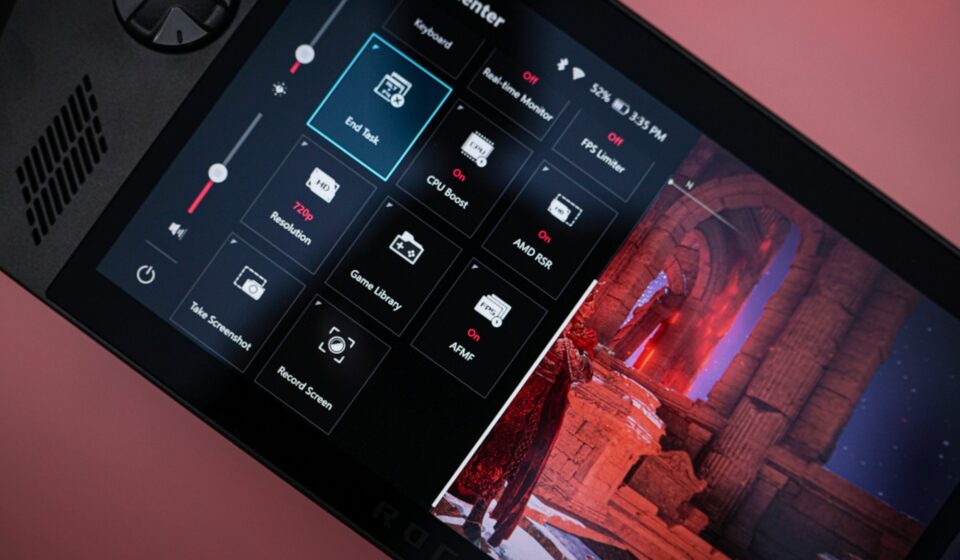
The ROG Xbox Ally X is about to get sharper, faster graphics — courtesy of a free April update that uses AI to do the heavy lifting in games.

Microsoft, through its Xbox division, is set to deliver a significant visual enhancement to the ROG Ally X handheld gaming PC with a forthcoming free software update scheduled for April 2026. This update, which requires no additional hardware or cost to users, introduces an artificial intelligence-powered feature designed to sharpen and improve the graphical fidelity of games played on the device. The initiative addresses a common desire among handheld PC gamers for more crisp and detailed visuals, a sentiment that has been heard and acted upon by the platform holder.
Introduction of Automatic Super Resolution (Auto SR)
The core of this enhancement lies in a new feature dubbed Automatic Super Resolution, or Auto SR. This technology represents Microsoft’s proprietary AI-driven solution for upscaling game visuals, directly competing with established technologies like Nvidia’s Deep Learning Super Sampling (DLSS) and AMD’s FidelityFX Super Resolution (FSR). Auto SR will function by intelligently upscaling game resolutions from the native 720p output of many handheld titles to a crisper 1080p or even higher resolutions, significantly improving the perceived sharpness and detail on the ROG Ally X’s display. This advancement promises to elevate the visual experience for users without necessitating any hardware upgrades or incurring further expenses, positioning it as a substantial value-add for existing owners.

How Auto SR Works and Its Performance Impact
The Auto SR feature is engineered to optimize the handheld’s processing capabilities, allowing it to render games more efficiently. By intelligently upscaling lower-resolution images to higher resolutions, the system can achieve a notable performance boost, reportedly up to 30%. This means that games not only look better but can also run smoother, potentially allowing for higher frame rates or the utilization of more demanding graphical settings within the constraints of the handheld’s hardware.
A key differentiator for Auto SR, as highlighted in early reports, is its implementation at the operating system level. Unlike DLSS and FSR, which typically require direct integration by game developers on a per-title basis, Auto SR aims to function more universally across compatible games. This broad compatibility means that a wider range of titles, without explicit developer intervention, could potentially benefit from the visual enhancements and performance gains offered by the AI upscaling. This approach simplifies the adoption process for users, as they will not need to hunt for specific game settings or wait for developer patches to experience the improved visuals.
However, it is important to note that while Auto SR is a significant step forward, its current iteration may not yet match the absolute image quality achieved by more mature technologies like Nvidia’s DLSS. Nevertheless, its operating system-level integration and broad applicability represent a compelling advancement for the ROG Ally X ecosystem.

Game Compatibility and Technical Underpinnings
For the initial rollout, Auto SR will primarily support games utilizing DirectX 11 and DirectX 12 graphics APIs. This covers a vast majority of modern PC titles, ensuring that a substantial library of games will be eligible to benefit from the new technology. The focus on these widely adopted APIs underscores Microsoft’s intention to make Auto SR a widely accessible enhancement.
The decision to roll out Auto SR exclusively to the ROG Ally X, and not the original ROG Ally model, is directly tied to the hardware specifications of the X variant. The ROG Ally X is equipped with AMD’s Ryzen Z2 Extreme chipset, which notably includes an integrated Neural Processing Unit (NPU). This NPU is a specialized processor designed to accelerate AI and machine learning tasks, much like those found in contemporary smartphones and advanced CPUs.
The Auto SR feature is understood to leverage this dedicated NPU to perform the computationally intensive task of real-time game upscaling. By offloading these AI workloads to the NPU, the system can achieve visual improvements without placing an undue burden on the central processing unit (CPU) or the graphics processing unit (GPU). This dedicated hardware acceleration is crucial for maintaining smooth gameplay and battery life, essential factors for a portable gaming device. The absence of an NPU in the base model of the ROG Ally is the primary reason for the feature’s exclusivity to the ROG Ally X, making the "X" model a distinct proposition for those seeking the latest in AI-enhanced portable gaming.

Release Cadence and Preview Status
It is crucial to understand that the April 2026 release of Auto SR is designated as a preview. This means that while the feature will be available to users at that time, it is not the final, fully polished product. Microsoft will likely continue to refine the AI algorithms, optimize performance, and expand compatibility based on user feedback and further development.
The reported 30% performance uplift is an exciting projection, but real-world results may vary as the technology matures. Users can expect ongoing improvements and potential enhancements to the visual quality and performance benefits over time as Microsoft iterates on the Auto SR system. This preview status suggests an iterative development approach, common for cutting-edge AI technologies, allowing for early adoption and feedback while the technology reaches its full potential.
Broader Implications for Handheld PC Gaming
The introduction of Auto SR by Microsoft on the ROG Ally X marks a significant moment in the evolution of handheld PC gaming. It signifies a growing trend of leveraging AI to overcome the inherent hardware limitations of portable devices, allowing them to play more demanding games or achieve better visual fidelity than might otherwise be possible. This move by Microsoft could set a precedent for other manufacturers and platform holders in the burgeoning handheld PC market.

The operating system-level integration of such a feature is particularly noteworthy. If successful, it could pave the way for similar AI-driven enhancements to be implemented across a wider range of Windows-based portable devices, not just those specifically designed for gaming. This could democratize access to advanced graphical technologies, making visually richer gaming experiences available on a broader spectrum of hardware.
Furthermore, the reliance on dedicated NPUs for AI tasks highlights the increasing importance of specialized silicon in modern computing. As AI continues to permeate various aspects of technology, devices equipped with NPUs will likely offer distinct advantages in performance and efficiency for AI-accelerated applications. The ROG Ally X, with its Ryzen Z2 Extreme chipset and NPU, is positioned as an early adopter of this trend in the portable gaming space.
The competitive landscape of handheld gaming PCs is intensifying, with devices from ASUS, Lenovo, and Valve vying for market share. Innovations like Auto SR can serve as key differentiators, attracting consumers who prioritize visual quality and performance. By offering a free, AI-powered upgrade, Microsoft is not only enhancing the value proposition of the ROG Ally X but also demonstrating a commitment to continuous improvement and technological advancement for its users. This proactive approach to software enhancement, particularly through the application of AI, is likely to shape user expectations and drive further innovation in the portable gaming sector for years to come. The move also underscores the ongoing collaboration between Microsoft and AMD, which has been a cornerstone of the Xbox ecosystem, extending its influence into the PC handheld market. As the gaming industry continues its rapid digital transformation, such AI-driven advancements are poised to become increasingly integral to the user experience.