The Bottleneck Investment Thesis: Historical Precedents in Mining and Infrastructure for the Artificial Intelligence Revolution

The historical trajectory of technological revolutions suggests that while public attention and initial capital flows typically gravitate toward the front-end innovators of a new era, the most substantial long-term financial gains are often concentrated within the supply chain bottlenecks. As the global economy pivots toward a future dominated by artificial intelligence (AI), market analysts are increasingly looking toward the physical infrastructure and raw materials required to sustain this digital expansion. This shift in focus mirrors the late 1990s dot-com boom, where industrial metal suppliers and infrastructure providers outperformed high-flying internet stocks by addressing critical supply shortages.
Macro investing expert Eric Fry, editor of The Speculator, has identified a recurring pattern in market cycles where "choke points" in production and distribution become the primary drivers of wealth creation. According to Fry’s analysis, the AI revolution is currently entering a phase where the demand for compute power, electricity, and specialized materials is outstripping global supply capacity. This dynamic creates a "bottleneck" where the companies controlling limited resources gain significant pricing power and market share.
The Historical Context: The Y2K Catalyst and the Dot-Com Infrastructure Buildout
To understand the current AI landscape, economists often look back to the period between 1996 and 2001. At the turn of the millennium, the global technology sector was driven by two simultaneous forces: the rapid adoption of the internet and the looming threat of the "Y2K bug." The latter, a software logic flaw where computers were expected to misinterpret the year 2000 as 1900, triggered a massive wave of hardware and software upgrades.
The Clinton administration described Y2K remediation as "the single largest technology management challenge in history." Estimates from researchers at Gartner indicate that the global cost of preparing for the millennium transition totaled between $300 billion and $600 billion. While the public focused on the potential for catastrophic computer failures, the actual economic story was the unprecedented demand for the physical components of the digital age: personal computers, servers, and networking hardware.
This surge in demand created a massive supply bottleneck for industrial metals. Companies such as Cisco Systems Inc., Intel Corp., and Dell Technologies Inc. faced significant lead-time issues as they scrambled to secure the raw materials necessary for production. During this period, investors who shifted their focus from speculative internet startups to the mining companies supplying the infrastructure realized returns that far exceeded the broader market indices.
Case Studies in Resource Bottlenecks: 1998–2006
The effectiveness of the bottleneck investment thesis is evidenced by the performance of several key mining and resource companies during the late 1990s and early 2000s. These companies provided the essential materials for the internet’s physical backbone, often operating in sectors that were initially ignored by tech-focused investors.
Antofagasta plc (ANTO.L)
In the mid-1990s, Antofagasta was a diversified Chilean conglomerate. However, in 1996, the company strategically spun off its non-mining assets to focus on copper production. This transition occurred just as the internet boom triggered a global demand for copper wiring and electronic components. The company’s development of the Los Pelambres mine in Chile became a pivotal moment. Construction began in 1997, and by 2001, the mine had reached full capacity.
The financial results were significant. Between December 1998 and 2001, Antofagasta’s stock price increased by 205%, while the S&P 500 remained largely flat. Over a six-year period, the company delivered a 633% gain, illustrating how a pure-play focus on a bottleneck resource can yield exponential returns during a period of infrastructure expansion.
Freeport-McMoRan Inc. (FCX)
While Antofagasta was building new capacity, Freeport-McMoRan utilized its existing Grasberg Mine in Indonesia—one of the world’s largest copper and gold deposits—to meet surging demand. Because the infrastructure was already in place, Freeport was able to ramp up production without the capital-intensive delays associated with new mine development. From April 1999 to 2005, Freeport’s stock rose 154%, significantly outperforming the broader market, which lost 10% of its value in the same period following the dot-com crash.
Cameco Corp. (CCJ) and Impala Platinum Holdings (IMPUY)
The bottleneck phenomenon extended beyond copper. Cameco Corp., controlling high-grade uranium deposits in Canada’s Athabasca Basin, maintained a cost advantage that allowed it to thrive even when energy prices were volatile. Its stock rose 221% over a six-year period starting in 1999. Similarly, Impala Platinum Holdings benefited from the rising demand for Platinum Group Metals (PGMs) used in semiconductors and industrial manufacturing. Following a recommendation in early 2001, Impala’s stock soared 649% over the subsequent six years, compared to a 22% gain for the S&P 500.
The AI Revolution: Identifying Modern Supply Constraints
The current AI boom is following a strikingly similar trajectory. The initial phase of the AI revolution was defined by the "compute bottleneck," which saw Nvidia Corp. (NVDA) achieve gains of nearly 1,000% as data center operators raced to acquire H100 GPUs. However, market analysts suggest that the next phase of the bottleneck cycle will shift from chips to the broader infrastructure required to power and cool AI systems.
Artificial intelligence models, particularly Large Language Models (LLMs), require exponentially more energy than traditional computing tasks. This has placed immense pressure on electrical grids and the supply of specialized memory chips. Fry identifies four primary criteria for identifying a modern bottleneck opportunity:
- The company provides a material or service essential to a major technological trend.
- Demand for that resource is growing faster than supply.
- Expanding supply is difficult, expensive, or time-consuming.
- High barriers to entry prevent new competitors from quickly entering the market.
Based on these criteria, several sectors are emerging as critical "choke points" in the AI economy:
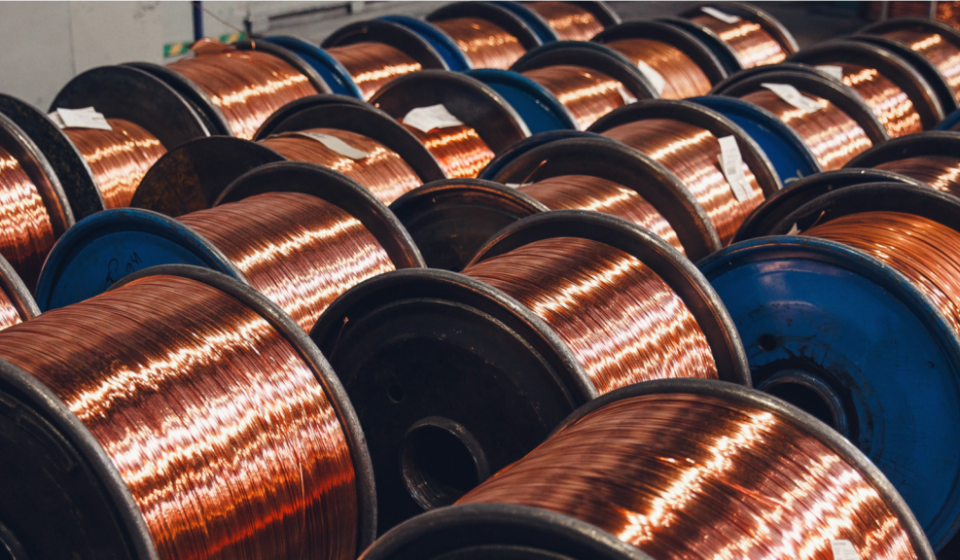
- Copper and Electrical Infrastructure: The modernization of power grids to support AI data centers requires vast amounts of copper for transformers and transmission lines.
- High-Bandwidth Memory (HBM): As AI chips become more powerful, the bottleneck has shifted to the memory components that allow data to move in and out of the processor.
- Nuclear and Sustainable Energy: Data center operators are increasingly turning to nuclear energy to provide the 24/7 "baseload" power required for AI operations, creating a renewed demand for uranium.
Analytical Implications for Investors
The transition from the "innovation phase" to the "infrastructure phase" of a technological boom often results in a rotation of capital. While software companies and AI application developers currently command high valuations, their ability to scale is ultimately limited by the physical availability of hardware and energy.
Institutional analysts note that the capital intensity of the AI revolution is unprecedented. Unlike the software-as-a-service (SaaS) boom of the 2010s, which required relatively little physical capital, AI is deeply tethered to the industrial economy. This creates a strategic advantage for "pick and shovel" plays—companies that provide the fundamental components of the system.
Furthermore, the lead times for addressing these bottlenecks are substantial. Opening a new copper mine can take over a decade due to permitting and environmental regulations, and constructing a new semiconductor fabrication plant or a nuclear modular reactor requires billions in capital and years of specialized engineering. These delays ensure that supply shortages remain persistent, allowing the companies that control existing assets to maintain high margins for an extended period.
Future Outlook and Upcoming Briefings
As the market approaches 2026, the focus is expected to shift toward the secondary and tertiary winners of the AI boom. While Nvidia remains the most visible beneficiary of the compute bottleneck, the next wave of winners is likely to emerge from the sectors solving the energy and materials crises created by rapid AI adoption.
Eric Fry is scheduled to present a detailed analysis of these developing constraints during a "FutureProof 2026" event on March 18. This briefing is expected to reveal 15 specific companies positioned to capitalize on the next wave of AI bottlenecks, ranging from energy providers to specialized materials miners. The event underscores a growing consensus among macro-investors: the most durable profits in a technological revolution are found not in the flashy apps or the front-facing software, but in the gritty, industrial foundations that make the digital world possible.
In summary, history demonstrates that the resolution of technological bottlenecks is where the most significant market alpha is generated. By identifying the critical materials and infrastructure components that are currently in short supply, investors can position themselves for the next phase of the AI-driven economic cycle, much as they did during the transition from the analog to the digital age at the turn of the century.