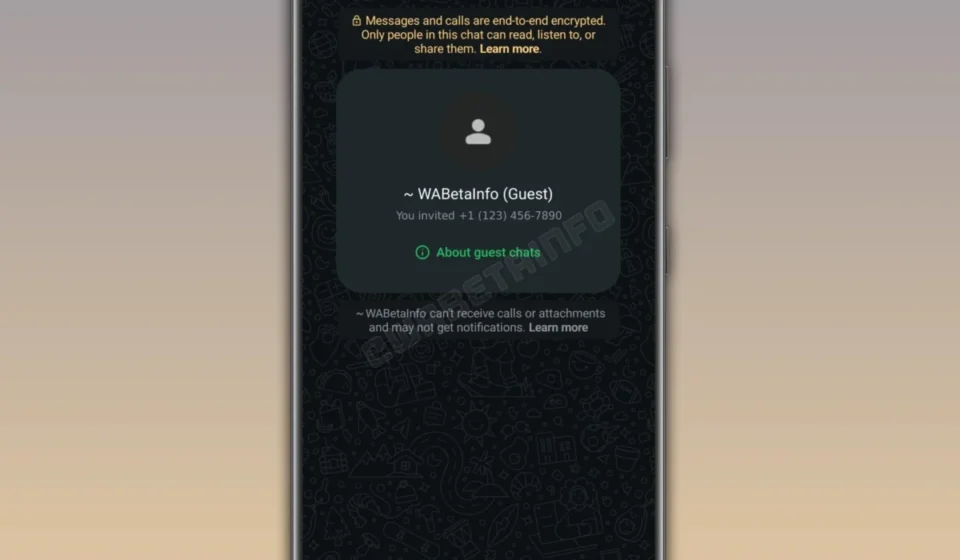
WhatsApp Guest Chat Feature Will Let You Communicate With Users Without an Account

WhatsApp is rolling out a significant new feature, dubbed "guest chats," that promises to lower the barrier to entry for communication on the popular messaging platform. This innovative functionality, currently in beta for a select group of Android and iOS users, will enable individuals to initiate and participate in conversations without requiring them to possess a WhatsApp account. This development marks a strategic move by WhatsApp to broaden its reach and facilitate spontaneous interactions, potentially impacting how casual communication and quick exchanges are conducted across the digital landscape.
The Mechanics of Guest Chats
The functionality of guest chats, as detailed by WABetaInfo, a source that frequently provides early insights into WhatsApp’s upcoming features, centers around the creation and sharing of unique invitation links. Users will be able to generate these links through a dedicated "Invite a friend" section within the app or by accessing a similar option at the bottom of their contact list. This generated link serves as the gateway for non-WhatsApp users to join a conversation.
Upon receiving a guest chat link, an individual can open it directly in a web browser, whether on a desktop computer or a mobile device. This allows for an immediate entry into a temporary chat session. Within the guest chat interface, the participant will be clearly identified with a "Guest" label, distinguishing them from registered WhatsApp users. This visual cue is crucial for managing expectations and understanding the nature of the interaction.

Crucially, WhatsApp is maintaining its commitment to user privacy by ensuring that these guest chats are end-to-end encrypted. This means that the content of the messages remains secure and can only be deciphered by the sender and the intended recipient(s), irrespective of whether the guest participant is a registered user. However, the absence of a verified WhatsApp account for guests introduces a nuanced aspect to identity verification. Unlike regular chats where users are identified by their phone numbers and profile information, the identity of a guest user cannot be confirmed with the same level of certainty. This inherent characteristic means that anyone who gains access to the invitation link could potentially join the conversation. Consequently, WhatsApp is advising users to exercise caution when sharing these links and to verbally confirm the identity of the person they are conversing with, especially if the discussion involves sensitive information.
Feature Set and Limitations of Guest Chats
The design of guest chats emphasizes simplicity and temporary engagement, leading to a set of deliberate limitations for guest participants. To streamline the experience and maintain a focus on core messaging, guests will not have access to certain advanced functionalities available to registered users. These limitations include the inability to join group chats, send media files such as photos, videos, documents, stickers, or GIFs, or initiate voice and video calls. Voice messages will also be unavailable to guest users.
The temporary nature of these chats is further reinforced by an automatic expiration policy. If a guest chat remains inactive for a period of 10 days, it will be automatically closed. To re-establish communication after expiration, the initiator of the chat would need to generate and share a new invitation link. This mechanism is designed to prevent stale or forgotten conversations from persisting indefinitely and to encourage active engagement.
At present, the guest chat feature is undergoing a phased rollout to a limited number of beta testers. WhatsApp has not yet provided a definitive timeline for its official global launch. This gradual deployment strategy allows the company to gather user feedback, identify any potential issues, and refine the feature before making it widely available.

Broader Context and WhatsApp’s Evolving Strategy
The introduction of guest chats aligns with WhatsApp’s ongoing efforts to innovate and expand its user base. In recent months, the platform has seen the rollout of several other significant updates aimed at enhancing user experience and catering to diverse needs. These include the introduction of parent-managed accounts for children under 13, a feature designed to provide greater control and safety for younger users, and an update that facilitates easier onboarding for new members in group chats by allowing them to catch up on recent conversation history.
Furthermore, WhatsApp is reportedly exploring a potential subscription model for certain advanced features. While details remain scarce, this move could signal a shift towards a freemium approach, where core functionalities remain free, but premium services might be offered on a paid tier. Such a strategy could provide WhatsApp with new revenue streams and allow for the development of more sophisticated features that may require dedicated resources.
The guest chat feature, in particular, can be viewed as a strategic initiative to bridge the gap between WhatsApp users and non-users. This could be particularly beneficial for businesses looking to engage with customers who may not be on the platform, or for individuals seeking to quickly connect with someone for a one-off conversation without the commitment of account creation. The ability to initiate a secure, encrypted chat via a simple web link democratizes communication and could foster more spontaneous and efficient exchanges.
Implications and Potential Impact
The introduction of guest chats carries several potential implications for the messaging landscape.

Increased Accessibility and Onboarding: The most immediate impact will be a significant reduction in the friction associated with starting a conversation. For individuals who are not tech-savvy or who prefer not to create accounts for every online service, guest chats offer an accessible entry point. This could lead to a broader adoption of WhatsApp for specific, short-term communication needs.
Enhanced Business-to-Consumer Communication: Businesses, particularly small and medium-sized enterprises, could leverage this feature to offer immediate customer support or sales inquiries without requiring potential clients to download and register for WhatsApp. This could streamline lead generation and customer service interactions.
Facilitating Temporary Collaborations: For project-based work or quick information sharing among acquaintances who may not regularly use WhatsApp, guest chats provide a secure and convenient channel. The temporary nature of the chats, coupled with the automatic expiration, is well-suited for such scenarios.
Security Considerations and User Responsibility: While end-to-end encryption provides a robust layer of security for the message content, the inherent anonymity of guest users necessitates a higher degree of user vigilance. The responsibility to verify identity and avoid sharing sensitive information will fall more heavily on the WhatsApp user initiating the chat. This could lead to a learning curve for some users who are accustomed to the established identity verification within the platform.

Competitive Landscape: This feature could put pressure on other messaging platforms that rely on mandatory account creation for all interactions. WhatsApp’s move towards a more open communication model could influence competitors to explore similar low-barrier entry options.
Data and Analytics: While WhatsApp emphasizes privacy, the usage patterns of guest chats could provide valuable, anonymized data for the company regarding user engagement and communication trends outside its core user base. This data, if handled responsibly, could inform future product development and strategic decisions.
The guest chat feature represents a thoughtful evolution of WhatsApp’s communication tools. By offering a pathway for non-users to engage in secure, encrypted conversations, WhatsApp is not only expanding its potential reach but also addressing a fundamental aspect of digital interaction: the ease and immediacy of connection. As the feature continues its beta testing phase, its long-term success will likely hinge on its seamless integration into the existing user experience and its ability to maintain a balance between accessibility and user security. The broader implications suggest a future where messaging platforms are increasingly adaptable to various user needs, moving beyond rigid account-based models to embrace more fluid and inclusive communication paradigms.