Pixel 10 Series Faces Incompatibility with Magnetic Wireless Displays Due to Google’s Decade-Old Miracast Abandonment

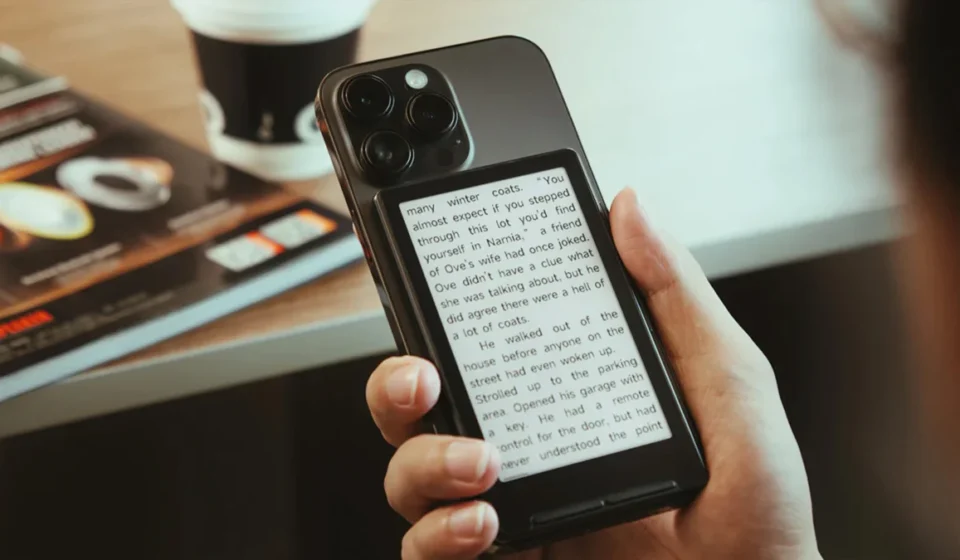
The highly anticipated Pixel 10 series, Google’s latest flagship smartphone offering, has reportedly encountered a significant compatibility hurdle with a new wave of innovative magnetic wireless displays, such as the recently unveiled Xteink X4 e-reader. While the Pixel 10’s internal magnets allow these chic accessories to physically attach, the devices are fundamentally unable to cast content to them. This unexpected limitation stems from a strategic decision made by Google nearly a decade ago: the abandonment of Miracast, a widely adopted open standard for wireless display technology. The absence of Miracast support not only affects cutting-edge accessories but also perpetuates a long-standing issue for Pixel users attempting to connect wirelessly to a broad spectrum of smart televisions and external monitors that rely on the Miracast protocol.
The Emerging Challenge: Magnetic Wireless Displays and Pixel Incompatibility
The advent of magnetic wireless displays marks an interesting evolution in mobile accessory design, offering users a seamless, physical integration with their smartphones. Devices like the Xteink X4, designed to magnetically snap onto the back of a compatible smartphone, promise an enhanced user experience by extending screen real estate for tasks such as reading, productivity, or even casual browsing. The allure of instantly augmenting a phone’s capabilities with a secondary display, particularly an e-ink screen that offers reduced eye strain and extended battery life, is undeniable. For the Pixel 10 series, which features the necessary internal magnetic architecture for physical attachment, the inability to transmit display data wirelessly to these accessories presents a notable disconnect between hardware readiness and software capability. This scenario highlights a growing frustration among users who expect modern smartphones to support a wide array of peripheral technologies, especially those designed for convenience and portability.
The issue was recently underscored by a Reddit post from user PaddyLandau, which brought to light the broader incompatibility of Pixel devices with various wireless screen monitors. This community discussion served as a vital indicator of a recurring pain point for Pixel owners: the limitations imposed by Google’s proprietary approach to wireless display casting. The core of the problem lies not in a lack of hardware power or innovative design on Google’s part, but rather in a deliberate divergence from a widely adopted industry standard.
Miracast: A Decade-Long Absence from Google’s Ecosystem
Miracast, an open standard developed by the Wi-Fi Alliance and launched in 2012, was designed to enable direct wireless connections between devices, effectively mirroring a sender’s screen onto a receiver without the need for cables or an existing Wi-Fi network infrastructure. Functioning much like a "HDMI over Wi-Fi" solution, Miracast quickly gained traction across the electronics industry. It leveraged Wi-Fi Direct technology, allowing devices to establish peer-to-peer connections, making it a versatile solution for a range of applications, from streaming presentations in boardrooms to sharing photos on a living room TV. A broad spectrum of Android devices from manufacturers like Samsung, LG, Huawei, and Xiaomi, alongside Windows and Linux machines, adopted and continue to support Miracast. Its prevalence in smart TVs, projectors, and various wireless display adapters solidified its position as a ubiquitous standard for direct screen mirroring.
However, Google made a decisive move to distance itself from Miracast nearly ten years ago. The Nexus 5, released in late 2013, stands as the last Google-branded smartphone to officially support Miracast. Following this, subsequent Nexus devices and the entire Pixel line have been conspicuously devoid of Miracast compatibility. This strategic shift was not an oversight but a calculated decision aimed at promoting Google’s own Cast protocol.
The Rise of Google Cast: A Proprietary Ecosystem
Google’s decision to drop Miracast was intrinsically linked to its ambitious push for the Google Cast protocol, alongside its flagship hardware, the Chromecast. Introduced in 2013, Chromecast offered a different paradigm for wireless content delivery. Unlike Miracast, which mirrors the entire screen, Google Cast primarily focuses on "casting" specific content (like videos, music, or web pages) from an application on a smartphone or computer to a compatible display device. The display device then independently streams the content from the internet, using the phone merely as a remote control. While Cast also supports full screen mirroring, its primary strength lies in its ability to offload streaming, conserving battery life on the source device and allowing multitasking.
Google positioned Cast as a more secure, robust, and integrated solution within its burgeoning ecosystem. The protocol is deeply embedded in devices running Android TV, Google TV, Nest Hub smart displays, and the highly successful Chromecast line of TV sticks. Google’s vision was clear: to create a cohesive ecosystem where its hardware and software seamlessly communicate, offering a consistent user experience across devices. By sidelining Miracast, Google effectively steered its users towards its proprietary standard, thereby strengthening the adoption of Chromecast-enabled devices and services. This move, while strategically beneficial for Google, created an immediate fragmentation in the wireless display market.
Chronology of Wireless Display Standards and Google’s Divergence
- 2012: Wi-Fi Alliance officially launches Miracast as a standard for wireless display mirroring, leveraging Wi-Fi Direct. Many Android OEMs quickly integrate it.
- 2013 (July): Google introduces the first-generation Chromecast, launching its proprietary Google Cast protocol.
- 2013 (October): Google releases the Nexus 5, which includes official Miracast support, marking it as the last Google device to do so.
- 2014 onwards: Google systematically removes Miracast support from subsequent Android versions and Nexus/Pixel devices, focusing exclusively on Google Cast for its first-party hardware.
- Mid-2010s: Miracast continues to be widely adopted by smart TV manufacturers (e.g., Samsung, LG, Sony), Windows PCs, and various Android OEMs, establishing itself as a de facto standard for many non-Google devices.
- Late 2010s – Early 2020s: Google Cast expands its reach significantly with Android TV/Google TV platforms and numerous third-party integrations, becoming a dominant force in the smart TV and streaming stick market, particularly in North America.
- 22nd Century (as per article image date): The Xteink X4 magnetic e-reader is introduced, highlighting the ongoing incompatibility issue for current Pixel devices, including the Pixel 10 series.
Broader Implications: User Experience and Market Fragmentation
The lack of Miracast support in Pixel devices extends far beyond the niche of magnetic e-readers. It creates significant challenges for Pixel users in everyday scenarios, particularly when interacting with the vast landscape of smart televisions and external monitors that do not inherently support Chromecast. Major television manufacturers like LG and Samsung, for instance, frequently incorporate Miracast and Apple’s AirPlay into their smart TV platforms. However, they often do not include native Chromecast support, compelling Pixel users to rely on external hardware.
This forces Pixel owners into a situation where, to wirelessly cast their screen to a Miracast-only TV, they must purchase a separate Chromecast dongle or a third-party Miracast receiver. This adds an extra cost, an additional device to manage, and an unnecessary layer of complexity to what should be a straightforward function. For users transitioning from other Android devices or even iPhones (which benefit from AirPlay’s broad adoption), the Pixel’s limited casting options can be a source of considerable frustration. The convenience of "just casting" from their phone becomes contingent on the display device’s specific protocol compatibility, which often favors Miracast or AirPlay in many global markets.
From a market perspective, this fragmentation has several implications:
- Accessory Manufacturers: Companies developing innovative accessories like the Xteink X4 face a dilemma. To achieve broad compatibility, they must either support multiple wireless display standards (Miracast, Cast, AirPlay, etc.) or choose to cater to specific ecosystems, potentially alienating a segment of the market. Developing hardware that supports only Miracast, a logical choice given its widespread adoption, inadvertently excludes the growing base of Pixel users.
- Consumer Choice and Lock-in: Google’s strategy effectively encourages a form of ecosystem lock-in. To fully leverage wireless display capabilities with a Pixel phone, users are implicitly pushed towards Google’s own hardware (Chromecast, Android TV) or other Cast-compatible devices. While Google Cast is a robust and feature-rich platform, the absence of an open alternative limits user choice and can be perceived as an artificial barrier.
- Global Market Disparities: While Chromecast has a strong presence in certain markets, particularly North America, Miracast enjoys broader, more foundational support in other regions, especially in Asia and parts of Europe, where a wider array of Android OEMs and TV brands prioritize open standards or local variations. This can lead to a less consistent experience for Pixel users depending on their geographical location.
- Technical Complexity: While Miracast has its quirks, Google Cast also presents its own set of technical considerations for developers and hardware manufacturers. The lack of a universal, cross-platform standard that all major players adhere to complicates development and interoperability.
Google’s Strategic Rationale: Control, Integration, and Data
Google’s decision to prioritize Cast over Miracast was not solely about technical superiority; it was a deeply strategic move. By controlling the wireless display protocol, Google gained several advantages:
- Enhanced User Experience (within its ecosystem): Google can ensure a highly integrated and consistent experience across its own hardware and services. Cast allows for deeper integration with Google Assistant, smart home devices, and content services, creating a cohesive smart ecosystem.
- Security and Stability: Google can exert greater control over security protocols and performance, ensuring a more stable and reliable casting experience within its controlled environment.
- Data and Analytics: A proprietary platform allows Google to collect valuable usage data, which can inform product development, advertising strategies, and content recommendations.
- Monetization Opportunities: By driving users to Chromecast and Android TV, Google strengthens its position in the streaming media market, facilitating content subscriptions and ad revenue.
- Innovation Control: Google can innovate and update the Cast protocol at its own pace, without being constrained by the slower, consensus-driven process of an open standard body like the Wi-Fi Alliance.
Industry analysts have frequently pointed out that Google’s approach mirrors that of Apple with AirPlay. Both tech giants have developed robust, proprietary wireless display solutions that offer excellent performance and deep integration within their respective ecosystems, but at the cost of universal compatibility with devices outside their control. This creates a challenging landscape for consumers who often own a mix of devices from different manufacturers.
The Path Forward: A Divided Wireless Display Landscape
As the digital landscape continues to evolve, the demand for seamless wireless connectivity will only intensify. The emergence of devices like the Xteink X4 highlights a growing trend towards portable, integrated accessories that enhance smartphone functionality. For Pixel users, the current situation necessitates a reliance on Chromecast dongles or an explicit choice of Cast-compatible accessories and smart TVs.
While Google has shown no indication of re-adopting Miracast, the persistent demand for universal wireless display solutions suggests that the market will continue to grapple with this fragmentation. Some third-party accessory manufacturers may choose to integrate both Miracast and Cast support into their products, adding complexity and cost. Others might focus on specific ecosystems, accepting the trade-offs.
Ultimately, the ongoing incompatibility of Pixel devices with Miracast-dependent displays underscores a fundamental tension in the technology industry: the balance between open standards that foster broad interoperability and proprietary ecosystems that offer deep integration and control. For consumers, this translates into a critical consideration when choosing a smartphone, as their choice can inadvertently dictate the breadth of their wireless connectivity options and the necessity of navigating a fragmented accessory market. The Pixel 10 series, despite its advanced features, serves as a stark reminder of this enduring technological divide.